BACKGROUND Mechanisms of glioma invasion remain to be fully elucidated. Glioma cells within glioblastoma multiforme (GBM) range from well-differentiated tumor cells to less-differentiated brain tumor-initiating cells (BTICs). The β2-subunit of Na(+)/K(+)-ATPase,called the adhesion molecule on glia (AMOG),is highly expressed in normal glia but is thought to be universally downregulated in GBM. To test our hypothesis that expression of AMOG is heterogeneous in GBM and confers a less invasive phenotype,we compared it between BTICs and differentiated cells from patient-matched GBM and then tested GBM invasion in vitro after AMOG overexpression. METHODS Immunohistochemistry,immunoblotting,and real-time PCR were used to characterize AMOG protein and mRNA expression in tumor samples,BTICs,and differentiated cells. Matrigel invasion assay,scratch assay,and direct cell counting were used for testing in vitro invasion,migration,and proliferation,respectively. RESULTS While AMOG expression is heterogeneous in astrocytomas of grades II-IV,it is lost in most GBM. BTICs express higher levels of AMOG mRNA and protein compared with patient-matched differentiated tumor cells. Overexpression of AMOG decreased GBM cell and BTIC invasion without affecting migration or proliferation. Knockdown of AMOG expression in normal human astrocytes increased invasion. CONCLUSIONS AMOG expression inhibits GBM invasion. Its downregulation increases invasion in glial cells and may also represent an important step in BTIC differentiation. These data provide compelling evidence implicating the role of AMOG in glioma invasion and provide impetus for further investigation.
View Publication
Ohtsuka T et al. (JAN 2006)
Molecular and cellular neurosciences 31 1 109--22
Visualization of embryonic neural stem cells using Hes promoters in transgenic mice.
In the central nervous system,neural stem cells proliferate in the ventricular zone (VZ) and sequentially give rise to both neurons and glial cells in a temporally and spatially regulated manner,suggesting that stem cells may differ from one another in different brain regions and at different developmental stages. For the purpose of marking and purifying neural stem cells to ascertain whether such differences exist,we generated transgenic mice using promoters from Hes genes (pHes1 or pHes5) to drive expression of destabilized enhanced green fluorescent protein. In the developing brains of these transgenic mice,GFP expression was restricted to undifferentiated cells in the VZ,which could asymmetrically produce a Numb-positive neuronal daughter and a GFP-positive progenitor cell in clonal culture,indicating that they retain the capacity to self-renew. Our results suggest that pHes-EGFP transgenic mice can be used to explore similarities and differences among neural stem cells during development.
View Publication
产品类型:
产品号#:
05700
05701
05702
产品名:
NeuroCult™ 基础培养基(小鼠和大鼠)
NeuroCult™ 扩增添加物(小鼠和大鼠)
NeuroCult™扩增试剂盒(小鼠和大鼠)
Pei Y et al. (MAY 2016)
Brain research 1638 Pt A 57--73
Comparative neurotoxicity screening in human iPSC-derived neural stem cells, neurons and astrocytes.
Induced pluripotent stem cells (iPSC) and their differentiated derivatives offer a unique source of human primary cells for toxicity screens. Here,we report on the comparative cytotoxicity of 80 compounds (neurotoxicants,developmental neurotoxicants,and environmental compounds) in iPSC as well as isogenic iPSC-derived neural stem cells (NSC),neurons,and astrocytes. All compounds were tested over a 24-h period at 10 and 100$\$,in duplicate,with cytotoxicity measured using the MTT assay. Of the 80 compounds tested,50 induced significant cytotoxicity in at least one cell type; per cell type,32,38,46,and 41 induced significant cytotoxicity in iPSC,NSC,neurons,and astrocytes,respectively. Four compounds (valinomycin,3,3',5,5'-tetrabromobisphenol,deltamethrin,and triphenyl phosphate) were cytotoxic in all four cell types. Retesting these compounds at 1,10,and 100$\$ using the same exposure protocol yielded consistent results as compared with the primary screen. Using rotenone,we extended the testing to seven additional iPSC lines of both genders; no substantial difference in the extent of cytotoxicity was detected among the cell lines. Finally,the cytotoxicity assay was simplified by measuring luciferase activity using lineage-specific luciferase reporter iPSC lines which were generated from the parental iPSC line. This article is part of a Special Issue entitled SI: PSC and the brain.
View Publication
产品类型:
产品号#:
05850
05857
05870
05875
85850
85857
85870
85875
产品名:
mTeSR™1
mTeSR™1
Blackmore DG et al. (JAN 2012)
Scientific reports 2 250
Growth hormone responsive neural precursor cells reside within the adult mammalian brain.
The detection of growth hormone (GH) and its receptor in germinal regions of the mammalian brain prompted our investigation of GH and its role in the regulation of endogenous neural precursor cell activity. Here we report that the addition of exogenous GH significantly increased the expansion rate in long-term neurosphere cultures derived from wild-type mice,while neurospheres derived from GH null mice exhibited a reduced expansion rate. We also detected a doubling in the frequency of large (i.e. stem cell-derived) colonies for up to 120 days following a 7-day intracerebroventricular infusion of GH suggesting the activation of endogenous stem cells. Moreover,gamma irradiation induced the ablation of normally quiescent stem cells in GH-infused mice,resulting in a decline in olfactory bulb neurogenesis. These results suggest that GH activates populations of resident stem and progenitor cells,and therefore may represent a novel therapeutic target for age-related neurodegeneration and associated cognitive decline.
View Publication
产品类型:
产品号#:
05700
05701
05702
05740
产品名:
NeuroCult™ 基础培养基(小鼠和大鼠)
NeuroCult™ 扩增添加物(小鼠和大鼠)
NeuroCult™扩增试剂盒(小鼠和大鼠)
Oh MC et al. (JAN 2012)
PloS one 7 10 e47846
Overexpression of calcium-permeable glutamate receptors in glioblastoma derived brain tumor initiating cells.
Glioblastoma multiforme is the most malignant type of primary brain tumor with a poor prognosis. These tumors consist of a heterogeneous population of malignant cells,including well-differentiated tumor cells and less differentiated cells with stem cell properties. These cancer stem cells,known as brain tumor initiating cells,likely contribute to glioma recurrence,as they are highly invasive,mobile,resistant to radiation and chemotherapy,and have the capacity to self-renew. Glioblastoma tumor cells release excitotoxic levels of glutamate,which may be a key process in the death of peritumoral neurons,formation of necrosis,local inflammation,and glioma-related seizures. Moreover,elevated glutamate levels in the tumor may act in paracrine and autocrine manner to activate glutamate receptors on glioblastoma tumor cells,resulting in proliferation and invasion. Using a previously described culturing condition that selectively promotes the growth of brain tumor initiating cells,which express the stem cell markers nestin and SOX-2,we characterize the expression of α-amino-3-hydroxy-5-methyl-4-isozolepropionic acid (AMPA)-type glutamate receptor subunits in brain tumor initiating cells derived from glioblastomas. Here we show for the first time that glioblastoma brain tumor initiating cells express high concentrations of functional calcium-permeable AMPA receptors,compared to the differentiated tumor cultures consisting of non-stem cells. Up-regulated calcium-permeable AMPA receptor expression was confirmed by immunoblotting,immunocytochemistry,and intracellular calcium imaging in response to specific agonists. Our findings raise the possibility that glutamate secretion in the GBM tumor microenvironment may stimulate brain tumor derived cancer stem cells.
View Publication
产品类型:
产品号#:
05750
产品名:
NeuroCult™ NS-A 基础培养基(人)
Chesnokova V et al. (AUG 2013)
Proceedings of the National Academy of Sciences 110 35 E3331--E3339
Growth hormone is a cellular senescence target in pituitary and nonpituitary cells
Premature proliferative arrest in benign or early-stage tumors induced by oncoproteins,chromosomal instability,or DNA damage is associated with p53/p21 activation,culminating in either senescence or apoptosis,depending on cell context. Growth hormone (GH) elicits direct peripheral metabolic actions as well as growth effects mediated by insulin-like growth factor 1 (IGF1). Locally produced peripheral tissue GH,in contrast to circulating pituitary-derived endocrine GH,has been proposed to be both proapoptotic and prooncogenic. Pituitary adenomas expressing and secreting GH are invariably benign and exhibit DNA damage and a senescent phenotype. We therefore tested effects of nutlin-induced p53-mediated senescence in rat and human pituitary cells. We show that DNA damage senescence induced by nutlin triggers the p53/p21 senescent pathway,with subsequent marked induction of intracellular pituitary GH in vitro. In contrast,GH is not induced in cells devoid of p53. Furthermore we show that p53 binds specific GH promoter motifs and enhances GH transcription and secretion in senescent pituitary adenoma cells and also in nonpituitary (human breast and colon) cells. In vivo,treatment with nutlin results in up-regulation of both p53 and GH in the pituitary gland,as well as increased GH expression in nonpituitary tissues (lung and liver). Intracrine GH acts in pituitary cells as an apoptosis switch for p53-mediated senescence,likely protecting the pituitary adenoma from progression to malignancy. Unlike in the pituitary,in nonpituitary cells GH exerts antiapoptotic properties. Thus,the results show that GH is a direct p53 transcriptional target and fulfills criteria as a p53 target gene. Induced GH is a readily measurable cell marker for p53-mediated cellular senescence.
View Publication
Zheng H et al. (MAY 2010)
Cancer cell 17 5 497--509
PLAGL2 regulates Wnt signaling to impede differentiation in neural stem cells and gliomas.
A hallmark feature of glioblastoma is its strong self-renewal potential and immature differentiation state,which contributes to its plasticity and therapeutic resistance. Here,integrated genomic and biological analyses identified PLAGL2 as a potent protooncogene targeted for amplification/gain in malignant gliomas. Enhanced PLAGL2 expression strongly suppresses neural stem cell (NSC) and glioma-initiating cell differentiation while promoting their self-renewal capacity upon differentiation induction. Transcriptome analysis revealed that these differentiation-suppressive activities are attributable in part to PLAGL2 modulation of Wnt/beta-catenin signaling. Inhibition of Wnt signaling partially restores PLAGL2-expressing NSC differentiation capacity. The identification of PLAGL2 as a glioma oncogene highlights the importance of a growing class of cancer genes functioning to impart stem cell-like characteristics in malignant cells.
View Publication
Chen W et al. (JUN 2014)
Scientific reports 4 5404
Generation of the SCN1A epilepsy mutation in hiPS cells using the TALEN technique.
Human induced pluripotent stem cells (iPSC) can be used to understand the pathological mechanisms of human disease. These cells are a promising source for cell-replacement therapy. However,such studies require genetically defined conditions. Such genetic manipulations can be performed using the novel Transcription Activator-Like Effector Nucleases (TALENs),which generate site-specific double-strand DNA breaks (DSBs) with high efficiency and precision. Combining the TALEN and iPSC methods,we developed two iPS cell lines by generating the point mutation A5768G in the SCN1A gene,which encodes the voltage-gated sodium channel Nav1.1 α subunit. The engineered iPSC maintained pluripotency and successfully differentiated into neurons with normal functional characteristics. The two cell lines differ exclusively at the epilepsy-susceptibility variant. The ability to robustly introduce disease-causing point mutations in normal hiPS cell lines can be used to generate a human cell model for studying epileptic mechanisms and for drug screening.
View Publication


 EasySep™小鼠TIL(CD45)正选试剂盒





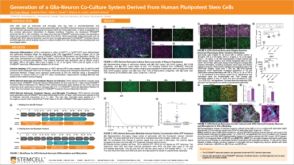 科学海报Generation of a Glia-Neuron Co-Culture System Derived From Human Pluripotent Stem Cells
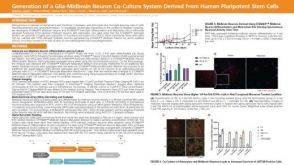 科学海报Generation of a Glia-Midbrain Neuron Co-Culture System Derived From Human Pluripotent Stem Cells

 沪公网安备31010102008431号