El-Helou V et al. (NOV 2005)
Hypertension 46 5 1219--25
Resident nestin+ neural-like cells and fibers are detected in normal and damaged rat myocardium.
The present study examined whether nestin+ neural-like stem cells detected in the scar tissue of rats 1 week after myocardial infarction (MI) were derived from bone marrow and/or were resident cells of the normal myocardium. Irradiated male Wistar rats transplanted with beta-actin promoter-driven,green fluorescent protein (GFP)-labeled,unfractionated bone marrow cells were subjected to coronary artery ligation. Three weeks after MI,GFP-labeled bone marrow cells were detected in the infarct region,and a modest number were associated with nestin immunoreactivity. The paucity of GFP+/nestin+ cells in the scar tissue provided the impetus to explore whether neural-like stem cells were derived from cardiac tissue. Nestin mRNA and immunoreactivity were detected in normal rat myocardium,and transcript levels were increased in the damaged heart after MI. In primary-passage,cardiac tissue-derived neural cells,filamentous nestin staining was associated with a diffuse,cytoplasmic glial fibrillary acidic protein signal. Unexpectedly,in viable myocardium,numerous nestin+/glial fibrillary acidic protein+ fiberlike structures of varying length were detected and observed in close proximity to neurofilament-M+ fibers. The infarct region was likewise innervated,and the preponderance of neurofilament-M+ fibers appeared to be physically associated with nestin+ fiberlike structures. These data highlight the novel observation that the normal rat heart contained resident nestin+/glial fibrillary acidic protein+ neural-like stem cells,fiberlike structures,and nestin mRNA levels that were increased in response to myocardial ischemia. Cardiac tissue-derived neural stem cell migration to the infarct region and concomitant nestin+ fiberlike innervation represent obligatory events of reparative fibrosis in the damaged rat myocardium.
View Publication
产品类型:
产品号#:
05700
05701
05702
产品名:
NeuroCult™ 基础培养基(小鼠和大鼠)
NeuroCult™ 扩增添加物(小鼠和大鼠)
NeuroCult™扩增试剂盒(小鼠和大鼠)
Yasuda T et al. (FEB 2008)
Molecular and cellular neurosciences 37 2 284--97
K(ir) and K(v) channels regulate electrical properties and proliferation of adult neural precursor cells.
The functional significance of the electrophysiological properties of neural precursor cells (NPCs) was investigated using dissociated neurosphere-derived NPCs from the forebrain subventricular zone (SVZ) of adult mice. NPCs exhibited hyperpolarized resting membrane potentials,which were depolarized by the K(+) channel inhibitor,Ba(2+). Pharmacological analysis revealed two distinct K(+) channel families: Ba(2+)-sensitive K(ir) channels and tetraethylammonium (TEA)-sensitive K(v) (primarily K(DR)) channels. Ba(2+) promoted mitogen-stimulated NPC proliferation,which was mimicked by high extracellular K(+),whereas TEA inhibited proliferation. Based on gene and protein levels in vitro,we identified K(ir)4.1,K(ir)5.1 and K(v)3.1 channels as the functional K(+) channel candidates. Expression of these K(+) channels was immunohistochemically found in NPCs of the adult mouse SVZ,but was negligible in neuroblasts. It therefore appears that expression of K(ir) and K(v) (K(DR)) channels in NPCs and related changes in the resting membrane potential could contribute to NPC proliferation and neuronal lineage commitment in the neurogenic microenvironment.
View Publication
产品类型:
产品号#:
05701
产品名:
NeuroCult™ 扩增添加物(小鼠和大鼠)
Flanagan LA et al. (MAR 2008)
Stem cells (Dayton,Ohio) 26 3 656--65
Unique dielectric properties distinguish stem cells and their differentiated progeny.
The relatively new field of stem cell biology is hampered by a lack of sufficient means to accurately determine the phenotype of cells. Cell-type-specific markers,such as cell surface proteins used for flow cytometry or fluorescence-activated cell sorting,are limited and often recognize multiple members of a stem cell lineage. We sought to develop a complementary approach that would be less dependent on the identification of particular markers for the subpopulations of cells and would instead measure their overall character. We tested whether a microfluidic system using dielectrophoresis (DEP),which induces a frequency-dependent dipole in cells,would be useful for characterizing stem cells and their differentiated progeny. We found that populations of mouse neural stem/precursor cells (NSPCs),differentiated neurons,and differentiated astrocytes had different dielectric properties revealed by DEP. By isolating NSPCs from developmental ages at which they are more likely to generate neurons,or astrocytes,we were able to show that a shift in dielectric property reflecting their fate bias precedes detectable marker expression in these cells and identifies specific progenitor populations. In addition,experimental data and mathematical modeling suggest that DEP curve parameters can indicate cell heterogeneity in mixed cultures. These findings provide evidence for a whole cell property that reflects stem cell fate bias and establish DEP as a tool with unique capabilities for interrogating,characterizing,and sorting stem cells.
View Publication


 EasySep™小鼠TIL(CD45)正选试剂盒




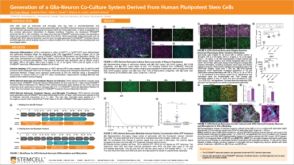 科学海报Generation of a Glia-Neuron Co-Culture System Derived From Human Pluripotent Stem Cells
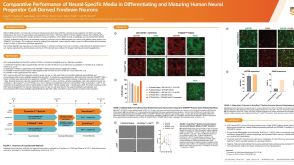 科学海报Comparative Performance of Neural-Specific Media in Differentiating and Maturing Human Neural Progenitor Cell-Derived Forebrain Neurons
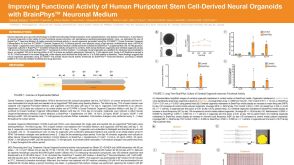 科学海报Improving Functional Activity of Human Pluripotent Stem Cell-Derived Neural Organoids with BrainPhys Neuronal Medium

 沪公网安备31010102008431号