Sii-Felice K et al. (MAR 2008)
The EMBO journal 27 5 770--81
Fanconi DNA repair pathway is required for survival and long-term maintenance of neural progenitors.
Although brain development abnormalities and brain cancer predisposition have been reported in some Fanconi patients,the possible role of Fanconi DNA repair pathway during neurogenesis is unclear. We thus addressed the role of fanca and fancg,which are involved in the activation of Fanconi pathway,in neural stem and progenitor cells during brain development and adult neurogenesis. Fanca(-/-) and fancg(-/-) mice presented with microcephalies and a decreased neuronal production in developing cortex and adult brain. Apoptosis of embryonic neural progenitors,but not that of postmitotic neurons,was increased in the neocortex of fanca(-/-) and fancg(-/-) mice and was correlated with chromosomal instability. In adult Fanconi mice,we showed a reduced proliferation of neural progenitor cells related to apoptosis and accentuated neural stem cells exhaustion with ageing. In addition,embryonic and adult Fanconi neural stem cells showed a reduced capacity to self-renew in vitro. Our study demonstrates a critical role for Fanconi pathway in neural stem and progenitor cells during developmental and adult neurogenesis.
View Publication
产品类型:
产品号#:
05700
05701
05702
05740
产品名:
NeuroCult™ 基础培养基(小鼠和大鼠)
NeuroCult™ 扩增添加物(小鼠和大鼠)
NeuroCult™扩增试剂盒(小鼠和大鼠)
Li Y et al. (JAN 2016)
Journal of virology 90 7 3385--99
Ecotropic Murine Leukemia Virus Infection of Glial Progenitors Interferes with Oligodendrocyte Differentiation: Implications for Neurovirulence.
UNLABELLED Certain murine leukemia viruses (MLVs) are capable of inducing fatal progressive spongiform motor neuron disease in mice that is largely mediated by viral Env glycoprotein expression within central nervous system (CNS) glia. While the etiologic mechanisms and the glial subtypes involved remain unresolved,infection of NG2 glia was recently observed to correlate spatially and temporally with altered neuronal physiology and spongiogenesis. Since one role of NG2 cells is to serve as oligodendrocyte (OL) progenitor cells (OPCs),we examined here whether their infection by neurovirulent (FrCasE) or nonneurovirulent (Fr57E) ecotropic MLVs influenced their viability and/or differentiation. Here,we demonstrate that OPCs,but not OLs,are major CNS targets of both FrCasE and Fr57E. We also show that MLV infection of neural progenitor cells (NPCs) in culture did not affect survival,proliferation,or OPC progenitor marker expression but suppressed certain glial differentiation markers. Assessment of glial differentiation in vivo using transplanted transgenic NPCs showed that,while MLVs did not affect cellular engraftment or survival,they did inhibit OL differentiation,irrespective of MLV neurovirulence. In addition,in chimeric brains,where FrCasE-infected NPC transplants caused neurodegeneration,the transplanted NPCs proliferated. These results suggest that MLV infection is not directly cytotoxic to OPCs but rather acts to interfere with OL differentiation. Since both FrCasE and Fr57E viruses restrict OL differentiation but only FrCasE induces overt neurodegeneration,restriction of OL maturation alone cannot account for neuropathogenesis. Instead neurodegeneration may involve a two-hit scenario where interference with OPC differentiation combined with glial Env-induced neuronal hyperexcitability precipitates disease. IMPORTANCE A variety of human and animal retroviruses are capable of causing central nervous system (CNS) neurodegeneration manifested as motor and cognitive deficits. These retroviruses infect a variety of CNS cell types; however,the specific role each cell type plays in neuropathogenesis remains to be established. The NG2 glia,whose CNS functions are only now emerging,are a newly appreciated viral target in murine leukemia virus (MLV)-induced neurodegeneration. Since one role of NG2 glia is that of oligodendrocyte progenitor cells (OPCs),we investigated here whether their infection by the neurovirulent MLV FrCasE contributed to neurodegeneration by affecting OPC viability and/or development. Our results show that both neurovirulent and nonneurovirulent MLVs interfere with oligodendrocyte differentiation. Thus,NG2 glial infection could contribute to neurodegeneration by preventing myelin formation and/or repair and by suspending OPCs in a state of persistent susceptibility to excitotoxic insult mediated by neurovirulent virus effects on other glial subtypes.
View Publication
Shahbazi M et al. (JUL 2013)
Journal of the Neurological Sciences 330 1–2 85--93
Inhibitory effects of neural stem cells derived from human embryonic stem cells on differentiation and function of monocyte-derived dendritic cells
Neural stem cells (NSCs) possess immunosuppressive characteristics,but effects of NSCs on human dendritic cells (DCs),the most important antigen presenting cells,are less well studied. We used an in vitro approach to evaluate the effects of human NSCs on differentiation of human blood CD14+ monocytes into DCs. NSCs derived from H1 human embryonic stem cells (hESC-NSCs) and human ReNcell NSC line,as well as human bone marrow derived mesenchymal stem cells (MSCs),were tested. We observed that in response to treatment with interleukin-4 and granulocyte macrophage colony-stimulating factor CD14+ monocytes co-cultured with NSCs were able to down-regulate CD14 and up-regulate the differentiation marker CD1a,whereas MSC co-culture strongly inhibited CD1a expression and supported prolonged expression of CD14. A similar difference between NSCs and MSCs was noted when lipopolysaccharides were included to induce maturation of monocyte-derived DCs. However,when effects on the function of derived DCs were investigated,NSCs suppressed the elevation of the DC maturation marker CD83,although not the up-regulation of costimulatory molecules CD80,CD86 and CD40,and impaired the functional capacity of the derived DCs to stimulate alloreactive T cells. We did not observe any obvious difference between hESC-NSCs and ReNcell NSCs in inhibiting DC maturation and function. Our data suggest that although human NSCs are less effective than human MSCs in suppressing monocyte differentiation into DCs,these stem cells can still affect the function of DCs,ultimately regulating specific immune responses.
View Publication
Belkind-Gerson J et al. (JAN 2013)
Neurogastroenterology and motility : the official journal of the European Gastrointestinal Motility Society 25 1 61--9.e7
Nestin-expressing cells in the gut give rise to enteric neurons and glial cells.
BACKGROUND Neuronal stem cells (NSCs) are promising for neurointestinal disease therapy. Although NSCs have been isolated from intestinal musclularis,their presence in mucosa has not been well described. Mucosa-derived NSCs are accessible endoscopically and could be used autologously. Brain-derived Nestin-positive NSCs are important in endogenous repair and plasticity. The aim was to isolate and characterize mucosa-derived NSCs,determine their relationship to Nestin-expressing cells and to demonstrate their capacity to produce neuroglial networks in vitro and in vivo. METHODS Neurospheres were generated from periventricular brain,colonic muscularis (Musc),and mucosa-submucosa (MSM) of mice expressing green fluorescent protein (GFP) controlled by the Nestin promoter (Nestin-GFP). Neuronal stem cells were also grown as adherent colonies from intestinal mucosal organoids. Their differentiation potential was assessed using immunohistochemistry using glial and neuronal markers. Brain and gut-derived neurospheres were transplanted into explants of chick embryonic aneural hindgut to determine their fate. KEY RESULTS Musc- and MSM-derived neurospheres expressed Nestin and gave rise to cells of neuronal,glial,and mesenchymal lineage. Although Nestin expression in tissue was mostly limited to glia co-labelled with glial fibrillary acid protein (GFAP),neurosphere-derived neurons and glia both expressed Nestin in vitro,suggesting that Nestin+/GFAP+ glial cells may give rise to new neurons. Moreover,following transplantation into aneural colon,brain- and gut-derived NSCs were able to differentiate into neurons. CONCLUSIONS & INFERENCES Nestin-expressing intestinal NSCs cells give rise to neurospheres,differentiate into neuronal,glial,and mesenchymal lineages in vitro,generate neurons in vivo and can be isolated from mucosa. Further studies are needed for exploring their potential for treating neuropathies.
View Publication
产品类型:
产品号#:
05700
05701
05702
05703
05704
05715
产品名:
NeuroCult™ 基础培养基(小鼠和大鼠)
NeuroCult™ 扩增添加物(小鼠和大鼠)
NeuroCult™扩增试剂盒(小鼠和大鼠)
NeuroCult™ 分化添加物(小鼠和大鼠)
NeuroCult™ 分化试剂盒(小鼠和大鼠)
NeuroCult™成年中枢神经系统(CNS)组织酶解试剂盒(小鼠和大鼠)
Oz S et al. (JAN 2012)
PloS one 7 12 e51458
The ADNP derived peptide, NAP modulates the tubulin pool: implication for neurotrophic and neuroprotective activities.
Microtubules (MTs),key cytoskeletal elements in living cells,are critical for axonal transport,synaptic transmission,and maintenance of neuronal morphology. NAP (NAPVSIPQ) is a neuroprotective peptide derived from the essential activity-dependent neuroprotective protein (ADNP). In Alzheimer's disease models,NAP protects against tauopathy and cognitive decline. Here,we show that NAP treatment significantly affected the alpha tubulin tyrosination cycle in the neuronal differentiation model,rat pheochromocytoma (PC12) and in rat cortical astrocytes. The effect on tubulin tyrosination/detyrosination was coupled to increased MT network area (measured in PC12 cells),which is directly related to neurite outgrowth. Tubulin beta3,a marker for neurite outgrowth/neuronal differentiation significantly increased after NAP treatment. In rat cortical neurons,NAP doubled the area of dynamic MT invasion (Tyr-tubulin) into the neuronal growth cone periphery. NAP was previously shown to protect against zinc-induced MT/neurite destruction and neuronal death,here,in PC12 cells,NAP treatment reversed zinc-decreased tau-tubulin-MT interaction and protected against death. NAP effects on the MT pool,coupled with increased tau engagement on compromised MTs imply an important role in neuronal plasticity,protecting against free tau accumulation leading to tauopathy. With tauopathy representing a major pathological hallmark in Alzheimer's disease and related disorders,the current findings provide a mechanistic basis for further development. NAP (davunetide) is in phase 2/3 clinical trial in progressive supranuclear palsy,a disease presenting MT deficiency and tau pathology.
View Publication
产品类型:
产品号#:
05711
05712
100-1281
产品名:
NeuroCult™ SM1 神经添加物
NeuroCult™ SM1 神经添加物
Okabe S et al. (SEP 1996)
Mechanisms of development 59 1 89--102
Development of neuronal precursor cells and functional postmitotic neurons from embryonic stem cells in vitro.
To understand the mechanism of the sequential restriction of multipotency of stem cells during development,we have established culture conditions that allow the differentiation of neuroepithelial precursor cells from embryonic stem (ES) cells. A highly enriched population of neuroepithelial precursor cells derived from ES cells proliferates in the presence of basic fibroblast growth factor (bFGF). These cells differentiate into both neurons and glia following withdrawal of bFGF. By further differentiating the cells in serum-containing medium,the neurons express a wide variety of neuron-specific genes and generate both excitatory and inhibitory synaptic connections. The expression pattern of position-specific neural markers suggests the presence of a variety of central nervous system (CNS) neuronal cell types. These findings indicate that neuronal precursor cells can be isolated from ES cells and that these cells can efficiently differentiate into functional post-mitotic neurons of diverse CNS structures.
View Publication
Beckerman SR et al. (SEP 2015)
ASSAY and Drug Development Technologies 13 7 377--388
Phenotypic Assays to Identify Agents That Induce Reactive Gliosis: A Counter-Screen to Prioritize Compounds for Preclinical Animal Studies
Astrocyte phenotypes change in a process called reactive gliosis after traumatic central nervous system (CNS) injury. Astrogliosis is characterized by expansion of the glial fibrillary acidic protein (GFAP) cytoskeleton,adoption of stellate morphologies,and differential expression of some extracellular matrix molecules. The astrocytic response immediately after injury is beneficial,but in the chronic injury phase,reactive astrocytes produce inhibitory factors (i.e.,chondroitin sulfate proteoglycans [CSPGs]) that limit the regrowth of injured axons. There are no drugs that promote axon regeneration or functional recovery after CNS trauma in humans. To develop novel therapeutics for the injured CNS,we screened various libraries in a phenotypic assay to identify compounds that promote neurite outgrowth. However,the effects these compounds have on astrocytes are unknown. Specifically,we were interested in whether compounds could alter astrocytes in a manner that mimics the glial reaction to injury. To test this hypothesis,we developed cell-based phenotypic bioassays to measure changes in (1) GFAP morphology/localization and (2) CSPG expression/immunoreactivity from primary astrocyte cultures. These assays were optimized for six-point dose-response experiments in 96-well plates. The GFAP morphology assay is suitable for counter-screening with a Z-factor of 0.44±0.03 (mean±standard error of the mean; N=3 biological replicates). The CSPG assay is reproducible and informative,but does not satisfy common metrics for a screenable" assay. As proof of principle we tested a small set of hit compounds from our neurite outgrowth bioassay and identified one that can enhance axon growth without exacerbating the deleterious characteristics of reactive gliosis.
View Publication
产品类型:
产品号#:
05711
100-1281
产品名:
NeuroCult™ SM1 神经添加物
NeuroCult™ SM1 神经添加物
Chaumeil MM et al. ( 2016)
NeuroImage. Clinical 12 180--9
Hyperpolarized (13)C MR imaging detects no lactate production in mutant IDH1 gliomas: Implications for diagnosis and response monitoring.
Metabolic imaging of brain tumors using (13)C Magnetic Resonance Spectroscopy (MRS) of hyperpolarized [1-(13)C] pyruvate is a promising neuroimaging strategy which,after a decade of preclinical success in glioblastoma (GBM) models,is now entering clinical trials in multiple centers. Typically,the presence of GBM has been associated with elevated hyperpolarized [1-(13)C] lactate produced from [1-(13)C] pyruvate,and response to therapy has been associated with a drop in hyperpolarized [1-(13)C] lactate. However,to date,lower grade gliomas had not been investigated using this approach. The most prevalent mutation in lower grade gliomas is the isocitrate dehydrogenase 1 (IDH1) mutation,which,in addition to initiating tumor development,also induces metabolic reprogramming. In particular,mutant IDH1 gliomas are associated with low levels of lactate dehydrogenase A (LDHA) and monocarboxylate transporters 1 and 4 (MCT1,MCT4),three proteins involved in pyruvate metabolism to lactate. We therefore investigated the potential of (13)C MRS of hyperpolarized [1-(13)C] pyruvate for detection of mutant IDH1 gliomas and for monitoring of their therapeutic response. We studied patient-derived mutant IDH1 glioma cells that underexpress LDHA,MCT1 and MCT4,and wild-type IDH1 GBM cells that express high levels of these proteins. Mutant IDH1 cells and tumors produced significantly less hyperpolarized [1-(13)C] lactate compared to GBM,consistent with their metabolic reprogramming. Furthermore,hyperpolarized [1-(13)C] lactate production was not affected by chemotherapeutic treatment with temozolomide (TMZ) in mutant IDH1 tumors,in contrast to previous reports in GBM. Our results demonstrate the unusual metabolic imaging profile of mutant IDH1 gliomas,which,when combined with other clinically available imaging methods,could be used to detect the presence of the IDH1 mutation in vivo.
View Publication


 EasySep™小鼠TIL(CD45)正选试剂盒





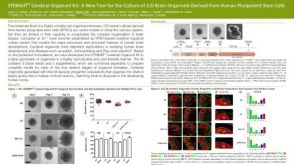 科学海报STEMdiff™ Cerebral Organoid Kit: A New Tool for the Culture of 3D Brain Organoids Derived from hPSCs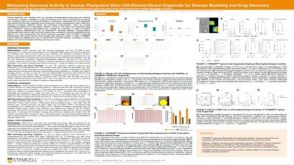

 沪公网安备31010102008431号