Pineda JR et al. (APR 2013)
EMBO Molecular Medicine 5 4 548--562
Vascular-derived TGF-β increases in the stem cell niche and perturbs neurogenesis during aging and following irradiation in the adult mouse brain
Neurogenesis decreases during aging and following cranial radiotherapy,causing a progressive cognitive decline that is currently untreatable. However,functional neural stem cells remained present in the subventricular zone of high dose-irradiated and aged mouse brains. We therefore investigated whether alterations in the neurogenic niches are perhaps responsible for the neurogenesis decline. This hypothesis was supported by the absence of proliferation of neural stem cells that were engrafted into the vascular niches of irradiated host brains. Moreover,we observed a marked increase in TGF-β1 production by endothelial cells in the stem cell niche in both middle-aged and irradiated mice. In co-cultures,irradiated brain endothelial cells induced the apoptosis of neural stem/progenitor cells via TGF-β/Smad3 signalling. Strikingly,the blockade of TGF-β signalling in vivo using a neutralizing antibody or the selective inhibitor SB-505124 significantly improved neurogenesis in aged and irradiated mice,prevented apoptosis and increased the proliferation of neural stem/progenitor cells. These findings suggest that anti-TGF-β-based therapy may be used for future interventions to prevent neurogenic collapse following radiotherapy or during aging.
View Publication
产品类型:
产品号#:
05700
05701
05702
产品名:
NeuroCult™ 基础培养基(小鼠和大鼠)
NeuroCult™ 扩增添加物(小鼠和大鼠)
NeuroCult™扩增试剂盒(小鼠和大鼠)
Chakrabarti L et al. (JAN 2012)
Frontiers in oncology 2 82
Reversible adaptive plasticity: a mechanism for neuroblastoma cell heterogeneity and chemo-resistance.
We describe a novel form of tumor cell plasticity characterized by reversible adaptive plasticity in murine and human neuroblastoma. Two cellular phenotypes were defined by their ability to exhibit adhered,anchorage dependent (AD) or sphere forming,anchorage independent (AI) growth. The tumor cells could transition back and forth between the two phenotypes and the transition was dependent on the culture conditions. Both cell phenotypes exhibited stem-like features such as expression of nestin,self-renewal capacity,and mesenchymal differentiation potential. The AI tumorspheres were found to be more resistant to chemotherapy and proliferated slower in vitro compared to the AD cells. Identification of specific molecular markers like MAP2,β-catenin,and PDGFRβ enabled us to characterize and observe both phenotypes in established mouse tumors. Irrespective of the phenotype originally implanted in mice,tumors grown in vivo show phenotypic heterogeneity in molecular marker signatures and are indistinguishable in growth or histologic appearance. Similar molecular marker heterogeneity was demonstrated in primary human tumor specimens. Chemotherapy or growth factor receptor inhibition slowed tumor growth in mice and promoted initial loss of AD or AI heterogeneity,respectively. Simultaneous targeting of both phenotypes led to further tumor growth delay with emergence of new unique phenotypes. Our results demonstrate that neuroblastoma cells are plastic,dynamic,and may optimize their ability to survive by changing their phenotype. Phenotypic switching appears to be an adaptive mechanism to unfavorable selection pressure and could explain the phenotypic and functional heterogeneity of neuroblastoma.
View Publication
产品类型:
产品号#:
05700
05701
05702
产品名:
NeuroCult™ 基础培养基(小鼠和大鼠)
NeuroCult™ 扩增添加物(小鼠和大鼠)
NeuroCult™扩增试剂盒(小鼠和大鼠)
Di Cristofori A et al. (JUL 2015)
Oncotarget 6 19 17514--31
The vacuolar H+ ATPase is a novel therapeutic target for glioblastoma.
The vacuolar H+ ATPase (V-ATPase) is a proton pump responsible for acidification of cellular microenvironments,an activity exploited by tumors to survive,proliferate and resist to therapy. Despite few observations,the role of V-ATPase in human tumorigenesis remains unclear.We investigated the expression of ATP6V0C,ATP6V0A2,encoding two subunits belonging to the V-ATPase V0 sector and ATP6V1C,ATP6V1G1,ATPT6V1G2,ATP6V1G3,which are part of the V1 sector,in series of adult gliomas and in cancer stem cell-enriched neurospheres isolated from glioblastoma (GBM) patients. ATP6V1G1 expression resulted significantly upregulated in tissues of patients with GBM and correlated with shorter patients' overall survival independent of clinical variables.ATP6V1G1 knockdown in GBM neurospheres hampered sphere-forming ability,induced cell death,and decreased matrix invasion,a phenotype not observed in GBM monolayer cultures. Treating GBM organotypic cultures or neurospheres with the selective V-ATPase inhibitor bafilomycin A1 reproduced the effects of ATP6V1G1 siRNA and strongly suppressed expression of the stem cell markers Nestin,CD133 and transcription factors SALL2 and POU3F2 in neurospheres.These data point to ATP6V1G1 as a novel marker of poor prognosis in GBM patients and identify V-ATPase inhibition as an innovative therapeutic strategy for GBM.
View Publication
产品类型:
产品号#:
05750
05751
产品名:
NeuroCult™ NS-A 基础培养基(人)
NeuroCult™ NS-A 扩增试剂盒(人)
Villa GR et al. (NOV 2016)
Cancer cell 30 5 683--693
An LXR-Cholesterol Axis Creates a Metabolic Co-Dependency for Brain Cancers.
Small-molecule inhibitors targeting growth factor receptors have failed to show efficacy for brain cancers,potentially due to their inability to achieve sufficient drug levels in the CNS. Targeting non-oncogene tumor co-dependencies provides an alternative approach,particularly if drugs with high brain penetration can be identified. Here we demonstrate that the highly lethal brain cancer glioblastoma (GBM) is remarkably dependent on cholesterol for survival,rendering these tumors sensitive to Liver X receptor (LXR) agonist-dependent cell death. We show that LXR-623,a clinically viable,highly brain-penetrant LXRα-partial/LXRβ-full agonist selectively kills GBM cells in an LXRβ- and cholesterol-dependent fashion,causing tumor regression and prolonged survival in mouse models. Thus,a metabolic co-dependency provides a pharmacological means to kill growth factor-activated cancers in the CNS.
View Publication
产品类型:
产品号#:
05750
05751
产品名:
NeuroCult™ NS-A 基础培养基(人)
NeuroCult™ NS-A 扩增试剂盒(人)
An MC et al. ( 2014)
PLoS currents 6 1--19
Polyglutamine Disease Modeling: Epitope Based Screen for Homologous Recombination using CRISPR/Cas9 System.
We have previously reported the genetic correction of Huntington's disease (HD) patient-derived induced pluripotent stem cells using traditional homologous recombination (HR) approaches. To extend this work,we have adopted a CRISPR-based genome editing approach to improve the efficiency of recombination in order to generate allelic isogenic HD models in human cells. Incorporation of a rapid antibody-based screening approach to measure recombination provides a powerful method to determine relative efficiency of genome editing for modeling polyglutamine diseases or understanding factors that modulate CRISPR/Cas9 HR.
View Publication
Halvorson KG et al. ( 2015)
PloS one 10 3 e0118926
A high-throughput in vitro drug screen in a genetically engineered mouse model of diffuse intrinsic pontine glioma identifies BMS-754807 as a promising therapeutic agent.
Diffuse intrinsic pontine gliomas (DIPGs) represent a particularly lethal type of pediatric brain cancer with no effective therapeutic options. Our laboratory has previously reported the development of genetically engineered DIPG mouse models using the RCAS/tv-a system,including a model driven by PDGF-B,H3.3K27M,and p53 loss. These models can serve as a platform in which to test novel therapeutics prior to the initiation of human clinical trials. In this study,an in vitro high-throughput drug screen as part of the DIPG preclinical consortium using cell-lines derived from our DIPG models identified BMS-754807 as a drug of interest in DIPG. BMS-754807 is a potent and reversible small molecule multi-kinase inhibitor with many targets including IGF-1R,IR,MET,TRKA,TRKB,AURKA,AURKB. In vitro evaluation showed significant cytotoxic effects with an IC50 of 0.13 μM,significant inhibition of proliferation at a concentration of 1.5 μM,as well as inhibition of AKT activation. Interestingly,IGF-1R signaling was absent in serum-free cultures from the PDGF-B; H3.3K27M; p53 deficient model suggesting that the antitumor activity of BMS-754807 in this model is independent of IGF-1R. In vivo,systemic administration of BMS-754807 to DIPG-bearing mice did not prolong survival. Pharmacokinetic analysis demonstrated that tumor tissue drug concentrations of BMS-754807 were well below the identified IC50,suggesting that inadequate drug delivery may limit in vivo efficacy. In summary,an unbiased in vitro drug screen identified BMS-754807 as a potential therapeutic agent in DIPG,but BMS-754807 treatment in vivo by systemic delivery did not significantly prolong survival of DIPG-bearing mice.
View Publication
产品类型:
产品号#:
05700
产品名:
NeuroCult™ 基础培养基(小鼠和大鼠)
Su CTE et al. (FEB 2015)
Journal of visualized experiments : JoVE 96 1--9
An Optogenetic Approach for Assessing Formation of Neuronal Connections in a Co-culture System.
Here we describe a protocol to generate a co-culture consisting of 2 different neuronal populations. Induced pluripotent stem cells (iPSCs) are reprogrammed from human fibroblasts using episomal vectors. Colonies of iPSCs can be observed 30 days after initiation of fibroblast reprogramming. Pluripotent colonies are manually picked and grown in neural induction medium to permit differentiation into neural progenitor cells (NPCs). iPSCs rapidly convert into neuroepithelial cells within 1 week and retain the capability to self-renew when maintained at a high culture density. Primary mouse NPCs are differentiated into astrocytes by exposure to a serum-containing medium for 7 days and form a monolayer upon which embryonic day 18 (E18) rat cortical neurons (transfected with channelrhodopsin-2 (ChR2)) are added. Human NPCs tagged with the fluorescent protein,tandem dimer Tomato (tdTomato),are then seeded onto the astrocyte/cortical neuron culture the following day and allowed to differentiate for 28 to 35 days. We demonstrate that this system forms synaptic connections between iPSC-derived neurons and cortical neurons,evident from an increase in the frequency of synaptic currents upon photostimulation of the cortical neurons. This co-culture system provides a novel platform for evaluating the ability of iPSC-derived neurons to create synaptic connections with other neuronal populations.
View Publication


 EasySep™小鼠TIL(CD45)正选试剂盒




 30:53
线上讲座Highly Characterized Human iPSCs and NPCs for Downstream Differentiation Applications发布日期: 07/19/2023
30:53
线上讲座Highly Characterized Human iPSCs and NPCs for Downstream Differentiation Applications发布日期: 07/19/2023
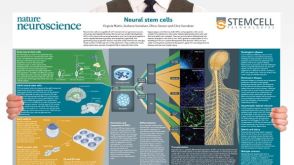 挂图Neural Stem Cells Overview of the types of NSCs and their potential use as therapeutic agents for disease

 沪公网安备31010102008431号