Liu S and Wicha MS (SEP 2010)
Journal of clinical oncology : official journal of the American Society of Clinical Oncology 28 25 4006--12
Targeting breast cancer stem cells.
There is increasing evidence that many cancers,including breast cancer,contain populations of cells that display stem-cell properties. These breast cancer stem cells,by virtue of their relative resistance to radiation and cytotoxic chemotherapy,may contribute to treatment resistance and relapse. The elucidation of pathways that regulate these cells has led to the identification of potential therapeutic targets. A number of agents capable of targeting breast cancer stem cells in preclinical models are currently entering clinical trials. Assessment of the efficacy of the agents will require development of innovative clinical trial designs with appropriate biologic and clinical end points. The effective targeting of breast cancer stem cells has the potential to significantly improve outcome for women with both early-stage and advanced breast cancer.
View Publication
Prince OA et al. (MAR 2018)
Cellular microbiology 20 3 e12810
Modelling persistent Mycoplasma pneumoniae infection of human airway epithelium.
Mycoplasma pneumoniae is a human respiratory tract pathogen causing acute and chronic airway disease states that can include long-term carriage and extrapulmonary spread. The mechanisms of persistence and migration beyond the conducting airways,however,remain poorly understood. We previously described an acute exposure model using normal human bronchial epithelium (NHBE) in air-liquid interface culture,showing that M. pneumoniae gliding motility is essential for initial colonisation and subsequent spread,including localisation to epithelial cell junctions. We extended those observations here,characterizing M. pneumoniae infection of NHBE for up to 4 weeks. Colonisation of the apical surface was followed by pericellular invasion of the basolateral compartment and migration across the underlying transwell membrane. Despite fluctuations in transepithelial electrical resistance and increased NHBE cell desquamation,barrier function remained largely intact. Desquamation was accompanied by epithelial remodelling that included cytoskeletal reorganisation and development of deep furrows in the epithelium. Finally,M. pneumoniae strains S1 and M129 differed with respect to invasion and histopathology,consistent with contrasting virulence in experimentally infected mice. In summary,this study reports pericellular invasion,NHBE cytoskeletal reorganisation,and tissue remodelling with persistent infection in a human airway epithelium model,providing clear insight into the likely route for extrapulmonary spread.
View Publication
Lindvall C et al. (NOV 2006)
The Journal of biological chemistry 281 46 35081--7
The Wnt signaling receptor Lrp5 is required for mammary ductal stem cell activity and Wnt1-induced tumorigenesis.
Canonical Wnt signaling has emerged as a critical regulatory pathway for stem cells. The association between ectopic activation of Wnt signaling and many different types of human cancer suggests that Wnt ligands can initiate tumor formation through altered regulation of stem cell populations. Here we have shown that mice deficient for the Wnt co-receptor Lrp5 are resistant to Wnt1-induced mammary tumors,which have been shown to be derived from the mammary stem/progenitor cell population. These mice exhibit a profound delay in tumorigenesis that is associated with reduced Wnt1-induced accumulation of mammary progenitor cells. In addition to the tumor resistance phenotype,loss of Lrp5 delays normal mammary development. The ductal trees of 5-week-old Lrp5-/- females have fewer terminal end buds,which are structures critical for juvenile ductal extension presumed to be rich in stem/progenitor cells. Consequently,the mature ductal tree is hypomorphic and does not completely fill the fat pad. Furthermore,Lrp5-/- ductal cells from mature females exhibit little to no stem cell activity in limiting dilution transplants. Finally,we have shown that Lrp5-/- embryos exhibit substantially impaired canonical Wnt signaling in the primitive stem cell compartment of the mammary placodes. These findings suggest that Lrp5-mediated canonical signaling is required for mammary ductal stem cell activity and for tumor development in response to oncogenic Wnt effectors.
View Publication
Yu C et al. ( )
In vivo (Athens,Greece) 25 1 69--76
ALDH activity indicates increased tumorigenic cells, but not cancer stem cells, in prostate cancer cell lines.
BACKGROUND: Cancer stem cells (CSCs) have been shown to be a small stem cell-like cell population which appears to drive tumorigenesis,tumor recurrence and metastasis. Thus,identification and characterization of CSCs may be critical to defining effective anticancer therapies. In prostate cancer (PCa),the CD44(+) cell population appears to have stem cell-like properties including being tumorigenic. The enzyme aldehyde dehydrogenase (ALDH) has been found to identify hematopoietic stem cells and our aim was to determine the utility of ALDH activity and CD44 in identifying PCa stem cell-like cells in PCa cell lines. MATERIALS AND METHODS: LNCaP cells and PC-3 cells were sorted based on their expression of CD44 and ALDH activity. The cell populations were investigated using colony-forming assays,invasion assays,sphere formation experiments in a non-adherent environment and 3-D Matrigel matrix culture to observe the in vitro stem-cell like properties. Different sorted cell populations were injected subcutaneously into NOD/SCID mice to determine the corresponding tumorigenic capacities. RESULTS: ALDH(hi) CD44(+) cells exhibit a higher proliferative,clonogenic and metastatic capacity in vitro and demonstrate higher tumorigenicity capacity in vivo than did ALDH(lo) CD44(-) cells. The tumors recapitulated the population of the original cell line. However,ALDHlo CD44(-) cells were able to develop tumors,albeit with longer latency periods. CONCLUSION: ALDH activity and CD44 do not appear to identify PCa stem cells; however,they do indicate increased tumorigenic and metastatic potential,indicating their potential importance for further exploration.
View Publication
产品类型:
产品号#:
01700
01705
01702
产品名:
ALDEFLUOR™ 试剂盒
ALDEFLUOR™ DEAB试剂, 1.5 mM, 1 mL
ALDEFLUOR™检测缓冲液
Liu C et al. (MAY 2012)
Molecular biology reports 39 5 5875--81
Co-expression of Oct-4 and Nestin in human breast cancers.
The aim is to investigate the clinical implications of the Oct-4 and Nestin protein in human breast cancers. A total of 346 cases including 26 fresh and 320 paraffin-embedded tumor tissues were selected for characterizing the frequency of CD44(+)CD24(-) tumor cells by flow cytometry and the differential expression of the stem cell-related genes between CD44(+)CD24(-) and non-CD44(+)CD24(-) tumor cells was analyzed by PCR Array and immunofluorescence. In comparison with the non-CD44(+)CD24(-) tumor cells,the CD44(+)CD24(-),particularly for those with high percentage of Oct-4(+) and Nestin(+),tumor cells had higher tumorigenicity by forming mammospheres in vitro. More importantly,42 (13.125%) out of 320 tumor tissues were positive for Oct-4 and Nestin staining. Universal analysis and multivariate analysis revealed that the expression of Oct-4 and Nestin was associated significantly with younger age,pathogenic degrees,lymph node metastasis and triple-negative breast cancer independently (P textless 0.05) as well as shorter survival (P = 0.001). Oct-4 and Nestin were important regulators of the development of breast cancer,and Oct-4 and Nestin may be used as predictors for the prognosis of breast cancers.
View Publication
De Giorgi U et al. (MAY 2011)
Cancer biology & therapy 11 9 812--5
Mesenchymal stem cells expressing GD2 and CD271 correlate with breast cancer-initiating cells in bone marrow.
Purpose: The bone marrow microenvironment is considered a critical component in the dissemination and fate of cancer cells in the metastatic process. We explored the possible correlation between bone marrow mesenchymal stem cells (BM-MSC) and disseminated breast cancer-initiating cells (BCIC) in primary breast cancer patients. Experimental design: Bone marrow mononuclear cells (BM-MNC) were collected at the time of primary surgery in 12 breast cancer patients. BM-MNC was immunophenotyped and BCIC was defined as epithelial cells (CD326+CD45-) with a stem-like" phenotype (CD44+CD24low/-�
View Publication


 EasySep™小鼠TIL(CD45)正选试剂盒





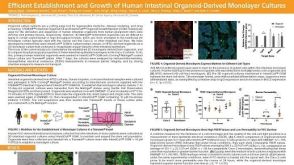 科学海报Efficient Establishment and Growth of Human Intestinal Organoid-Derived Monolayers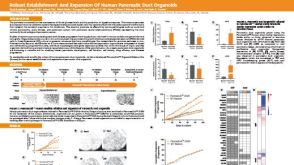
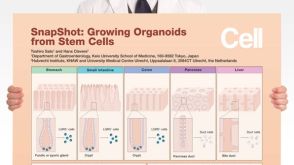 挂图SnapShot: Growing Organoids from Stem Cells Key culture conditions and organoid-forming cells from a variety of epithelial tissues


 沪公网安备31010102008431号