Wang H et al. (JAN 2012)
Journal of translational medicine 10 1 167
Oncolytic vaccinia virus GLV-1h68 strain shows enhanced replication in human breast cancer stem-like cells in comparison to breast cancer cells.
BACKGROUND: Recent data suggest that cancer stem cells (CSCs) play an important role in cancer,as these cells possess enhanced tumor-forming capabilities and are responsible for relapses after apparently curative therapies have been undertaken. Hence,novel cancer therapies will be needed to test for both tumor regression and CSC targeting. The use of oncolytic vaccinia virus (VACV) represents an attractive anti-tumor approach and is currently under evaluation in clinical trials. The purpose of this study was to demonstrate whether VACV does kill CSCs that are resistant to irradiation and chemotherapy. METHODS: Cancer stem-like cells were identified and separated from the human breast cancer cell line GI-101A by virtue of increased aldehyde dehydrogenase 1 (ALDH1) activity as assessed by the ALDEFLUOR assay and cancer stem cell-like features such as chemo-resistance,irradiation-resistance and tumor-initiating were confirmed in cell culture and in animal models. VACV treatments were applied to both ALDEFLUOR-positive cells in cell culture and in xenograft tumors derived from these cells. Moreover,we identified and isolated CD44(+)CD24(+)ESA(+) cells from GI-101A upon an epithelial-mesenchymal transition (EMT). These cells were similarly characterized both in cell culture and in animal models. RESULTS: We demonstrated for the first time that the oncolytic VACV GLV-1h68 strain replicated more efficiently in cells with higher ALDH1 activity that possessed stem cell-like features than in cells with lower ALDH1 activity. GLV-1h68 selectively colonized and eventually eradicated xenograft tumors originating from cells with higher ALDH1 activity. Furthermore,GLV-1h68 also showed preferential replication in CD44(+)CD24(+)ESA(+) cells derived from GI-101A upon an EMT induction as well as in xenograft tumors originating from these cells that were more tumorigenic than CD44(+)CD24(-)ESA(+) cells. CONCLUSIONS: Taken together,our findings indicate that GLV-1h68 efficiently replicates and kills cancer stem-like cells. Thus,GLV-1h68 may become a promising agent for eradicating both primary and metastatic tumors,especially tumors harboring cancer stem-like cells that are resistant to chemo and/or radiotherapy and may be responsible for recurrence of tumors.
View Publication
产品类型:
产品号#:
01700
01705
05620
01702
产品名:
ALDEFLUOR™ 试剂盒
ALDEFLUOR™ DEAB试剂, 1.5 mM, 1 mL
MammoCult™ 人源培养基套装
ALDEFLUOR™检测缓冲液
Stingl J et al. (MAY 2001)
Breast cancer research and treatment 67 2 93--109
Characterization of bipotent mammary epithelial progenitor cells in normal adult human breast tissue.
The purpose of the present study was to characterize primitive epithelial progenitor populations present in adult normal human mammary tissue using a combination of flow cytometry and in vitro colony assay procedures. Three types of human breast epithelial cell (HBEC) progenitors were identified: luminal-restricted,myoepithelial-restricted and bipotent progenitors. The first type expressed epithelial cell adhesion molecule (EpCAM),alpha6 integrin and MUC1 and generated colonies composed exclusively of cells positive for the luminal-associated markers keratin 8/18,keratin 19,EpCAM and MUC1. Bipotent progenitors produced colonies containing a central core of cells expressing luminal markers surrounded by keratin 14+ myoepithelial-like cells. Single cell cultures confirmed the bipotentiality of these progenitors. Their high expression of alpha6 integrin and low expression of MUC1 suggests a basal position of these cells in the mammary epithelium in vivo. Serial passage in vitro of an enriched population of bipotent progenitors demonstrated that only myoepithelial-restricted progenitors could be readily generated under the culture conditions used. These results support a hierarchical branching model of HBEC progenitor differentiation from a primitive uncommitted cell to luminal- and myoepithelial-restricted progenitors.
View Publication
产品类型:
产品号#:
01700
01705
05601
05610
01420
01421
01702
产品名:
ALDEFLUOR™ 试剂盒
ALDEFLUOR™ DEAB试剂, 1.5 mM, 1 mL
EpiCult™-B 人培养基
EpiCult™-B 小鼠培养基
ALDEFLUOR™检测缓冲液
Solleti SK et al. ( 2017)
Scientific Reports 7 1 1--10
MicroRNA expression profiling defines the impact of electronic cigarettes on human airway epithelial cells
While all forms of tobacco exposure have negative health effects,the significance of exposure to electronic cigarettes (eCig) is not fully understood. Here,we studied the global effects of eCig on the micro RNA (miRNA) transcriptome in human lung epithelial cells. Primary human bronchial epithelial (NHBE) cells differentiated at air-liquid interface were exposed to eCig liquid. Exposure of NHBE to any eCig liquid resulted in the induction of oxidative stress-response genes including GCLM,GCLC,GPX2,NQO1 and HO-1. Vaporization of,and/or the presence of nicotine in,eCig liquid was associated with a greater response. We identified 578 miRNAs dysregulated by eCig exposure in NHBE,and 125 miRNA affected by vaporization of eCig liquid. Nicotine containing eCig vapor displayed the most profound effects upon miRNA expression. We selected 8 miRNAs (29A,140,126,374A,26A-2,147B,941 and 589) for further study. We validated increased expression of multiple miRNAs,including miR126,following eCig exposure. We also found significant reduction in the expression of two miR126 target genes,MYC and MRGPRX3,following exposure. These data demonstrated that eCig exposure has profound effects upon gene expression in human lung epithelial cells,some of which are epigenetically programmed at the level of miRNA regulation.
View Publication
产品类型:
产品号#:
05001
05021
05022
产品名:
PneumaCult™-ALI 培养基
PneumaCult™-ALI 培养基含12 mm Transwell®插件
PneumaCult™-ALI 培养基含6.5 mm Transwell®插件
Croker AK et al. (AUG 2009)
Journal of cellular and molecular medicine 13 8B 2236--52
High aldehyde dehydrogenase and expression of cancer stem cell markers selects for breast cancer cells with enhanced malignant and metastatic ability.
Cancer stem cells (CSCs) have recently been identified in leukaemia and solid tumours; however,the role of CSCs in metastasis remains poorly understood. This dearth of knowledge about CSCs and metastasis is due largely to technical challenges associated with the use of primary human cancer cells in pre-clinical models of metastasis. Therefore,the objective of this study was to develop suitable pre-clinical model systems for studying stem-like cells in breast cancer metastasis,and to test the hypothesis that stem-like cells play a key role in metastatic behaviour. We assessed four different human breast cancer cell lines (MDA-MB-435,MDA-MB-231,MDA-MB-468,MCF-7) for expression of prospective CSC markers CD44/CD24 and CD133,and for functional activity of aldehyde dehydrogenase (ALDH),an enzyme involved in stem cell self-protection. We then used fluorescence-activated cell sorting and functional assays to characterize differences in malignant/metastatic behaviour in vitro (proliferation,colony-forming ability,adhesion,migration,invasion) and in vivo (tumorigenicity and metastasis). Sub-populations of cells demonstrating stem-cell-like characteristics (high expression of CSC markers and/or high ALDH) were identified in all cell lines except MCF-7. When isolated and compared to ALDH(low)CD44(low/-) cells,ALDH(hi)CD44(+)CD24(-) (MDA-MB-231) and ALDH(hi)CD44(+)CD133(+) (MDA-MB-468) cells demonstrated increased growth (P textless 0.05),colony formation (P textless 0.05),adhesion (P textless 0.001),migration (P textless 0.001) and invasion (P textless 0.001). Furthermore,following tail vein or mammary fat pad injection of NOD/SCID/IL2gamma receptor null mice,ALDH(hi)CD44(+)CD24(-) and ALDH(hi)CD44(+)CD133(+) cells showed enhanced tumorigenicity and metastasis relative to ALDH(low)CD44(low/-) cells (P textless 0.05). These novel results suggest that stem-like ALDH(hi)CD44(+)CD24(-) and ALDH(hi)CD44(+)CD133(+) cells may be important mediators of breast cancer metastasis.
View Publication
产品类型:
产品号#:
01700
01705
01702
产品名:
ALDEFLUOR™ 试剂盒
ALDEFLUOR™ DEAB试剂, 1.5 mM, 1 mL
ALDEFLUOR™检测缓冲液
Kumar A et al. (JAN 2012)
Breast cancer research : BCR 14 1 R4
Evidence that GTP-binding domain but not catalytic domain of transglutaminase 2 is essential for epithelial-to-mesenchymal transition in mammary epithelial cells.
INTRODUCTION: The expression of proinflammatory protein tissue transglutaminase 2 (TG2) is frequently upregulated in multiple cancer cell types. However,the exact role of TG2 in cancer cells is not well-understood. We recently initiated studies to determine the significance of TG2 in cancer cells and observed that sustained expression of TG2 resulted in epithelial-to-mesenchymal transition (EMT) and promoted cancer stem cell (CSC) traits in mammary epithelial cells. These results suggested that TG2 could serve as a promising therapeutic target for overcoming chemoresistance and inhibiting metastatic spread of cancer cells. METHODS: Using various mutant constructs,we analyzed the activity of TG2 that is essential for promoting the EMT-CSC phenotype. RESULTS: Our results suggest that catalytically inactive TG2 (TG2-C277S) is as effective as wild-type TG2 (TG2-WT) in inducing the EMT-CSC in mammary epithelial cells. In contrast,overexpression of a GTP-binding-deficient mutant (TG2-R580A) was completely incompetent in this regard. Moreover,TG2-dependent activation of the proinflammatory transcription factor NF-κB is deemed essential for promoting the EMT-CSC phenotype in mammary epithelial cells. CONCLUSIONS: Our results suggest that the transamidation activity of TG2 is not essential for promoting its oncogenic functions and provide a strong rationale for developing small-molecule inhibitors to block GTP-binding pockets of TG2. Such inhibitors may have great potential for inhibiting the TG2-regulated pathways,reversing drug resistance and inhibiting the metastasis of cancer cells.
View Publication
Jeselsohn R et al. (JAN 2010)
Cancer cell 17 1 65--76
Cyclin D1 kinase activity is required for the self-renewal of mammary stem and progenitor cells that are targets of MMTV-ErbB2 tumorigenesis.
Transplantation studies have demonstrated the existence of mammary progenitor cells with the ability to self-renew and regenerate a functional mammary gland. Although these progenitors are the likely targets for oncogenic transformation,correlating progenitor populations with certain oncogenic stimuli has been difficult. Cyclin D1 is required for lobuloalveolar development during pregnancy and lactation as well as MMTV-ErbB2- but not MMTV-Wnt1-mediated tumorigenesis. Using a kinase-deficient cyclin D1 mouse,we identified two functional mammary progenitor cell populations,one of which is the target of MMTV-ErbB2. Moreover,cyclin D1 activity is required for the self-renewal and differentiation of mammary progenitors because its abrogation leads to a failure to maintain the mammary epithelial regenerative potential and also results in defects in luminal lineage differentiation.
View Publication
Efficient Derivation of Functional Human Airway Epithelium from Pluripotent Stem Cells via Temporal Regulation of Wnt Signaling.
Effective derivation of functional airway organoids from induced pluripotent stem cells (iPSCs) would provide valuable models of lung disease and facilitate precision therapies for airway disorders such as cystic fibrosis. However,limited understanding of human airway patterning has made this goal challenging. Here,we show that cyclical modulation of the canonical Wnt signaling pathway enables rapid directed differentiation of human iPSCs via an NKX2-1+progenitor intermediate into functional proximal airway organoids. We find that human NKX2-1+progenitors have high levels of Wnt activation but respond intrinsically to decreases in Wnt signaling by rapidly patterning into proximal airway lineages at the expense of distal fates. Using this directed approach,we were able to generate cystic fibrosis patient-specific iPSC-derived airway organoids with a defect in forskolin-induced swelling that is rescued by gene editing to correct the disease mutation. Our approach has many potential applications in modeling and drug screening for airway diseases.
View Publication
Allan AL et al. (MAY 2005)
Cytometry. Part A : the journal of the International Society for Analytical Cytology 65 1 4--14
Detection and quantification of circulating tumor cells in mouse models of human breast cancer using immunomagnetic enrichment and multiparameter flow cytometry.
BACKGROUND: Circulating tumor cells (CTCs) in the peripheral blood of breast cancer patients may be an important indicator of metastatic disease and poor prognosis. However,the use of experimental models is required to fully elucidate the functional consequences of CTCs. The purpose of this study was to optimize the sensitivity of multiparameter flow cytometry for detection of human tumor cells in mouse models of breast cancer. METHODS: MDA-MB-468 human breast cancer cells were serially diluted in whole mouse blood. Samples were lysed and incubated with a fluorescein isothiocyanate-conjugated anti-human leukocytic antigen antibody and a phycoerythrin-conjugated anti-mouse pan-leukocyte CD45 antibody. Samples were then immunomagnetically depleted of CD45-positive leukocytes,fixed,permeabilized,and stained with propidium iodide before flow cytometric analysis. RESULTS: Human breast cancer cells could be differentiated from mouse leukocytes based on increased light scatter,cell surface marker expression,and aneuploid DNA content. The method was found to have a lower sensitivity limit of 10(-5) and was effective for detecting human breast cancer cells in vivo in the circulation of experimental mice carrying primary human mammary tumors. CONCLUSIONS: This technique has the potential to be a valuable and sensitive tool for investigating the biological relevance of CTCs in experimental mouse models of breast cancer.
View Publication


 EasySep™小鼠TIL(CD45)正选试剂盒





 科学海报A Human Pluripotent Stem Cell-Derived Organoid Model for Recapitulation of Central Nervous System (CNS) Barrier and Fluid Secretion Functions of the Choroid Plexus
 科学海报PneumaCult™-Ex Plus, a Novel Defined and Feeder-Free Medium, Supports the Improved Expansion of Primary Human Airway Epithelial Cells
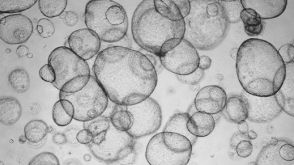 实验方案How to Perform Albumin Detection Assays in Human Hepatic Organoids
 科学海报Robust Establishment and Expansion of Multilineage Human Fallopian Tube Organoids in Serum-Free Medium
 沪公网安备31010102008431号