Eden JA (JUL 2010)
Menopause (New York,N.Y.) 17 4 801--10
Human breast cancer stem cells and sex hormones--a narrative review.
OBJECTIVE: The aim of this narrative review was to evaluate the role of cancer stem cells (CSCs) and sex steroids in the pathophysiology of human breast cancer. METHODS: A key-word search was performed using the Scopus database. Preference was given to studies using human cells and tissues. RESULTS: Long-term estrogen-progestin hormone therapy is known to increase breast cancer risk,although the mechanisms are poorly understood. In the last few years,it has become clear that many human breast cancers contain CSCs,which may be responsible for much of the tumor's malignant behavior. Very recently,the impact of estrogen,progesterone,and progestins on breast CSCs and their progeny has been studied and clarified. Most breast CSCs are estrogen receptor negative and progesterone receptor negative,although some intermediary progenitor forms have hormone receptors,especially progesterone receptor. Most mature human breast cancer cellsare estrogen receptor positive and can thus be stimulated by estrogen. Breast CSCs usually elaborate CD44+,CD24j/low and/or ALDEFLUOR+ cell markers and are lineage markers negative. One of the main roles of progesterone and progestin seems to be on certain breast cancer stem intermediate forms,inducing them to revert back to a more primitive breast CSC form. CONCLUSIONS: As the pathophysiology of human breast CSC is clarified,it is probable that this will lead to novel,effective breast cancer treatments and,perhaps,new breast cancer preventive agents. This research may also lead to safer hormone therapy regimens.
View Publication
Gazdhar A et al. ( 2017)
Frontiers in immunology 8 April 447
Human Bronchial Epithelial Cells Induce CD141/CD123/DC-SIGN/FLT3Monocytes That Promote Allogeneic Th17 Differentiation.
Little is known about monocyte differentiation in the lung mucosal environment and about how the epithelium shapes monocyte function. We studied the role of the soluble component of bronchial epithelial cells (BECs) obtained under basal culture conditions in innate and adaptive monocyte responses. Monocytes cultured in bronchial epithelial cell-conditioned media (BEC-CM) specifically upregulate CD141,CD123,and DC-SIGN surface levels andFLT3expression,as well as the release of IL-1β,IL-6,and IL-10. BEC-conditioned monocytes stimulate naive T cells to produce IL-17 through IL-1β mechanism and also trigger IL-10 production by memory T cells. Furthermore,monocytes cultured in an inflammatory environment induced by the cytokines IL-6,IL-8,IL-1β,IL-15,TNF-α,and GM-CSF also upregulate CD123 and DC-SIGN expression. However,only inflammatory cytokines in the epithelial environment boost the expression of CD141. Interestingly,we identified a CD141/CD123/DC-SIGN triple positive population in the bronchoalveolar lavage fluid (BALF) from patients with different inflammatory conditions,demonstrating that this monocyte population existsin vivo. The frequency of this monocyte population was significantly increased in patients with sarcoidosis,suggesting a role in inflammatory mechanisms. Overall,these data highlight the specific role that the epithelium plays in shaping monocyte responses. Therefore,the unraveling of these mechanisms contributes to the understanding of the function that the epithelium may playin vivo.
View Publication
产品类型:
产品号#:
05001
05021
05022
产品名:
PneumaCult™-ALI 培养基
PneumaCult™-ALI 培养基含12 mm Transwell®插件
PneumaCult™-ALI 培养基含6.5 mm Transwell®插件
Gilpin SE et al. ( 2016)
Biomaterials 108 111--119
Regenerative potential of human airway stem cells in lung epithelial engineering
Bio-engineered organs for transplantation may ultimately provide a personalized solution for end-stage organ failure,without the risk of rejection. Building upon the process of whole organ perfusion decellularization,we aimed to develop novel,translational methods for the recellularization and regeneration of transplantable lung constructs. We first isolated a proliferative KRT5+TP63+ basal epithelial stem cell population from human lung tissue and demonstrated expansion capacity in conventional 2D culture. We then repopulated acellular rat scaffolds in ex vivo whole organ culture and observed continued cell proliferation,in combination with primary pulmonary endothelial cells. To show clinical scalability,and to test the regenerative capacity of the basal cell population in a human context,we then recellularized and cultured isolated human lung scaffolds under biomimetic conditions. Analysis of the regenerated tissue constructs confirmed cell viability and sustained metabolic activity over 7 days of culture. Tissue analysis revealed extensive recellularization with organized tissue architecture and morphology,and preserved basal epithelial cell phenotype. The recellularized lung constructs displayed dynamic compliance and rudimentary gas exchange capacity. Our results underline the regenerative potential of patient-derived human airway stem cells in lung tissue engineering. We anticipate these advances to have clinically relevant implications for whole lung bioengineering and ex vivo organ repair.
View Publication
产品类型:
产品号#:
05001
05021
05022
产品名:
PneumaCult™-ALI 培养基
PneumaCult™-ALI 培养基含12 mm Transwell®插件
PneumaCult™-ALI 培养基含6.5 mm Transwell®插件
Zhao X et al. (AUG 2010)
Proceedings of the National Academy of Sciences of the United States of America 107 32 14146--51
Telomerase-immortalized human mammary stem/progenitor cells with ability to self-renew and differentiate.
There is increasing evidence that breast and other cancers originate from and are maintained by a small fraction of stem/progenitor cells with self-renewal properties. Whether such cancer stem/progenitor cells originate from normal stem cells based on initiation of a de novo stem cell program,by reprogramming of a more differentiated cell type by oncogenic insults,or both remains unresolved. A major hurdle in addressing these issues is lack of immortal human stem/progenitor cells that can be deliberately manipulated in vitro. We present evidence that normal and human telomerase reverse transcriptase (hTERT)-immortalized human mammary epithelial cells (hMECs) isolated and maintained in Dana-Farber Cancer Institute 1 (DFCI-1) medium retain a fraction with progenitor cell properties. These cells coexpress basal (K5,K14,and vimentin),luminal (E-cadherin,K8,K18,or K19),and stem/progenitor (CD49f,CD29,CD44,and p63) cell markers. Clonal derivatives of progenitors coexpressing these markers fall into two distinct types--a K5(+)/K19(-) type and a K5(+)/K19(+) type. We show that both types of progenitor cells have self-renewal and differentiation ability. Microarray analyses confirmed the differential expression of components of stem/progenitor-associated pathways,such as Notch,Wnt,Hedgehog,and LIF,in progenitor cells compared with differentiated cells. Given the emerging evidence that stem/progenitor cells serve as precursors for cancers,these cellular reagents represent a timely and invaluable resource to explore unresolved questions related to stem/progenitor origin of breast cancer.
View Publication
产品类型:
产品号#:
01700
01705
01702
产品名:
ALDEFLUOR™ 试剂盒
ALDEFLUOR™ DEAB试剂, 1.5 mM, 1 mL
ALDEFLUOR™检测缓冲液
Ma I and Allan AL (JUN 2011)
Stem cell reviews 7 2 292--306
The role of human aldehyde dehydrogenase in normal and cancer stem cells.
Normal stem cells and cancer stem cells (CSCs) share similar properties,in that both have the capacity to self-renew and differentiate into multiple cell types. In both the normal stem cell and cancer stem cell fields,there has been a great need for a universal marker that can effectively identify and isolate these rare populations of cells in order to characterize them and use this information for research and therapeutic purposes. Currently,it would appear that certain isoenzymes of the aldehyde dehydrogenase (ALDH) superfamily may be able to fulfill this role as a marker for both normal and cancer stem cells. ALDH has been identified as an important enzyme in the protection of normal hematopoietic stem cells,and is now also widely used as a marker to identify and isolate various types of normal stem cells and CSCs. In addition,emerging evidence suggests that ALDH1 is not only a marker for stem cells,but may also play important functional roles related to self-protection,differentiation,and expansion. This comprehensive review discusses the role that ALDH plays in normal stem cells and CSCs,with focus on ALDH1 and ALDH3A1. Discrepancies in the functional themes between cell types and future perspectives for therapeutic applications will also be discussed.
View Publication
产品类型:
产品号#:
01700
01705
01702
产品名:
ALDEFLUOR™ 试剂盒
ALDEFLUOR™ DEAB试剂, 1.5 mM, 1 mL
ALDEFLUOR™检测缓冲液
Li T et al. (FEB 2010)
Laboratory investigation; a journal of technical methods and pathology 90 2 234--44
ALDH1A1 is a marker for malignant prostate stem cells and predictor of prostate cancer patients' outcome.
Prostate cancer (PCa) contains a small population of cancer stem cells (CSCs) that contribute to its initiation and progression. The development of specific markers for identification of the CSCs may lead to new diagnostic strategies of PCa. Increased aldehyde dehydrogenase 1A1 (ALDH1A1) activity has been found in the stem cell populations of leukemia and some solid tumors. The aim of the study was to investigate the stem-cell-related function and clinical significance of the ALDH1A1 in human PCa. ALDEFLUOR assay was used to isolate ALDH1A1(+) cells from PCa cell lines. Stem cell characteristics of the ALDH1A1(+) cells were then investigated by in vitro and in vivo approaches. The ALDH1A1 expression was also analyzed by immunohistochemistry in 18 normal prostate and 163 PCa tissues. The ALDH1A1(+) PCa cells showed high clonogenic and tumorigenic capacities,and serially reinitiated transplantable tumors that resembled histopathologic characteristics and heterogeneity of the parental PCa cells in mice. Immunohistochemical analysis of human prostate tissues showed that ALDH1A1(+) cells were sparse and limited to the basal component in normal prostates. However,in tumor specimens,increased ALDH1A1 immunopositivity was found not only in secretory type cancer epithelial cells but also in neuroendocrine tumor populations. Furthermore,the high ALDH1A1 expression in PCa was positively correlated with Gleason score (P=0.01) and pathologic stage (P=0.01),and inversely associated with overall survival and cancer-specific survival of the patients (P=0.00093 and 0.00017,respectively). ALDH1A1 could be a prostate CSC-related marker. Measuring its expression might provide a potential approach to study tumorigenesis of PCa and predict outcome of the disease.
View Publication
产品类型:
产品号#:
01700
01705
01701
01702
产品名:
ALDEFLUOR™ 试剂盒
ALDEFLUOR™ DEAB试剂, 1.5 mM, 1 mL
ALDEFLUOR™检测缓冲液
Maestre-Batlle D et al. (FEB 2017)
Scientific reports 7 42214
Novel flow cytometry approach to identify bronchial epithelial cells from healthy human airways.
Sampling various compartments within the lower airways to examine human bronchial epithelial cells (HBEC) is essential for understanding numerous lung diseases. Conventional methods to identify HBEC in bronchoalveolar lavage (BAL) and wash (BW) have throughput limitations in terms of efficiency and ensuring adequate cell numbers for quantification. Flow cytometry can provide high-throughput quantification of cell number and function in BAL and BW samples,while requiring low cell numbers. To date,a flow cytometric method to identify HBEC recovered from lower human airway samples is unavailable. In this study we present a flow cytometric method identifying HBEC as CD45 negative,EpCAM/pan-cytokeratin (pan-CK) double-positive population after excluding debris,doublets and dead cells from the analysis. For validation,the HBEC panel was applied to primary HBEC resulting in 98.6% of live cells. In healthy volunteers,HBEC recovered from BAL (2.3% of live cells),BW (32.5%) and bronchial brushing samples (88.9%) correlated significantly (p = 0.0001) with the manual microscopy counts with an overall Pearson correlation of 0.96 across the three sample types. We therefore have developed,validated,and applied a flow cytometric method that will be useful to interrogate the role of the respiratory epithelium in multiple lung diseases.
View Publication


 EasySep™小鼠TIL(CD45)正选试剂盒




 实验方案How to Identify ALDH-Expressing Cells in Human Breast Tissue
 科学海报High-Throughput-Compatible Differentiation of Human Pluripotent Stem Cell Lines to Kidney Organoids for Nephrotoxic Drug Screening
 56:31
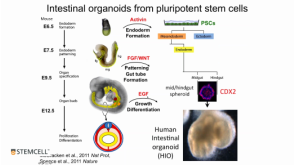
线上讲座Modeling Human Gastrointestinal Development and Disease Using Pluripotent Stem Cells发布日期: 03/06/2017
56:31
线上讲座Modeling Human Gastrointestinal Development and Disease Using Pluripotent Stem Cells发布日期: 03/06/2017 科学海报Highly Efficient Differentiation of Human Pluripotent Stem Cells into Long-term Expandable “Mini-gut” Organoids

 沪公网安备31010102008431号