Wu K et al. (JAN 2011)
The Journal of biological chemistry 286 3 2132--42
Cell fate determination factor Dachshund reprograms breast cancer stem cell function.
The cell fate determination factor Dachshund was cloned as a dominant inhibitor of the hyperactive epidermal growth factor receptor ellipse. The expression of Dachshund is lost in human breast cancer associated with poor prognosis. Breast tumor-initiating cells (TIC) may contribute to tumor progression and therapy resistance. Here,endogenous DACH1 was reduced in breast cancer cell lines with high expression of TIC markers and in patient samples of the basal breast cancer phenotype. Re-expression of DACH1 reduced new tumor formation in serial transplantations in vivo,reduced mammosphere formation,and reduced the proportion of CD44(high)/CD24(low) breast tumor cells. Conversely,lentiviral shRNA to DACH1 increased the breast (B)TIC population. Genome-wide expression studies of mammary tumors demonstrated DACH1 repressed a molecular signature associated with stem cells (SOX2,Nanog,and KLF4) and genome-wide ChIP-seq analysis identified DACH1 binding to the promoter of the Nanog,KLF4,and Lin28 genes. KLF4/c-Myc and Oct4/Sox2 antagonized DACH1 repression of BTIC. Mechanistic studies demonstrated DACH1 directly repressed the Nanog and Sox2 promoters via a conserved domain. Endogenous DACH1 regulates BTIC in vitro and in vivo.
View Publication
Murphy S et al. (APR 2010)
Current protocols in stem cell biology Chapter 1 Unit 1E.6
Amnion epithelial cell isolation and characterization for clinical use.
Human amnion epithelial cells (hAECs) are a heterologous population positive for stem cell markers; they display multilineage differentiation potential,differentiating into cells of the endoderm (liver,lung epithelium),mesoderm (bone,fat),and ectoderm (neural cells). They have a low immunogenic profile and possess potent immunosuppressive properties. Hence,hAECs may be a valuable source of cells for cell therapy. This unit describes an efficient and effective method of hAEC isolation,culture,and cryopreservation that is animal product-free and in accordance with current guidelines on preparation of cells for clinical use. Cells isolated using this method were characterized after 5 passages by analysis of karyotype,cell cycle distribution,and changes in telomere length. The differentiation potential of hAECs isolated using this animal product-free method was demonstrated by differentiation into lineages of the three primary germ layers and expression of lineage-specific markers analyzed by PCR,immunocytochemistry,and histology.
View Publication
产品类型:
产品号#:
07930
07931
07940
07955
07956
07959
07954
100-1061
07952
产品名:
CryoStor® CS10
CryoStor® CS10
CryoStor® CS10
CryoStor® CS10
CryoStor® CS10
CryoStor® CS10
CryoStor® CS10
C. Li et al. ( 2023)
Cellular and molecular gastroenterology and hepatology 15 931-947
Glycolytic Regulation of Intestinal Stem Cell Self-Renewal and Differentiation.
BACKGROUND AND AIMS The intestinal mucosa undergoes a continual process of proliferation,differentiation,and apoptosis. An imbalance in this highly regimented process within the intestinal crypts is associated with several intestinal pathologies. Although metabolic changes are known to play a pivotal role in cell proliferation and differentiation,how glycolysis contributes to intestinal epithelial homeostasis remains to be defined. METHODS Small intestines were harvested from mice with specific hexokinase 2 (HK2) deletion in the intestinal epithelium or LGR5+ stem cells. Glycolysis was measured using the Seahorse XFe96 analyzer. Expression of phospho-p38 mitogen-activated protein kinase,the transcription factor atonal homolog 1,and intestinal cell differentiation markers lysozyme,mucin 2,and chromogranin A were determined by Western blot,quantitative real-time reverse transcription polymerase chain reaction,or immunofluorescence,and immunohistochemistry staining. RESULTS HK2 is a target gene of Wnt signaling in intestinal epithelium. HK2 knockout or inhibition of glycolysis resulted in increased numbers of Paneth,goblet,and enteroendocrine cells and decreased intestinal stem cell self-renewal. Mechanistically,HK2 knockout resulted in activation of p38 mitogen-activated protein kinase and increased expression of ATOH1; inhibition of p38 mitogen-activated protein kinase signaling attenuated the phenotypes induced by HK2 knockout in intestinal organoids. HK2 knockout significantly decreased glycolysis and lactate production in intestinal organoids; supplementation of lactate or pyruvate reversed the phenotypes induced by HK2 knockout. CONCLUSIONS Our results show that HK2 regulates intestinal stem cell self-renewal and differentiation through p38 mitogen-activated protein kinase/atonal homolog 1 signaling pathway. Our findings demonstrate an essential role for glycolysis in maintenance of intestinal stem cell function.
View Publication
Ma S et al. (JUL 2008)
Molecular cancer research : MCR 6 7 1146--53
Aldehyde dehydrogenase discriminates the CD133 liver cancer stem cell populations.
Recent efforts in our study of cancer stem cells (CSC) in hepatocellular carcinoma (HCC) have led to the identification of CD133 as a prominent HCC CSC marker. Findings were based on experiments done on cell lines and xenograft tumors where expression of CD133 was detected at levels as high as 65%. Based on the CSC theory,CSCs are believed to represent only a minority number of the tumor mass. This is indicative that our previously characterized CD133(+) HCC CSC population is still heterogeneous,consisting of perhaps subsets of cells with differing tumorigenic potential. We hypothesized that it is possible to further enrich the CSC population by means of additional differentially expressed markers. Using a two-dimensional PAGE approach,we compared protein profiles between CD133(+) and CD133(-) subpopulations isolated from Huh7 and PLC8024 and identified aldehyde dehydrogenase 1A1 as one of the proteins that are preferentially expressed in the CD133(+) subfraction. Analysis of the expression of several different ALDH isoforms and ALDH enzymatic activity in liver cell lines found ALDH to be positively correlated with CD133 expression. Dual-color flow cytometry analysis found the majority of ALDH(+) to be CD133(+),yet not all CD133(+) HCC cells were ALDH(+). Subsequent studies on purified subpopulations found CD133(+)ALDH(+) cells to be significantly more tumorigenic than their CD133(-)ALDH(+) or CD133(-)ALDH(-) counterparts,both in vitro and in vivo. These data,combined with those from our previous work,reveal the existence of a hierarchical organization in HCC bearing tumorigenic potential in the order of CD133(+)ALDH(+) textgreater CD133(+)ALDH(-) textgreater CD133(-)ALDH(-). ALDH,expressed along CD133,can more specifically characterize the tumorigenic liver CSC population.
View Publication
产品类型:
产品号#:
01700
01705
01702
产品名:
ALDEFLUOR™ 试剂盒
ALDEFLUOR™ DEAB试剂, 1.5 mM, 1 mL
ALDEFLUOR™检测缓冲液
N. K. Lytle et al. ( 2019)
Cell 177 3 572--586.e22
A Multiscale Map of the Stem Cell State in Pancreatic Adenocarcinoma.
Drug resistance and relapse remain key challenges in pancreatic cancer. Here,we have used RNA sequencing (RNA-seq),chromatin immunoprecipitation (ChIP)-seq,and genome-wide CRISPR analysis to map the molecular dependencies of pancreatic cancer stem cells,highly therapy-resistant cells that preferentially drive tumorigenesis and progression. This integrated genomic approach revealed an unexpected utilization of immuno-regulatory signals by pancreatic cancer epithelial cells. In particular,the nuclear hormone receptor retinoic-acid-receptor-related orphan receptor gamma (ROR$\gamma$),known to drive inflammation and T cell differentiation,was upregulated during pancreatic cancer progression,and its genetic or pharmacologic inhibition led to a striking defect in pancreatic cancer growth and a marked improvement in survival. Further,a large-scale retrospective analysis in patients revealed that ROR$\gamma$ expression may predict pancreatic cancer aggressiveness,as it positively correlated with advanced disease and metastasis. Collectively,these data identify an orthogonal co-option of immuno-regulatory signals by pancreatic cancer stem cells,suggesting that autoimmune drugs should be evaluated as novel treatment strategies for pancreatic cancer patients.
View Publication
产品类型:
产品号#:
06040
产品名:
PancreaCult™类器官生长培养基(小鼠)
Shackleton M et al. (JAN 2006)
Nature 439 7072 84--8
Generation of a functional mammary gland from a single stem cell.
The existence of mammary stem cells (MaSCs) has been postulated from evidence that the mammary gland can be regenerated by transplantation of epithelial fragments in mice. Interest in MaSCs has been further stimulated by their potential role in breast tumorigenesis. However,the identity and purification of MaSCs has proved elusive owing to the lack of defined markers. We isolated discrete populations of mouse mammary cells on the basis of cell-surface markers and identified a subpopulation (Lin-CD29hiCD24+) that is highly enriched for MaSCs by transplantation. Here we show that a single cell,marked with a LacZ transgene,can reconstitute a complete mammary gland in vivo. The transplanted cell contributed to both the luminal and myoepithelial lineages and generated functional lobuloalveolar units during pregnancy. The self-renewing capacity of these cells was demonstrated by serial transplantation of clonal outgrowths. In support of a potential role for MaSCs in breast cancer,the stem-cell-enriched subpopulation was expanded in premalignant mammary tissue from MMTV-wnt-1 mice and contained a higher number of MaSCs. Our data establish that single cells within the Lin-CD29hiCD24+ population are multipotent and self-renewing,properties that define them as MaSCs.
View Publication
产品类型:
产品号#:
01700
01705
05601
05610
05620
01702
产品名:
ALDEFLUOR™ 试剂盒
ALDEFLUOR™ DEAB试剂, 1.5 mM, 1 mL
EpiCult™-B 人培养基
EpiCult™-B 小鼠培养基
MammoCult™ 人源培养基套装
ALDEFLUOR™检测缓冲液
Korkaya H et al. (OCT 2008)
Oncogene 27 47 6120--30
HER2 regulates the mammary stem/progenitor cell population driving tumorigenesis and invasion.
The cancer stem cell hypothesis proposes that cancers arise in stem/progenitor cells through disregulation of self-renewal pathways generating tumors,which are driven by a component of 'tumor-initiating cells' retaining stem cell properties. The HER2 gene is amplified in 20-30% of human breast cancers and has been implicated in mammary tumorigenesis as well as in mediating aggressive tumor growth and metastasis. We demonstrate that HER2 overexpression drives mammary carcinogenesis,tumor growth and invasion through its effects on normal and malignant mammary stem cells. HER2 overexpression in normal mammary epithelial cells (NMEC) increases the proportion of stem/progenitor cells as demonstrated by in vitro mammosphere assays and the expression of stem cell marker aldehyde dehydrogenase (ALDH) as well as by generation of hyperplastic lesions in humanized fat pads of NOD (nucleotide-binding oligomerization domain)/SCID (severe combined immunodeficient) mice. Overexpression of HER2 in a series of breast carcinoma cell lines increases the ALDH-expressing 'cancer stem cell' population which displays increased expression of stem cell regulatory genes,increased invasion in vitro and increased tumorigenesis in NOD/SCID mice. The effects of HER2 overexpression on breast cancer stem cells are blocked by trastuzumab in sensitive,but not resistant,cell lines,an effect mediated by the PI3-kinase/Akt pathway. These studies provide support for the cancer stem cell hypothesis by suggesting that the effects of HER2 amplification on carcinogenesis,tumorigenesis and invasion may be due to its effects on normal and malignant mammary stem/progenitor cells. Furthermore,the clinical efficacy of trastuzumab may relate to its ability to target the cancer stem cell population in HER2-amplified tumors.
View Publication
产品类型:
产品号#:
01700
01705
01702
产品名:
ALDEFLUOR™ 试剂盒
ALDEFLUOR™ DEAB试剂, 1.5 mM, 1 mL
ALDEFLUOR™检测缓冲液
Shirato K et al. ( 2017)
Virology November 0--1
Wild-type human coronaviruses prefer cell-surface TMPRSS2 to endosomal cathepsins for cell entry
Human coronaviruses (HCoVs) enter cells via two distinct pathways: the endosomal pathway using cathepsins to activate spike protein and the cell-surface or early endosome pathway using extracellular proteases such as transmembrane protease serine 2 (TMPRSS2). We previously reported that clinical isolates of HCoV-229E preferred cell-surface TMPRSS2 to endosomal cathepsin for cell entry,and that they acquired the ability to use cathepsin L by repeated passage in cultured cells and were then able to enter cells via the endosomal pathway. Here,we show that clinical isolates of HCoV-OC43 and -HKU1 preferred the cell-surface TMRRSS2 to endosomal cathepsins for cell entry,similar to HCoV-229E. In addition,the cell-culture-adapted HCoV-OC43 lost the ability to infect and replicate in air-liquid interface cultures of human bronchial tracheal epithelial cells. These results suggest that circulating HCoVs in the field generally use cell-surface TMPRSS2 for cell entry,not endosomal cathepsins,in human airway epithelial cells.
View Publication


 EasySep™小鼠TIL(CD45)正选试剂盒




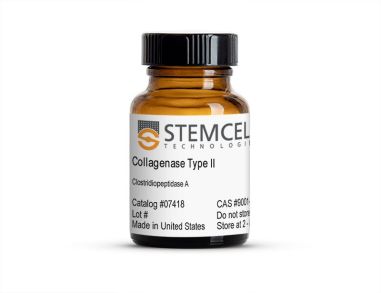 II型胶原酶 用于消化天然胶原纤维
 III型胶原酶 用于消化天然胶原纤维
 24:25
线上讲座ISSCR Standards in Action: Advancements in Cell Line Generation and Organoid Innovation发布日期: 08/01/2024
24:25
线上讲座ISSCR Standards in Action: Advancements in Cell Line Generation and Organoid Innovation发布日期: 08/01/2024

 沪公网安备31010102008431号