Q. Zhou et al. (Apr 2023)
Gastroenterology 164 630-641.e34
Catechol-O-Methyltransferase Loss Drives Cell-Specific Nociceptive Signaling via the Enteric Catechol-O-Methyltransferase/microRNA-155/Tumor Necrosis Factor ? Axis
BACKGROUND & AIMS The etiology of abdominal pain in postinfectious,diarrhea-predominant irritable bowel syndrome (PI-IBS-D) is unknown,and few treatment options exist. Catechol-O-methyltransferase (COMT),an enzyme that inactivates and degrades biologically active catecholamines,plays an important role in numerous physiologic processes,including modulation of pain perception. Our objective was to determine the mechanism(s) of how decreased colonic COMT in PI-IBS-D patients contributes to the chronic abdominal pain phenotype after enteric infections. METHODS Colon neurons,epithelial cells,and macrophages were procured with laser capture microdissection from PI-IBS-D patients to evaluate cell-specific colonic COMT,microRNA-155 (miR-155),and tumor necrosis factor (TNF) ? expression levels compared to recovered patients (infection cleared: did not develop PI-IBS-D) and control individuals. COMT-/-,colon-specific COMT-/-,and miR-155-/- mice and human colonoids were used to model phenotypic expression of COMT in PI-IBS-D patients and to investigate signaling pathways linking abdominal pain. Citrobacter rodentium and trinitrobenzene sulfonic acid animal models were used to model postinflammatory changes seen in PI-IBS-D patients. RESULTS Colonic COMT levels were significantly decreased and correlated with increased visual analog scale abdominal pain ratings in PI-IBS-D patients compared to recovered patients and control individuals. Colonic miR-155 and TNF-? were increased in PI-IBS-D patients with diminished colonic COMT. COMT-/- mice had significantly increased expression of miR-155 and TNF-? in both colon tissues and dorsal root ganglia. Introduction of cV1q antibody (anti-TNF-?) into mice reversed visceral hypersensitivity after C rodentium and trinitrobenzene sulfonic acid. CONCLUSIONS Decreased colonic COMT in PI-IBS-D patients drives abdominal pain phenotypes via the COMT/miR-155/TNF-? axis. These important findings will allow new treatment paradigms and more targeted and personalized medicine approaches for gastrointestinal disorders after enteric infections.
View Publication
产品类型:
产品号#:
06005
06010
产品名:
IntestiCult™ 类器官生长培养基 (小鼠)
IntestiCult™ 类器官生长培养基 (人)
Stevenson C et al. (AUG 2017)
Inflammation research : official journal of the European Histamine Research Society ... [et al.] 66 8 691--700
OBJECTIVE To evaluate the effects of MUC18 on IL-13-mediated airway inflammatory responses in human airway epithelial cells and in mice. MATERIALS Primary normal human tracheobronchial epithelial (HTBE) cells,wild-type (WT) and Muc18 knockout (KO) mice,and mouse tracheal epithelial cells (mTECs) were utilized. TREATMENT Cultured HTBE cells treated with MUC18 siRNA or MUC18 expressing lentivirus were incubated with IL-13 (10 ng/mL) for 24 h. Mice were intranasally instilled with 500 ng of IL-13 for 3 days. mTECs were treated with IL-13 (10 ng/mL) for 3 days. METHODS PCR was used to measure mRNA expression. Western Blot and ELISAs were used to quantify protein expression. Cytospins of bronchoalveolar lavage (BAL) cells were used to obtain leukocyte differentials. RESULTS MUC18 siRNA reduced IL-13-mediated eotaxin-3 (183 ± 44 vs. 380 ± 59 pg/mL,p < 0.05),while MUC18 overexpression increased IL-13-mediated eotaxin-3 (95 ± 3 vs. 58 ± 3 pg/mL,p < 0.05) in HTBE cells. IL-13-treated Muc18 KO mice had a lower percentage of neutrophils in BAL than WT mice (25 ± 3 vs. 35 ± 3%,p = 0.0565). CONCLUSIONS These results implicate MUC18 as a potential enhancer of airway inflammation in a type 2 cytokine (e.g.,IL-13) milieu.
View Publication


 EasySep™小鼠TIL(CD45)正选试剂盒





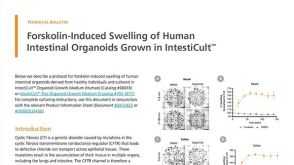 技术公告Forskolin诱导培养于IntestiCult™中人肠类器官膨胀的操作流程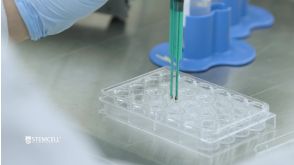


 沪公网安备31010102008431号