Distinct expression levels and patterns of stem cell marker, aldehyde dehydrogenase isoform 1 (ALDH1), in human epithelial cancers.
Aldehyde dehydrogenase isoform 1 (ALDH1) has been proved useful for the identification of cancer stem cells. However,our knowledge of the expression and activity of ALDH1 in common epithelial cancers and their corresponding normal tissues is still largely absent. Therefore,we characterized ALDH1 expression in 24 types of normal tissues and a large collection of epithelial tumor specimens (six cancer types,n = 792) by immunohistochemical staining. Using the ALDEFUOR assay,ALDH1 activity was also examined in 16 primary tumor specimens and 43 established epithelial cancer cell lines. In addition,an ovarian cancer transgenic mouse model and 7 murine ovarian cancer cell lines were analyzed. We found that the expression levels and patterns of ALDH1 in epithelial cancers are remarkably distinct,and they correlate with their corresponding normal tissues. ALDH1 protein expression levels are positively correlated with ALDH1 enzymatic activity measured by ALDEFLUOR assay. Long-term in vitro culture doesn't significantly affect ALDH1 activity in epithelial tumor cells. Consistent with research on other cancers,we found that high ALDH1 expression is significantly associated with poor clinical outcomes in serous ovarian cancer patients (n = 439,p = 0.0036). Finally,ALDH(br) tumor cells exhibit cancer stem cell properties and are resistant to chemotherapy. As a novel cancer stem cell marker,ALDH1 can be used for tumors whose corresponding normal tissues express ALDH1 in relatively restricted or limited levels such as breast,lung,ovarian or colon cancer.
View Publication
产品类型:
产品号#:
01700
01705
01701
01702
05620
产品名:
ALDEFLUOR™ 试剂盒
ALDEFLUOR™ DEAB试剂, 1.5 mM, 1 mL
ALDEFLUOR™检测缓冲液
MammoCult™ 人源培养基套装
Korkaya H et al. (AUG 2012)
Molecular cell 47 4 570--84
Activation of an IL6 inflammatory loop mediates trastuzumab resistance in HER2+ breast cancer by expanding the cancer stem cell population.
Although inactivation of the PTEN gene has been implicated in the development of resistance to the HER2 targeting antibody trastuzumab,the mechanisms mediating this resistance remain elusive. We generated trastuzumab resistant cells by knocking down PTEN expression in HER2 overexpressing breast cancer cell lines and demonstrate that development of trastuzumab resistance in these cells is mediated by activation of an IL6 inflammatory feedback loop leading to expansion of the cancer stem cell (CSC) population. Long term trastuzumab treatment generates highly enriched CSCs which display an EMT phenotype secreting over 100-fold more IL6 than parental cells. An IL6 receptor antibody interrupted this inflammatory feedback loop reducing the cancer stem cell population resulting in decreased tumor growth and metastasis in mouse xenographs. These studies demonstrate that trastuzumab resistance may be mediated by an IL6 inflammatory loop and suggest that blocking this loop may provide alternative strategy to overcome trastuzumab resistance.
View Publication
产品类型:
产品号#:
01700
01705
05620
01702
产品名:
ALDEFLUOR™ 试剂盒
ALDEFLUOR™ DEAB试剂, 1.5 mM, 1 mL
MammoCult™ 人源培养基套装
ALDEFLUOR™检测缓冲液
Luckett-Chastain LR and Gallucci RM (AUG 2009)
The British journal of dermatology 161 2 237--48
Interleukin (IL)-6 modulates transforming growth factor-beta expression in skin and dermal fibroblasts from IL-6-deficient mice.
BACKGROUND Interleukin (IL-6) and transforming growth factor (TGF)-beta have been shown to play a role in skin development and maintenance. OBJECTIVES A link between these two cytokines has yet to be identified and therefore in this study we investigated the modulation of TGF-beta1 and TGF-beta type 2 receptor (TGF-betaR2) by IL-6 in skin. METHODS An IL-6 knockout (IL-6KO) fibroblast-populated lattice model and intradermal injections of IL-6 into unwounded IL-6KO mice were used to investigate the direct effects of IL-6 treatment on TGF-beta and TGF-betaR2 expression and to determine the signalling mechanism. In addition,IL-6KO and C57BL/6 control mice were wounded by a 4-mm punch biopsy to monitor expression of TGF-beta1 and TGF-betaR2 within a wound over time. The expression of TGF-beta1 and TGF-betaR2 was assessed by real-time quantitative polymerase chain reaction,enzyme-linked immunosorbent assay and immunohistology. RESULTS Recombinant IL-6 treatment of IL-6KO lattices and intradermal injections of IL-6 showed a significant induction of TGF-beta1 mRNA and protein,with TGF-beta1 expression localized in the dermis,while TGF-betaR2 expression was primarily in the epidermis in IL-6KO mice. During healing,the expression of TGF-beta1 and TGF-betaR2 mRNA was significantly greater in unwounded and 7-day-old wounds from wild-type mice; however,protein expression did not differ. Treatment with signal transduction inhibitors indicated that IL-6 modulates TGF-beta through a mitogen-activated protein kinase/extracellular signal-regulated kinase (Mapk/Erk)-dependent mechanism. CONCLUSION These studies indicate that IL-6 has the ability to modulate the expression of TGF-beta and TGF-betaR2 to varying degrees in the skin,which may provide a possible mechanism for defining the role of IL-6 in skin maintenance and a new association of IL-6 with TGF-beta in pathologies associated with fibrosis.
View Publication
产品类型:
产品号#:
07930
07931
07940
07955
07956
07959
07954
100-1061
07952
产品名:
CryoStor® CS10
CryoStor® CS10
CryoStor® CS10
CryoStor® CS10
CryoStor® CS10
CryoStor® CS10
CryoStor® CS10
Guo H-B et al. (DEC 2010)
Proceedings of the National Academy of Sciences of the United States of America 107 49 21116--21
Specific posttranslational modification regulates early events in mammary carcinoma formation.
The expression of an enzyme,GnT-V,that catalyzes a specific posttranslational modification of a family of glycoproteins,namely a branched N-glycan,is transcriptionally up-regulated during breast carcinoma oncogenesis. To determine the molecular basis of how early events in breast carcinoma formation are regulated by GnT-V,we studied both the early stages of mammary tumor formation by using 3D cell culture and a her-2 transgenic mouse mammary tumor model. Overexpression of GnT-V in MCF-10A mammary epithelial cells in 3D culture disrupted acinar morphogenesis with impaired hollow lumen formation,an early characteristic of mammary neoplastic transformation. The disrupted acinar morphogenesis of mammary tumor cells in 3D culture caused by her-2 expression was reversed in tumors that lacked GnT-V expression. Moreover,her-2-induced mammary tumor onset was significantly delayed in the GnT-V null tumors,evidence that the lack of the posttranslational modification catalyzed by GnT-V attenuated tumor formation. Inhibited activation of both PKB and ERK signaling pathways was observed in GnT-V null tumor cells. The proportion of tumor-initiating cells (TICs) in the mammary tumors from GnT-V null mice was significantly reduced compared with controls,and GnT-V null TICs displayed a reduced ability to form secondary tumors in NOD/SCID mice. These results demonstrate that GnT-V expression and its branched glycan products effectively modulate her-2-mediated signaling pathways that,in turn,regulate the relative proportion of tumor initiating cells and the latency of her-2-driven tumor onset.
View Publication
Q. Zhou et al. (Apr 2023)
Gastroenterology 164 630-641.e34
Catechol-O-Methyltransferase Loss Drives Cell-Specific Nociceptive Signaling via the Enteric Catechol-O-Methyltransferase/microRNA-155/Tumor Necrosis Factor ? Axis
BACKGROUND & AIMS The etiology of abdominal pain in postinfectious,diarrhea-predominant irritable bowel syndrome (PI-IBS-D) is unknown,and few treatment options exist. Catechol-O-methyltransferase (COMT),an enzyme that inactivates and degrades biologically active catecholamines,plays an important role in numerous physiologic processes,including modulation of pain perception. Our objective was to determine the mechanism(s) of how decreased colonic COMT in PI-IBS-D patients contributes to the chronic abdominal pain phenotype after enteric infections. METHODS Colon neurons,epithelial cells,and macrophages were procured with laser capture microdissection from PI-IBS-D patients to evaluate cell-specific colonic COMT,microRNA-155 (miR-155),and tumor necrosis factor (TNF) ? expression levels compared to recovered patients (infection cleared: did not develop PI-IBS-D) and control individuals. COMT-/-,colon-specific COMT-/-,and miR-155-/- mice and human colonoids were used to model phenotypic expression of COMT in PI-IBS-D patients and to investigate signaling pathways linking abdominal pain. Citrobacter rodentium and trinitrobenzene sulfonic acid animal models were used to model postinflammatory changes seen in PI-IBS-D patients. RESULTS Colonic COMT levels were significantly decreased and correlated with increased visual analog scale abdominal pain ratings in PI-IBS-D patients compared to recovered patients and control individuals. Colonic miR-155 and TNF-? were increased in PI-IBS-D patients with diminished colonic COMT. COMT-/- mice had significantly increased expression of miR-155 and TNF-? in both colon tissues and dorsal root ganglia. Introduction of cV1q antibody (anti-TNF-?) into mice reversed visceral hypersensitivity after C rodentium and trinitrobenzene sulfonic acid. CONCLUSIONS Decreased colonic COMT in PI-IBS-D patients drives abdominal pain phenotypes via the COMT/miR-155/TNF-? axis. These important findings will allow new treatment paradigms and more targeted and personalized medicine approaches for gastrointestinal disorders after enteric infections.
View Publication
产品类型:
产品号#:
06005
06010
产品名:
IntestiCult™ 类器官生长培养基 (小鼠)
IntestiCult™ 类器官生长培养基 (人)
Ishikawa S and Ito S ( 2016)
Toxicology in Vitro 38 170--178
Repeated whole cigarette smoke exposure alters cell differentiation and augments secretion of inflammatory mediators in air-liquid interface three-dimensional co-culture model of human bronchial tissue
In vitro models of human bronchial epithelium are useful for toxicological testing because of their resemblance to in vivo tissue. We constructed a model of human bronchial tissue which has a fibroblast layer embedded in a collagen matrix directly below a fully-differentiated epithelial cell layer. The model was applied to whole cigarette smoke (CS) exposure repeatedly from an air-liquid interface culture while bronchial epithelial cells were differentiating. The effects of CS exposure on differentiation were determined by histological and gene expression analyses on culture day 21. We found a decrease in ciliated cells and perturbation of goblet cell differentiation. We also analyzed the effects of CS exposure on the inflammatory response,and observed a significant increase in secretion of IL-8,GRO-α,IL-1β,and GM-CSF. Interestingly,secretion of these mediators was augmented with repetition of whole CS exposure. Our data demonstrate the usefulness of our bronchial tissue model for in vitro testing and the importance of exposure repetition in perturbing the differentiation and inflammation processes.
View Publication
产品类型:
产品号#:
05001
05021
05022
产品名:
PneumaCult™-ALI 培养基
PneumaCult™-ALI 培养基含12 mm Transwell®插件
PneumaCult™-ALI 培养基含6.5 mm Transwell®插件
Stevenson C et al. (AUG 2017)
Inflammation research : official journal of the European Histamine Research Society ... [et al.] 66 8 691--700
OBJECTIVE To evaluate the effects of MUC18 on IL-13-mediated airway inflammatory responses in human airway epithelial cells and in mice. MATERIALS Primary normal human tracheobronchial epithelial (HTBE) cells,wild-type (WT) and Muc18 knockout (KO) mice,and mouse tracheal epithelial cells (mTECs) were utilized. TREATMENT Cultured HTBE cells treated with MUC18 siRNA or MUC18 expressing lentivirus were incubated with IL-13 (10 ng/mL) for 24 h. Mice were intranasally instilled with 500 ng of IL-13 for 3 days. mTECs were treated with IL-13 (10 ng/mL) for 3 days. METHODS PCR was used to measure mRNA expression. Western Blot and ELISAs were used to quantify protein expression. Cytospins of bronchoalveolar lavage (BAL) cells were used to obtain leukocyte differentials. RESULTS MUC18 siRNA reduced IL-13-mediated eotaxin-3 (183 ± 44 vs. 380 ± 59 pg/mL,p < 0.05),while MUC18 overexpression increased IL-13-mediated eotaxin-3 (95 ± 3 vs. 58 ± 3 pg/mL,p < 0.05) in HTBE cells. IL-13-treated Muc18 KO mice had a lower percentage of neutrophils in BAL than WT mice (25 ± 3 vs. 35 ± 3%,p = 0.0565). CONCLUSIONS These results implicate MUC18 as a potential enhancer of airway inflammation in a type 2 cytokine (e.g.,IL-13) milieu.
View Publication


 EasySep™小鼠TIL(CD45)正选试剂盒





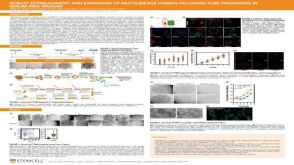 科学海报Robust Establishment and Expansion of Multilineage Human Fallopian Tube Organoids in Serum-Free Medium
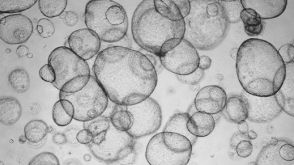 实验方案How to Perform Albumin Detection Assays in Human Hepatic Organoids
 技术公告Forskolin诱导培养于IntestiCult™中人肠类器官膨胀的操作流程


 沪公网安备31010102008431号