Yang X et al. (NOV 2010)
Cancer research 70 22 9463--72
Double-negative feedback loop between reprogramming factor LIN28 and microRNA let-7 regulates aldehyde dehydrogenase 1-positive cancer stem cells.
A relatively rare aldehyde dehydrogenase 1 (ALDH1)-positive stem cell-like" subpopulation of tumor cells has the unique ability to initiate and perpetuate tumor growth; moreover�
View Publication
产品类型:
产品号#:
01700
01705
01702
产品名:
ALDEFLUOR™ 试剂盒
ALDEFLUOR™ DEAB试剂, 1.5 mM, 1 mL
ALDEFLUOR™检测缓冲液
Cortjens B et al. (MAY 2017)
Journal of virology 91 10 1--15
Broadly Reactive Anti-Respiratory Syncytial Virus G Antibodies from Exposed Individuals Effectively Inhibit Infection of Primary Airway Epithelial Cells.
Respiratory syncytial virus (RSV) causes severe respiratory disease in young children. Antibodies specific for the RSV prefusion F protein have guided RSV vaccine research,and in human serum,these antibodies contribute to<90% of the neutralization response; however,detailed insight into the composition of the human B cell repertoire against RSV is still largely unknown. In order to study the B cell repertoire of three healthy donors for specificity against RSV,CD27+memory B cells were isolated and immortalized using BCL6 and Bcl-xL. Of the circulating memory B cells,0.35% recognized RSV-A2-infected cells,of which 59% were IgA-expressing cells and 41% were IgG-expressing cells. When we generated monoclonal B cells selected for high binding to RSV-infected cells,44.5% of IgG-expressing B cells and 56% of IgA-expressing B cells reacted to the F protein,while,unexpectedly,41.5% of IgG-expressing B cells and 44% of IgA expressing B cells reacted to the G protein. Analysis of the G-specific antibodies revealed that 4 different domains on the G protein were recognized. These epitopes predicted cross-reactivity between RSV strain A (RSV-A) and RSV-B and matched the potency of antibodies to neutralize RSV in HEp-2 cells and in primary epithelial cell cultures. G-specific antibodies were also able to induce antibody-dependent cellular cytotoxicity and antibody-dependent cellular phagocytosis of RSV-A2-infected cells. However,these processes did not seem to depend on a specific epitope. In conclusion,healthy adults harbor a diverse repertoire of RSV glycoprotein-specific antibodies with a broad range of effector functions that likely play an important role in antiviral immunity.IMPORTANCEHuman RSV remains the most common cause of severe lower respiratory tract disease in premature babies,young infants,the elderly,and immunocompromised patients and plays an important role in asthma exacerbations. In developing countries,RSV lower respiratory tract disease has a high mortality. Without an effective vaccine,only passive immunization with palivizumab is approved for prophylactic treatment. However,highly potent RSV-specific monoclonal antibodies could potentially serve as a therapeutic treatment and contribute to disease control and mortality reduction. In addition,these antibodies could guide further vaccine development. In this study,we isolated and characterized several novel antibodies directed at the RSV G protein. This information can add to our understanding and treatment of RSV disease.
View Publication
产品类型:
产品号#:
05001
05021
05022
产品名:
PneumaCult™-ALI 培养基
PneumaCult™-ALI 培养基含12 mm Transwell®插件
PneumaCult™-ALI 培养基含6.5 mm Transwell®插件
Wu H et al. (SEP 2011)
Journal of breast cancer 14 3 175--80
Can CD44+/CD24- Tumor Cells Be Used to Determine the Extent of Breast Cancer Invasion Following Neoadjuvant Chemotherapy?
PURPOSE: To investigate the distribution of CD44(+)/CD24(-) cells in breast cancers in relation to tumor size before and after the administration of neoadjuvant chemotherapy. METHODS: CD44(+)/CD24(-) tumor cells obtained from breast cancer specimens were characterized in vivo and in vitro using tumor formation assays and mammosphere generation assays,respectively. The distribution of CD44+/CD24- tumor cells in 78 breast cancer specimens following administration of neoadjuvant chemotherapy was also evaluated using immunofluorescence assays,and this distribution was compared with the extent of tumor invasion predicted by Response Evaluation Criteria in Solid Tumours (RECIST). RESULTS: In 27/78 cases,complete remission (CR) was identified using RECIST. However,18 of these CR cases were associated with a scattered distribution of tumor stem cells in the outline of the original tumor prior to neoadjuvant chemotherapy. After neoadjuvant chemotherapy,24 cases involved cancer cells that were confined to the tumor outline,and 21 cases had tumor cells or tumor stem cells overlapping the tumor outline. In addition,there were 6 patients who were insensitive to chemotherapy,and in these cases,both cancer cells and stem cells were detected outside the contours of the tumor volume imaged prior to chemotherapy. CONCLUSION: CD44+/CD24- tumor cells may be an additional parameter to evaluate when determining the extent of breast cancer invasion.
View Publication
产品类型:
产品号#:
05620
产品名:
MammoCult™ 人源培养基套装
Banerjee A et al. (JUL 2016)
Oncotarget 7 27 41432--41444
Endoplasmic reticulum stress and IRE-1 signaling cause apoptosis in colon cancer cells in response to andrographolide treatment
Bhushal S et al. ( 2017)
Frontiers in immunology 8 JUN 671
Cell Polarization and Epigenetic Status Shape the Heterogeneous Response to Type III Interferons in Intestinal Epithelial Cells.
Type I and type III interferons (IFNs) are crucial components of the first-line antiviral host response. While specific receptors for both IFN types exist,intracellular signaling shares the same Jak-STAT pathway. Due to its receptor expression,IFN-λ responsiveness is restricted mainly to epithelial cells. Here,we display IFN-stimulated gene induction at the single cell level to comparatively analyze the activities of both IFN types in intestinal epithelial cells and mini-gut organoids. Initially,we noticed that the response to both types of IFNs at low concentrations is based on a single cell decision-making determining the total cell intrinsic antiviral activity. We identified histone deacetylase (HDAC) activity as a crucial restriction factor controlling the cell frequency of IFN-stimulated gene (ISG) induction upon IFN-λ but not IFN-β stimulation. Consistently,HDAC blockade confers antiviral activity to an elsewise non-responding subpopulation. Second,in contrast to the type I IFN system,polarization of intestinal epithelial cells strongly enhances their ability to respond to IFN-λ signaling and raises the kinetics of gene induction. Finally,we show that ISG induction in mini-gut organoids by low amounts of IFN is characterized by a scattered heterogeneous responsiveness of the epithelial cells and HDAC activity fine-tunes exclusively IFN-λ activity. This study provides a comprehensive description of the differential response to type I and type III IFNs and demonstrates that cell polarization in gut epithelial cells specifically increases IFN-λ activity.
View Publication
Molinski SV et al. ( 2017)
EMBO Molecular Medicine 9 9 1224--1243
Orkambi® and amplifier co-therapy improves function from a rare CFTR mutation in gene edited cells and patient tissue
The combination therapy of lumacaftor and ivacaftor (Orkambi®) is approved for patients bearing the major cystic fibrosis (CF) mutation: ΔF508 It has been predicted that Orkambi® could treat patients with rarer mutations of similar theratype"; however a standardized approach confirming efficacy in these cohorts has not been reported. Here we demonstrate that patients bearing the rare mutation: c.3700 A>G causing protein misprocessing and altered channel function-similar to ΔF508-CFTR are unlikely to yield a robust Orkambi® response. While in silico and biochemical studies confirmed that this mutation could be corrected and potentiated by lumacaftor and ivacaftor respectively this combination led to a minor in vitro response in patient-derived tissue. A CRISPR/Cas9-edited bronchial epithelial cell line bearing this mutation enabled studies showing that an "amplifier" compound effective in increasing the levels of immature CFTR protein augmented the Orkambi® response. Importantly this "amplifier" effect was recapitulated in patient-derived nasal cultures-providing the first evidence for its efficacy in augmenting Orkambi® in tissues harboring a rare CF-causing mutation. We propose that this multi-disciplinary approach including creation of CRISPR/Cas9-edited cells to profile modulators together with validation using primary tissue will facilitate therapy development for patients with rare CF mutations.
View Publication
产品类型:
产品号#:
05001
05021
05022
产品名:
PneumaCult™-ALI 培养基
PneumaCult™-ALI 培养基含12 mm Transwell®插件
PneumaCult™-ALI 培养基含6.5 mm Transwell®插件
Law JH et al. (JAN 2010)
PloS one 5 9
Molecular decoy to the Y-box binding protein-1 suppresses the growth of breast and prostate cancer cells whilst sparing normal cell viability.
The Y-box binding protein-1 (YB-1) is an oncogenic transcription/translation factor that is activated by phosphorylation at S102 whereby it induces the expression of growth promoting genes such as EGFR and HER-2. We recently illustrated by an in vitro kinase assay that a novel peptide to YB-1 was highly phosphorylated by the serine/threonine p90 S6 kinases RSK-1 and RSK-2,and to a lesser degree PKCα and AKT. Herein,we sought to develop this decoy cell permeable peptide (CPP) as a cancer therapeutic. This 9-mer was designed as an interference peptide that would prevent endogenous YB-1(S102) phosphorylation based on molecular docking. In cancer cells,the CPP blocked P-YB-1(S102) and down-regulated both HER-2 and EGFR transcript level and protein expression. Further,the CPP prevented YB-1 from binding to the EGFR promoter in a gel shift assay. Notably,the growth of breast (SUM149,MDA-MB-453,AU565) and prostate (PC3,LNCap) cancer cells was inhibited by ∼90% with the CPP. Further,treatment with this peptide enhanced sensitivity and overcame resistance to trastuzumab in cells expressing amplified HER-2. By contrast,the CPP had no inhibitory effect on the growth of normal immortalized breast epithelial (184htert) cells,primary breast epithelial cells,nor did it inhibit differentiation of hematopoietic progenitors. These data collectively suggest that the CPP is a novel approach to suppressing the growth of cancer cells while sparing normal cells and thereby establishes a proof-of-concept that blocking YB-1 activation is a new course of cancer therapeutics.
View Publication
产品类型:
产品号#:
05601
18056
18056RF
04435
04445
产品名:
EpiCult™-B 人培养基
MethoCult™ H4435 Enriched
MethoCult™ H4435 Enriched
Ketola K et al. (DEC 2010)
Molecular cancer therapeutics 9 12 3175--85
Monensin is a potent inducer of oxidative stress and inhibitor of androgen signaling leading to apoptosis in prostate cancer cells.
Current treatment options for advanced and hormone refractory prostate cancer are limited and responses to commonly used androgen pathway inhibitors are often unsatisfactory. Our recent results indicated that sodium ionophore monensin is one of the most potent and cancer-specific inhibitors in a systematic sensitivity testing of most known drugs and drug-like molecules in a panel of prostate cancer cell models. Because monensin has been extensively used in veterinary applications to build muscle mass in cattle,the link to prostate cancer and androgen signaling was particularly interesting. Here,we showed that monensin effects at nanomolar concentrations are linked to induction of apoptosis and potent reduction of androgen receptor mRNA and protein in prostate cancer cells. Monensin also elevated intracellular oxidative stress in prostate cancer cells as evidenced by increased generation of intracellular reactive oxygen species and by induction of a transcriptional profile characteristic of an oxidative stress response. Importantly,the antiproliferative effects of monensin were potentiated by combinatorial treatment with the antiandrogens and antagonized by antioxidant vitamin C. Taken together,our results suggest monensin as a potential well-tolerated,in vivo compatible drug with strong proapoptotic effects in prostate cancer cells,and synergistic effects with antiandrogens. Moreover,our data suggest a general strategy by which the effects of antiandrogens could be enhanced by combinatorial administration with agents that increase oxidative stress in prostate cancer cells.
View Publication
产品类型:
产品号#:
01700
01705
01702
产品名:
ALDEFLUOR™ 试剂盒
ALDEFLUOR™ DEAB试剂, 1.5 mM, 1 mL
ALDEFLUOR™检测缓冲液
Neumeister V et al. (MAY 2010)
The American journal of pathology 176 5 2131--8
In situ identification of putative cancer stem cells by multiplexing ALDH1, CD44, and cytokeratin identifies breast cancer patients with poor prognosis.
A subset of cells,tentatively called cancer stem cells (CSCs),in breast cancer have been associated with tumor initiation,drug resistance,and tumor persistence or aggressiveness. They are characterized by CD44 positivity,CD24 negativity,and/or ALDH1 positivity in flow cytometric studies. We hypothesized that the frequency or density of these cells may be associated with more aggressive tumor behavior. We borrowed these multiplexed,flow-based methods to develop an in situ method to define CSCs in formalin-fixed paraffin-embedded breast cancer tissue,with the goal of assessing the prognostic value of the presence of CSCs in breast cancer. Using a retrospective collection of 321 node-negative and 318 node-positive patients with a mean follow-up time of 12.6 years,we assessed TMAs using the AQUA method for quantitative immunofluorescence. Using a multiplexed assay for ALDH1,CD44,and cytokeratin to measure the coexpression of these proteins,putative CSCs appear in variable sized clusters and in 27 cases (of 490),which showed significantly worse outcome (log rank P = 0.0003). Multivariate analysis showed that this marker combination is independent of tumor size,histological grade,nodal status,ER-,PR,- and HER2-status. In this cohort,ALDH1 expression alone does not significantly predict outcome. We conclude that the multiplexed method of in situ identification of putative CSCs identifies high risk patients in breast cancer.
View Publication
产品类型:
产品号#:
01700
01705
01702
产品名:
ALDEFLUOR™ 试剂盒
ALDEFLUOR™ DEAB试剂, 1.5 mM, 1 mL
ALDEFLUOR™检测缓冲液
Bunaciu RP and Yen A (MAR 2011)
Cancer research 71 6 2371--80
Activation of the aryl hydrocarbon receptor AhR Promotes retinoic acid-induced differentiation of myeloblastic leukemia cells by restricting expression of the stem cell transcription factor Oct4.
Retinoic acid (RA) is used to treat leukemia and other cancers through its ability to promote cancer cell differentiation. Strategies to enhance the anticancer effects of RA could deepen and broaden its beneficial therapeutic applications. In this study,we describe a receptor cross-talk system that addresses this issue. RA effects are mediated by RAR/RXR receptors that we show are modified by interactions with the aryl hydrocarbon receptor (AhR),a protein functioning both as a transcription factor and a ligand-dependent adaptor in an ubiquitin ligase complex. RAR/RXR and AhR pathways cross-talk at the levels of ligand-receptor and also receptor-promoter interactions. Here,we assessed the role of AhR during RA-induced differentiation and a hypothesized convergence at Oct4,a transcription factor believed to maintain stem cell characteristics. RA upregulated AhR and downregulated Oct4 during differentiation of HL-60 promyelocytic leukemia cells. AhR overexpression in stable transfectants downregulated Oct4 and also decreased ALDH1 activity,another stem cell-associated factor,enhancing RA-induced differentiation as indicated by cell differentiation markers associated with early (CD38 and CD11b) and late (neutrophilic respiratory burst) responses. AhR overexpression also increased levels of activated Raf1,which is known to help propel RA-induced differentiation. RNA interference-mediated knockdown of Oct4 enhanced RA-induced differentiation and G(0) cell-cycle arrest relative to parental cells. Consistent with the hypothesized importance of Oct4 downregulation for differentiation,parental cells rendered resistant to RA by biweekly high RA exposure displayed elevated Oct4 levels that failed to be downregulated. Together,our results suggested that therapeutic effects of RA-induced leukemia differentiation depend on AhR and its ability to downregulate the stem cell factor Oct4.
View Publication
产品类型:
产品号#:
01700
01705
01701
01702
07912
产品名:
ALDEFLUOR™ 试剂盒
ALDEFLUOR™ DEAB试剂, 1.5 mM, 1 mL
ALDEFLUOR™检测缓冲液
胶原酶/透明质酸酶
Reuben JM et al. (JUL 2011)
European journal of cancer (Oxford,England : 1990) 47 10 1527--36
Primary breast cancer patients with high risk clinicopathologic features have high percentages of bone marrow epithelial cells with ALDH activity and CD44-CD24lo cancer stem cell phenotype.
BACKGROUND: Cancer stem cells (CSCs) are purported to be epithelial tumour cells expressing CD44(+)CD24(lo) that exhibit aldehyde dehydrogenase activity (Aldefluor(+)). We hypothesised that if CSCs are responsible for tumour dissemination,disseminated cells in the bone marrow (BM) would be positive for putative breast CSC markers. Therefore,we assessed the presence of Aldefluor(+) epithelial (CD326(+)CD45(dim)) cells for the presence of the CD44(+)CD24(lo) phenotype in BM of patients with primary breast cancer (PBC). METHODS: BM aspirates were collected at the time of surgery from 66 patients with PBC. Thirty patients received neoadjuvant chemotherapy (NACT) prior to aspiration. BM was analysed for Aldefluor(+) epithelial cells with or without CD44(+)CD24(lo) expression by flow cytometry. BM aspirates from three healthy donors (HD) were subjected to identical processing and analyses and served as controls. RESULTS: Patients with triple-receptor-negative (TN) tumours had a significantly higher median percentage of CD44(+)CD24(lo) CSC within Aldefluor(+) epithelial cell population than patients with other immunohistochemical subtypes (P=0.018). Patients with TN tumours or with pN2 or higher pathologic nodal status were more likely to have a proportion of CD44(+)CD24(lo) CSC within Aldefluor(+) epithelial cell population above the highest level of HD. Furthermore,patients who received NACT were more likely to have percentages of Aldefluor(+) epithelial cells than the highest level of HD (P=0.004). CONCLUSION: The percentage of CD44(+)CD24(lo) CSC in the BM is higher in PBC patients with high risk tumour features. The selection or enrichment of Aldefluor(+) epithelial cells by NACT may represent an opportunity to target these cells with novel therapies.
View Publication


 EasySep™小鼠TIL(CD45)正选试剂盒





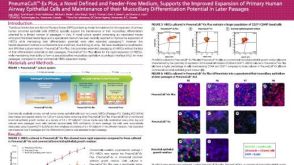 科学海报PneumaCult™-Ex Plus, a Novel Defined and Feeder-Free Medium, Supports the Improved Expansion of Primary Human Airway Epithelial Cells
 沪公网安备31010102008431号