Orlandi A et al. (APR 2008)
American journal of physiology. Heart and circulatory physiology 294 4 H1541--9
Functional properties of cells obtained from human cord blood CD34+ stem cells and mouse cardiac myocytes in coculture.
Prior in vitro studies suggested that different types of hematopoietic stem cells may differentiate into cardiomyocytes. The present work examined whether human CD34(+) cells from the human umbilical cord blood (hUCB),cocultured with neonatal mouse cardiomyocytes,acquire the functional properties of myocardial cells and express human cardiac genes. hUCB CD34(+) cells were cocultured onto cardiomyocytes following an infection with a lentivirus-encoding enhanced green fluorescent protein (EGFP). After 7 days,mononucleated EGFP(+) cells were tested for their electrophysiological features by patch clamp and for cytosolic [Ca(2+)] ([Ca(2+)](i)) homeostasis by [Ca(2+)](i) imaging of X-rhod1-loaded cells. Human Nkx2.5 and GATA-4 expression was examined in cocultured cell populations by real-time RT-PCR. EGFP(+) cells were connected to surrounding cells by gap junctions,acquired electrophysiological properties similar to those of cardiomyocytes,and showed action potential-associated [Ca(2+)](i) transients. These cells also exhibited spontaneous sarcoplasmic reticulum [Ca(2+)](i) oscillations and the associated membrane potential depolarization. However,RT-PCR of both cell populations showed no upregulation of human-specific cardiac genes. In conclusion,under our experimental conditions,hUCB CD34(+) cells cocultured with murine cardiomyocytes formed cells that exhibited excitation-contraction coupling features similar to those of cardiomyocytes. However,the expression of human-specific cardiac genes was undetectable by RT-PCR.
View Publication
Angiopoietin-like 5 and IGFBP2 stimulate ex vivo expansion of human cord blood hematopoietic stem cells as assayed by NOD/SCID transplantation.
Hematopoietic stem cells (HSCs) are the basis of bone marrow transplantation and are attractive target cells for hematopoietic gene therapy,but these important clinical applications have been severely hampered by difficulties in ex vivo expansion of HSCs. In particular,the use of cord blood for adult transplantation is greatly limited by the number of HSCs. Previously we identified angiopoietin-like proteins and IGF-binding protein 2 (IGFBP2) as new hormones that,together with other factors,can expand mouse bone marrow HSCs in culture. Here,we measure the activity of multipotent human severe combined immunodeficient (SCID)-repopulating cells (SRCs) by transplantation into the nonobese diabetic SCID (NOD/SCID) mice; secondary transplantation was performed to evaluate the self-renewal potential of SRCs. A serum-free medium containing SCF,TPO,and FGF-1 or Flt3-L cannot significantly support expansion of the SRCs present in human cord blood CD133+ cells. Addition of either angiopoietin-like 5 or IGF-binding protein 2 to the cultures led to a sizable expansion of HSC numbers,as assayed by NOD/SCID transplantation. A serum-free culture containing SCF,TPO,FGF-1,angiopoietin-like 5,and IGFBP2 supports an approximately 20-fold net expansion of repopulating human cord blood HSCs,a number potentially applicable to several clinical processes including HSC transplantation.
View Publication
Giassi LJ et al. (AUG 2008)
Experimental biology and medicine (Maywood,N.J.) 233 8 997--1012
Expanded CD34+ human umbilical cord blood cells generate multiple lymphohematopoietic lineages in NOD-scid IL2rgamma(null) mice.
Umbilical cord blood (UCB) is increasingly being used for human hematopoietic stem cell (HSC) transplantation in children but often requires pooling multiple cords to obtain sufficient numbers for transplantation in adults. To overcome this limitation,we have used an ex vivo two-week culture system to expand the number of hematopoietic CD34(+) cells in cord blood. To assess the in vivo function of these expanded CD34(+) cells,cultured human UCB containing 1 x 10(6) CD34(+) cells were transplanted into conditioned NOD-scid IL2rgamma(null) mice. The expanded CD34(+) cells displayed short- and long-term repopulating cell activity. The cultured human cells differentiated into myeloid,B-lymphoid,and erythroid lineages,but not T lymphocytes. Administration of human recombinant TNFalpha to recipient mice immediately prior to transplantation promoted human thymocyte and T-cell development. These T cells proliferated vigorously in response to TCR cross-linking by anti-CD3 antibody. Engrafted TNFalpha-treated mice generated antibodies in response to T-dependent and T-independent immunization,which was enhanced when mice were co-treated with the B cell cytokine BLyS. Ex vivo expanded CD34(+) human UCB cells have the capacity to generate multiple hematopoietic lineages and a functional human immune system upon transplantation into TNFalpha-treated NOD-scid IL2rgamma(null) mice.
View Publication
产品类型:
产品号#:
09600
09650
09850
产品名:
StemSpan™ SFEM
StemSpan™ SFEM
Lin H et al. (MAR 2009)
Experimental biology and medicine (Maywood,N.J.) 234 3 342--53
Maitake beta-glucan enhances umbilical cord blood stem cell transplantation in the NOD/SCID mouse.
Beta glucans are cell wall constituents of yeast,fungi and bacteria,as well as mushrooms and barley. Glucans are not expressed on mammalian cells and are recognized as pathogen-associated molecular patterns (PAMPS) by pattern recognition receptors (PRR). Beta glucans have potential activity as biological response modifiers for hematopoiesis and enhancement of bone marrow recovery after injury. We have reported that Maitake beta glucan (MBG) enhanced mouse bone marrow (BMC) and human umbilical cord blood (CB) cell granulocyte-monocyte colony forming unit (GM-CFU) activity in vitro and protected GM-CFU forming stem cells from doxorubicin (DOX) toxicity. The objective of this study was to determine the effects of MBG on expansion of phenotypically distinct subpopulations of progenitor and stem cells in CB from full-term infants cultured ex vivo and on homing and engraftment in vivo in the nonobese diabetic/severe combined immunodeficient (NOD/SCID) mouse. MBG promoted a greater expansion of CD34+CD33+CD38- human committed hematopoietic progenitor (HPC) cells compared to the conventional stem cell culture medium (P = 0.002 by ANOVA). CD34+CXCR4+CD38- early,uncommitted human hematopoietic stem cell (HSC) numbers showed a trend towards increase in response to MBG. The fate of CD34+ enriched CB cells after injection into the sublethally irradiated NOS/SCID mouse was evaluated after retrieval of xenografted human CB from marrow and spleen by flow cytometric analysis. Oral administration of MBG to recipient NOS/SCID mice led to enhanced homing at 3 days and engraftment at 6 days in mouse bone marrow (P = 0.002 and P = 0.0005,respectively) compared to control mice. More CD34+ human CB cells were also retrieved from mouse spleen in MBG treated mice at 6 days after transplantation. The studies suggest that MBG promotes hematopoiesis through effects on CD34+ progenitor cell expansion ex vivo and when given to the transplant recipient could enhance CD34+ precursor cell homing and support engraftment.
View Publication


 EasySep™小鼠TIL(CD45)正选试剂盒





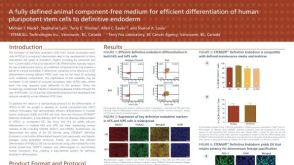 科学海报A Fully Defined Animal Component Free Medium for Efficient Differentiation of Human Pluripotent Stem Cells to Definitive Endoderm
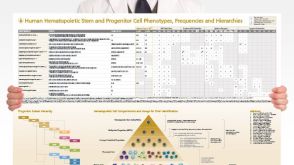 挂图Human Hematopoietic Stem and Progenitor Cell Phenotyping Overview of subset surface markers, frequencies and assays for analysis
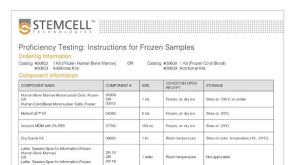 产品手册Worksheet for Proficiency Testing with Frozen Samples


 沪公网安备31010102008431号