Lioznov MV et al. (MAY 2005)
Bone marrow transplantation 35 9 909--14
Aldehyde dehydrogenase activity as a marker for the quality of hematopoietic stem cell transplants.
Taking advantage of fluorescent substrates for their metabolic marker aldehyde dehydrogenase (ALDH),hematopoietic stem cells (HSC) were defined as SSC(lo)ALDH(br) - reflecting their low orthogonal light scattering and bright fluorescence intensity in flow cytometry. Based thereon,we investigated the usefulness of ALDH activity for characterizing HSC graft quality,particularly under stress conditions. We first compared the expression of ALDH vs CD34 in bone marrow and peripheral blood stem cell (PBSC) samples over 7 days. We noted that (i) only ALDH activity but not CD34 expression strongly reflected colony-forming ability over time,and that (ii) PBSC grafts stored at room temperature lost most of their progenitor cells within just 48 h. We then retrospectively related ALDH and CD34 expression as well as granulocyte-macrophage colony-forming units (CFU-GM) potential for 19 cryopreserved allogeneic PBSC grafts to engraftment data. Strikingly,in all six patients who received markedly decreased numbers of SSC(lo)ALDH(br) cells,this was associated not only with almost complete loss of CFU-GM potential but also with delayed establishment/permanent absence of full hematopoietic donor cell chimerism,whereas all other patients showed early complete donor chimerism. In conclusion,we suggest to measure ALDH activity as a surrogate marker for HSC activity,and to transport and store PBSC under controlled cooling conditions.
View Publication
Pharmacologic modulation of the calcium-sensing receptor enhances hematopoietic stem cell lodgment in the adult bone marrow.
The ability of hematopoietic stem cells (HSCs) to undergo self-renewal is partly regulated by external signals originating from the stem cell niche. Our previous studies with HSCs obtained from fetal liver of mice deficient for the calcium-sensing receptor (CaR) have shown the crucial role of this receptor in HSC lodgment and engraftment in the bone marrow (BM) endosteal niche. Using a CaR agonist,Cinacalcet,we assessed the effects of stimulating the CaR on the function of murine HSCs. Our results show that CaR stimulation increases primitive hematopoietic cell activity in vitro,including growth in stromal cell cocultures,adhesion to extracellular matrix molecules such as collagen I and fibronectin,and migration toward the chemotactic stimulus,stromal cell-derived factor 1α. Receptor stimulation also led to augmented in vivo homing,CXCR4-mediated lodgment at the endosteal niche,and engraftment capabilities. These mechanisms by which stimulating the CaR dictates preferential localization of HSCs in the BM endosteal niche provide additional insights into the fundamental interrelationship between the stem cell and its niche. These studies also have implications in the area of clinical stem cell transplantation,where ex vivo modulation of the CaR may be envisioned as a strategy to enhance HSC engraftment in the BM.
View Publication
产品类型:
产品号#:
03434
03444
产品名:
MethoCult™ GF M3434
MethoCult™ GF M3434
Liu C et al. (DEC 2010)
Blood 116 25 5518--27
Progenitor cell dose determines the pace and completeness of engraftment in a xenograft model for cord blood transplantation.
Two critical concerns in clinical cord blood transplantation are the initial time to engraftment and the subsequent restoration of immune function. These studies measured the impact of progenitor cell dose on both the pace and strength of hematopoietic reconstitution by transplanting nonobese diabetic/severe combined immunodeficiency/interleukin-2 receptor-gamma-null (NSγ) mice with lineage-depleted aldehyde dehydrogenase-bright CD34(+) human cord blood progenitors. The progress of each transplant was monitored over an extended time course by repeatedly analyzing the peripheral blood for human hematopoietic cells. In vivo human hematopoietic development was complete. After long-term transplantation assays (≥ 19 weeks),human T-cell development was documented within multiple tissues in 16 of 32 NSγ mice. Human T-cell differentiation was active within NSγ thymuses,as documented by the presence of CD4(+) CD8(+) T-cell progenitors as well as T-cell receptor excision circles. It is important to note that although myeloid and B-cell engraftment was detected as early as 4 weeks after transplantation,human T-cell development was exclusively late onset. High progenitor cell doses were associated with a robust human hematopoietic chimerism that accelerated both initial time to engraftment and subsequent T-cell development. At lower progenitor cell doses,the chimerism was weak and the human hematopoietic lineage development was frequently incomplete.
View Publication
产品类型:
产品号#:
01700
01705
01701
01702
14056
14066
28600
19056
19056RF
19756
19756RF
产品名:
ALDEFLUOR™ 试剂盒
ALDEFLUOR™ DEAB试剂, 1.5 mM, 1 mL
ALDEFLUOR™检测缓冲液
L-Calc™有限稀释软件
Crow J et al. (JUL 2010)
The Journal of molecular diagnostics : JMD 12 4 530--7
Donor cell leukemia in umbilical cord blood transplant patients: a case study and literature review highlighting the importance of molecular engraftment analysis.
Donor cell neoplasms are rare complications of treatment regimens that involve stem cell transplantation for hematological malignancies,myelodysplastic processes,or certain genetic or metabolic disorders. We report a case of donor cell leukemia in a pediatric patient with a history of acute myeloid leukemia that manifested as recurrent AML FAB type M5 fourteen months after umbilical cord blood transplantation. Although there was some immunophenotypic drift from the patient's original AML and their posttransplant presentation,the initial pathological impression was of recurrent disease. Bone marrow engraftment analysis by multiplex PCR of short tandem repeat markers performed on the patient's diagnostic specimen showed complete engraftment by donor cells,with a loss of heterozygosity in the donor alleles on chromosome 7. This led to the reinterpretation of this patient's disease as donor-derived leukemia. This interpretation was supported by a routine karyotype and fluorescence in situ hybridization analysis showing loss of chromosome 7 and a male (donor) chromosome complement in this female patient. Also noted was a loss of the patient's presenting chromosomal abnormality,t(11;19)(q23;p13). This case highlights the need for close coordination between all aspects of clinical testing for the transplant patient,including molecular engraftment studies,when distinguishing the very common complication of recurrent disease from the exceedingly rare complication of donor cell leukemia.
View Publication
产品类型:
产品号#:
18051
18051RF
21000
20119
20155
产品名:
RoboSep™- S
RoboSep™ 吸头组件抛光剂
RoboSep™分选管套装(9个塑料管)
Shimakura Y et al. (JAN 2000)
Stem cells (Dayton,Ohio) 18 3 183--9
Murine stromal cell line HESS-5 maintains reconstituting ability of Ex vivo-generated hematopoietic stem cells from human bone marrow and cytokine-mobilized peripheral blood.
Human bone marrow (BM) or mobilized peripheral blood (mPB) CD34(+) cells have been shown to loose their stem cell quality during culture period more easily than those from cord blood (CB). We previously reported that human umbilical CB stem cells could effectively be expanded in the presence of human recombinant cytokines and a newly established murine bone marrow stromal cell line HESS-5. In this study we assessed the efficacy of this xenogeneic coculture system using human BM and mPB CD34(+) cells as materials. We measured the generation of CD34(+)CD38(-) cells and colony-forming units,and assessed severe-combined immunodeficient mouse-repopulating cell (SRC) activity using cells five days after serum-free cytokine-containing culture in the presence or the absence of a direct contact with HESS-5 cells. As compared with the stroma-free culture,the xenogeneic coculture was significantly superior on expansion of CD34(+)CD38(-) cells and colony-forming cells and on maintenance of SRC activity. The PKH26 study demonstrated that cell division was promoted faster in cells cocultured with HESS-5 cells than in cells cultured without HESS-5 cells. These results indicate that HESS-5 supports rapid generation of primitive progenitor cells (PPC) and maintains reconstituting ability of newly generated stem cells during ex vivo culture irrespective of the source of samples. This xenogeneic coculture system will be useful for ex vivo manipulation such as gene transduction to promote cell division and the generation of PPC and to prevent loss of stem cell quality.
View Publication
产品类型:
产品号#:
04064
04034
04044
产品名:
MethoCult™ H4034 Optimum 入门试剂盒
MethoCult™ H4034 Optimum
MethoCult™ H4034 Optimum
Pirson L et al. (JUL 2006)
Stem cells (Dayton,Ohio) 24 7 1814--21
Despite inhibition of hematopoietic progenitor cell growth in vitro, the tyrosine kinase inhibitor imatinib does not impair engraftment of human CD133+ cells into NOD/SCIDbeta2mNull mice.
There is potential interest for combining allogeneic hematopoietic cell transplantation (HCT),and particularly allogeneic HCT with a nonmyeloablative regimen,to the tyrosine kinase inhibitor imatinib (Glivec; Novartis,Basel,Switzerland,http://www.novartis.com) in order to maximize anti-leukemic activity against Philadelphia chromosome-positive leukemias. However,because imatinib inhibits c-kit,the stem cell factor receptor,it could interfere with bone marrow engraftment. In this study,we examined the impact of imatinib on normal progenitor cell function. Imatinib decreased the colony-forming capacity of mobilized peripheral blood human CD133(+) cells but not that of long-term culture-initiating cells. Imatinib also decreased the proliferation of cytokine-stimulated CD133(+) cells but did not induce apoptosis of these cells. Expression of very late antigen (VLA)-4,VLA-5,and CXCR4 of CD133(+) cells was not modified by imatinib,but imatinib decreased the ability of CD133(+) cells to migrate. Finally,imatinib did not decrease engraftment of CD133(+) cells into irradiated nonobese diabetic/severe combined immunodeficient/beta2m(null) mice conditioned with 3 or 1 Gy total body irradiation. In summary,our results suggest that,despite inhibition of hematopoietic progenitor cell growth in vitro,imatinib does not interfere with hematopoietic stem cell engraftment.
View Publication
Eichler H et al. (JAN 2003)
Stem cells (Dayton,Ohio) 21 2 208--16
Engraftment capacity of umbilical cord blood cells processed by either whole blood preparation or filtration.
Umbilical cord blood (UCB) preparation needs to be optimized in order to develop more simplified procedures for volume reduction,as well as to reduce the amount of contaminating cells within the final stem cell transplant. We evaluated a novel filter device (StemQuick((TM))E) and compared it with our routine buffy coat (BC) preparation procedure for the enrichment of hematopoietic progenitor cells (HPCs). Two groups of single or pooled UCB units were filtered (each n = 6),or equally divided in two halves and processed by filtration and BC preparation in parallel (n = 10). The engraftment capacity of UCB samples processed by whole blood (WB) preparation was compared with paired samples processed by filtration in the nonobese diabetic/severe combined immunodeficient (NOD/SCID) mouse animal model. Filtration of UCB units in the two groups with a mean volume of 87.8 and 120.7 ml,respectively,and nucleated cell (NC) content of 9.7 and 23.8 x 10(8) resulted in a sufficient mean cell recovery for mononucleated cells ([MNCs] 74.2%-77.5%),CD34(+) cells (76.3%-79.0%),and colony-forming cells (64.1%-86.3%). Moreover,we detected a relevant depletion of the transplants for RBCs (89.2%-90.0%) and platelets ([PLTs] 77.5%-86.1%). In contrast,the mean depletion rate using BC processing proved to be significantly different for PLTs (10%,p = 0.03) and RBCs (39.6%,p textless 0.01). The NC composition showed a highly significant increase in MNCs and a decrease in granulocytes after filtration (p textless 0.01),compared with a less significant MNC increase in the BC group (p textless 0.05). For mice transplanted with WB-derived progenitors,we observed a mean of 15.3% +/- 15.5% of human CD45(+) cells within the BM compared with 19.9% +/- 16.8% for mice transplanted with filter samples (p = 0.03). The mean percentage of human CD34(+) cells was 4.2% +/- 3.1% for WB samples and 4.5% +/- 3.2% for filter samples (p = 0.68). As the data of NOD/SCID mice transplantation demonstrated a significant engraftment capacity of HPCs processed by filtration,no negative effect on the engraftment potential of filtered UCB cells versus non-volume-reduced cells from WB transplants was found. The StemQuick((TM))E filter devices proved to be a useful tool for Good Manufacturing Practices conform enrichment of HPCs and MNCs out of UCB. Filtration enables a quick and standardized preparation of a volume-reduced UCB transplant,including a partial depletion of granulocytes,RBCs,and PLTs without the need for centrifugation. Therefore,it seems very probable that filter-processed UCB transplants will also result in sufficient hematopoietic reconstitution in humans.
View Publication
产品类型:
产品号#:
04434
04444
04535
04545
04564
04035
04034
04044
04435
04445
04534
04544
产品名:
MethoCult™ H4434 Classic
MethoCult™ H4434 Classic
MethoCult™ H4535 Enriched,不含EPO
MethoCult™ H4535 Enriched,不含EPO
MethoCult™ H4534 Classic 无 EPO 入门试剂盒
MethoCult™ 不含EPO的H4035 Optimum
MethoCult™ H4034 Optimum
MethoCult™ H4034 Optimum
MethoCult™ H4435 Enriched
MethoCult™ H4435 Enriched
MethoCult™ H4534 Classic(不含 EPO)
MethoCult™ H4534 Classic(不含 EPO)
Thanopoulou E et al. (JUN 2004)
Blood 103 11 4285--93
Engraftment of NOD/SCID-beta2 microglobulin null mice with multilineage neoplastic cells from patients with myelodysplastic syndrome.
The development of immunodeficient mouse xenograft models has greatly facilitated the investigation of some human hematopoietic malignancies,but application of this approach to the myelodysplastic syndromes (MDSs) has proven difficult. We now show that cells from most MDS patients (including all subtypes) repopulate nonobese diabetic-severe combined immunodeficient (scid)/scid-beta2 microglobulin null (NOD/SCID-beta2m(-/-)) mice at least transiently and produce abnormal differentiation patterns in this model. Normal marrow transplants initially produce predominantly erythroid cells and later predominantly B-lymphoid cells in these mice,whereas most MDS samples produced predominantly granulopoietic cells. In 4 of 4 MDS cases,the regenerated cells showed the same clonal markers (trisomy 8,n = 3; and 5q-,n = 1) as the original sample and,in one instance,regenerated trisomy 8(+) B-lymphoid as well as myeloid cells were identified. Interestingly,the enhanced growth of normal marrow obtained in NOD/SCID-beta2m(-/-) mice engineered to produce human interleukin-3,granulocyte-macrophage colony-stimulating factor,and Steel factor was seen only with 1 of 7 MDS samples. These findings support the concept that human MDS originates in a transplantable multilineage hematopoietic stem cell whose genetic alteration may affect patterns of differentiation and responsiveness to hematopoietic growth factors. They also demonstrate the potential of this new murine xenotransplant model for future investigations of MDS.
View Publication


 EasySep™小鼠TIL(CD45)正选试剂盒




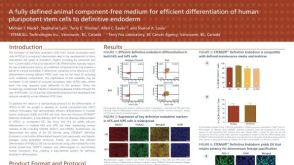 科学海报A Fully Defined Animal Component Free Medium for Efficient Differentiation of Human Pluripotent Stem Cells to Definitive Endoderm

 沪公网安备31010102008431号