Perna F et al. (OCT 2017)
Cancer cell 32 4 506--519.e5
Integrating Proteomics and Transcriptomics for Systematic Combinatorial Chimeric Antigen Receptor Therapy of AML.
Chimeric antigen receptor (CAR) therapy targeting CD19 has yielded remarkable outcomes in patients with acute lymphoblastic leukemia. To identify potential CAR targets in acute myeloid leukemia (AML),we probed the AML surfaceome for overexpressed molecules with tolerable systemic expression. We integrated large transcriptomics and proteomics datasets from malignant and normal tissues,and developed an algorithm to identify potential targets expressed in leukemia stem cells,but not in normal CD34+CD38- hematopoietic cells,T cells,or vital tissues. As these investigations did not uncover candidate targets with a profile as favorable as CD19,we developed a generalizable combinatorial targeting strategy fulfilling stringent efficacy and safety criteria. Our findings indicate that several target pairings hold great promise for CAR therapy of AML.
View Publication
产品类型:
产品号#:
70002
70002.1
70002.2
70002.3
70002.4
70002.5
产品名:
Cavero I et al. (MAY 2016)
Journal of pharmacological and toxicological methods
Comprehensive in vitro Proarrhythmia Assay (CiPA): Pending issues for successful validation and implementation.
INTRODUCTION The Comprehensive in vitro Proarrhythmia Assay (CiPA) is a nonclinical Safety Pharmacology paradigm for discovering electrophysiological mechanisms that are likely to confer proarrhythmic liability to drug candidates intended for human use. TOPICS COVERED Key talks delivered at the 'CiPA on my mind' session,held during the 2015 Annual Meeting of the Safety Pharmacology Society (SPS),are summarized. Issues and potential solutions relating to crucial constituents [e.g.,biological materials (ion channels and pluripotent stem cell-derived cardiomyocytes),study platforms,drug solutions,and data analysis] of CiPA core assays are critically examined. DISCUSSION In order to advance the CiPA paradigm from the current testing and validation stages to a research and regulatory drug development strategy,systematic guidance by CiPA stakeholders is necessary to expedite solutions to pending and newly arising issues. Once a study protocol is proved to yield robust and reproducible results within and across laboratories,it can be implemented as qualified regulatory procedure.
View Publication
Antigen-antibody affinity for dry eye biomarkers by label free biosensing. Comparison with the ELISA technique
The specificity and affinity of antibody-antigen interactions is a fundamental way to achieve reliable biosensing responses. Different proteins involved with dry eye dysfunction: ANXA1,ANXA11,CST4,PRDX5,PLAA and S100A6; were validated as biomarkers. In this work several antibodies were tested for ANXA1,ANXA11 and PRDX5 to select the best candidates for each biomarker. The results were obtained by using Biophotonic Sensing Cells (BICELLs) as an efficient methodology for label-free biosensing and compared with the Enzyme-Linked Immuno Sorbent Assay (ELISA) technique.
View Publication
Ting S et al. (MAY 2014)
Biotechnology journal 9 5 675--683
Time-resolved video analysis and management system for monitoring cardiomyocyte differentiation processes and toxicology assays.
Cardiomyocytes (CM) derived from human embryonic stem cells (hESC) are used for cardio-toxicity evaluation and tested in many preclinical trials for their potential use in regenerative therapeutics. As more efficient CM differentiation protocols are developed,reliable automated platforms for characterization and detection are needed. An automated time-resolved video analysis and management system (TVAMS) has been developed for the evaluation of hESC differentiation to CM. The system was used for monitoring the kinetics of embryoid bodies (EB) generation (numbers and size) and differentiation into beating EBs (percentage beating area and beating EB count) in two differentiation protocols. We show that the percentage beating areas of EBs (from total area of the EBs) is a more sensitive and better predictor of CM differentiation efficiency than percentage of beating EBs (from total EBs) as the percentage beating areas of EBs correlates with cardiac troponin-T and myosin heavy chain expression levels. TVAMS can also be used to evaluate the effect of drugs and inhibitors (e.g. isoproterenol and ZD7288) on CM beating frequency. TVAMS can reliably replace the commonly practiced,time consuming,manual counting of total and beating EBs during CM differentiation. TVAMS is a high-throughput non-invasive video imaging platform that can be applied for the development of new CM differentiation protocols,as well as a tool to conduct CM toxicology assays.
View Publication
产品类型:
产品号#:
05850
05857
05870
05875
85850
85857
85870
85875
产品名:
mTeSR™1
mTeSR™1
Ball CR et al. (SEP 2007)
Blood 110 6 1779--87
Stable differentiation and clonality of murine long-term hematopoiesis after extended reduced-intensity selection for MGMT P140K transgene expression.
Efficient in vivo selection increases survival of gene-corrected hematopoietic stem cells (HSCs) and protects hematopoiesis,even if initial gene transfer efficiency is low. Moreover,selection of a limited number of transduced HSCs lowers the number of cell clones at risk of gene activation by insertional mutagenesis. However,a limited clonal repertoire greatly increases the proliferation stress of each individual clone. Therefore,understanding the impact of in vivo selection on proliferation and lineage differentiation of stem-cell clones is essential for its clinical use. We established minimal cell and drug dosage requirements for selection of P140K mutant O6-methylguanine-DNA-methyltransferase (MGMT P140K)-expressing HSCs and monitored their differentiation potential and clonality under long-term selective stress. Up to 17 administrations of O6-benzylguanine (O6-BG) and 1,3-bis(2-chloroethyl)-1-nitroso-urea (BCNU) did not impair long-term differentiation and proliferation of MGMT P140K-expressing stem-cell clones in mice that underwent serial transplantation and did not lead to clonal exhaustion. Interestingly,not all gene-modified hematopoietic repopulating cell clones were efficiently selectable. Our studies demonstrate that the normal function of murine hematopoietic stem and progenitor cells is not compromised by reduced-intensity long-term in vivo selection,thus underscoring the potential value of MGMT P140K selection for clinical gene therapy.
View Publication


 EasySep™小鼠TIL(CD45)正选试剂盒





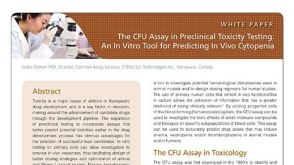 技术公告The CFU Assay in Preclinical Toxicity Testing: An In Vitro Tool for Predicting In Vivo Cytopenia


 沪公网安备31010102008431号