Sakai R et al. (MAR 2003)
Toxicological sciences : an official journal of the Society of Toxicology 72 1 84--91
TCDD treatment eliminates the long-term reconstitution activity of hematopoietic stem cells.
2,3,7,8-tetrachlorodibenzo-p-dioxin (TCDD),an endocrine disrupting chemical (EDC),can cause carcinogenesis,immunosuppression,and teratogenesis,through a ligand-activated transcription factor,the aryl hydrocarbon receptor (AhR). Despite remarkable recent advances in stem cell biology,the influence of TCDD on hematopoietic stem cells (HSCs),which possess the ability to reconstitute long-term multilineage hematopoiesis,has not been well investigated. In this study we examined the influence of TCDD on HSCs enriched for CD34(-),c-kit(+),Sca-1(+),lineage negative (CD34-KSL) cells. The number of the CD34-KSL cells was found to be increased about four-fold upon a single oral administration of TCDD (40 micro g/kg body weight). Surprisingly,we found that these TCDD-treated cells almost lost long-term reconstitution activity. This defect was not present in AhR(-/-) mice. These findings suggest that modulation of AhR/ARNT system activity may have an effect on HSC function or survival.
View Publication
产品类型:
产品号#:
03434
03444
产品名:
MethoCult™ GF M3434
MethoCult™ GF M3434
Jones DT et al. (MAR 2004)
Blood 103 5 1855--61
Geldanamycin and herbimycin A induce apoptotic killing of B chronic lymphocytic leukemia cells and augment the cells' sensitivity to cytotoxic drugs.
We studied the actions of geldanamycin (GA) and herbimycin A (HMA),inhibitors of the chaperone proteins Hsp90 and GRP94,on B chronic lymphocytic leukemia (CLL) cells in vitro. Both drugs induced apoptosis of the majority of CLL isolates studied. Whereas exposure to 4-hour pulses of 30 to 100 nM GA killed normal B lymphocytes and CLL cells with similar dose responses,T lymphocytes from healthy donors as well as those present in the CLL isolates were relatively resistant. GA,but not HMA,showed a modest cytoprotective effect toward CD34+ hematopoietic progenitors from normal bone marrow. The ability of bone marrow progenitors to form hematopoietic colonies was unaffected by pulse exposures to GA. Both GA and HMA synergized with chlorambucil and fludarabine in killing a subset of CLL isolates. GA- and HMA-induced apoptosis was preceded by the up-regulation of the stress-responsive chaperones Hsp70 and BiP. Both ansamycins also resulted in down-regulation of Akt protein kinase,a modulator of cell survival. The relative resistance of T lymphocytes and of CD34+ bone marrow progenitors to GA coupled with its ability to induce apoptosis following brief exposures and to synergize with cytotoxic drugs warrant further investigation of ansamycins as potential therapeutic agents in CLL.
View Publication
产品类型:
产品号#:
04434
04444
产品名:
MethoCult™ H4434 Classic
MethoCult™ H4434 Classic
Coffman KT et al. (NOV 2003)
Cancer Research 63 22 7907--12
Differential EphA2 epitope display on normal versus malignant cells.
The EphA2 receptor tyrosine kinase is overexpressed in many different types of human cancers where it functions as a powerful oncoprotein. Dramatic changes in the subcellular localization and function of EphA2 have also been linked with cancer,and in particular,unstable cancer cell-cell contacts prevent EphA2 from stably binding its ligand on the surface of adjoining cells. This change is important in light of evidence that ligand binding causes EphA2 to transmit signals that negatively regulate tumor cell growth and invasiveness and also induce EphA2 degradation. On the basis of these properties,we have begun to target EphA2 on tumor cells using agonistic antibodies,which mimic the consequences of ligand binding. In our present study,we show that a subset of agonistic EphA2 antibodies selectively bind epitopes on malignant cells,which are not available on nontransformed epithelial cells. We also show that such epitopes arise from differential cell-cell adhesions and that the stable intercellular junctions of nontransformed epithelial cells occlude the binding site for ligand,as well as this subset of EphA2 antibodies. Finally,we demonstrate that antibody targeting of EphA2 decreases tumor cell growth as measured using xenograft tumor models and found that the mechanism of antibody action relates to EphA2 protein degradation in vivo. Taken together,these results suggest new opportunities for therapeutic targeting of the large number of different cancers that express EphA2 in a manner that could minimize potential toxicities to normal cells.
View Publication
产品类型:
产品号#:
03800
03801
03802
03803
03804
03805
03806
产品名:
ClonaCell™-HY杂交瘤试剂盒
ClonaCell™-HY培养基A
ClonaCell™-HY 培养基 B
ClonaCell™-HY 培养基 C
ClonaCell™-HY 培养基 D
ClonaCell™-HY 培养基 E
ClonaCell™-HY PEG
Pei Y et al. (MAY 2016)
Brain research 1638 Pt A 57--73
Comparative neurotoxicity screening in human iPSC-derived neural stem cells, neurons and astrocytes.
Induced pluripotent stem cells (iPSC) and their differentiated derivatives offer a unique source of human primary cells for toxicity screens. Here,we report on the comparative cytotoxicity of 80 compounds (neurotoxicants,developmental neurotoxicants,and environmental compounds) in iPSC as well as isogenic iPSC-derived neural stem cells (NSC),neurons,and astrocytes. All compounds were tested over a 24-h period at 10 and 100$\$,in duplicate,with cytotoxicity measured using the MTT assay. Of the 80 compounds tested,50 induced significant cytotoxicity in at least one cell type; per cell type,32,38,46,and 41 induced significant cytotoxicity in iPSC,NSC,neurons,and astrocytes,respectively. Four compounds (valinomycin,3,3',5,5'-tetrabromobisphenol,deltamethrin,and triphenyl phosphate) were cytotoxic in all four cell types. Retesting these compounds at 1,10,and 100$\$ using the same exposure protocol yielded consistent results as compared with the primary screen. Using rotenone,we extended the testing to seven additional iPSC lines of both genders; no substantial difference in the extent of cytotoxicity was detected among the cell lines. Finally,the cytotoxicity assay was simplified by measuring luciferase activity using lineage-specific luciferase reporter iPSC lines which were generated from the parental iPSC line. This article is part of a Special Issue entitled SI: PSC and the brain.
View Publication
产品类型:
产品号#:
05850
05857
05870
05875
85850
85857
85870
85875
产品名:
mTeSR™1
mTeSR™1
Weisberg E et al. (DEC 2008)
Blood 112 13 5161--70
Antileukemic effects of the novel, mutant FLT3 inhibitor NVP-AST487: effects on PKC412-sensitive and -resistant FLT3-expressing cells.
An attractive target for therapeutic intervention is constitutively activated,mutant FLT3,which is expressed in a subpopulation of patients with acute myelocyic leukemia (AML) and is generally a poor prognostic indicator in patients under the age of 65 years. PKC412 is one of several mutant FLT3 inhibitors that is undergoing clinical testing,and which is currently in late-stage clinical trials. However,the discovery of drug-resistant leukemic blast cells in PKC412-treated patients with AML has prompted the search for novel,structurally diverse FLT3 inhibitors that could be alternatively used to override drug resistance. Here,we report the potent and selective antiproliferative effects of the novel mutant FLT3 inhibitor NVP-AST487 on primary patient cells and cell lines expressing FLT3-ITD or FLT3 kinase domain point mutants. NVP-AST487,which selectively targets mutant FLT3 protein kinase activity,is also shown to override PKC412 resistance in vitro,and has significant antileukemic activity in an in vivo model of FLT3-ITD(+) leukemia. Finally,the combination of NVP-AST487 with standard chemotherapeutic agents leads to enhanced inhibition of proliferation of mutant FLT3-expressing cells. Thus,we present a novel class of FLT3 inhibitors that displays high selectivity and potency toward FLT3 as a molecular target,and which could potentially be used to override drug resistance in AML.
View Publication
产品类型:
产品号#:
04434
04444
产品名:
MethoCult™ H4434 Classic
MethoCult™ H4434 Classic
Fakler M et al. (FEB 2009)
Blood 113 8 1710--22
Small molecule XIAP inhibitors cooperate with TRAIL to induce apoptosis in childhood acute leukemia cells and overcome Bcl-2-mediated resistance.
Defects in apoptosis contribute to poor outcome in pediatric acute lymphoblastic leukemia (ALL),calling for novel strategies that counter apoptosis resistance. Here,we demonstrate for the first time that small molecule inhibitors of the antiapoptotic protein XIAP cooperate with TRAIL to induce apoptosis in childhood acute leukemia cells. XIAP inhibitors at subtoxic concentrations,but not a structurally related control compound,synergize with TRAIL to trigger apoptosis and to inhibit clonogenic survival of acute leukemia cells,whereas they do not affect viability of normal peripheral blood lymphocytes,suggesting some tumor selectivity. Analysis of signaling pathways reveals that XIAP inhibitors enhance TRAIL-induced activation of caspases,loss of mitochondrial membrane potential,and cytochrome c release in a caspase-dependent manner,indicating that they promote a caspase-dependent feedback mitochondrial amplification loop. Of note,XIAP inhibitors even overcome Bcl-2-mediated resistance to TRAIL by enhancing Bcl-2 cleavage and Bak conformational change. Importantly,XIAP inhibitors kill leukemic blasts from children with ALL ex vivo and cooperate with TRAIL to induce apoptosis. In vivo,they significantly reduce leukemic burden in a mouse model of pediatric ALL engrafted in non-obese diabetic/severe combined immunodeficient (NOD/SCID) mice. Thus,XIAP inhibitors present a promising novel approach for apoptosis-based therapy of childhood ALL.
View Publication
产品类型:
产品号#:
04100
产品名:
MethoCult™ H4100
Zhao H et al. (JUN 2009)
Blood 113 23 5747--56
Amelioration of murine beta-thalassemia through drug selection of hematopoietic stem cells transduced with a lentiviral vector encoding both gamma-globin and the MGMT drug-resistance gene.
Correction of murine models of beta-thalassemia has been achieved through high-level globin lentiviral vector gene transfer into mouse hematopoietic stem cells (HSCs). However,transduction of human HSCs is less robust and may be inadequate to achieve therapeutic levels of genetically modified erythroid cells. We therefore developed a double gene lentiviral vector encoding both human gamma-globin under the transcriptional control of erythroid regulatory elements and methylguanine methyltransferase (MGMT),driven by a constitutive cellular promoter. MGMT expression provides cellular resistance to alkylator drugs,which can be administered to kill residual untransduced,diseased HSCs,whereas transduced cells are protected. Mice transplanted with beta-thalassemic HSCs transduced with a gamma-globin/MGMT vector initially had subtherapeutic levels of red cells expressing gamma-globin. To enrich gamma-globin-expressing cells,transplanted mice were treated with the alkylator agent 1,3-bis-chloroethyl-1-nitrosourea. This resulted in significant increases in the number of gamma-globin-expressing red cells and the amount of fetal hemoglobin,leading to resolution of anemia. Selection of transduced HSCs was also obtained when cells were drug-treated before transplantation. Mice that received these cells demonstrated reconstitution with therapeutic levels of gamma-globin-expressing cells. These data suggest that MGMT-based drug selection holds promise as a modality to improve gene therapy for beta-thalassemia.
View Publication
产品类型:
产品号#:
09600
09650
产品名:
StemSpan™ SFEM
StemSpan™ SFEM
Heringer-Walther S et al. (JUN 2009)
Haematologica 94 6 857--60
Angiotensin-(1-7) stimulates hematopoietic progenitor cells in vitro and in vivo.
Effects of angiotensin (Ang)-(1-7),an AngII metabolite,on bone marrow-derived hematopoietic cells were studied. We identified Ang-(1-7) to stimulate proliferation of human CD34(+) and mononuclear cells in vitro. Under in vivo conditions,we monitored proliferation and differentiation of human cord blood mononuclear cells in NOD/SCID mice. Ang-(1-7) stimulated differentially human cells in bone marrow and accumulated them in the spleen. The number of HLA-I(+) and CD34(+) cells in the bone marrow was increased 42-fold and 600-fold,respectively. These results indicate a decisive impact of Ang-(1-7) on hematopoiesis and its promising therapeutic potential in diseases requiring progenitor stimulation.
View Publication
产品类型:
产品号#:
09600
09650
产品名:
StemSpan™ SFEM
StemSpan™ SFEM
Esplin BL et al. (MAY 2011)
Journal of immunology (Baltimore,Md. : 1950) 186 9 5367--75
Chronic exposure to a TLR ligand injures hematopoietic stem cells.
Hematopoietic stem cells (HSC) can be harmed by disease,chemotherapy,radiation,and normal aging. We show in this study that damage also occurs in mice repeatedly treated with very low doses of LPS. Overall health of the animals was good,and there were relatively minor changes in marrow hematopoietic progenitors. However,HSC were unable to maintain quiescence,and transplantation revealed them to be myeloid skewed. Moreover,HSC from treated mice were not sustained in serial transplants and produced lymphoid progenitors with low levels of the E47 transcription factor. This phenomenon was previously seen in normal aging. Screening identified mAbs that resolve HSC subsets,and relative proportions of these HSC changed with age and/or chronic LPS treatment. For example,minor CD150(Hi)CD48(-) populations lacking CD86 or CD18 expanded. Simultaneous loss of CD150(Lo/-)CD48(-) HSC and gain of the normally rare subsets,in parallel with diminished transplantation potential,would be consistent with age- or TLR-related injury. In contrast,HSC in old mice differed from those in LPS-treated animals with respect to VCAM-1 or CD41 expression and lacked proliferation abnormalities. HSC can be exposed to endogenous and pathogen-derived TLR ligands during persistent low-grade infections. This stimulation might contribute in part to HSC senescence and ultimately compromise immunity.
View Publication


 EasySep™小鼠TIL(CD45)正选试剂盒





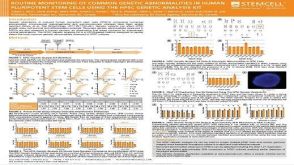 科学海报Routine Monitoring of Common Genetic Abnormalities in Human Pluripotent Stem Cells Using the hPSC Genetic Analysis Kit
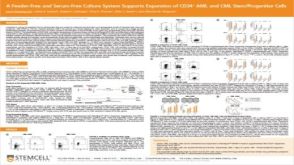 科学海报A Feeder-Free and Serum-Free Culture System Supports Expansion of CD34+ AML and CML Stem/Progenitor Cells
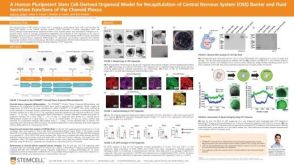 科学海报A Human Pluripotent Stem Cell-Derived Organoid Model for Recapitulation of Central Nervous System (CNS) Barrier and Fluid Secretion Functions of the Choroid Plexus
 沪公网安备31010102008431号