Ayasoufi K et al. (APR 2016)
Journal of Immunology 196 7 3180--90
CD4 T Cell Help via B Cells Is Required for Lymphopenia-Induced CD8 T Cell Proliferation.
Ab-mediated lymphoablation is commonly used in solid organ and hematopoietic cell transplantation. However,these strategies fail to control pathogenic memory T cells efficiently and to improve long-term transplant outcomes significantly. Understanding the mechanisms of T cell reconstitution is critical for enhancing the efficacy of Ab-mediated depletion in sensitized recipients. Using a murine analog of anti-thymocyte globulin (mATG) in a mouse model of cardiac transplantation,we previously showed that peritransplant lymphocyte depletion induces rapid memory T cell proliferation and only modestly prolongs allograft survival. We now report that T cell repertoire following depletion is dominated by memory CD4 T cells. Additional depletion of these residual CD4 T cells severely impairs the recovery of memory CD8 T cells after mATG treatment. The CD4 T cell help during CD8 T cell recovery depends on the presence of B cells expressing CD40 and intact CD40/CD154 interactions. The requirement for CD4 T cell help is not limited to the use of mATG in heart allograft recipients,and it is observed in nontransplanted mice and after CD8 T cell depletion with mAb instead of mATG. Most importantly,limiting helper signals increases the efficacy of mATG in controlling memory T cell expansion and significantly extends heart allograft survival in sensitized recipients. Our findings uncover the novel role for helper memory CD4 T cells during homeostatic CD8 T cell proliferation and open new avenues for optimizing lymphoablative therapies in allosensitized patients.
View Publication
产品类型:
产品号#:
19851
19851RF
产品名:
EasySep™小鼠T细胞分选试剂盒
RoboSep™ 小鼠T细胞分选试剂盒
Tsang JY-S et al. (JUL 2006)
Journal of leukocyte biology 80 1 145--51
Altered proximal T cell receptor (TCR) signaling in human CD4+CD25+ regulatory T cells.
CD4+CD25+ regulatory T cells play an important role in peripheral tolerance. Upon T cell receptor (TCR)-mediated activation,the cells fail to proliferate but are induced to have a suppressor function. The intracellular signaling events that lead to their responses have not been elucidated. In this study,we have examined the proximal TCR signaling events in freshly isolated human CD4+CD25+ regulatory T cells after TCR ligation. In contrast to CD4+CD25- T cells,TCR ligation of CD4+CD25+ regulatory T cells by anti-CD3 cross-linking resulted in a lower calcium influx and extracellular signal-regulated kinase 1/2 phosphorylation. Examination of the CD3zeta chain phosphorylation status indicated that CD4+CD25+ regulatory T cells have poor phosphorylation of the protein and consequently,reduced recruitment of zeta-associated protein-70 to the TCR immunoreceptor tyrosine motif. The adaptor protein,Src homology 2 domain-containing leukocyte phosphoprotein of 76 kDa,which relays signals to downstream signaling components,also showed reduced phosphorylation,which correlated with reduced VAV guanine nucleotide exchange factors association. Consistent with other findings,the defect is accompanied with impaired actin cap formation,implicating a failure of actin remodeling of the cells. Together,our results demonstrate that CD4+CD25+ regulatory T cells have altered TCR proximal signaling pathways,which could be critical for inducing the distinct behavior of these cells.
View Publication
J. M. Termini et al. ( 2017)
Journal of virology 91 20
Simian T Lymphotropic Virus 1 Infection of Papio anubis: tax Sequence Heterogeneity and T Cell Recognition.
Baboons naturally infected with simian T lymphotropic virus (STLV) are a potentially useful model system for the study of vaccination against human T lymphotropic virus (HTLV). Here we expanded the number of available full-length baboon STLV-1 sequences from one to three and related the T cell responses that recognize the immunodominant Tax protein to the tax sequences present in two individual baboons. Continuously growing T cell lines were established from two baboons,animals 12141 and 12752. Next-generation sequencing (NGS) of complete STLV genome sequences from these T cell lines revealed them to be closely related but distinct from each other and from the baboon STLV-1 sequence in the NCBI sequence database. Overlapping peptides corresponding to each unique Tax sequence and to the reference baboon Tax sequence were used to analyze recognition by T cells from each baboon using intracellular cytokine staining (ICS). Individual baboons expressed more gamma interferon and tumor necrosis factor alpha in response to Tax peptides corresponding to their own STLV-1 sequence than in response to Tax peptides corresponding to the reference baboon STLV-1 sequence. Thus,our analyses revealed distinct but closely related STLV-1 genome sequences in two baboons,extremely low heterogeneity of STLV sequences within each baboon,no evidence for superinfection within each baboon,and a ready ability of T cells in each baboon to recognize circulating Tax sequences. While amino acid substitutions that result in escape from CD8+ T cell recognition were not observed,premature stop codons were observed in 7{\%} and 56{\%} of tax sequences from peripheral blood mononuclear cells from animals 12141 and 12752,respectively.IMPORTANCE It has been estimated that approximately 100,000 people suffer serious morbidity and 10,000 people die each year from the consequences associated with human T lymphotropic virus (HTLV) infection. There are no antiviral drugs and no preventive vaccine. A preventive vaccine would significantly impact the global burden associated with HTLV infections. Here we provide fundamental information on the simian T lymphotropic virus (STLV) naturally transmitted in a colony of captive baboons. The limited viral sequence heterogeneity in individual baboons,the identity of the viral gene product that is the major target of cellular immune responses,the persistence of viral amino acid sequences that are the major targets of cellular immune responses,and the emergence in vivo of truncated variants in the major target of cellular immune responses all parallel what are seen with HTLV infection of humans. These results justify the use of STLV-infected baboons as a model system for vaccine development efforts.
View Publication
Snyder CM et al. (SEP 2009)
Journal of immunology (Baltimore,Md. : 1950) 183 6 3932--41
CD4+ T cell help has an epitope-dependent impact on CD8+ T cell memory inflation during murine cytomegalovirus infection.
Murine CMV (MCMV) establishes a systemic,low-level persistent infection resulting in the accumulation of CD8(+) T cells specific for a subset of viral epitopes,a process called memory inflation. Although replicating virus is rarely detected in chronically infected C57BL/6 mice,these inflationary cells display a phenotype suggestive of repeated Ag stimulation,and they remain functional. CD4(+) T cells have been implicated in maintaining the function and/or number of CD8(+) T cells in other chronic infections. Moreover,CD4(+) T cells are essential for complete control of MCMV. Thus,we wondered whether CD4(+) T cell deficiency would result in impaired MCMV-specific CD8(+) T cell responses. Here we show that CD4(+) T cell deficiency had an epitope-specific impact on CD8(+) T cell memory inflation. Of the three codominant T cell responses during chronic infection,only accumulation of the late-appearing IE3-specific CD8(+) T cells was substantially impaired in CD4(+) T cell-deficient mice. Moreover,the increased viral activity did not drive increased CD8(+) T cell division or substantial dysfunction in any MCMV-specific population that we studied. These data show that CD4(+) T cell help is needed for inflation of a response that develops only during chronic infection but is otherwise dispensable for the steady state maintenance and function of MCMV-specific CD8(+) T cells.
View Publication
产品类型:
产品号#:
19753
19753RF
产品名:
Chen Z et al. (SEP 2017)
Cell reports 20 11 2584--2597
miR-150 Regulates Memory CD8 T Cell Differentiation via c-Myb.
MicroRNAs play an important role in T cell responses. However,how microRNAs regulate CD8 T cell memory remains poorly defined. Here,we found that miR-150 negatively regulates CD8 T cell memory in vivo. Genetic deletion of miR-150 disrupted the balance between memory precursor and terminal effector CD8 T cells following acute viral infection. Moreover,miR-150-deficient memory CD8 T cells were more protective upon rechallenge. A key circuit whereby miR-150 repressed memory CD8 T cell development through the transcription factor c-Myb was identified. Without miR-150,c-Myb was upregulated and anti-apoptotic targets of c-Myb,such as Bcl-2 and Bcl-xL,were also increased,suggesting a miR-150-c-Myb survival circuit during memory CD8 T cell development. Indeed,overexpression of non-repressible c-Myb rescued the memory CD8 T cell defects caused by overexpression of miR-150. Overall,these results identify a key role for miR-150 in memory CD8 T cells through a c-Myb-controlled enhanced survival circuit.
View Publication


 EasySep™小鼠TIL(CD45)正选试剂盒




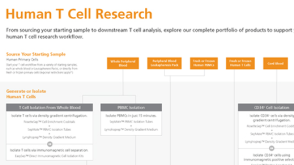 产品手册Human T Cell Research Product Workflow
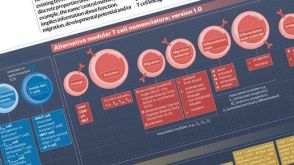 挂图T Cell Nomenclature: From Subsets to Modules A modular framework for classifying T cells by lineage, function, migration, differentiation, and antigen context.发布日期: 12/05/2025
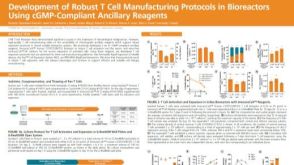 科学海报Development of Robust T Cell Manufacturing Protocols in Bioreactors Using cGMP-Compliant Ancillary Reagents
 挂图Regulatory T Cells Overview of the development, phenotype and functions of regulatory T cells



 沪公网安备31010102008431号