Role of innate lymphoid cells and dendritic cells in intradermal immunization of the enterovirus antigen.
Enterovirus type 71 (EV71) and coxsackievirus A 16 (CA16) are the major pathogens of human hand,foot,and mouth disease (HFMD). In our previous study,intramuscular immunization with the inactivated EV71 vaccine elicited effective immunity,while immunization with the inactivated CA16 vaccine did not. In this report,we focused on innate immune responses elicited by inactivated EV71 and CA16 antigens administered intradermally or intramuscularly. The distributions of the EV71 and CA16 antigens administered intradermally or intramuscularly were not obviously different,but the antigens were detected for a shorter period of time when administered intradermally. The expression levels of NF-kappaB pathway signaling molecules,which were identified as being capable of activating DCs,ILCs,and T cells,were higher in the intradermal group than in the intramuscular group. Antibodies for the EV71 and CA16 antigens colocalized with ILCs and DCs in skin and muscle tissues under fluorescence microscopy. Interestingly,ILC colocalization decreased over time,while DC colocalization increased over time. ELISpot analysis showed that coordination between DCs and ILCs contributed to successful adaptive immunity against vaccine antigens in the skin. EV71 and/or CA16 antigen immunization via the intradermal route was more capable of significantly increasing neutralizing antibody titers and activating specific T cell responses than immunization via the intramuscular route. Furthermore,neonatal mice born to mothers immunized with the EV71 and CA16 antigens were 100{\%} protected against wild-type EV71 or CA16 viral challenge. Together,our results provide new insights into the development of vaccines for HFMD.
View Publication
产品类型:
产品号#:
19851
19851RF
产品名:
EasySep™小鼠T细胞分选试剂盒
RoboSep™ 小鼠T细胞分选试剂盒
R. Lorenzetti et al. (jul 2019)
Journal of autoimmunity 101 145--152
Abatacept modulates CD80 and CD86 expression and memory formation in human B-cells.
BACKGROUND Cytotoxic T lymphocyte antigen-4 (CTLA-4) limits T-cell activation and is expressed on T-regulatory cells. Human CTLA-4 deficiency results in severe immune dysregulation. Abatacept (CTLA-4 Ig) is approved for the treatment of rheumatoid arthritis (RA) and its mechanism of action is attributed to effects on T-cells. It is known that CTLA-4 modulates the expression of its ligands CD80 and CD86 on antigen presenting cells (APC) by transendocytosis. As B-cells express CD80/CD86 and function as APC,we hypothesize that B-cells are a direct target of abatacept. OBJECTIVES To investigate direct effects of abatacept on human B-lymphocytes in vitro and in RA patients. METHODS The effect of abatacept on healthy donor B-cells' phenotype,activation and CD80/CD86 expression was studied in vitro. Nine abatacept-treated RA patients were studied. Seven of these were followed up to 24 months,and two up to 12 months only and treatment response,immunoglobulins,ACPA,RF concentrations,B-cell phenotype and ACPA-specific switched memory B-cell frequency were assessed. RESULTS B-cell development was unaffected by abatacept. Abatacept treatment resulted in a dose-dependent decrease of CD80/CD86 expression on B-cells in vitro,which was due to dynamin-dependent internalization. RA patients treated with abatacept showed a progressive decrease in plasmablasts and serum IgG. While ACPA-titers only moderately declined,the frequency of ACPA-specific switched memory B-cells significantly decreased. CONCLUSIONS Abatacept directly targets B-cells by reducing CD80/CD86 expression. Impairment of antigen presentation and T-cell activation may result in altered B-cell selection,providing a new therapeutic mechanism and a base for abatacept use in B-cell mediated autoimmunity.
View Publication
Christopher MJ et al. (FEB 2011)
The Journal of experimental medicine 208 2 251--60
Expression of the G-CSF receptor in monocytic cells is sufficient to mediate hematopoietic progenitor mobilization by G-CSF in mice.
Granulocyte colony-stimulating factor (G-CSF),the prototypical mobilizing cytokine,induces hematopoietic stem and progenitor cell (HSPC) mobilization from the bone marrow in a cell-nonautonomous fashion. This process is mediated,in part,through suppression of osteoblasts and disruption of CXCR4/CXCL12 signaling. The cellular targets of G-CSF that initiate the mobilization cascade have not been identified. We use mixed G-CSF receptor (G-CSFR)-deficient bone marrow chimeras to show that G-CSF-induced mobilization of HSPCs correlates poorly with the number of wild-type neutrophils. We generated transgenic mice in which expression of the G-CSFR is restricted to cells of the monocytic lineage. G-CSF-induced HSPC mobilization,osteoblast suppression,and inhibition of CXCL12 expression in the bone marrow of these transgenic mice are intact,demonstrating that G-CSFR signals in monocytic cells are sufficient to induce HSPC mobilization. Moreover,G-CSF treatment of wild-type mice is associated with marked loss of monocytic cells in the bone marrow. Finally,we show that bone marrow macrophages produce factors that support the growth and/or survival of osteoblasts in vitro. Together,these data suggest a model in which G-CSFR signals in bone marrow monocytic cells inhibit the production of trophic factors required for osteoblast lineage cell maintenance,ultimately leading to HSPC mobilization.
View Publication
产品类型:
产品号#:
03434
03444
产品名:
MethoCult™ GF M3434
MethoCult™ GF M3434
Ichikawa S et al. (MAY 2011)
Journal of immunology (Baltimore,Md. : 1950) 186 10 5549--55
Hepatic stellate cells function as regulatory bystanders.
Regulatory T cells (Tregs) contribute significantly to the tolerogenic nature of the liver. The mechanisms,however,underlying liver-associated Treg induction are still elusive. We recently identified the vitamin A metabolite,retinoic acid (RA),as a key controller that promotes TGF-β-dependent Foxp3(+) Treg induction but inhibits TGF-β-driven Th17 differentiation. To investigate whether the RA producing hepatic stellate cells (HSC) are part of the liver tolerance mechanism,we investigated the ability of HSC to function as regulatory APC. Different from previous reports,we found that highly purified HSC did not express costimulatory molecules and only upregulated MHC class II after in vitro culture in the presence of exogenous IFN-γ. Consistent with an insufficient APC function,HSC failed to stimulate naive OT-II TCR transgenic CD4(+) T cells and only moderately stimulated α-galactosylceramide-primed invariant NKT cells. In contrast,HSC functioned as regulatory bystanders and promoted enhanced Foxp3 induction by OT-II TCR transgenic T cells primed by spleen dendritic cells,whereas they greatly inhibited the Th17 differentiation. Furthermore,the regulatory bystander capacity of the HSC was completely dependent on their ability to produce RA. Our data thus suggest that HSC can function as regulatory bystanders,and therefore,by promoting Tregs and suppressing Th17 differentiation,they might represent key players in the mechanism that drives liver-induced tolerance.
View Publication
产品类型:
产品号#:
01700
01705
01701
01702
19755
产品名:
ALDEFLUOR™ 试剂盒
ALDEFLUOR™ DEAB试剂, 1.5 mM, 1 mL
ALDEFLUOR™检测缓冲液
Daniels TR et al. ( 2011)
Journal of immunotherapy (Hagerstown,Md. : 1997) 34 6 500--8
An antibody-based multifaceted approach targeting the human transferrin receptor for the treatment of B-cell malignancies.
We previously developed an antibody-avidin fusion protein (ch128.1Av) targeting the human transferrin receptor 1 (TfR1,also known as CD71),which demonstrates direct in vitro cytotoxicity against malignant hematopoietic cells. This cytotoxicity is attributed to its ability to decrease the level of TfR1 leading to lethal iron deprivation. We now report that ch128.1Av shows the ability to bind the Fcγ receptors and the complement component C1q,suggesting that it is capable of eliciting Fc-mediated effector functions such as antibody-dependent cell-mediated cytotoxicity and complement-mediated cytotoxicity. In addition,in 2 disseminated multiple myeloma xenograft mouse models,we show that a single dose of ch128.1Av results in significant antitumor activity,including long-term survival. It is interesting to note that the parental antibody without avidin (ch128.1) also shows remarkable in vivo anticancer activity despite its limited in vitro cytotoxicity. Finally,we demonstrate that ch128.1Av is not toxic to pluripotent hematopoietic progenitor cells using the long-term cell-initiating culture assay suggesting that these important progenitors would be preserved in different therapeutic approaches,including the in vitro purging of cancer cells for autologous transplantation and in vivo passive immunotherapy. Our results suggest that ch128.1Av and ch128.1 may be effective in the therapy of human multiple myeloma and potentially other hematopoietic malignancies.
View Publication
产品类型:
产品号#:
70001
70001.1
70001.2
70001.3
70001.4
产品名:
Machmach K et al. (APR 2012)
Journal of virology 86 8 4245--52
Plasmacytoid dendritic cells reduce HIV production in elite controllers.
HIV elite controllers (EC) are a rare group of HIV-infected patients who are able to maintain undetectable viral loads during a long period of time in the absence of antiretroviral treatment. Adaptive immunity and host genetic factors,although implicated,do not entirely explain this phenomenon. On the other hand,plasmacytoid dendritic cells (pDCs) are the principal type I interferon (IFN) producers in response to viral infection,and it is unknown whether pDCs are involved in the control of HIV infection in EC. In our study,we analyzed peripheral pDC levels and IFN-α production by peripheral blood mononuclear cells (PBMCs) in EC compared to other groups of HIV-infected patients,the ability of pDCs to reduce HIV production in vitro,and the mechanisms potentially involved. We showed preserved pDC counts and IFN-α production in EC. We also observed a higher capacity of pDCs from EC to reduce HIV production and to induce T cell apoptosis,whereas pDCs from viremic patients barely responded without previous Toll-like receptor 9 (TLR-9) stimulus. The preserved functionality of pDCs from EC to reduce viral production may be one of the mechanisms involved in the control of HIV viremia in these subjects. These results demonstrate the importance of innate immunity in HIV pathogenesis,and an understanding of pDC mechanisms would be helpful for the design of new therapies.
View Publication
产品类型:
产品号#:
15022
15062
19062
19062RF
17977
17977RF
产品名:
RosetteSep™人CD4+ T细胞富集抗体混合物
RosetteSep™人CD4+ T细胞富集抗体混合物
EasySep™人浆细胞样DC富集试剂盒
RoboSep™ 人浆细胞样DC富集试剂盒含滤芯吸头
EasySep™人浆细胞样DC分选试剂盒
RoboSep™ 人浆细胞样DC分选试剂盒
Yamin R et al. (MAY 2016)
Cell Reports 15 7 1542--53
HCMV vCXCL1 Binds Several Chemokine Receptors and Preferentially Attracts Neutrophils over NK Cells by Interacting with CXCR2.
HCMV is a highly sophisticated virus that has developed various mechanisms for immune evasion and viral dissemination throughout the body (partially mediated by neutrophils). NK cells play an important role in elimination of HCMV-infected cells. Both neutrophils and NK cells utilize similar sets of chemokine receptors to traffic,to and from,various organs. However,the mechanisms by which HCMV attracts neutrophils and not NK cells are largely unknown. Here,we show a unique viral protein,vCXCL1,which targets three chemokine receptors: CXCR1 and CXCR2 expressed on neutrophils and CXCR1 and CX3CR1 expressed on NK cells. Although vCXCL1 attracted both cell types,neutrophils migrated faster and more efficiently than NK cells through the binding of CXCR2. Therefore,we propose that HCMV has developed vCXCL1 to orchestrate its rapid systemic dissemination through preferential attraction of neutrophils and uses alternative mechanisms to counteract the later attraction of NK cells.
View Publication
产品类型:
产品号#:
19055
19055RF
产品名:
EasySep™人NK细胞富集试剂盒
RoboSep™ 人NK细胞富集试剂盒含滤芯吸头
Martinez-Gonzalez I et al. (JUL 2016)
Immunity 45 1 198--208
Allergen-Experienced Group 2 Innate Lymphoid Cells Acquire Memory-like Properties and Enhance Allergic Lung Inflammation.
Group 2 innate lymphoid cells (ILC2s) in the lung are stimulated by inhaled allergens. ILC2s do not directly recognize allergens but they are stimulated by cytokines including interleukin (IL)-33 released by damaged epithelium. In response to allergens,lung ILC2s produce T helper 2 cell type cytokines inducing T cell-independent allergic lung inflammation. Here we examined the fate of lung ILC2s upon allergen challenges. ILC2s proliferated and secreted cytokines upon initial stimulation with allergen or IL-33,and this phase was followed by a contraction phase as cytokine production ceased. Some ILC2s persisted long after the resolution of the inflammation as allergen-experienced ILC2s and responded to unrelated allergens more potently than naive ILC2s,mediating severe allergic inflammation. The allergen-experienced ILC2s exhibited a gene expression profile similar to that of memory T cells. The memory-like properties of allergen-experienced ILC2s may explain why asthma patients are often sensitized to multiple allergens.
View Publication
产品类型:
产品号#:
19842
产品名:
EasySep™小鼠ILC2富集试剂盒
Bemark M et al. ( 2016)
Nature communications 7 12698
Limited clonal relatedness between gut IgA plasma cells and memory B cells after oral immunization.
Understanding how memory B cells are induced and relate to long-lived plasma cells is important for vaccine development. Immunity to oral vaccines has been considered short-lived because of a poor ability to develop IgA B-cell memory. Here we demonstrate that long-lived mucosal IgA memory is readily achieved by oral but not systemic immunization in mouse models with NP hapten conjugated with cholera toxin and transfer of B1-8(high)/GFP(+) NP-specific B cells. Unexpectedly,memory B cells are poorly related to long-lived plasma cells and less affinity-matured. They are α4β7-integrin(+)CD73(+)PD-L2(+)CD80(+) and at systemic sites mostly IgM(+),while 80% are IgA(+) in Peyer's patches. On reactivation,most memory B cells in Peyer's patches are GL7(-),but expand in germinal centres and acquire higher affinity and more mutations,demonstrating strong clonal selection. CCR9 expression is found only in Peyer's patches and appears critical for gut homing. Thus,gut mucosal memory possesses unique features not seen after systemic immunization.
View Publication


 EasySep™小鼠TIL(CD45)正选试剂盒





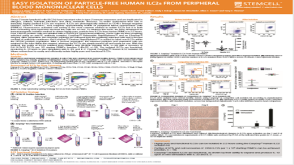 科学海报Easy Isolation of Particle-Free Human ILC2s from Peripheral Blood Mononuclear Cells
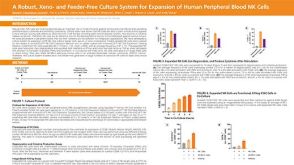 科学海报A Robust, Xeno- and Feeder-Free Culture System for Expansion of Human Peripheral Blood NK Cells

 沪公网安备31010102008431号