Doehle BP et al. (OCT 2009)
Journal of virology 83 20 10395--405
Human immunodeficiency virus type 1 mediates global disruption of innate antiviral signaling and immune defenses within infected cells.
Interferon regulatory factor 3 (IRF-3) is essential for innate intracellular immune defenses that limit virus replication,but these defenses fail to suppress human immunodeficiency virus (HIV) infection,which can ultimately associate with opportunistic coinfections and the progression to AIDS. Here,we examined antiviral defenses in CD4+ cells during virus infection and coinfection,revealing that HIV type 1 (HIV-1) directs a global disruption of innate immune signaling and supports a coinfection model through suppression of IRF-3. T cells responded to paramyxovirus infection to activate IRF-3 and interferon-stimulated gene expression,but they failed to mount a response against HIV-1. The lack of response associated with a marked depletion of IRF-3 but not IRF-7 in HIV-1-infected cells,which supported robust viral replication,whereas ectopic expression of active IRF-3 suppressed HIV-1 infection. IRF-3 depletion was dependent on a productive HIV-1 replication cycle and caused the specific disruption of Toll-like receptor and RIG-I-like receptor innate immune signaling that rendered cells permissive to secondary virus infection. IRF-3 levels were reduced in vivo within CD4+ T cells from patients with acute HIV-1 infection but not from long-term nonprogressors. Our results indicate that viral suppression of IRF-3 promotes HIV-1 infection by disrupting IRF-3-dependent signaling pathways and innate antiviral defenses of the host cell. IRF-3 may direct an innate antiviral response that regulates HIV-1 replication and viral set point while governing susceptibility to opportunistic virus coinfections.
View Publication
产品类型:
产品号#:
19052
19052RF
21000
20119
20155
产品名:
EasySep™人CD4+ T细胞富集试剂盒
RoboSep™ 人CD4+ T细胞富集试剂盒含滤芯吸头
RoboSep™- S
RoboSep™ 吸头组件抛光剂
RoboSep™分选管套装(9个塑料管)
Kerns HM et al. (MAR 2010)
Blood 115 11 2146--55
B cell-specific lentiviral gene therapy leads to sustained B-cell functional recovery in a murine model of X-linked agammaglobulinemia.
The immunodeficiency disorder,X-linked agammaglobulinemia (XLA),results from mutations in the gene encoding Bruton tyrosine kinase (Btk). Btk is required for pre-B cell clonal expansion and B-cell antigen receptor signaling. XLA patients lack mature B cells and immunoglobulin and experience recurrent bacterial infections only partially mitigated by life-long antibody replacement therapy. In pursuit of definitive therapy for XLA,we tested ex vivo gene therapy using a lentiviral vector (LV) containing the immunoglobulin enhancer (Emu) and Igbeta (B29) minimal promoter to drive B lineage-specific human Btk expression in Btk/Tec(-/-) mice,a strain that reproduces the features of human XLA. After transplantation of EmuB29-Btk-LV-transduced stem cells,treated mice showed significant,albeit incomplete,rescue of mature B cells in the bone marrow,peripheral blood,spleen,and peritoneal cavity,and improved responses to T-independent and T-dependent antigens. LV-treated B cells exhibited enhanced B-cell antigen receptor signaling and an in vivo selective advantage in the peripheral versus central B-cell compartment. Secondary transplantation showed sustained Btk expression,viral integration,and partial functional responses,consistent with long-term stem cell marking; and serial transplantation revealed no evidence for cellular or systemic toxicity. These findings strongly support pursuit of B lineage-targeted LV gene therapy in human XLA.
View Publication
产品类型:
产品号#:
09600
09650
产品名:
StemSpan™ SFEM
StemSpan™ SFEM
Isnardi I et al. (JUN 2010)
Blood 115 24 5026--36
Complement receptor 2/CD21- human naive B cells contain mostly autoreactive unresponsive clones.
Complement receptor 2-negative (CR2/CD21(-)) B cells have been found enriched in patients with autoimmune diseases and in common variable immunodeficiency (CVID) patients who are prone to autoimmunity. However,the physiology of CD21(-/lo) B cells remains poorly characterized. We found that some rheumatoid arthritis (RA) patients also display an increased frequency of CD21(-/lo) B cells in their blood. A majority of CD21(-/lo) B cells from RA and CVID patients expressed germline autoreactive antibodies,which recognized nuclear and cytoplasmic structures. In addition,these B cells were unable to induce calcium flux,become activated,or proliferate in response to B-cell receptor and/or CD40 triggering,suggesting that these autoreactive B cells may be anergic. Moreover,gene array analyses of CD21(-/lo) B cells revealed molecules specifically expressed in these B cells and that are likely to induce their unresponsive stage. Thus,CD21(-/lo) B cells contain mostly autoreactive unresponsive clones,which express a specific set of molecules that may represent new biomarkers to identify anergic B cells in humans.
View Publication
产品类型:
产品号#:
15024
15064
产品名:
RosetteSep™人B细胞富集抗体混合物
RosetteSep™人B细胞富集抗体混合物
Poulin LF et al. (JUN 2010)
The Journal of experimental medicine 207 6 1261--71
Characterization of human DNGR-1+ BDCA3+ leukocytes as putative equivalents of mouse CD8alpha+ dendritic cells.
In mouse,a subset of dendritic cells (DCs) known as CD8alpha+ DCs has emerged as an important player in the regulation of T cell responses and a promising target in vaccination strategies. However,translation into clinical protocols has been hampered by the failure to identify CD8alpha+ DCs in humans. Here,we characterize a population of human DCs that expresses DNGR-1 (CLEC9A) and high levels of BDCA3 and resembles mouse CD8alpha+ DCs in phenotype and function. We describe the presence of such cells in the spleens of humans and humanized mice and report on a protocol to generate them in vitro. Like mouse CD8alpha+ DCs,human DNGR-1+ BDCA3hi DCs express Necl2,CD207,BATF3,IRF8,and TLR3,but not CD11b,IRF4,TLR7,or (unlike CD8alpha+ DCs) TLR9. DNGR-1+ BDCA3hi DCs respond to poly I:C and agonists of TLR8,but not of TLR7,and produce interleukin (IL)-12 when given innate and T cell-derived signals. Notably,DNGR-1+ BDCA3+ DCs from in vitro cultures efficiently internalize material from dead cells and can cross-present exogenous antigens to CD8+ T cells upon treatment with poly I:C. The characterization of human DNGR-1+ BDCA3hi DCs and the ability to grow them in vitro opens the door for exploiting this subset in immunotherapy.
View Publication
产品类型:
产品号#:
09600
09650
产品名:
StemSpan™ SFEM
StemSpan™ SFEM
Feng T et al. (NOV 2010)
Journal of immunology (Baltimore,Md. : 1950) 185 10 5915--25
Generation of mucosal dendritic cells from bone marrow reveals a critical role of retinoic acid.
It is unknown how dendritic cells (DCs) become specialized as mucosal DCs and maintain intestinal homeostasis. We report that a subset of bone marrow cells freshly isolated from C57BL/6 mice express the retinoic acid (RA)-synthesizing enzyme aldehyde dehydrogenase family 1,subfamily A2 (ALDH1a2) and are capable of providing RA to DC precursors in the bone marrow microenvironment. RA induced bone marrow-derived DCs to express CCR9 and ALDH1a2 and conferred upon them mucosal DC functions,including induction of Foxp3(+) regulatory T cells,IgA-secreting B cells,and gut-homing molecules. This response of DCs to RA was dependent on a narrow time window and stringent dose effect. RA promoted bone marrow-derived DC production of bioactive TGF-β by inhibiting suppressor of cytokine signaling 3 expression and thereby enhancing STAT3 activation. These RA effects were evident in vivo,in that mucosal DCs from vitamin A-deficient mice had reduced mucosal DC function,namely failure to induce Foxp3(+) regulatory T cells. Furthermore,MyD88 signaling enhanced RA-educated DC ALDH1a2 expression and was required for optimal TGF-β production. These data indicate that RA plays a critical role in the generation of mucosal DCs from bone marrow and in their functional activity.
View Publication
产品类型:
产品号#:
01700
01705
01702
产品名:
ALDEFLUOR™ 试剂盒
ALDEFLUOR™ DEAB试剂, 1.5 mM, 1 mL
ALDEFLUOR™检测缓冲液
Liu Z et al. (JUN 2011)
The Journal of biological chemistry 286 23 20606--14
Multiple apoptotic defects in hematopoietic cells from mice lacking lipocalin 24p3.
The lipocalin mouse 24p3 has been implicated in diverse physiological processes,including apoptosis,iron trafficking,development and innate immunity. Studies from our laboratory as well as others demonstrated the proapoptotic activity of 24p3 in a variety of cultured models. However,a general role for the lipocalin 24p3 in the hematopoietic system has not been tested in vivo. To study the role of 24p3,we derived 24p3 null mice and back-crossed them onto C57BL/6 and 129/SVE backgrounds. Homozygous 24p3(-/-) mice developed a progressive accumulation of lymphoid,myeloid,and erythroid cells,which was not due to enhanced hematopoiesis because competitive repopulation and recovery from myelosuppression were the same as for wild type. Instead,apoptotic defects were unique to many mature hematopoietic cell types,including neutrophils,cytokine-dependent mast cells,thymocytes,and erythroid cells. Thymocytes isolated from 24p3 null mice also displayed resistance to apoptosis-induced by dexamethasone. Bim response to various apoptotic stimuli was attenuated in 24p3(-/-) cells,thus explaining their resistance to the ensuing cell death. The results of these studies,in conjunction with those of previous studies,reveal 24p3 as a regulator of the hematopoietic compartment with important roles in normal physiology and disease progression. Interestingly,these functions are limited to relatively mature blood cell compartments.
View Publication
产品类型:
产品号#:
03234
产品名:
MethoCult™ M3234
Zeng J et al. (MAY 2012)
The Journal of Immunology 188 9 4297--4304
Enhancing Immunostimulatory Function of Human Embryonic Stem Cell-Derived Dendritic Cells by CD1d Overexpression
Human embryonic stem cell-derived dendritic cells (hESC-DCs) may potentially provide a platform to generate off-the-shelf" therapeutic cancer vaccines. To apply hESC-DCs for cancer immunotherapy in a semiallogeneic setting�
View Publication
产品类型:
产品号#:
05850
05857
05870
05875
09600
09650
70024
70024.1
85850
85857
85870
85875
70025
70025.1
70025.2
70025.3
70047
70047.1
70047.2
70048
70048.1
70048.2
产品名:
StemSpan™ SFEM
StemSpan™ SFEM
冻存的人外周血Pan T细胞
冻存的人外周血Pan T细胞
mTeSR™1
mTeSR™1
冻存的人外周血单个核细胞
冻存的人外周血单个核细胞
冻存的人外周血单个核细胞
冻存的人外周血单个核细胞
Garg TK et al. (SEP 2012)
Haematologica 97 9 1348--56
Highly activated and expanded natural killer cells for multiple myeloma immunotherapy.
BACKGROUND Patients with gene expression profiling-defined high-risk myeloma in relapse have poor outcomes with current therapies. We tested whether natural killer cells expanded by co-culture with K562 cells transfected with 41BBL and membrane-bound interleukin-15 could kill myeloma cells with a high-risk gene expression profile in vitro and in a unique model which recapitulates human myeloma. DESIGN AND METHODS OPM2 and high-risk primary myeloma tumors were grown in human fetal bone implanted into non-obese diabetic severe combined immunodeficiency mice with a deficient interleukin-2 receptor gamma chain. These mice are devoid of endogenous natural killer and T-cell activity and were used to determine whether adoptively transferred expanded natural killer cells could inhibit myeloma growth and myeloma-associated bone destruction. RESULTS Natural killer cells from healthy donors and myeloma patients expanded a median of 804- and 351-fold,respectively,without significant T-cell expansion. Expanded natural killer cells killed both allogeneic and autologous primary myeloma cells avidly via a perforin-mediated mechanism in which the activating receptor NKG2D,natural cytotoxicity receptors,and DNAX-accessory molecule-1 played a central role. Adoptive transfer of expanded natural killer cells inhibited the growth of established OPM2 and high-risk primary myeloma tumors grown in the murine model. The transferred,expanded natural killer cells proliferated in vivo in an interleukin-2 dose-dependent fashion,persisted up to 4 weeks,were readily detectable in the human bone,inhibited myeloma growth and protected bone from myeloma-induced osteolysis. CONCLUSIONS These studies provide the rationale for testing expanded natural killer cells in humans.
View Publication
产品类型:
产品号#:
19055
19055RF
产品名:
EasySep™人NK细胞富集试剂盒
RoboSep™ 人NK细胞富集试剂盒含滤芯吸头
Gü et al. (MAY 2012)
International immunopharmacology 13 1 61--8
Cryopreservation of adenovirus-transfected dendritic cells (DCs) for clinical use.
In this study,we examined the effects of cryoprotectant,freezing and thawing,and adenovirus (Adv) transduction on the viability,transgene expression,phenotype,and function of human dendritic cells (DCs). DCs were differentiated from cultured peripheral blood (PB) monocytes following Elutra isolation using granulocyte-macrophage colony-stimulating factor (GM-CSF) and interleukin-4 (IL-4) for 6 days and then transduced using an Adv vector with an IL-12 transgene. Fresh,cryopreserved,and thawed transduced immature DCs were examined for their: 1) cellular concentration and viability; 2) antigenicity using an allogeneic mixed lymphocyte reaction (MLR); 3) phenotype (HLA-DR and CD11c) and activation (CD83); and 4) transgene expression based on IL-12 secretion. Stability studies revealed that transduced DCs could be held in cryoprotectant for as long as 75 min at 2-8°C prior to freezing with little effect on their viability and cellularity. Further,cryopreservation,storage,and thawing reduced the viability of the transduced DCs by an average of 7.7%; and had no significant impact on DC phenotype and activation. In summary,cryopreservation,storage,and thawing had no significant effect on DC viability,function,and transgene expression by Adv-transduced DCs.
View Publication
产品类型:
产品号#:
07933
07953
07949
07930
07931
07940
07955
07956
07959
07954
100-1061
07952
产品名:
CryoStor®CS5
CryoStor®CS5
CryoStor®CS5
CryoStor® CS10
CryoStor® CS10
CryoStor® CS10
CryoStor® CS10
CryoStor® CS10
CryoStor® CS10
CryoStor® CS10
Kang L et al. ( 2013)
Frontiers in immunology 4 MAY 101
Characterization and ex vivo Expansion of Human Placenta-Derived Natural Killer Cells for Cancer Immunotherapy.
Recent clinical studies suggest that adoptive transfer of donor-derived natural killer (NK) cells may improve clinical outcome in hematological malignancies and some solid tumors by direct anti-tumor effects as well as by reduction of graft versus host disease (GVHD). NK cells have also been shown to enhance transplant engraftment during allogeneic hematopoietic stem cell transplantation (HSCT) for hematological malignancies. The limited ex vivo expansion potential of NK cells from peripheral blood (PB) or umbilical cord blood (UCB) has however restricted their therapeutic potential. Here we define methods to efficiently generate NK cells from donor-matched,full-term human placenta perfusate (termed Human Placenta-Derived Stem Cell,HPDSC) and UCB. Following isolation from cryopreserved donor-matched HPDSC and UCB units,CD56+CD3- placenta-derived NK cells,termed pNK cells,were expanded in culture for up to 3 weeks to yield an average of 1.2 billion cells per donor that were textgreater80% CD56+CD3-,comparable to doses previously utilized in clinical applications. Ex vivo-expanded pNK cells exhibited a marked increase in anti-tumor cytolytic activity coinciding with the significantly increased expression of NKG2D,NKp46,and NKp44 (p textless 0.001,p textless 0.001,and p textless 0.05,respectively). Strong cytolytic activity was observed against a wide range of tumor cell lines in vitro. pNK cells display a distinct microRNA (miRNA) expression profile,immunophenotype,and greater anti-tumor capacity in vitro compared to PB NK cells used in recent clinical trials. With further development,pNK may represent a novel and effective cellular immunotherapy for patients with high clinical needs and few other therapeutic options.
View Publication
BiHC, a T-Cell-Engaging Bispecific Recombinant Antibody, Has Potent Cytotoxic Activity Against Her2 Tumor Cells.
Among different cancer immunotherapy approaches,bispecific antibodies (BsAbs) are of great interest due to their ability to recruit immune cells to kill tumor cells directly. Various BsAbs against Her2 tumor cells have been proposed with potent cytotoxic activities. However,most of these formats require extensive processing to obtain heterodimeric bispecific antibodies. In this study,we describe a bispecific antibody,BiHC (bispecific Her2-CD3 antibody),constructed with a single-domain anti-Her2 and a single-chain Fv (variable fragment) of anti-CD3 in an IgG-like format. In contrast to most IgG-like BsAbs,the two arms in BiHC have different molecular weights,making it easier to separate hetero- or homodimers. BiHC can be expressed in Escherichia coli and purified via Protein A affinity chromatography. The purified BiHC can recruit T cells and induce specific cytotoxicity of Her2-expressing tumor cells in vitro. The BiHC can also efficiently inhibit the tumor growth in vivo. Thus,BiHC is a promising candidate for the treatment of Her2-positive cancers.
View Publication


 EasySep™小鼠TIL(CD45)正选试剂盒





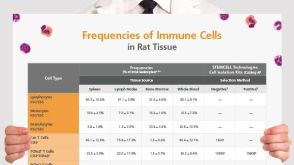 挂图Frequencies of Immune Cells in Rat Tissue Lists the estimated frequencies of more than 15 immune cell types in Sprague Dawley rats
 沪公网安备31010102008431号