Fuertes MB et al. (APR 2008)
Journal of immunology (Baltimore,Md. : 1950) 180 7 4606--14
Intracellular retention of the NKG2D ligand MHC class I chain-related gene A in human melanomas confers immune privilege and prevents NK cell-mediated cytotoxicity.
Most tumors grow in immunocompetent hosts despite expressing NKG2D ligands (NKG2DLs) such as the MHC class I chain-related genes A and B (MICA/B). However,their participation in tumor cell evasion is still not completely understood. Here we demonstrate that several human melanomas (cell lines and freshly isolated metastases) do not express MICA on the cell surface but have intracellular deposits of this NKG2DL. Susceptibility to NK cell-mediated cytotoxicity correlated with the ratio of NKG2DLs to HLA class I molecules but not with the amounts of MICA on the cell surface of tumor cells. Transfection-mediated overexpression of MICA restored cell surface expression and resulted in an increased in vitro cytotoxicity and IFN-gamma secretion by human NK cells. In xenografted nude mice,these melanomas exhibited a delayed growth and extensive in vivo apoptosis. Retardation of tumor growth was due to NK cell-mediated antitumor activity against MICA-transfected tumors,given that this effect was not observed in NK cell-depleted mice. Also,mouse NK cells killed MICA-overexpressing melanomas in vitro. A mechanistic analysis revealed the retention of MICA in the endoplasmic reticulum,an effect that was associated with accumulation of endoH-sensitive (immature) forms of MICA,retrograde transport to the cytoplasm,and degradation by the proteasome. Our study identifies a novel strategy developed by melanoma cells to evade NK cell-mediated immune surveillance based on the intracellular sequestration of immature forms of MICA in the endoplasmic reticulum. Furthermore,this tumor immune escape strategy can be overcome by gene therapy approaches aimed at overexpressing MICA on tumor cells.
View Publication
产品类型:
产品号#:
15025
15065
产品名:
RosetteSep™人NK细胞富集抗体混合物
RosetteSep™人NK细胞富集抗体混合物
Pike R et al. (NOV 2009)
Journal of virology 83 21 11211--22
Race between retroviral spread and CD4+ T-cell response determines the outcome of acute Friend virus infection.
Retroviruses can establish persistent infection despite induction of a multipartite antiviral immune response. Whether collective failure of all parts of the immune response or selective deficiency in one crucial part underlies the inability of the host to clear retroviral infections is currently uncertain. We examine here the contribution of virus-specific CD4(+) T cells in resistance against Friend virus (FV) infection in the murine host. We show that the magnitude and duration of the FV-specific CD4(+) T-cell response is directly proportional to resistance against acute FV infection and subsequent disease. Notably,significant protection against FV-induced disease is afforded by FV-specific CD4(+) T cells in the absence of a virus-specific CD8(+) T-cell or B-cell response. Enhanced spread of FV infection in hosts with increased genetic susceptibility or coinfection with Lactate dehydrogenase-elevating virus (LDV) causes a proportional increase in the number of FV-specific CD4(+) T cells required to control FV-induced disease. Furthermore,ultimate failure of FV/LDV coinfected hosts to control FV-induced disease is accompanied by accelerated contraction of the FV-specific CD4(+) T-cell response. Conversely,an increased frequency or continuous supply of FV-specific CD4(+) T cells is both necessary and sufficient to effectively contain acute infection and prevent disease,even in the presence of coinfection. Thus,these results suggest that FV-specific CD4(+) T cells provide significant direct protection against acute FV infection,the extent of which critically depends on the ratio of FV-infected cells to FV-specific CD4(+) T cells.
View Publication
产品类型:
产品号#:
18752
18752RF
17852
17852RF
100-0693
产品名:
EasySep™人CD4正选试剂盒II
RoboSep™ 人CD4正选试剂盒II
EasySep™人CD4正选试剂盒II
Fortin G et al. (AUG 2009)
The Journal of experimental medicine 206 9 1995--2011
A role for CD47 in the development of experimental colitis mediated by SIRPalpha+CD103- dendritic cells.
Mesenteric lymph node (mLN) CD103 (alphaE integrin)(+) dendritic cells (DCs) induce regulatory T cells and gut tolerance. However,the function of intestinal CD103(-) DCs remains to be clarified. CD47 is the ligand of signal regulatory protein alpha (SIRPalpha) and promotes SIRPalpha(+) myeloid cell migration. We first show that mucosal CD103(-) DCs selectively express SIRPalpha and that their frequency was augmented in the lamina propria and mLNs of mice that developed Th17-biased colitis in response to trinitrobenzene sulfonic acid. In contrast,the percentage of SIRPalpha(+)CD103(-) DCs and Th17 responses were decreased in CD47-deficient (CD47 knockout [KO]) mice,which remained protected from colitis. We next demonstrate that transferring wild-type (WT),but not CD47 KO,SIRPalpha(+)CD103(-) DCs in CD47 KO mice elicited severe Th17-associated wasting disease. CD47 expression was required on the SIRPalpha(+)CD103(-) DCs for efficient trafficking to mLNs in vivo,whereas it was dispensable on both DCs and T cells for Th17 polarization in vitro. Finally,administration of a CD47-Fc molecule resulted in reduced SIRPalpha(+)CD103(-) DC-mediated Th17 responses and the protection of WT mice from colitis. We thus propose SIRPalpha(+)CD103(-) DCs as a pathogenic DC subset that drives Th17-biased responses and colitis,and the CD47-SIRPalpha axis as a potential therapeutic target for inflammatory bowel disease.
View Publication
产品类型:
产品号#:
18556
18556RF
产品名:
Herling M et al. (NOV 2009)
Blood 114 21 4675--86
High TCL1 levels are a marker of B-cell receptor pathway responsiveness and adverse outcome in chronic lymphocytic leukemia.
Although activation of the B-cell receptor (BCR) signaling pathway is implicated in the pathogenesis of chronic lymphocytic leukemia (CLL),its clinical impact and the molecular correlates of such response are not clearly defined. T-cell leukemia 1 (TCL1),the AKT modulator and proto-oncogene,is differentially expressed in CLL and linked to its pathogenesis based on CD5(+) B-cell expansions arising in TCL1-transgenic mice. We studied here the association of TCL1 levels and its intracellular dynamics with the in vitro responses to BCR stimulation in 70 CLL cases. The growth kinetics after BCR engagement correlated strongly with the degree and timing of induced AKT phospho-activation. This signaling intensity was best predicted by TCL1 levels and the kinetics of TCL1-AKT corecruitment to BCR membrane activation complexes,which further included the kinases LYN,SYK,ZAP70,and PKC. High TCL1 levels were also strongly associated with aggressive disease features,such as advanced clinical stage,higher white blood cell counts,and shorter lymphocyte doubling time. Higher TCL1 levels independently predicted an inferior clinical outcome (ie,shorter progression-free survival,P textless .001),regardless of therapy regimen,especially for ZAP70(+) tumors. We propose TCL1 as a marker of the BCR-responsive CLL subset identifying poor prognostic cases where targeting BCR-associated kinases may be therapeutically useful.
View Publication
产品类型:
产品号#:
15024
15064
产品名:
RosetteSep™人B细胞富集抗体混合物
RosetteSep™人B细胞富集抗体混合物
Pelletier M et al. (JAN 2010)
Blood 115 2 335--43
Evidence for a cross-talk between human neutrophils and Th17 cells.
Interleukin-17A (IL-17A) and IL-17F are 2 of several cytokines produced by T helper 17 cells (Th17),which are able to indirectly induce the recruitment of neutrophils. Recently,human Th17 cells have been phenotypically characterized and shown to express discrete chemokine receptors,including CCR2 and CCR6. Herein,we show that highly purified neutrophils cultured with interferon-gamma plus lipopolysaccharide produce the CCL2 and CCL20 chemokines,the known ligands of CCR2 and CCR6,respectively. Accordingly,supernatants from activated neutrophils induced chemotaxis of Th17 cells,which was greatly suppressed by anti-CCL20 and anti-CCL2 antibodies. We also discovered that activated Th17 cells could directly chemoattract neutrophils via the release of biologically active CXCL8. Consistent with this reciprocal recruitment,neutrophils and Th17 cells were found in gut tissue from Crohn disease and synovial fluid from rheumatoid arthritis patients. Finally,we report that,although human Th17 cells can directly interact with freshly isolated or preactivated neutrophils via granulocyte-macrophage colony-stimulating factor,tumor necrosis factor-alpha,and interferon-gamma release,these latter cells cannot be activated by IL-17A and IL-17F,because of their lack of IL-17RC expression. Collectively,our results reveal a novel chemokine-dependent reciprocal cross-talk between neutrophils and Th17 cells,which may represent a useful target for the treatment of chronic inflammatory diseases.
View Publication
产品类型:
产品号#:
19309
19309RF
19052
19052RF
19058
19058RF
100-1525
产品名:
EasySep™人定制富集试剂盒
RoboSep™ 人定制富集试剂盒,含滤芯吸头
EasySep™人CD4+ T细胞富集试剂盒
RoboSep™ 人CD4+ T细胞富集试剂盒含滤芯吸头
EasySep™人单核细胞富集试剂盒(不去除CD16)
RoboSep™ 人单核细胞富集试剂盒(不去除CD16)含滤芯吸头
EasySep™人单核细胞富集试剂盒(不去除CD16)
Yu J-J et al. (FEB 2010)
Clinical and vaccine immunology : CVI 17 2 215--22
Francisella tularensis T-cell antigen identification using humanized HLA-DR4 transgenic mice.
There is no licensed vaccine against the intracellular pathogen Francisella tularensis. The use of conventional mouse strains to screen protective vaccine antigens may be problematic,given the differences in the major histocompatibility complex (MHC) binding properties between murine and human antigen-presenting cells. We used engineered humanized mice that lack endogenous MHC class II alleles but that express a human HLA allele (HLA-DR4 transgenic [tg] mice) to identify potential subunit vaccine candidates. Specifically,we applied a biochemical and immunological screening approach with bioinformatics to select putative F. tularensis subsp. novicida T-cell-reactive antigens using humanized HLA-DR4 tg mice. Cell wall- and membrane-associated proteins were extracted with Triton X-114 detergent and were separated by fractionation with a Rotofor apparatus and whole-gel elution. A series of proteins were identified from fractions that stimulated antigen-specific gamma interferon (IFN-gamma) production,and these were further downselected by the use of bioinformatics and HLA-DR4 binding algorithms. We further examined the validity of this combinatorial approach with one of the identified proteins,a 19-kDa Francisella tularensis outer membrane protein (designated Francisella outer membrane protein B [FopB]; FTN0119). FopB was shown to be a T-cell antigen by a specific IFN-gamma recall assay with purified CD4(+) T cells from F. tularensis subsp. novicida DeltaiglC-primed HLA-DR4 tg mice and cells of a human B-cell line expressing HLA-DR4 (DRB1*0401) functioning as antigen-presenting cells. Intranasal immunization of HLA-DR4 tg mice with the single antigen FopB conferred significant protection against lethal pulmonary challenge with an F. tularensis subsp. holarctica live vaccine strain. These results demonstrate the value of combining functional biochemical and immunological screening with humanized HLA-DR4 tg mice to map HLA-DR4-restricted Francisella CD4(+) T-cell epitopes.
View Publication
产品类型:
产品号#:
19752
19752RF
产品名:
Su X et al. (FEB 2010)
Journal of immunology (Baltimore,Md. : 1950) 184 3 1630--41
Tumor microenvironments direct the recruitment and expansion of human Th17 cells.
Although Th17 cells play critical roles in the pathogenesis of many inflammatory and autoimmune diseases,their prevalence among tumor-infiltrating lymphocytes (TILs) and function in human tumor immunity remains largely unknown. We have recently demonstrated high percentages of Th17 cells in TILs from ovarian cancer patients,but the mechanisms of accumulation of these Th17 cells in the tumor microenvironment are still unclear. In this study,we further showed elevated Th17 cell populations in the TILs obtained from melanoma and breast and colon cancers,suggesting that development of tumor-infiltrating CD4(+) Th17 cells may be a general feature in cancer patients. We then demonstrated that tumor microenvironmental RANTES and MCP-1 secreted by tumor cells and tumor-derived fibroblasts mediate the recruitment of Th17 cells. In addition to their recruitment,we found that tumor cells and tumor-derived fibroblasts produce a proinflammatory cytokine milieu as well as provide cell-cell contact engagement that facilitates the generation and expansion of Th17 cells. We also showed that inflammatory TLR and nucleotide oligomerization binding domain 2 signaling promote the attraction and generation of Th17 cells induced by tumor cells and tumor-derived fibroblasts. These results identify Th17 cells as an important component of human TILs,demonstrate mechanisms involved in the recruitment and regulation of Th17 cells in tumor microenvironments,and provide new insights relevant for the development of novel cancer immunotherapeutic approaches.
View Publication
产品类型:
产品号#:
19155
19155RF
产品名:
Tomihara K et al. (JUN 2010)
Journal of immunology (Baltimore,Md. : 1950) 184 11 6151--60
Antigen-specific immunity and cross-priming by epithelial ovarian carcinoma-induced CD11b(+)Gr-1(+) cells.
Both innate and adaptive immune systems are considered important for cancer prevention,immunosurveillance,and control of cancer progression. It is known that,although both systems initially eliminate emerging tumor cells efficiently,tumors eventually escape immune attack by a variety of mechanisms,including differentiation and recruitment of immunosuppressive CD11b(+)Gr-1(+) myeloid suppressor cells into the tumor microenvironment. However,we show that CD11b(+)Gr-1(+) cells found in ascites of epithelial ovarian cancer-bearing mice at advanced stages of disease are immunostimulatory rather than being immunosuppressive. These cells consist of a homogenous population of cells that morphologically resemble neutrophils. Moreover,like dendritic cells,immunostimulatory CD11b(+)Gr-1(+) cells can strongly cross-prime,augmenting the proliferation of functional CTLs via signaling through the expression of costimulatory molecule CD80. Adoptive transfer of these immunostimulatory CD11b(+)Gr-1(+) cells from ascites of ovarian cancer-bearing mice results in the significant regression of s.c. tumors even without being pulsed with exogenous tumor Ag prior to adoptive transfer. We now show for the first time that adaptive immune responses against cancer can be augmented by these cancer-induced granulocyte-like immunostimulatory myeloid (CD11b(+)Gr-1(+)) cells,thereby mediating highly effective antitumor immunity in an adoptive transfer model of immunity.
View Publication
产品类型:
产品号#:
18553
18553RF
18556
18556RF
21000
20119
20155
产品名:
RoboSep™- S
RoboSep™ 吸头组件抛光剂
RoboSep™分选管套装(9个塑料管)
Podar K et al. (FEB 2003)
The Journal of biological chemistry 278 8 5794--801
Essential role of caveolae in interleukin-6- and insulin-like growth factor I-triggered Akt-1-mediated survival of multiple myeloma cells.
Caveolae,specialized flask-shaped lipid rafts on the cell surface,are composed of cholesterol,sphingolipids,and structural proteins termed caveolins; functionally,these plasma membrane microdomains have been implicated in signal transduction and transmembrane transport. In the present study,we examined the role of caveolin-1 in multiple myeloma cells. We show for the first time that caveolin-1,which is usually absent in blood cells,is expressed in multiple myeloma cells. Analysis of myeloma cell-derived plasma membrane fractions shows that caveolin-1 is co-localized with interleukin-6 receptor signal transducing chain gp130 and with insulin-like growth factor-I receptor. Cholesterol depletion by beta-cyclodextrin results in the loss of caveola structure in myeloma cells,as shown by transmission electron microscopy,and loss of caveolin-1 function. Interleukin-6 and insulin-like growth factor-I,growth and survival factors in multiple myeloma,induce caveolin-1 phosphorylation,which is abrogated by pre-treatment with beta-cyclodextrin. Importantly,inhibition of caveolin-1 phosphorylation blocks both interleukin-6-induced protein complex formation with caveolin-1 and downstream activation of the phosphatidylinositol 3-kinase/Akt-1 pathway. beta-Cyclodextrin also blocks insulin-like growth factor-I-induced tyrosine phosphorylation of insulin-responsive substrate-1 and downstream activation of the phosphatidylinositol 3-kinase/Akt-1 pathway. Therefore,cholesterol depletion by beta-cyclodextrin abrogates both interleukin-6- and insulin-like growth factor-I-triggered multiple myeloma cell survival via negative regulation of caveolin-1. Taken together,this study identifies caveolin-1 and other structural membrane components as potential new therapeutic targets in multiple myeloma.
View Publication


 EasySep™小鼠TIL(CD45)正选试剂盒




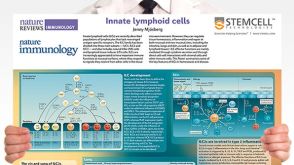 挂图Innate Lymphoid Cells Overview of innate lymphoid cells (ILCs) development, classification, plasticity and functional diversity
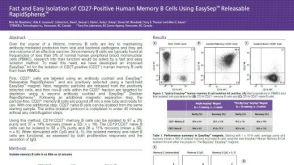 科学海报Fast and Easy Isolation of CD27-Positive Human Memory B Cells Using EasySep™ Releasable RapidSpheres™


 沪公网安备31010102008431号