J. U. Hermansen et al. (dec 2018)
Scientific reports 8 1 17651
Cryopreservation of primary B cells minimally influences their signaling responses.
Phospho flow is a powerful approach to detect cell signaling aberrations,identify biomarkers and assess pharmacodynamics,and can be performed using cryopreserved samples. The effects of cryopreservation on signaling responses and the reproducibility of phospho flow measurements are however unknown in many cell systems. Here,B lymphocytes were isolated from healthy donors and patients with the B cell malignancy chronic lymphocytic leukemia and analyzed by phospho flow using phospho-specific antibodies targeting 20 different protein epitopes. Cells were analyzed both at basal conditions and after activation of cluster of differentiation 40 (CD40) or the B cell receptor. Pharmacodynamics of the novel pathway inhibitor ibrutinib was also assessed. At all conditions,fresh cells were compared to cryopreserved cells. Minimal variation between fresh and frozen samples was detected. Reproducibility was tested by running samples from the same donors in different experiments. The results demonstrate reproducibility across different phospho flow runs and support the use of cryopreserved samples in future phospho flow studies of B lymphocytes.
View Publication
Chevalier MF et al. ( 2015)
The Journal of Infectious Diseases 211 5 769--779
Phenotype Alterations in Regulatory T-Cell Subsets in Primary HIV Infection and Identification of Tr1-like Cells as the Main Interleukin 10-Producing CD4+ T Cells
BACKGROUND: Conventional regulatory T cells (Tregs) can suppress human immunodeficiency virus type 1 (HIV-1)-specific immune responses but cannot control immune activation in primary HIV infection. Here,we characterized Treg subsets,using recently defined phenotypic delineation,and analyzed the relative contribution of cell subsets to the production of immunosuppressive cytokines in primary HIV infection. METHODS: In a longitudinal prospective study,ex vivo phenotyping of fresh peripheral blood mononuclear cells from patients with primary HIV infection was performed at baseline and month 6 of follow-up to characterize Treg subsets,immune activation,and cytokine production in isolated CD4(+) T cells. RESULTS: The frequency of CD4(+)CD25(+)CD127(low) Tregs and the distribution between the naive,memory,and activated/memory Treg subsets was similar in patients and healthy donors. However,Tregs from patients with primary HIV infection showed peculiar phenotypic profiles,such as elevated FoxP3,ICOS,and CTLA-4 expression,with CTLA-4 expression strikingly increased in all Treg subsets both at baseline and month 6 of follow-up. The great majority of interleukin 10 (IL-10)-producing CD4(+) T cells were FoxP3(neg) (ie,Tr1-like cells). In contrast to conventional Tregs,Tr1-like cells were inversely correlated with immune activation and not associated with lower effector T-cell responses. CONCLUSION: FoxP3(neg) Tr1-like cells-major contributors to IL-10 production-may have a beneficial role by controlling immune activation in early HIV infection.
View Publication
产品类型:
产品号#:
18062
18062RF
15022
15062
18251
18251RF
21000
20119
20155
15021
15061
产品名:
RosetteSep™人CD4+ T细胞富集抗体混合物
RosetteSep™人CD4+ T细胞富集抗体混合物
RoboSep™- S
RoboSep™ 吸头组件抛光剂
RoboSep™分选管套装(9个塑料管)
RosetteSep™人T细胞富集抗体混合物
RosetteSep™人T细胞富集抗体混合物
Goodridge JP et al. (AUG 2003)
Journal of immunology (Baltimore,Md. : 1950) 171 4 1768--74
KIR2DL4 (CD158d) genotype influences expression and function in NK cells.
The expression and function of the NK cell receptor KIR2DL4 are controversial. Two common alleles of the transmembrane domain of KIR2DL4 exist. The 10A allele with 10 adenines at the end of the transmembrane exon encodes a full length receptor,whereas the 9A allele has only 9 adenines resulting in a frame shift which in turn generates a stop codon early in the first cytoplasmic exon. The possibility that the 10A and 9A alleles might result in differences in expression and function of KIR2DL4 was explored using mAbs to KIR2DL4. Transfection experiments with cDNA from the 10A and 9A alleles revealed significant membrane expression only with the protein encoded by the 10A allele. Analysis of peripheral blood NK cells demonstrated that only in subjects with at least one 10A allele was cell surface expression of KIR2DL4 detectable,and then only on the minor CD56(bright) NK cell subset. The major CD56(dim) NK cell subset did not cell surface express KIR2DL4 but,interestingly,did so after in vitro culture. Functional analysis using cultured NK cells in redirected lysis assays demonstrated that KIR2DL4 is an activating receptor for NK cells with at least one 10A allele. No significant activity was detected for NK cells generated from subjects homozygous for the 9A allele. These data show that genotype influences cell surface expression and function of KIR2DL4 which may account for reported differences in KIR2DL4 expression and function.
View Publication
产品类型:
产品号#:
15025
15065
产品名:
RosetteSep™人NK细胞富集抗体混合物
RosetteSep™人NK细胞富集抗体混合物
Callahan KP et al. (OCT 2014)
Leukemia 28 10 1960--8
Flavaglines target primitive leukemia cells and enhance anti-leukemia drug activity.
Identification of agents that target human leukemia stem cells is an important consideration for the development of new therapies. The present study demonstrates that rocaglamide and silvestrol,closely related natural products from the flavagline class of compounds,are able to preferentially kill functionally defined leukemia stem cells,while sparing normal stem and progenitor cells. In addition to efficacy as single agents,flavaglines sensitize leukemia cells to several anticancer compounds,including front-line chemotherapeutic drugs used to treat leukemia patients. Mechanistic studies indicate that flavaglines strongly inhibit protein synthesis,leading to the reduction of short-lived antiapoptotic proteins. Notably though,treatment with flavaglines,alone or in combination with other drugs,yields a much stronger cytotoxic activity toward leukemia cells than the translational inhibitor temsirolimus. These results indicate that the underlying cell death mechanism of flavaglines is more complex than simply inhibiting general protein translation. Global gene expression profiling and cell biological assays identified Myc inhibition and the disruption of mitochondrial integrity to be features of flavaglines,which we propose contribute to their efficacy in targeting leukemia cells. Taken together,these findings indicate that rocaglamide and silvestrol are distinct from clinically available translational inhibitors and represent promising candidates for the treatment of leukemia.
View Publication
产品类型:
产品号#:
07930
07931
07940
07955
07956
07959
07954
100-1061
07952
产品名:
CryoStor® CS10
CryoStor® CS10
CryoStor® CS10
CryoStor® CS10
CryoStor® CS10
CryoStor® CS10
CryoStor® CS10
Parish ST et al. (MAR 2010)
Journal of immunology (Baltimore,Md. : 1950) 184 6 2847--54
Adenosine deaminase modulation of telomerase activity and replicative senescence in human CD8 T lymphocytes.
Increased proportions of CD8 T lymphocytes lacking expression of the CD28 costimulatory receptor have been documented during both aging and chronic infection with HIV-1,and their abundance correlates with numerous deleterious clinical outcomes. CD28-negative cells also arise in cell cultures of CD8(+)CD28(+) following multiple rounds of Ag-driven proliferation,reaching the end stage of replicative senescence. The present study investigates the role of a second T cell costimulatory receptor component,adenosine deaminase (ADA),on the process of replicative senescence. We had previously reported that CD28 signaling is required for optimal telomerase upregulation. In this study,we show that the CD8(+)CD28(+) T lymphocytes that are ADA(+) have significantly greater telomerase activity than those that do not express ADA and that ADA is progressively lost as cultures progress to senescence. Because ADA converts adenosine to inosine,cells lacking this enzyme might be subject to prolonged exposure to adenosine,which has immunosuppressive effects. Indeed,we show that chronic exposure of CD8 T lymphocytes to exogenous adenosine accelerates the process of replicative senescence,causing a reduction in overall proliferative potential,reduced telomerase activity,and blunted IL-2 gene transcription. The loss of CD28 expression was accelerated,in part due to adenosine-induced increases in constitutive caspase-3,known to act on the CD28 promoter. These findings provide the first evidence for a role of ADA in modulating the process of replicative senescence and suggest that strategies to enhance this enzyme may lead to novel therapeutic approaches for pathologies associated with increases in senescent CD8 T lymphocytes.
View Publication
产品类型:
产品号#:
19053
19053RF
产品名:
EasySep™人CD8+ T细胞富集试剂盒
RoboSep™ 人CD8+ T细胞富集试剂盒含滤芯吸头
Curat CA et al. (MAY 2004)
Diabetes 53 5 1285--92
From blood monocytes to adipose tissue-resident macrophages: induction of diapedesis by human mature adipocytes.
Obesity has been suggested to be a low-grade systemic inflammatory state,therefore we studied the interaction between human adipocytes and monocytes via adipose tissue (AT)-derived capillary endothelium. Cells composing the stroma-vascular fraction (SVF) of human ATs were characterized by fluorescence-activated cell sorter (FACS) analysis and two cell subsets (resident macrophages and endothelial cells [ECs]) were isolated using antibody-coupled microbeads. Media conditioned by mature adipocytes maintained in fibrin gels were applied to AT-derived ECs. Thereafter,the expression of endothelial adhesion molecules was analyzed as well as the adhesion and transmigration of human monocytes. FACS analysis showed that 11% of the SVF is composed of CD14(+)/CD31(+) cells,characterized as resident macrophages. A positive correlation was found between the BMI and the percentage of resident macrophages,suggesting that fat tissue growth is associated with a recruitment of blood monocytes. Incubation of AT-derived ECs with adipocyte-conditioned medium resulted in the upregulation of EC adhesion molecules and the increased chemotaxis of blood monocytes,an effect mimicked by recombinant human leptin. These results indicate that adipokines,such as leptin,activate ECs,leading to an enhanced diapedesis of blood monocytes,and suggesting that fat mass growth might be linked to inflammatory processes.
View Publication
L. Hang et al. (apr 2019)
Journal of immunology (Baltimore,Md. : 1950) 202 8 2473--2481
Heligmosomoides polygyrus bakeri Infection Decreases Smad7 Expression in Intestinal CD4+ T Cells, Which Allows TGF-beta to Induce IL-10-Producing Regulatory T Cells That Block Colitis.
Helminthic infections modulate host immunity and may protect their hosts from developing immunological diseases like inflammatory bowel disease. Induction of regulatory T cells (Tregs) may be an important part of this protective process. Heligmosomoides polygyrus bakeri infection also promotes the production of the regulatory cytokines TGF-beta and IL-10 in the gut. In the intestines,TGF-beta helps induce regulatory T cells. This study used Foxp3/IL-10 double reporter mice to investigate the effect of TGF-beta on the differentiation of colon and mesenteric lymph node-derived murine Foxp3- IL-10- CD4+ T cells into their regulatory phenotypes. Foxp3- IL-10- CD4+ T cells from H. polygyrus bakeri-infected mice,as opposed to T cells from uninfected animals,cultured in vitro with TGF-beta and anti-CD3/CD28 mAb differentiated into Foxp3+ and/or IL-10+ T cells. The IL-10-producing T cells nearly all displayed CD25. Smad7 is a natural inhibitor of TGF-beta signaling. In contrast to gut T cells from uninfected mice,Foxp3- IL10- CD4+ T cells from H. polygyrus bakeri-infected mice displayed reduced Smad7 expression and responded to TGF-beta with Smad2/3 phosphorylation. The TGF-beta-induced Tregs that express IL-10 blocked colitis when transferred into the Rag/CD25- CD4+ T cell transfer model of inflammatory bowel disease. TGF-beta had a greatly diminished capacity to induce Tregs in H. polygyrus bakeri-infected transgenic mice with constitutively high T cell-specific Smad7 expression. Thus,infection with H. polygyrus bakeri causes down-modulation in Smad7 expression in intestinal CD4+ T cells,which allows the TGF-beta produced in response to the infection to induce the Tregs that prevent colitis.
View Publication
产品类型:
产品号#:
19751
19751RF
产品名:
Fan Y et al. (JAN 2018)
The Biochemical journal 475 1 23--44
Interrogating Parkinson's disease LRRK2 kinase pathway activity by assessing Rab10 phosphorylation in human neutrophils.
There is compelling evidence for the role of the leucine-rich repeat kinase 2 (LRRK2) and in particular its kinase function in Parkinson's disease. Orally bioavailable,brain penetrant and potent LRRK2 kinase inhibitors are in the later stages of clinical development. Here,we describe a facile and robust assay to quantify LRRK2 kinase pathway activity by measuring LRRK2-mediated phosphorylation of Rab10 in human peripheral blood neutrophils. We use the selective MJFF-pRab10 monoclonal antibody recognising the Rab10 Thr73 phospho-epitope that is phosphorylated by LRRK2. We highlight the feasibility and practicability of using our assay in the clinical setting by studying a few patients with G2019S LRRK2 associated and sporadic Parkinson's as well as healthy controls. We suggest that peripheral blood neutrophils are a valuable resource for LRRK2 research and should be considered for inclusion in Parkinson's bio-repository collections as they are abundant,homogenous and express relatively high levels of LRRK2 as well as Rab10. In contrast,the widely used peripheral blood mononuclear cells are heterogeneous and only a minority of cells (monocytes and contaminating neutrophils) express LRRK2. While our LRRK2 kinase pathway assay could assist in patient stratification based on LRRK2 kinase activity,we envision that it may find greater utility in pharmacodynamic and target engagement studies in future LRRK2 inhibitor trials.
View Publication
产品类型:
产品号#:
19666
85450
85460
100-0404
产品名:
EasySep™ Direct人中性粒细胞分选试剂盒
SepMate™-50 (IVD)
SepMate™-50 (IVD)
RoboSep™ 人中性粒细胞分选试剂盒
He W et al. (NOV 2017)
Cancer research 77 22 6375--6388
CD155T/TIGIT Signaling Regulates CD8+ T-cell Metabolism and Promotes Tumor Progression in Human Gastric Cancer.
The T-cell surface molecule TIGIT is an immune checkpoint molecule that inhibits T-cell responses,but its roles in cancer are little understood. In this study,we evaluated the role TIGIT checkpoint plays in the development and progression of gastric cancer. We show that the percentage of CD8 T cells that are TIGIT+ was increased in gastric cancer patients compared with healthy individuals. These cells showed functional exhaustion with impaired activation,proliferation,cytokine production,and metabolism,all of which were rescued by glucose. In addition,gastric cancer tissue and cell lines expressed CD155,which bound TIGIT receptors and inactivated CD8 T cells. In a T cell-gastric cancer cell coculture system,gastric cancer cells deprived CD8 T cells of glucose and impaired CD8 T-cell effector functions; these effects were neutralized by the additional glucose or by TIGIT blockade. In gastric cancer tumor cells,CD155 silencing increased T-cell metabolism and IFNγ production,whereas CD155 overexpression inhibited T-cell metabolism and IFNγ production; this inhibition was neutralized by TIGIT blockade. Targeting CD155/TIGIT enhanced CD8 T-cell reaction and improved survival in tumor-bearing mice. Combined targeting of TIGIT and PD-1 further enhanced CD8 T-cell activation and improved survival in tumor-bearing mice. Our results suggest that gastric cancer cells inhibit CD8 T-cell metabolism through CD155/TIGIT signaling,which inhibits CD8 T-cell effector functions,resulting in hyporesponsive antitumor immunity. These findings support the candidacy of CD155/TIGIT as a potential therapeutic target in gastric cancer. Cancer Res; 77(22); 6375-88. textcopyright2017 AACR.
View Publication


 EasySep™小鼠TIL(CD45)正选试剂盒





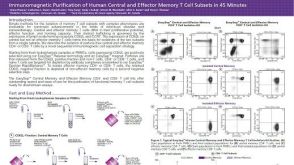 科学海报Immunomagnetic Purification of Human Central and Effector Memory T Cell Subsets in 45 Minutes
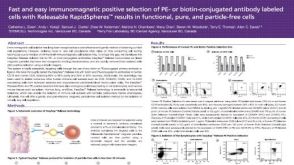 科学海报Fast and Easy Immunomagnetic Positive Selection of PE- or Biotin-Conjugated Antibody Labeled Cells with Releasable RapidSpheres™ Results in Functional, Pure and Particle-Free Cells

 沪公网安备31010102008431号