Chen Y et al. (MAY 2009)
Journal of immunology (Baltimore,Md. : 1950) 182 10 6031--43
IgM antibodies to apoptosis-associated determinants recruit C1q and enhance dendritic cell phagocytosis of apoptotic cells.
Natural Abs,which arise without known immune exposure,have been described that specifically recognize cells dying from apoptosis,but their role in innate immunity remains poorly understood. Herein,we show that the immune response to neoantigenic determinants on apoptotic thymocytes is dominated by Abs to oxidation-associated Ags,phosphorylcholine (PC),a head group that becomes exposed during programmed cell death,and malondialdehyde (MDA),a reactive aldehyde degradation product of polyunsaturated lipids produced following exposure to reactive oxidation species. While natural Abs to apoptotic cells in naive adult mice were dominated by PC and MDA specificities,the amounts of these Abs were substantially boosted by treatment of mice with apoptotic cells. Moreover,the relative amounts of PC and MDA Abs was affected by V(H) gene inheritance. Ab interactions with apoptotic cells also mediated the recruitment of C1q,which enhanced apoptotic cell phagocytosis by immature dendritic cells. Significantly,IgM Abs to both PC and MDA were primary factors in determining the efficiency of serum-dependent apoptotic cell phagocytosis. Hence,we demonstrate a mechanism by which certain natural Abs that recognize neoantigens on apoptotic cells,in naive mice and those induced by immune exposure to apoptotic cells,can enhance the functional capabilities of immature dendritic cells for phagocytic engulfment of apoptotic cells.
View Publication
产品类型:
产品号#:
09600
09650
产品名:
StemSpan™ SFEM
StemSpan™ SFEM
Yu H et al. (FEB 2006)
Blood 107 3 1200--6
Hematopoietic stem cell exhaustion impacted by p18 INK4C and p21 Cip1/Waf1 in opposite manners.
Transplantation-associated stress can compromise the hematopoietic potential of hematopoietic stem cells (HSCs). As a consequence,HSCs may undergo exhaustion" in serial transplant recipients�
View Publication
产品类型:
产品号#:
18856
18856RF
产品名:
Zhang P et al. (FEB 2009)
Journal of immunology (Baltimore,Md. : 1950) 182 3 1568--76
Acute alcohol intoxication inhibits the lineage- c-kit+ Sca-1+ cell response to Escherichia coli bacteremia.
Alcohol abuse predisposes the host to bacterial infections. In response to bacterial infection,the bone marrow hematopoietic activity shifts toward granulocyte production,which is critical for enhancing host defense. This study investigated the hematopoietic precursor cell response to bacteremia and how alcohol affects this response. Acute alcohol intoxication was induced in BALB/c mice 30 min before initiation of Escherichia coli bacteremia. Bacteremia caused a significant increase in the number of bone marrow lineage (lin(-))-c-kit(+)Sca-1(+) cells. Marrow lin(-)c-kit(+)Sca-1(+) cells isolated from bacteremic mice showed an increase in CFU-granulocyte/macrophage activity compared with controls. In addition to enhanced proliferation of lin(-)c-kit(+)Sca-1(+) cells as reflected by BrdU incorporation,phenotypic inversion of lin(-)c-kit(+)Sca-1(+)Sca-1(-) cells primarily accounted for the rapid increase in marrow lin(-)c-kit(+)Sca-1(+) cells following bacteremia. Bacteremia increased plasma concentration of TNF-alpha. Culture of marrow lin(-)c-kit(+)Sca-1(+)Sca-1(-) cells with murine rTNF-alpha for 24 h caused a dose-dependent increase in conversion of these cells to lin(-)c-kit(+)Sca-1(+) cells. Sca-1 mRNA expression by the cultured cells was also up-regulated following TNF-alpha stimulation. Acute alcohol intoxication inhibited the increase in the number of lin(-)c-kit(+)Sca-1(+) cells in the bone marrow after E. coli infection. Alcohol impeded the increase in BrdU incorporation into marrow lin(-)c-kit(+)Sca-1(+) cells in response to bacteremia. Alcohol also suppressed the plasma TNF-alpha response to bacteremia and inhibited TNF-alpha-induced phenotypic inversion of lin(-)c-kit(+)Sca-1(+)Sca-1(-) cells in vitro. These data show that alcohol inhibits the hematopoietic precursor cell response to bacteremia,which may serve as one mechanism underlying the impaired host defense in alcohol abusers with severe bacterial infections.
View Publication
产品类型:
产品号#:
03534
03434
03444
09600
09650
产品名:
MethoCult™ GF M3534
MethoCult™ GF M3434
MethoCult™ GF M3434
StemSpan™ SFEM
StemSpan™ SFEM
Franç et al. (SEP 2009)
Blood 114 13 2632--8
Mesenchymal stromal cells cross-present soluble exogenous antigens as part of their antigen-presenting cell properties.
Recent studies involving bone marrow mesenchymal stromal cells (MSCs) demonstrated that interferon (IFN)-gamma stimulation induces major histocompatibility complex (MHC) class II-mediated antigen presentation in MSCs both in vitro and in vivo. Concordantly,we investigated the ability of MSCs to present extracellular antigen through their MHC class I molecules,a process known as cross-presentation. Using an in vitro antigen presentation assay,we demonstrated that murine MSCs can cross-present soluble ovalbumin (OVA) to naive CD8(+) T cells from OT-I mice. Cross-presentation by MSC was proteasome dependent and partly dependent on transporter associated with antigen-processing molecules. Pretreatment of MSC with IFN-gamma increased cross-presentation by up-regulating antigen processing and presentation. However,although the transcription of the transporter associated with antigen processing-1 molecules and the immunoproteasome subunit LMP2 induced by IFN-gamma was inhibited by transforming growth factor-beta,the overall cross-presentation capacity of MSCs remained unchanged after transforming growth factor-beta treatment. These observations were validated in vivo by performing an immune reconstitution assay in beta(2)-microglobulin(-/-) mice and show that OVA cross-presentation by MSCs induces the proliferation of naive OVA-specific CD8(+) T cells. In conclusion,we demonstrate that MSCs can cross-present exogenous antigen and induce an effective CD8(+) T-cell immune response,a property that could be exploited as a therapeutic cell-based immune biopharmaceutic for the treatment of cancer or infectious diseases.
View Publication
Llibre A et al. (MAR 2016)
Journal of Immunology 196 5 2085--94
LLT1 and CD161 Expression in Human Germinal Centers Promotes B Cell Activation and CXCR4 Downregulation.
Germinal centers (GCs) are microanatomical structures critical for the development of high-affinity Abs and B cell memory. They are organized into two zones,light and dark,with coordinated roles,controlled by local signaling. The innate lectin-like transcript 1 (LLT1) is known to be expressed on B cells,but its functional role in the GC reaction has not been explored. In this study,we report high expression of LLT1 on GC-associated B cells,early plasmablasts,and GC-derived lymphomas. LLT1 expression was readily induced via BCR,CD40,and CpG stimulation on B cells. Unexpectedly,we found high expression of the LLT1 ligand,CD161,on follicular dendritic cells. Triggering of LLT1 supported B cell activation,CD83 upregulation,and CXCR4 downregulation. Overall,these data suggest that LLT1-CD161 interactions play a novel and important role in B cell maturation within the GC in humans.
View Publication
产品类型:
产品号#:
17954
17954RF
100-0971
产品名:
EasySep™人B细胞分选试剂盒
RoboSep™ 人B细胞分选试剂盒
EasySep™人B细胞分离试剂盒
Bernstein HB et al. (SEP 2006)
Journal of immunology (Baltimore,Md. : 1950) 177 6 3669--76
CD4 expression on activated NK cells: ligation of CD4 induces cytokine expression and cell migration.
NK cells play an important role in the innate immune response. We have isolated NK cells from human lymphoid tissues and found that these cells express the CD4 molecule on their surface at levels higher than those found on peripheral blood NK cells. To study the functional role of the CD4 molecule on NK cells,we developed an in vitro system by which we are able to obtain robust CD4 expression on NK cells derived from blood. CD4+ NK cells efficiently mediate NK cell cytotoxicity,and CD4 expression does not appear to alter lytic function. CD4+ NK cells are more likely to produce the cytokines gamma-IFN and TNF-alpha than are CD4- NK cells. Ligation of CD4 further increases the number of NK cells producing these cytokines. NK cells expressing CD4 are also capable of migrating toward the CD4-specific chemotactic factor IL-16,providing another function for the CD4 molecule on NK cells. Thus,the CD4 molecule is present and functional on NK cells and plays a role in innate immune responses as a chemotactic receptor and by increasing cytokine production,in addition to its well-described function on T cells as a coreceptor for Ag responsive cell activation.
View Publication
产品类型:
产品号#:
14055
14065
18052
18052RF
19055
19055RF
产品名:
EasySep™人NK细胞富集试剂盒
RoboSep™ 人NK细胞富集试剂盒含滤芯吸头
Haniffa M et al. (FEB 2009)
The Journal of experimental medicine 206 2 371--85
Differential rates of replacement of human dermal dendritic cells and macrophages during hematopoietic stem cell transplantation.
Animal models of hematopoietic stem cell transplantation have been used to analyze the turnover of bone marrow-derived cells and to demonstrate the critical role of recipient antigen-presenting cells (APC) in graft versus host disease (GVHD). In humans,the phenotype and lineage relationships of myeloid-derived tissue APC remain incompletely understood. It has also been proposed that the risk of acute GVHD,which extends over many months,is related to the protracted survival of certain recipient APC. Human dermis contains three principal subsets of CD45(+)HLA-DR(+) cells: CD1a(+)CD14(-) DC,CD1a(-)CD14(+) DC,and CD1a(-)CD14(+)FXIIIa(+) macrophages. In vitro,each subset has characteristic properties. After transplantation,both CD1a(+) and CD14(+) DC are rapidly depleted and replaced by donor cells,but recipient macrophages can be found in GVHD lesions and may persist for many months. Macrophages isolated from normal dermis secrete proinflammatory cytokines. Although they stimulate little proliferation of naive or memory CD4(+) T cells,macrophages induce cytokine expression in memory CD4(+) T cells and activation and proliferation of CD8(+) T cells. These observations suggest that dermal macrophages and DC are from distinct lineages and that persistent recipient macrophages,although unlikely to initiate alloreactivity,may contribute to GVHD by sustaining the responses of previously activated T cells.
View Publication
产品类型:
产品号#:
19155
19155RF
产品名:
Chen W et al. (APR 2004)
Blood 103 7 2547--53
Thrombopoietin cooperates with FLT3-ligand in the generation of plasmacytoid dendritic cell precursors from human hematopoietic progenitors.
Type 1 interferon-producing cells (IPCs),also known as plasmacytoid dendritic cell (DC) precursors,represent the key effectors in antiviral innate immunity and triggers for adaptive immune responses. IPCs play important roles in the pathogenesis of systemic lupus erythematosus (SLE) and in modulating immune responses after hematopoietic stem cell transplantation. Understanding IPC development from hematopoietic progenitor cells (HPCs) may provide critical information in controlling viral infection,autoimmune SLE,and graft-versus-host disease. FLT3-ligand (FLT3-L) represents a key IPC differentiation factor from HPCs. Although hematopoietic cytokines such as interleukin-3 (IL-3),IL-7,stem cell factor (SCF),macrophage-colony-stimulating factor (M-CSF),and granulocyte M-CSF (GM-CSF) promote the expansion of CD34+ HPCs in FLT3-L culture,they strongly inhibit HPC differentiation into IPCs. Here we show that thrombopoietin (TPO) cooperates with FLT3-L,inducing CD34+ HPCs to undergo a 400-fold expansion in cell numbers and to generate more than 6 x 10(6) IPCs per 10(6) CD34+ HPCs within 30 days in culture. IPCs derived from HPCs in FLT3-L/TPO cultures display blood IPC phenotype and have the capacity to produce large amounts of interferon-alpha (IFN-alpha) and to differentiate into mature DCs. This culture system,combined with the use of adult peripheral blood CD34+ HPCs purified from G-CSF-mobilized donors,permits the generation of more than 10(9) IPCs from a single blood donor.
View Publication
Maes C et al. (MAY 2006)
The Journal of clinical investigation 116 5 1230--42
Placental growth factor mediates mesenchymal cell development, cartilage turnover, and bone remodeling during fracture repair.
Current therapies for delayed- or nonunion bone fractures are still largely ineffective. Previous studies indicated that the VEGF homolog placental growth factor (PlGF) has a more significant role in disease than in health. Therefore we investigated the role of PlGF in a model of semi-stabilized bone fracture healing. Fracture repair in mice lacking PlGF was impaired and characterized by a massive accumulation of cartilage in the callus,reminiscent of delayed- or nonunion fractures. PlGF was required for the early recruitment of inflammatory cells and the vascularization of the fracture wound. Interestingly,however,PlGF also played a role in the subsequent stages of the repair process. Indeed in vivo and in vitro findings indicated that PlGF induced the proliferation and osteogenic differentiation of mesenchymal progenitors and stimulated cartilage turnover by particular MMPs. Later in the process,PlGF was required for the remodeling of the newly formed bone by stimulating osteoclast differentiation. As PlGF expression was increased throughout the process of bone repair and all the important cell types involved expressed its receptor VEGFR-1,the present data suggest that PlGF is required for mediating and coordinating the key aspects of fracture repair. Therefore PlGF may potentially offer therapeutic advantages for fracture repair.
View Publication
产品类型:
产品号#:
03534
03334
03434
03444
18753
18753RF
产品名:
MethoCult™ GF M3534
MethoCult™ M3334
MethoCult™ GF M3434
MethoCult™ GF M3434
Hervé et al. (JUL 2007)
The Journal of experimental medicine 204 7 1583--93
CD40 ligand and MHC class II expression are essential for human peripheral B cell tolerance.
Hyper-IgM (HIGM) syndromes are primary immunodeficiencies characterized by defects of class switch recombination and somatic hypermutation. HIGM patients who carry mutations in the CD40-ligand (CD40L) gene expressed by CD4(+) T cells suffer from recurrent infections and often develop autoimmune disorders. To investigate the impact of CD40L-CD40 interactions on human B cell tolerance,we tested by ELISA the reactivity of recombinant antibodies isolated from single B cells from three CD40L-deficient patients. Antibody characteristics and reactivity from CD40L-deficient new emigrant B cells were similar to those from healthy donors,suggesting that CD40L-CD40 interactions do not regulate central B cell tolerance. In contrast,mature naive B cells from CD40L-deficient patients expressed a high proportion of autoreactive antibodies,including antinuclear antibodies. Thus,CD40L-CD40 interactions are essential for peripheral B cell tolerance. In addition,a patient with the bare lymphocyte syndrome who could not express MHC class II molecules failed to counterselect autoreactive mature naive B cells,suggesting that peripheral B cell tolerance also depends on major histocompatibility complex (MHC) class II-T cell receptor (TCR) interactions. The decreased frequency of MHC class II-restricted CD4(+) regulatory T cells in CD40L-deficient patients suggests that these T cells may mediate peripheral B cell tolerance through CD40L-CD40 and MHC class II-TCR interactions.
View Publication


 EasySep™小鼠TIL(CD45)正选试剂盒





 实验方案How to Prepare a Single-Cell Suspension from Mouse Spleen Prior to Dendritic Cell Isolation
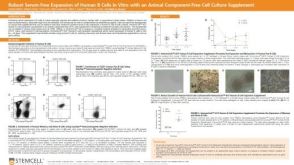 科学海报Robust Serum-Free Expansion of Human B Cells In Vitro with an Animal Component-Free Cell Culture Supplement
 沪公网安备31010102008431号