Frazer-Abel AA et al. (NOV 2004)
The Journal of pharmacology and experimental therapeutics 311 2 758--69
Nicotine activates nuclear factor of activated T cells c2 (NFATc2) and prevents cell cycle entry in T cells.
We used primary peripheral blood T cells,a population that exists in G(0) and can be stimulated to enter the cell cycle synchronously,to define more precisely the effects of nicotine on pathways that control cell cycle entry and progression. Our data show that nicotine decreased the ability of T cells to transit through the G(0)/G(1) boundary (acquire competence) and respond to progression signals. These effects were due to nuclear factor of activated T cells c2 (NFATc2)-dependent repression of cyclin-dependent kinase 4 (CDK4) expression. Growth arrest at the G(0)/G(1) boundary was further enforced by inhibition of cyclin D2 expression and by increased expression and stabilization of p27Kip1. Intriguingly,T cells from habitual users of tobacco products and from NFATc2-deficient mice constitutively expressed CDK4 and were resistant to the antiproliferative effects of nicotine. These results indicate that nicotine impairs T cell cycle entry through NFATc2-dependent mechanisms and suggest that,in the face of chronic nicotine exposure,selection may favor cells that can evade these effects. We postulate that cross talk between nicotinic acetylcholine receptors and growth factor receptor-activated pathways offers a novel mechanism by which nicotine may directly impinge on cell cycle progression. This offers insight into possible reasons that underlie the unique effects of nicotine on distinct cell types and identifies new targets that may be useful control tobacco-related diseases.
View Publication
产品类型:
产品号#:
19751
19751RF
产品名:
Critchley-Thorne RJ et al. (JUN 2009)
Proceedings of the National Academy of Sciences of the United States of America 106 22 9010--5
Impaired interferon signaling is a common immune defect in human cancer.
Immune dysfunction develops in patients with many cancer types and may contribute to tumor progression and failure of immunotherapy. Mechanisms underlying cancer-associated immune dysfunction are not fully understood. Efficient IFN signaling is critical to lymphocyte function; animals rendered deficient in IFN signaling develop cancer at higher rates. We hypothesized that altered IFN signaling may be a key mechanism of immune dysfunction common to cancer. To address this,we assessed the functional responses to IFN in peripheral blood lymphocytes from patients with 3 major cancers: breast cancer,melanoma,and gastrointestinal cancer. Type-I IFN (IFN-alpha)-induced signaling was reduced in T cells and B cells from all 3 cancer-patient groups compared to healthy controls. Type-II IFN (IFN-gamma)-induced signaling was reduced in B cells from all 3 cancer patient groups,but not in T cells or natural killer cells. Impaired-IFN signaling was equally evident in stage II,III,and IV breast cancer patients,and downstream functional defects in T cell activation were identified. Taken together,these findings indicate that defects in lymphocyte IFN signaling arise in patients with breast cancer,melanoma,and gastrointestinal cancer,and these defects may represent a common cancer-associated mechanism of immune dysfunction.
View Publication
Mace EM et al. (NOV 2016)
The Journal of clinical investigation
Biallelic mutations in IRF8 impair human NK cell maturation and function.
Human NK cell deficiencies are rare yet result in severe and often fatal disease,particularly as a result of viral susceptibility. NK cells develop from hematopoietic stem cells,and few monogenic errors that specifically interrupt NK cell development have been reported. Here we have described biallelic mutations in IRF8,which encodes an interferon regulatory factor,as a cause of familial NK cell deficiency that results in fatal and severe viral disease. Compound heterozygous or homozygous mutations in IRF8 in 3 unrelated families resulted in a paucity of mature CD56dim NK cells and an increase in the frequency of the immature CD56bright NK cells,and this impairment in terminal maturation was also observed in Irf8-/-,but not Irf8+/-,mice. We then determined that impaired maturation was NK cell intrinsic,and gene expression analysis of human NK cell developmental subsets showed that multiple genes were dysregulated by IRF8 mutation. The phenotype was accompanied by deficient NK cell function and was stable over time. Together,these data indicate that human NK cells require IRF8 for development and functional maturation and that dysregulation of this function results in severe human disease,thereby emphasizing a critical role for NK cells in human antiviral defense.
View Publication
产品类型:
产品号#:
15025
15065
产品名:
RosetteSep™人NK细胞富集抗体混合物
RosetteSep™人NK细胞富集抗体混合物
Jin Q et al. (SEP 2011)
Virology 417 2 449--56
Role for the conserved N-terminal cysteines in the anti-chemokine activities by the chemokine-like protein MC148R1 encoded by Molluscum contagiosum virus.
Molluscum contagiosum poxvirus (MCV) type 1 and type 2 encode two chemokine-like proteins MC148R1 and MC148R2. It is believed that MC148R proteins function by blocking the inflammatory response. However,the mechanism of the proposed biological activities of MC148R proteins and the role of the additional C-terminal cysteines that do not exist in other chemokines are not understood. Here,we demonstrated in two different assay systems that His-tagged MC148R1 displaces the interaction between CXCL12α and CXCR4. The N-terminal cysteines but not the additional C-terminal cysteines modulate this displacement. His-tagged MC148R1 blocked both CXCL12α-mediated and MIP-1α-mediated chemotaxis. In contrast,MC148R2 blocked MIP-1α-mediated but not CXCL12α-mediated chemotaxis. Immunoprecipitation by antibodies to MC148R1 or CXCL12α followed by immunoblotting and detection by antibodies to the other protein demonstrated physical interaction of His-tagged CXCL12α and His-tagged MC148R1. Interaction with chemokines might mask the receptor interaction site resulting in decreased binding and impairment of the biological activities.
View Publication
Mitchell WB et al. (MAY 2007)
Blood 109 9 3725--32
Mapping early conformational changes in alphaIIb and beta3 during biogenesis reveals a potential mechanism for alphaIIbbeta3 adopting its bent conformation.
Current evidence supports a model in which the low-affinity state of the platelet integrin alphaIIbbeta3 results from alphaIIbbeta3 adopting a bent conformation. To assess alphaIIbbeta3 biogenesis and how alphaIIbbeta3 initially adopts the bent conformation,we mapped the conformational states occupied by alphaIIb and beta3 during biogenesis using conformation-specific monoclonal antibodies (mAbs). We found that alphaIIbbeta3 complex formation was not limited by the availability of either free pro-alphaIIb or free beta3,suggesting that other molecules,perhaps chaperones,control complex formation. Five beta3-specific,ligand-induced binding site (LIBS) mAbs reacted with much or all free beta3 but not with beta3 when in complex with mature alphaIIb,suggesting that beta3 adopts its mature conformation only after complex formation. Conversely,2 alphaIIb-specific LIBS mAbs directed against the alphaIIb Calf-2 region adjacent to the membrane reacted with only minor fractions of free pro-alphaIIb,raising the possibility that pro-alphaIIb adopts a bent conformation early in biogenesis. Our data suggest a working model in which pro-alphaIIb adopts a bent conformation soon after synthesis,and then beta3 assumes its bent conformation by virtue of its interaction with the bent pro-alphaIIb.
View Publication
产品类型:
产品号#:
15026
15066
产品名:
RosetteSep™人造血祖细胞富集抗体混合物
RosetteSep™人造血祖细胞富集抗体混合物
Wu X et al. (JAN 2018)
Cell 172 3 423--438.e25
Intrinsic Immunity Shapes Viral Resistance of Stem Cells.
Stem cells are highly resistant to viral infection compared to their differentiated progeny; however,the mechanism is mysterious. Here,we analyzed gene expression in mammalian stem cells and cells at various stages of differentiation. We find that,conserved across species,stem cells express a subset of genes previously classified as interferon (IFN) stimulated genes (ISGs) but that expression is intrinsic,as stem cells are refractory to interferon. This intrinsic ISG expression varies in a cell-type-specific manner,and many ISGs decrease upon differentiation,at which time cells become IFN responsive,allowing induction of a broad spectrum of ISGs by IFN signaling. Importantly,we show that intrinsically expressed ISGs protect stem cells against viral infection. We demonstrate the in vivo importance of intrinsic ISG expression for protecting stem cells and their differentiation potential during viral infection. These findings have intriguing implications for understanding stem cell biology and the evolution of pathogen resistance.
View Publication
Comparison of gene expression profiles between human and mouse monocyte subsets.
Blood of both humans and mice contains 2 main monocyte subsets. Here,we investigated the extent of their similarity using a microarray approach. Approximately 270 genes in humans and 550 genes in mice were differentially expressed between subsets by 2-fold or more. More than 130 of these gene expression differences were conserved between mouse and human monocyte subsets. We confirmed numerous of these differences at the cell surface protein level. Despite overall conservation,some molecules were conversely expressed between the 2 species' subsets,including CD36,CD9,and TREM-1. Other differences included a prominent peroxisome proliferator-activated receptor gamma (PPARgamma) signature in mouse monocytes,which is absent in humans,and strikingly opposed patterns of receptors involved in uptake of apoptotic cells and other phagocytic cargo between human and mouse monocyte subsets. Thus,whereas human and mouse monocyte subsets are far more broadly conserved than currently recognized,important differences between the species deserve consideration when models of human disease are studied in mice.
View Publication


 EasySep™小鼠TIL(CD45)正选试剂盒





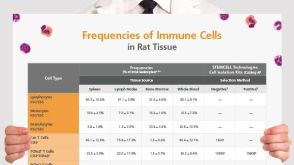 挂图Frequencies of Immune Cells in Rat Tissue Lists the estimated frequencies of more than 15 immune cell types in Sprague Dawley rats
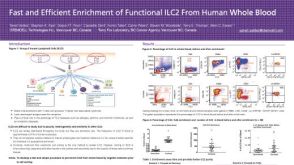 科学海报Fast and Efficient Enrichment of Functional ILC2 From Human Whole Blood



 沪公网安备31010102008431号