Pourcet B et al. (MAY 2016)
Scientific Reports 6 25481
The nuclear receptor LXR modulates interleukin-18 levels in macrophages through multiple mechanisms.
IL-18 is a member of the IL-1 family involved in innate immunity and inflammation. Deregulated levels of IL-18 are involved in the pathogenesis of multiple disorders including inflammatory and metabolic diseases,yet relatively little is known regarding its regulation. Liver X receptors or LXRs are key modulators of macrophage cholesterol homeostasis and immune responses. Here we show that LXR ligands negatively regulate LPS-induced mRNA and protein expression of IL-18 in bone marrow-derived macrophages. Consistent with this being an LXR-mediated process,inhibition is abolished in the presence of a specific LXR antagonist and in LXR-deficient macrophages. Additionally,IL-18 processing of its precursor inactive form to its bioactive state is inhibited by LXR through negative regulation of both pro-caspase 1 expression and activation. Finally,LXR ligands further modulate IL-18 levels by inducing the expression of IL-18BP,a potent endogenous inhibitor of IL-18. This regulation occurs via the transcription factor IRF8,thus identifying IL-18BP as a novel LXR and IRF8 target gene. In conclusion,LXR activation inhibits IL-18 production through regulation of its transcription and maturation into an active pro-inflammatory cytokine. This novel regulation of IL-18 by LXR could be applied to modulate the severity of IL-18 driven metabolic and inflammatory disorders.
View Publication
产品类型:
产品号#:
17858
17858RF
100-0694
产品名:
EasySep™人CD14正选试剂盒II
RoboSep™ 人CD14正选试剂盒II
EasySep™人CD14正选试剂盒II
Liu T-T et al. (MAY 2016)
Journal of Immunology
LSm14A Plays a Critical Role in Antiviral Immune Responses by Regulating MITA Level in a Cell-Specific Manner.
Viral infection triggers induction of antiviral cytokines and effectors,which are critical mediators of innate antiviral immune response. It has been shown that the processing body-associated protein LSm14A is involved in the induction of antiviral cytokines in cell lines but in vivo evidence is lacking. By generating LSm14A-deficient mice,in this study,we show that LSm14A plays a critical and specific role in the induction of antiviral cytokines in dendritic cells (DCs) but not in macrophages and fibroblasts. Induction of antiviral cytokines triggered by the DNA viruses HSV-1 and murid herpesvirus 68 and the RNA virus vesicular stomatitis virus but not Sendai virus was impaired in Lsm14a(-/-) DCs,which is correlated to the functions of the adaptor protein MITA/STING in the antiviral signaling pathways. LSm14A deficiency specifically downregulated MITA/STING level in DCs by impairing its nuclear mRNA precursor processing and subsequently impaired antiviral innate and adaptive immune responses. Our findings reveal a nuclear mRNA precursor processing and cell-specific regulatory mechanism of antiviral immune responses.
View Publication
产品类型:
产品号#:
18758
18758RF
18768
18768RF
18780
18780RF
18781
18781RF
产品名:
EasySep™小鼠CD11c正选试剂盒II
RoboSep™ 小鼠CD11c正选试剂盒II
EasySep™小鼠CD11c正选试剂盒II及脾脏解离液
RoboSep™ 小鼠CD11c正选试剂盒II及脾脏解离液
Kieback E et al. (MAY 2016)
Immunity 44 5 1114--26
Thymus-Derived Regulatory T Cells Are Positively Selected on Natural Self-Antigen through Cognate Interactions of High Functional Avidity.
Regulatory T (Treg) cells expressing Foxp3 transcripton factor are essential for immune homeostasis. They arise in the thymus as a separate lineage from conventional CD4(+)Foxp3(-) T (Tconv) cells. Here,we show that the thymic development of Treg cells depends on the expression of their endogenous cognate self-antigen. The formation of these cells was impaired in mice lacking this self-antigen,while Tconv cell development was not negatively affected. Thymus-derived Treg cells were selected by self-antigens in a specific manner,while autoreactive Tconv cells were produced through degenerate recognition of distinct antigens. These distinct modes of development were associated with the expression of T cell receptor of higher functional avidity for self-antigen by Treg cells than Tconv cells,a difference subsequently essential for the control of autoimmunity. Our study documents how self-antigens define the repertoire of thymus-derived Treg cells to subsequently endow this cell type with the capacity to undermine autoimmune attack.
View Publication
产品类型:
产品号#:
18782
18782RF
19852
19852RF
产品名:
EasySep™小鼠CD25调节性T细胞正选试剂盒
RoboSep™ 小鼠CD25调节性T细胞正选试剂盒
EasySep™小鼠CD4+ T细胞分选试剂盒
RoboSep™ 小鼠CD4+ T细胞分选试剂盒
Kishimoto RK et al. (APR 2016)
Revista brasileira de hematologia e hemoterapia 38 2 113--20
Validation of interphase fluorescence in situ hybridization (iFISH) for multiple myeloma using CD138 positive cells.
BACKGROUND Multiple myeloma is a plasma cell neoplasm with acquired genetic abnormalities of clinical and prognostic importance. Multiple myeloma differs from other hematologic malignancies due to a high fraction of low proliferating malignant plasma cells and the paucity of plasma cells in bone marrow aspiration samples,making cytogenetic analysis a challenge. An abnormal karyotype is found in only one-third of patients with multiple myeloma and interphase fluorescence in situ hybridization is the most useful test for studying the chromosomal abnormalities present in almost 90% of cases. However,it is necessary to study the genetic abnormalities in plasma cells after their identification or selection by morphology,immunophenotyping or sorting. Other challenges are the selection of the most informative FISH panel and determining cut-off levels for FISH probes. This study reports the validation of interphase fluorescence in situ hybridization using CD138 positive cells,according to proposed guidelines published by the European Myeloma Network (EMN) in 2012. METHOD Bone marrow samples from patients with multiple myeloma were used to standardize a panel of five probes [1q amplification,13q14 deletion,17p deletion,t(4;14),and t(14;16)] in CD138(+) cells purified by magnetic cell sorting. RESULTS This test was validated with a low turnaround time and good reproducibility. Five of six samples showed genetic abnormalities. Monosomy/deletion 13 plus t(4;14) were found in two cases. CONCLUSION This technique together with magnetic cell sorting is effective and can be used in the routine laboratory practice. In addition,magnetic cell sorting provides a pure plasma cell population that allows other molecular and genomic studies.
View Publication
产品类型:
产品号#:
18387
18387RF
产品名:
Korniotis S et al. ( 2016)
Nature communications 7 12134
Treatment of ongoing autoimmune encephalomyelitis with activated B-cell progenitors maturing into regulatory B cells.
The influence of signals perceived by immature B cells during their development in bone marrow on their subsequent functions as mature cells are poorly defined. Here,we show that bone marrow cells transiently stimulated in vivo or in vitro through the Toll-like receptor 9 generate proB cells (CpG-proBs) that interrupt experimental autoimmune encephalomyelitis (EAE) when transferred at the onset of clinical symptoms. Protection requires differentiation of CpG-proBs into mature B cells that home to reactive lymph nodes,where they trap T cells by releasing the CCR7 ligand,CCL19,and to inflamed central nervous system,where they locally limit immunopathogenesis through interleukin-10 production,thereby cooperatively inhibiting ongoing EAE. These data demonstrate that a transient inflammation at the environment,where proB cells develop,is sufficient to confer regulatory functions onto their mature B-cell progeny. In addition,these properties of CpG-proBs open interesting perspectives for cell therapy of autoimmune diseases.
View Publication
产品类型:
产品号#:
21000
20119
20155
18757
18757RF
19852
19852RF
产品名:
RoboSep™- S
RoboSep™ 吸头组件抛光剂
RoboSep™分选管套装(9个塑料管)
EasySep™小鼠CD117(cKIT)正选试剂盒
RoboSep™ 小鼠CD117(cKIT)正选试剂盒含滤芯吸头
EasySep™小鼠CD4+ T细胞分选试剂盒
RoboSep™ 小鼠CD4+ T细胞分选试剂盒
Roufaiel M et al. (SEP 2016)
Nature immunology
CCL19-CCR7-dependent reverse transendothelial migration of myeloid cells clears Chlamydia muridarum from the arterial intima.
Regions of the normal arterial intima predisposed to atherosclerosis are sites of ongoing monocyte trafficking and also contain resident myeloid cells with features of dendritic cells. However,the pathophysiological roles of these cells are poorly understood. Here we found that intimal myeloid cells underwent reverse transendothelial migration (RTM) into the arterial circulation after systemic stimulation of pattern-recognition receptors (PRRs). This process was dependent on expression of the chemokine receptor CCR7 and its ligand CCL19 by intimal myeloid cells. In mice infected with the intracellular pathogen Chlamydia muridarum,blood monocytes disseminated infection to the intima. Subsequent CCL19-CCR7-dependent RTM was critical for the clearance of intimal C. muridarum. This process was inhibited by hypercholesterolemia. Thus,RTM protects the normal arterial intima,and compromised RTM during atherogenesis might contribute to the intracellular retention of pathogens in atherosclerotic lesions.
View Publication
产品类型:
产品号#:
19853
19853RF
产品名:
EasySep™小鼠CD8+ T细胞分选试剂盒
RoboSep™ 小鼠CD8+ T细胞分选试剂盒
Ozga AJ et al. (OCT 2016)
The Journal of experimental medicine
pMHC affinity controls duration of CD8+ T cell-DC interactions and imprints timing of effector differentiation versus expansion.
During adaptive immune responses,CD8(+) T cells with low TCR affinities are released early into the circulation before high-affinity clones become dominant at later time points. How functional avidity maturation is orchestrated in lymphoid tissue and how low-affinity cells contribute to host protection remains unclear. In this study,we used intravital imaging of reactive lymph nodes (LNs) to show that T cells rapidly attached to dendritic cells irrespective of TCR affinity,whereas one day later,the duration of these stable interactions ceased progressively with lowering peptide major histocompatibility complex (pMHC) affinity. This correlated inversely BATF (basic leucine zipper transcription factor,ATF-like) and IRF4 (interferon-regulated factor 4) induction and timing of effector differentiation,as low affinity-primed T cells acquired cytotoxic activity earlier than high affinity-primed ones. After activation,low-affinity effector CD8(+) T cells accumulated at efferent lymphatic vessels for egress,whereas high affinity-stimulated CD8(+) T cells moved to interfollicular regions in a CXCR3-dependent manner for sustained pMHC stimulation and prolonged expansion. The early release of low-affinity effector T cells led to rapid target cell elimination outside reactive LNs. Our data provide a model for affinity-dependent spatiotemporal orchestration of CD8(+) T cell activation inside LNs leading to functional avidity maturation and uncover a role for low-affinity effector T cells during early microbial containment.
View Publication
产品类型:
产品号#:
19853
19853RF
产品名:
EasySep™小鼠CD8+ T细胞分选试剂盒
RoboSep™ 小鼠CD8+ T细胞分选试剂盒
Donnarumma T et al. (NOV 2016)
Cell reports 17 6 1571--1583
Opposing Development of Cytotoxic and Follicular Helper CD4 T Cells Controlled by the TCF-1-Bcl6 Nexus.
CD4(+) T cells develop distinct and often contrasting helper,regulatory,or cytotoxic activities. Typically a property of CD8(+) T cells,granzyme-mediated cytotoxic T cell (CTL) potential is also exerted by CD4(+) T cells. However,the conditions that induce CD4(+) CTLs are not entirely understood. Using single-cell transcriptional profiling,we uncover a unique signature of Granzyme B (GzmB)(+) CD4(+) CTLs,which distinguishes them from other CD4(+) T helper (Th) cells,including Th1 cells,and strongly contrasts with the follicular helper T (Tfh) cell signature. The balance between CD4(+) CTL and Tfh differentiation heavily depends on the class of infecting virus and is jointly regulated by the Tfh-related transcription factors Bcl6 and Tcf7 (encoding TCF-1) and by the expression of the inhibitory receptors PD-1 and LAG3. This unique profile of CD4(+) CTLs offers targets for their study,and its antagonism by the Tfh program separates CD4(+) T cells with either helper or killer functions.
View Publication
产品类型:
产品号#:
18952
18952RF
产品名:
EasySep™小鼠CD4正选试剂盒II
RoboSep™ 小鼠CD4正选试剂盒II
Pereira RC et al. ( 2016)
Frontiers in immunology 7 415
Human Articular Chondrocytes Regulate Immune Response by Affecting Directly T Cell Proliferation and Indirectly Inhibiting Monocyte Differentiation to Professional Antigen-Presenting Cells.
Autologous chondrocyte implantation is the current gold standard cell therapy for cartilage lesions. However,in some instances,the heavily compromised health of the patient can either impair or limit the recovery of the autologous chondrocytes and a satisfactory outcome of the implant. Allogeneic human articular chondrocytes (hAC) could be a good alternative,but the possible immunological incompatibility between recipient and hAC donor should be considered. Herein,we report that allogeneic hAC inhibited T lymphocyte response to antigen-dependent and -independent proliferative stimuli. This effect was maximal when T cells and hAC were in contact and it was not relieved by the addition of exogenous lymphocyte growth factor interleukin (IL)-2. More important,hAC impaired the differentiation of peripheral blood monocytes induced with granulocyte monocyte colony-stimulating factor and IL-4 (Mo) to professional antigen-presenting cells,such as dendritic cells (DC). Indeed,a marked inhibition of the onset of the CD1a expression and an ineffective downregulation of CD14 antigens was observed in Mo-hAC co-cultures. Furthermore,compared to immature or mature DC,Mo from Mo-hAC co-cultures did not trigger an efficacious allo-response. The prostaglandin (PG) E2 present in the Mo-hAC co-culture conditioned media is a putative candidate of the hAC-mediated inhibition of Mo maturation. Altogether,these findings indicate that allogeneic hAC inhibit,rather than trigger,immune response and strongly suggest that an efficient chondrocyte implantation could be possible also in an allogeneic setting.
View Publication


 EasySep™小鼠TIL(CD45)正选试剂盒




 产品手册小鼠细胞分选
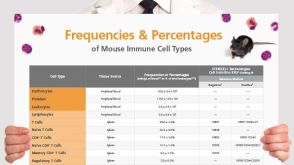 挂图Frequencies and Percentages of Mouse Immune Cell Types List of the frequencies of over 25 immune cell types in C57BL/6 mice

 沪公网安备31010102008431号