Guan H et al. (JUL 2007)
Journal of immunology (Baltimore,Md. : 1950) 179 1 590--6
NK cells enhance dendritic cell response against parasite antigens via NKG2D pathway.
Recent studies have shown that NK-dendritic cell (DC) interaction plays an important role in the induction of immune response against tumors and certain viruses. Although the effect of this interaction is bidirectional,the mechanism or molecules involved in this cross-talk have not been identified. In this study,we report that coculture with NK cells causes several fold increase in IL-12 production by Toxoplasma gondii lysate Ag-pulsed DC. This interaction also leads to stronger priming of Ag-specific CD8+ T cell response by these cells. In vitro blockade of NKG2D,a molecule present on human and murine NK cells,neutralizes the NK cell-induced up-regulation of DC response. Moreover,treatment of infected animals with Ab to NKG2D receptor compromises the development of Ag-specific CD8+ T cell immunity and reduces their ability to clear parasites. These studies emphasize the critical role played by NKG2D in the NK-DC interaction,which apparently is important for the generation of robust CD8+ T cell immunity against intracellular pathogens. To the best of our knowledge,this is the first work that describes in vivo importance of NKG2D during natural infection.
View Publication
Tomic J et al. (MAR 2006)
Journal of immunology (Baltimore,Md. : 1950) 176 6 3830--9
Sensitization of IL-2 signaling through TLR-7 enhances B lymphoma cell immunogenicity.
The innate ability of B lymphoma cells to escape control by tumor-reactive T cells must be overcome to develop effective immunotherapies for these diseases. Because signals from both the innate and adaptive immune systems direct the acquisition of strong immunogenicity by professional APCs,the effects of IL-2 and the TLR-7 agonist,S28690,on the immunogenic properties of chronic lymphocytic leukemia (CLL) B cells were studied. IL-2 with S28690 caused CLL cells to proliferate and increased their expression of B7-family members,production of TNF-alpha and IL-10,and levels of tyrosine-phosphorylated STAT-1 and STAT-3 proteins. S28690 increased CD25 expression on CLL cells and sensitized them to IL-2 signaling. However,IL-2 did not change TLR-7 expression or signaling in CLL cells. The ability to stimulate T cell proliferation required additional activation of protein kinase C,which inhibited tumor cell proliferation,switched off" IL-10 production�
View Publication
产品类型:
产品号#:
15021
15061
产品名:
RosetteSep™人T细胞富集抗体混合物
RosetteSep™人T细胞富集抗体混合物
Mace EM et al. (NOV 2016)
The Journal of clinical investigation
Biallelic mutations in IRF8 impair human NK cell maturation and function.
Human NK cell deficiencies are rare yet result in severe and often fatal disease,particularly as a result of viral susceptibility. NK cells develop from hematopoietic stem cells,and few monogenic errors that specifically interrupt NK cell development have been reported. Here we have described biallelic mutations in IRF8,which encodes an interferon regulatory factor,as a cause of familial NK cell deficiency that results in fatal and severe viral disease. Compound heterozygous or homozygous mutations in IRF8 in 3 unrelated families resulted in a paucity of mature CD56dim NK cells and an increase in the frequency of the immature CD56bright NK cells,and this impairment in terminal maturation was also observed in Irf8-/-,but not Irf8+/-,mice. We then determined that impaired maturation was NK cell intrinsic,and gene expression analysis of human NK cell developmental subsets showed that multiple genes were dysregulated by IRF8 mutation. The phenotype was accompanied by deficient NK cell function and was stable over time. Together,these data indicate that human NK cells require IRF8 for development and functional maturation and that dysregulation of this function results in severe human disease,thereby emphasizing a critical role for NK cells in human antiviral defense.
View Publication
Carrera Silva EA et al. ( 2017)
Blood 130 17 1898--1902
CD207+CD1a+ cells circulate in pediatric patients with active Langerhans cell histiocytosis.
Langerhans cell histiocytosis (LCH) is a rare disease with an unknown etiology characterized by heterogeneous lesions containing CD207+CD1a+ cells that can arise in almost any tissue and cause significant morbidity and mortality. Precursors of pathological Langerhans cells have yet to be defined. Our aim was to identify circulating CD207+CD1a+ cells and their inducers in LCH. Expression of CD207 and CD1a in the blood myeloid compartment as well as thymic stromal lymphopoietin (TSLP) and transforming growth factor β (TGF-β) plasma levels were measured in 22 pediatric patients with active disease (AD) or nonactive disease (NAD). In patients with AD vs those with NAD,the myeloid compartment showed an increased CD11b (CD11bhigh plus CD11b+) fraction (39.7 ± 3.6 vs 18.6 ± 1.9),a higher percentage of circulating CD11bhighCD11c+CD207+ cells (44.5 ± 11.3 vs 3.2 ± 0.5),and the presence of CD11chighCD207+CD1a+ cells (25.0 ± 9.1 vs 2.3 ± 0.5). Blood CD207+CD1a+ cells were not observed in adult controls or umbilical cord. Increased TSLP and TGF-β levels were detected in patients with AD. Interestingly,plasma from patients with AD induces CD207 expression on CD14+ monocytes. We conclude that CD207+CD1a+ cells are circulating in patients with active LCH,and TSLP and TGF-β are potential drivers of Langerhans-like cells in vivo.
View Publication
产品类型:
产品号#:
17858
17858RF
100-0694
产品名:
EasySep™人CD14正选试剂盒II
RoboSep™ 人CD14正选试剂盒II
EasySep™人CD14正选试剂盒II
Chen H et al. (DEC 2015)
Biological research 48 1 59
Functional disruption of human leukocyte antigen II in human embryonic stem cell.
BACKGROUND Theoretically human embryonic stem cells (hESCs) have the capacity to self-renew and differentiate into all human cell types. Therefore,the greatest promise of hESCs-based therapy is to replace the damaged tissues of patients suffering from traumatic or degenerative diseases by the exact same type of cells derived from hESCs. Allograft immune rejection is one of the obstacles for hESCs-based clinical applications. Human leukocyte antigen (HLA) II leads to CD4(+) T cells-mediated allograft rejection. Hence,we focus on optimizing hESCs for clinic application through gene modification. RESULTS Transcription activator-like effector nucleases (TALENs) were used to target MHC class II transactivator (CIITA) in hESCs efficiently. CIITA (-/-) hESCs did not show any difference in the differentiation potential and self-renewal capacity. Dendritic cells (DCs) derived from CIITA (-/-) hESCs expressed CD83 and CD86 but without the constitutive HLA II. Fibroblasts derived from CIITA (-/-) hESCs were powerless in IFN-$\$ expression of HLA II. CONCLUSION We generated HLA II defected hESCs via deleting CIITA,a master regulator of constitutive and IFN-$\$ expression of HLA II genes. CIITA (-/-) hESCs can differentiate into tissue cells with non-HLA II expression. It's promising that CIITA (-/-) hESCs-derived cells could be used in cell therapy (e.g.,T cells and DCs) and escape the attack of receptors' CD4(+) T cells,which are the main effector cells of cellular immunity in allograft.
View Publication


 EasySep™小鼠TIL(CD45)正选试剂盒




 技术手册Generation of NK Cells Using STEMdiff™ or StemSpan™ NK Cell Kits
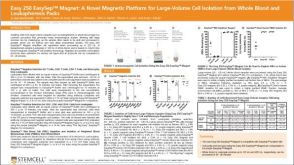 科学海报Easy 250 EasySep™ Magnet: A Novel Magnetic Platform for Large-Volume Cell Isolation
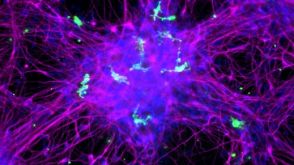 实验方案How to Co-Culture Human Pluripotent Stem Cell (hPSC)-Derived Forebrain Neurons and Microglia
 实验方案How to Measure NK Cell Killing Activity with a Standardized Potency Assay
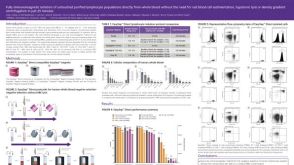 科学海报Immunomagnetic Cell Isolation of Untouched Lymphocyte Populations Directly from Whole Blood

 沪公网安备31010102008431号