Wong KK et al. (AUG 2010)
Journal of leukocyte biology 88 2 361--72
The role of CD200 in immunity to B cell lymphoma.
CD200 is a transmembrane protein broadly expressed on a variety of cell types,which delivers immunoregulatory signals through binding to receptors (CD200Rs) expressed on monocytes/myeloid cells and T lymphocytes. Signals delivered through the CD200:CD200R axis have been shown to play an important role in the regulation of anti-tumor immunity,and overexpression of CD200 has been reported in a number of malignancies,including CLL,as well as on cancer stem cells. We investigated the effect of CD200 blockade in vitro on a generation of CTL responses against a poorly immunogenic CD200+ lymphoma cell line and fresh cells obtained from CLL patients using anti-CD200 mAb and CD200-specific siRNAs. Suppression of functional expression of CD200 augmented killing of the CD200+ cells,as well as production of the inflammatory cytokines IFN-gamma and TNF-alpha by effector PBMCs. Killing was mediated by CD8+ cytotoxic T cells,and CD4+ T cells play an important role in CD200-mediated suppression of CTL responses. Our data suggest that CD200 blockade may represent a novel approach to clinical treatment of CLL.
View Publication
产品类型:
产品号#:
18052
18052RF
18053
18053RF
产品名:
Briercheck EL et al. ( 2015)
The Journal of Immunology 194 4 1832--1840
PTEN Is a Negative Regulator of NK Cell Cytolytic Function
Human NK cells are characterized by their ability to initiate an immediate and direct cytolytic response to virally infected or malignantly transformed cells. Within human peripheral blood,the more mature CD56(dim) NK cell efficiently kills malignant targets at rest,whereas the less mature CD56(bright) NK cells cannot. In this study,we show that resting CD56(bright) NK cells express significantly more phosphatase and tensin homolog deleted on chromosome 10 (PTEN) protein when compared with CD56(dim) NK cells. Consistent with this,forced overexpression of PTEN in NK cells resulted in decreased cytolytic activity,and loss of PTEN in CD56(bright) NK cells resulted in elevated cytolytic activity. Comparable studies in mice showed PTEN overexpression did not alter NK cell development or NK cell-activating and inhibitory receptor expression yet,as in humans,did decrease expression of downstream NK activation targets MAPK and AKT during early cytolysis of tumor target cells. Confocal microscopy revealed that PTEN overexpression disrupts the NK cell's ability to organize immunological synapse components including decreases in actin accumulation,polarization of the microtubule organizing center,and the convergence of cytolytic granules. In summary,our data suggest that PTEN normally works to limit the NK cell's PI3K/AKT and MAPK pathway activation and the consequent mobilization of cytolytic mediators toward the target cell and suggest that PTEN is among the active regulatory components prior to human NK cells transitioning from the noncytolytic CD56(bright) NK cell to the cytolytic CD56(dim) NK cells.
View Publication
Roda JM et al. (JUL 2006)
Journal of immunology (Baltimore,Md. : 1950) 177 1 120--9
Interleukin-21 enhances NK cell activation in response to antibody-coated targets.
NK cells express an activating FcR (FcgammaRIIIa) that mediates Ab-dependent cellular cytotoxicity and the production of immune modulatory cytokines in response to Ab-coated targets. IL-21 has antitumor activity in murine models that depends in part on its ability to promote NK cell cytotoxicity and IFN-gamma secretion. We hypothesized that the NK cell response to FcR stimulation would be enhanced by the administration of IL-21. Human NK cells cultured with IL-21 and immobilized IgG or human breast cancer cells coated with a therapeutic mAb (trastuzumab) secreted large amounts of IFN-gamma. Increased secretion of TNF-alpha and the chemokines IL-8,MIP-1alpha,and RANTES was also observed under these conditions. NK cell IFN-gamma production was dependent on distinct signals mediated by the IL-21R and the FcR and was abrogated in STAT1-deficient NK cells. Supernatants derived from NK cells that had been stimulated with IL-21 and mAb-coated breast cancer cells were able to drive the migration of naive and activated T cells in an in vitro chemotaxis assay. IL-21 also enhanced NK cell lytic activity against Ab-coated tumor cells. Coadministration of IL-21 and Ab-coated tumor cells to immunocompetent mice led to synergistic production of IFN-gamma by NK cells. Furthermore,the administration of IL-21 augmented the effects of an anti-HER2/neu mAb in a murine tumor model,an effect that required IFN-gamma. These findings demonstrate that IL-21 significantly enhances the NK cell response to Ab-coated targets and suggest that IL-21 would be an effective adjuvant to administer in combination with therapeutic mAbs.
View Publication
Schenk S et al. (JAN 2007)
Stem cells (Dayton,Ohio) 25 1 245--51
Monocyte chemotactic protein-3 is a myocardial mesenchymal stem cell homing factor.
MSCs have received attention for their therapeutic potential in a number of disease states,including bone formation,diabetes,stem cell engraftment after marrow transplantation,graft-versus-host disease,and heart failure. Despite this diverse interest,the molecular signals regulating MSC trafficking to sites of injury are unclear. MSCs are known to transiently home to the freshly infarcted myocardium. To identify MSC homing factors,we determined chemokine expression pattern as a function of time after myocardial infarction (MI). We merged these profiles with chemokine receptors expressed on MSCs but not cardiac fibroblasts,which do not home after MI. This analysis identified monocyte chemotactic protein-3 (MCP-3) as a potential MSC homing factor. Overexpression of MCP-3 1 month after MI restored MSC homing to the heart. After serial infusions of MSCs,cardiac function improved in MCP-3-expressing hearts (88.7%,p textless .001) but not in control hearts (8.6%,p = .47). MSC engraftment was not associated with differentiation into cardiac myocytes. Rather,MSC engraftment appeared to result in recruitment of myofibroblasts and remodeling of the collagen matrix. These data indicate that MCP-3 is an MSC homing factor; local overexpression of MCP-3 recruits MSCs to sites of injured tissue and improves cardiac remodeling independent of cardiac myocyte regeneration.
View Publication
产品类型:
产品号#:
18557
18557RF
产品名:
T. A. Mace et al. (mar 2019)
Scientific reports 9 1 5068
Soy isoflavones and their metabolites modulate cytokine-induced natural killer cell function.
Soybeans are a rich source of isoflavones that have been linked with anti-inflammatory processes and various health benefits. However,specific mechanisms whereby soy bioactives impact immune cell subsets are unclear. Isoflavones,such as genistein and daidzein,are metabolized by microbes to bioactive metabolites as O-desmethylangolensin (O-DMA) and equol,whose presence has been linked to health benefits. We examined how soy isoflavones and metabolites impact natural killer (NK) cell signaling and function. We observe no impact of isoflavones on viability of healthy donor peripheral blood mononuclear cells (PBMCs) or NK cells,even at high (25 µM) concentrations. However,pre-treatment of PBMCs with physiologically-relevant concentrations of genistein (p = 0.0023) and equol (p = 0.006) decreases interleukin (IL)-12/IL-18-induced interferon-gamma (IFN-gamma) production versus controls. Detailed cellular analyses indicate genistein and equol decrease IL-12/IL-18-induced IFN-gamma production by human NK cell subsets,but do not consistently alter cytotoxicity. At the level of signal transduction,genistein decreases IL-12/IL-18-induced total phosphorylated tyrosine,and phosphorylation MAPK pathway components. Further,genistein limits IL-12/IL-18-mediated upregulation of IL-18Ralpha expression on NK cells (p = 0.0109). Finally,in vivo studies revealed that C57BL/6 mice fed a soy-enriched diet produce less plasma IFN-gamma following administration of IL-12/IL-18 versus control-fed animals (p {\textless} 0.0001). This study provides insight into how dietary soy modulates NK cell functions.
View Publication


 EasySep™小鼠TIL(CD45)正选试剂盒





 产品手册Highway1™: Fast, Gentle, and Automated Cell Sorting for Every Lab
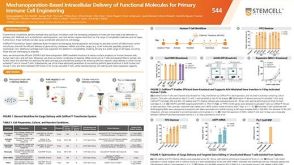 科学海报Mechanoporation-Based Intracellular Delivery of Functional Molecules for Primary Immune Cell Engineering
 实验方案How to Collect Plasma from Whole Blood Before Cell Isolation
 产品手册Highway1™: Fast, Gentle, and Automated Cell Sorting for Every Lab
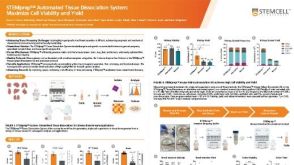 科学海报STEMprep™ Automated Tissue Dissociation System: Maximize Cell Viability and Yield


 沪公网安备31010102008431号