Aflaki E et al. (JUN 2014)
Science translational medicine 6 240 240ra73
Macrophage models of Gaucher disease for evaluating disease pathogenesis and candidate drugs.
Gaucher disease is caused by an inherited deficiency of glucocerebrosidase that manifests with storage of glycolipids in lysosomes,particularly in macrophages. Available cell lines modeling Gaucher disease do not demonstrate lysosomal storage of glycolipids; therefore,we set out to develop two macrophage models of Gaucher disease that exhibit appropriate substrate accumulation. We used these cellular models both to investigate altered macrophage biology in Gaucher disease and to evaluate candidate drugs for its treatment. We generated and characterized monocyte-derived macrophages from 20 patients carrying different Gaucher disease mutations. In addition,we created induced pluripotent stem cell (iPSC)-derived macrophages from five fibroblast lines taken from patients with type 1 or type 2 Gaucher disease. Macrophages derived from patient monocytes or iPSCs showed reduced glucocerebrosidase activity and increased storage of glucocerebroside and glucosylsphingosine in lysosomes. These macrophages showed efficient phagocytosis of bacteria but reduced production of intracellular reactive oxygen species and impaired chemotaxis. The disease phenotype was reversed with a noninhibitory small-molecule chaperone drug that enhanced glucocerebrosidase activity in the macrophages,reduced glycolipid storage,and normalized chemotaxis and production of reactive oxygen species. Macrophages differentiated from patient monocytes or patient-derived iPSCs provide cellular models that can be used to investigate disease pathogenesis and facilitate drug development.
View Publication
产品类型:
产品号#:
05850
05857
05870
05875
19059
19059RF
85850
85857
85870
85875
27845
27945
27840
27865
27940
27965
产品名:
EasySep™人单核细胞富集试剂盒
RoboSep™ 人单核细胞富集试剂盒含滤芯吸头
mTeSR™1
mTeSR™1
Marwali MR et al. (SEP 2004)
Journal of immunology (Baltimore,Md. : 1950) 173 5 2960--7
Lipid rafts mediate association of LFA-1 and CD3 and formation of the immunological synapse of CTL.
Lipid rafts accumulate in the immunological synapse formed by an organized assembly of the TCR/CD3,LFA-1,and signaling molecules. However,the precise role of lipid rafts in the formation of the immunological synapse is unclear. In this study,we show that LFA-1 on CTL is constitutively active and mediates Ag-independent binding of CTL to target cells expressing its ligands. LFA-1 and CD3 on CTL,but not resting T cells,colocalize in lipid rafts. Binding of LFA-1 on CTL to targets initiates the formation of the immunological synapse,which is formed by LFA-1,CD3,and ganglioside GM1 distributed in the periphery of the cell contact site and cholesterol is more widely distributed. The formation of this synapse is Ag independent,but the recognition of Ag by the TCR induces accumulation of tyrosine phosphorylated proteins in the synapse as well as redistribution of the microtubule organization center toward the cell contact site. Our results suggest that LFA-1 recruits lipid rafts and the TCR/CD3 to the synapse,and facilitates efficient and rapid activation of CTL.
View Publication
产品类型:
产品号#:
18554
18554RF
18564
18564RF
产品名:
Cebo C et al. (JAN 2006)
Journal of immunology (Baltimore,Md. : 1950) 176 2 864--72
The decreased susceptibility of Bcr/Abl targets to NK cell-mediated lysis in response to imatinib mesylate involves modulation of NKG2D ligands, GM1 expression, and synapse formation.
Chronic myeloid leukemia is a clonal multilineage myeloproliferative disease of stem cell origin characterized by the presence of the Bcr/Abl oncoprotein,a constitutively active tyrosine kinase. In previous studies,we have provided evidence that Bcr/Abl overexpression in leukemic cells increased their susceptibility to NK-mediated lysis by different mechanisms. In the present study,using UT-7/9 cells,a high level Bcr/Abl transfectant of UT-7 cells,we show that the treatment of Bcr/Abl target by imatinib mesylate (IM),a specific Abl tyrosine kinase inhibitor,hampers the formation of the NK/target immunological synapse. The main effect of IM involves an induction of surface GM1 ganglioside on Bcr/Abl transfectants that prevents the redistribution of MHC-related Ag molecules in lipid rafts upon interaction with NK cells. IM also affects cell surface glycosylation of targets,as assessed by binding of specific lectins resulting in the subsequent modulation of their binding to lectin type NK receptor,particularly NKG2D. In addition,we demonstrate that the tyrosine kinase activity repression results in a decrease of MHC-related Ags-A/B and UL-16-binding protein expression on Bcr/Abl transfectants UT-7/9. We show that NKG2D controls the NK-mediated lysis of UT-7/9 cells,and IM treatment inhibits this activating pathway. Taken together,our results show that the high expression of Bcr/Abl in leukemic cells controls the expression of NKG2D receptor ligands and membrane GM1 via a tyrosine kinase-dependent mechanism and that the modulation of these molecules by IM interferes with NK cell recognition and cytolysis of the transfectants.
View Publication
产品类型:
产品号#:
15025
15065
产品名:
RosetteSep™人NK细胞富集抗体混合物
RosetteSep™人NK细胞富集抗体混合物
Cesaro A et al. (SEP 2012)
PLoS ONE 7 9 e45478
An inflammation loop orchestrated by S100A9 and Calprotectin is critical for development of arthritis
OBJECTIVE: The S100A9 and S100A8 proteins are highly expressed by neutrophils and monocytes and are part of a group of damage-associated molecular pattern molecules that trigger inflammatory responses. Sera and synovial fluids of patients with rheumatoid arthritis (RA) contain high concentrations of S100A8/A9 that correlate with disease activity.backslashnbackslashnMETHODS: In this study,we investigated the importance of S100A9 in RA by using neutralizing antibodies in a murine lipopolysaccharide-synchronized collagen-induced arthritis model. We also used an in vitro model of stimulation of human immune cells to decipher the role played by S100A9 in leukocyte migration and pro-inflammatory cytokine secretion.backslashnbackslashnRESULTS: Treatment with anti-S100A9 antibodies improved the clinical score by 50%,diminished immune cell infiltration,reduced inflammatory cytokines,both in serum and in the joints,and preserved bone/collagen integrity. Stimulation of neutrophils with S100A9 protein led to the enhancement of neutrophil transendothelial migration. S100A9 protein also induced the secretion by monocytes of proinflammatory cytokines like TNFα,IL-1β and IL-6,and of chemokines like MIP-1α and MCP-1.backslashnbackslashnCONCLUSION: The effects of anti-S100A9 treatment are likely direct consequences of inhibiting the S100A9-mediated promotion of neutrophil transmigration and secretion of pro-inflammatory cytokines from monocytes. Collectively,our results show that treatment with anti-S100A9 may inhibit amplification of the immune response and help preserve tissue integrity. Therefore,S100A9 is a promising potential therapeutic target for inflammatory diseases like rheumatoid arthritis for which alternative therapeutic strategies are needed.
View Publication
产品类型:
产品号#:
03800
03801
03802
03803
03804
03805
03806
15028
15068
产品名:
ClonaCell™-HY杂交瘤试剂盒
ClonaCell™-HY培养基A
ClonaCell™-HY 培养基 B
ClonaCell™-HY 培养基 C
ClonaCell™-HY 培养基 D
ClonaCell™-HY 培养基 E
ClonaCell™-HY PEG
RosetteSep™人单核细胞富集抗体混合物
RosetteSep™人单核细胞富集抗体混合物
C. Gu et al. (jul 2019)
Journal of immunology (Baltimore,Md. : 1950) 203 2 389--399
Signaling Cascade through DC-ASGPR Induces Transcriptionally Active CREB for IL-10 Induction and Immune Regulation.
The types and magnitude of Ag-specific immune responses can be determined by the functional plasticity of dendritic cells (DCs). However,how DCs display functional plasticity and control host immune responses have not been fully understood. In this study,we report that ligation of DC-asialoglycoprotein receptor (DC-ASGPR),a C-type lectin receptor (CLR) expressed on human DCs,resulted in rapid activation of Syk,followed by PLCgamma2 and PKCdelta engagements. However,different from other Syk-coupled CLRs,including Dectin-1,signaling cascade through DC-ASGPR did not trigger NF-kappaB activation. Instead,it selectively activated MAPK ERK1/2 and JNK. Rapid and prolonged phosphorylation of ERK1/2 led to sequential activation of p90RSK and CREB,which consequently bound to IL10 promoter and initiated cytokine expression. In addition,DC-ASGPR ligation activated Akt,which differentially regulated the activities of GSK-3alpha/beta and beta-catenin and further contributed to IL-10 expression. Our observations demonstrate that DC-ASGPR induces IL-10 expression via an intrinsic signaling pathway,which provides a molecular explanation for DC-ASGPR-mediated programing of DCs to control host immune responses.
View Publication
Koka R et al. (SEP 2004)
Journal of immunology (Baltimore,Md. : 1950) 173 6 3594--8
Cutting edge: murine dendritic cells require IL-15R alpha to prime NK cells.
NK cells protect hosts against viral pathogens and transformed cells,and dendritic cells (DCs) play important roles in activating NK cells. We now find that murine IL-15Ralpha-deficient DCs fail to support NK cell cytolytic activity and elaboration of IFN-gamma,despite the fact that these DCs express normal levels of costimulatory molecules and IL-12. By contrast,IL-15Ralpha expression on NK cells is entirely dispensable for their activation by DCs. In addition,blockade with anti-IL-15Ralpha and anti-IL-2Rbeta but not anti-IL-2Ralpha-specific Abs prevents NK cell activation by wild-type DCs. Finally,presentation of IL-15 by purified IL-15Ralpha/Fc in trans synergizes with IL-12 to support NK cell priming. These findings suggest that murine DCs require IL-15Ralpha to present IL-15 in trans to NK cells during NK cell priming.
View Publication
产品类型:
产品号#:
18755
18755RF
产品名:
EasySep™小鼠CD49b正选试剂盒
RoboSep™ 小鼠CD49b正选试剂盒含滤芯吸头
Aoukaty A and Tan R (APR 2005)
Journal of immunology (Baltimore,Md. : 1950) 174 8 4551--8
Role for glycogen synthase kinase-3 in NK cell cytotoxicity and X-linked lymphoproliferative disease.
NK cells from individuals with X-linked lymphoproliferative (XLP) disease exhibit functional defects when stimulated through the NK receptor,2B4 (CD244). These defects are likely a consequence of aberrant intracellular signaling initiated by mutations of the adaptor molecule SLAM-associated protein. In this report,we show that NK cells from individuals with XLP but not healthy individuals fail to phosphorylate and thereby inactivate glycogen synthase kinase-3 (GSK-3) following 2B4 stimulation. Lack of GSK-3 phosphorylation prevented the accumulation of the transcriptional coactivator beta-catenin in the cytoplasm and its subsequent translocation to the nucleus. Potential signaling pathways leading from 2B4 stimulation to GSK-3 phosphorylation were also investigated. Ligation of 2B4 resulted in the phosphorylation of the guanine nucleotide exchange factor,Vav-1,and subsequent activation of the GTP-binding protein Rac-1 (but not Ras) and the serine-threonine kinase Raf-1 in healthy but not XLP-derived NK cells. In addition,the activity of MEK-2 (but not MEK-1) was up-regulated,and Erk1/2 was phosphorylated in normal NK cells but not those from an individual with XLP suggesting that these proteins relay SLAM-associated protein-dependent signals from 2B4. Finally,inactivation of GSK-3 using a specific inhibitor of GSK-3beta increased the cytotoxicity and cytokine secretion of both healthy and XLP NK cells. These data indicate that the signaling of 2B4 in NK cells is mediated by GSK-3 and beta-catenin,possibly through a signal transduction pathway that involves Vav-1,Rac-1,Raf-1,MEK-2,and Erk1/2 and that this pathway is aberrant in individuals with XLP.
View Publication
产品类型:
产品号#:
15025
15065
产品名:
RosetteSep™人NK细胞富集抗体混合物
RosetteSep™人NK细胞富集抗体混合物
Glatigny S et al. (MAY 2016)
Journal of Immunology 196 9 3542--6
Cutting Edge: Integrin α4 Is Required for Regulatory B Cell Control of Experimental Autoimmune Encephalomyelitis.
The neutralization of integrin α4 (Itga4) is currently used as treatment in multiple sclerosis. Although most studies have focused on its function on lymphocyte migration to the CNS,we have uncovered the importance of Itga4 for the generation of regulatory B cells in peripheral immune organs and their control of pathogenic T cell response and CNS pathology. Our study underscores the importance of looking at the dual role of B cells in CNS autoimmunity and provides important perspectives regarding the efficacy and side effects associated with Itga4 neutralization and other B cell-targeting therapies.
View Publication
产品类型:
产品号#:
19854
19854RF
产品名:
EasySep™小鼠B细胞分选试剂盒
RoboSep™ 小鼠B细胞分选试剂盒
Pua HH et al. (JAN 2007)
The Journal of experimental medicine 204 1 25--31
A critical role for the autophagy gene Atg5 in T cell survival and proliferation.
Macroautophagy (hereafter referred to as autophagy) is a well-conserved intracellular degradation process. Recent studies examining cells lacking the autophagy genes Atg5 and Atg7 have demonstrated that autophagy plays essential roles in cell survival during starvation,in innate cell clearance of microbial pathogens,and in neural cell maintenance. However,the role of autophagy in T lymphocyte development and survival is not known. Here,we demonstrate that autophagosomes form in primary mouse T lymphocytes. By generating Atg5-/- chimeric mice,we found that Atg5-deficient T lymphocytes underwent full maturation. However,the numbers of total thymocytes and peripheral T and B lymphocytes were reduced in Atg5 chimeras. In the periphery,Atg5-/- CD8+ T lymphocytes displayed dramatically increased cell death. Furthermore,Atg5-/- CD4+ and CD8+ T cells failed to undergo efficient proliferation after TCR stimulation. These results demonstrate a critical role for Atg5 in multiple aspects of lymphocyte development and function and suggest that autophagy may be essential for both T lymphocyte survival and proliferation.
View Publication


 EasySep™小鼠TIL(CD45)正选试剂盒




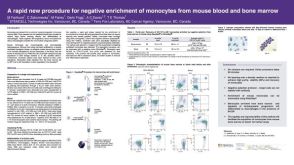 科学海报Procedure for Negative Enrichment of Monocytes from Mouse Blood and Bone Marrow


 沪公网安备31010102008431号