Al-Jaderi Z and Maghazachi AA (NOV 2013)
Toxins 5 11 1932--47
Effects of vitamin D3, calcipotriol and FTY720 on the expression of surface molecules and cytolytic activities of human natural killer cells and dendritic cells.
We describe here the effects of three drugs that are either approved or have the potential for treating multiple sclerosis (MS) patients through the in vitro activities of human natural killer (NK) cells and dendritic cells (DCs). Our results indicate that 1,25(OH)2D3,the biologically active metabolite of vitamin D3,calcipotriol and FTY720 augment IL-2-activated NK cell lysis of K562 and RAJI tumor cell lines as well as immature (i) and mature (m) DCs,with variable efficacies. These results are corroborated with the ability of the drugs to up-regulate the expression of NK cytotoxicity receptors NKp30 and NKp44,as well as NKG2D on the surfaces of NK cells. Also,they down-regulate the expression of the killer inhibitory receptor CD158. The three drugs down-regulate the expression of CCR6 on the surface of iDCs,whereas vitamin D3 and calcipotriol tend to up-regulate the expression of CCR7 on mDCs,suggesting that they may influence the migration of DCs into the lymph nodes. Finally,vitamin D3,calcipotriol and FTY720 enhance NK17/NK1 cell lysis of K562 cells,suggesting that a possible mechanism of action for these drugs is via activating these newly described cells. In conclusion,our results show novel mechanisms of action for vitamin D3,calcipotriol and FTY720 on cells of the innate immune system.
View Publication
产品类型:
产品号#:
18055
18055RF
15025
15065
15028
15068
产品名:
RosetteSep™人NK细胞富集抗体混合物
RosetteSep™人NK细胞富集抗体混合物
RosetteSep™人单核细胞富集抗体混合物
RosetteSep™人单核细胞富集抗体混合物
Falco M et al. (JUL 2010)
Journal of immunology (Baltimore,Md. : 1950) 185 1 433--41
Combined genotypic and phenotypic killer cell Ig-like receptor analyses reveal KIR2DL3 alleles displaying unexpected monoclonal antibody reactivity: identification of the amino acid residues critical for staining.
In humans,recent clinical and experimental data from hematopoietic stem cell transplantation revealed that donor-derived alloreactive NK cells exert a beneficial graft versus leukemia effect. The existence of donor-derived alloreactive NK cells can be predicted on the basis of donor killer cell Ig-like receptor (KIR) gene profile and HLA class I typing of both donor and recipient. Moreover,the size of the alloreactive NK cell population can be directly assessed by the combined use of anti-KIR-specific mAb. In this study,in an attempt to improve the definition of alloreactive NK cell subsets,we assessed the KIR genotype and phenotype in a cohort of 44 donors. This approach allowed the identification of two different KIR2DL3 alleles (KIR2DL3*005 and the novel allele KIR2DL3*015) that did not react with the anti-KIR2DL3-specific ECM41 mAb. In contrast,both alleles were recognized at the cell surface by several mAb reacting with KIR2DL2/L3/S2. Notably,KIR2DL3*005 was also stained by the anti-KIR2DL1/S1-specific EB6B and 11PB6 mAb. Functional analysis revealed that,despite its particular mAb reactivity,the specificity of KIR2DL3*005 for HLA-C molecules did not differ from that of other KIR2DL2/L3 alleles. Finally,site-directed mutagenesis demonstrated that glutamine at position 35 is required for ECM41 staining,whereas glutamic acid 35 and arginine 50 are relevant for staining with EB6B or 11PB6 mAb. Our present data represent a substantial progress in the characterization of the NK cell repertoire and an improved phenotypic/functional definition of given KIR(+) subsets.
View Publication
产品类型:
产品号#:
15025
15065
产品名:
RosetteSep™人NK细胞富集抗体混合物
RosetteSep™人NK细胞富集抗体混合物
Castriconi R et al. (JUN 2007)
Blood 109 11 4873--81
Functional characterization of natural killer cells in type I leukocyte adhesion deficiency.
In this study,we analyzed IL-2-activated polyclonal natural killer (NK) cells derived from 2 patients affected by leukocyte adhesion deficiency type I (LAD1),an immunodeficiency characterized by mutations of the gene coding for CD18,the beta subunit shared by major leukocyte integrins. We show that LAD1 NK cells express normal levels of various triggering NK receptors (and coreceptors) and that mAb-mediated engagement of these receptors results in the enhancement of both NK cytolytic activity and cytokine production. Moreover,these activating NK receptors were capable of recognizing their specific ligands on target cells. Thus,LAD1 NK cells,similarly to normal NK cells,were capable of killing most human tumor cells analyzed and produced high amounts of IFN-gamma when cocultured in presence of target cells. Murine target cells represented a common exception,as they were poorly susceptible to LAD1 NK cells. Finally,LAD1 NK cells could efficiently kill or induce maturation of monocyte-derived immature dendritic cells (DCs). Altogether our present study indicates that in LAD1 patients,3 important functions of NK cells (eg,cytotoxicity,IFN-gamma production,and DC editing) are only marginally affected and provides new insight on the cooperation between activating receptors and LFA-1 in the induction of NK cell activation and function.
View Publication
产品类型:
产品号#:
15025
15065
产品名:
RosetteSep™人NK细胞富集抗体混合物
RosetteSep™人NK细胞富集抗体混合物
Yokota A et al. (APR 2009)
International immunology 21 4 361--77
GM-CSF and IL-4 synergistically trigger dendritic cells to acquire retinoic acid-producing capacity.
Retinoic acid (RA) produced by intestinal dendritic cells (DCs) imprints gut-homing specificity on lymphocytes and enhances Foxp3(+) regulatory T-cell differentiation. The expression of aldehyde dehydrogenase (ALDH) 1A in these DCs is essential for the RA production. However,it remains unclear how the steady-state ALDH1A expression is induced under specific pathogen-free (SPF) conditions. Here,we found that bone marrow-derived dendritic cells (BM-DCs) generated with granulocyte-macrophage colony-stimulating factor (GM-CSF) expressed Aldh1a2,an isoform of Aldh1a,but that fms-related tyrosine kinase 3 ligand-generated BM-DCs did not. DCs from mesenteric lymph nodes (MLN) and Peyer's patches (PP) of normal SPF mice expressed ALDH1A2,but not the other known RA-producing enzymes. Employing a flow cytometric method,we detected ALDH activities in 10-30% of PP-DCs and MLN-DCs. They were CD11c(high)CD4(-/low)CD8alpha(intermediate)CD11b(-/low) F4/80(low/intermediate)CD45RB(low)CD86(high)MHC class II(high)B220(-)CD103(+). Equivalent levels of aldehyde dehydrogenase activity (ALDHact) and ALDH1A2 expression were induced synergistically by GM-CSF and IL-4 in splenic DCs in vitro. In BM-DCs,however,additional signals via Toll-like receptors or RA receptors were required for inducing the equivalent levels. The generated ALDH1A2(+) DCs triggered T cells to express gut-homing receptors or Foxp3. GM-CSF receptor-deficient or vitamin A-deficient mice exhibited marked reductions in the ALDHact in intestinal DCs and the T cell number in the intestinal lamina propria,whereas IL-4 receptor-mediated signals were dispensable. GM-CSF(+)CD11c(-)F4/80(+) cells existed constitutively in the intestinal tissues. The results suggest that GM-CSF and RA itself are pivotal among multiple microenvironment factors that enable intestinal DCs to produce RA.
View Publication
产品类型:
产品号#:
01700
01705
01701
01702
产品名:
ALDEFLUOR™ 试剂盒
ALDEFLUOR™ DEAB试剂, 1.5 mM, 1 mL
ALDEFLUOR™检测缓冲液
Xue D et al. (NOV 2016)
Journal of immunology (Baltimore,Md. : 1950)
Semaphorin 4C Protects against Allergic Inflammation: Requirement of Regulatory CD138+ Plasma Cells.
The regulatory properties of B cells have been studied in autoimmune diseases; however,their role in allergic diseases is poorly understood. We demonstrate that Semaphorin 4C (Sema4C),an axonal guidance molecule,plays a crucial role in B cell regulatory function. Mice deficient in Sema4C exhibited increased airway inflammation after allergen exposure,with massive eosinophilic lung infiltrates and increased Th2 cytokines. This phenotype was reproduced by mixed bone marrow chimeric mice with Sema4C deficient only in B cells,indicating that B lymphocytes were the key cells affected by the absence of Sema4C expression in allergic inflammation. We determined that Sema4C-deficient CD19(+)CD138(+) cells exhibited decreased IL-10 and increased IL-4 expression in vivo and in vitro. Adoptive transfer of Sema4c(-/-) CD19(+)CD138(+) cells induced marked pulmonary inflammation,eosinophilia,and increased bronchoalveolar lavage fluid IL-4 and IL-5,whereas adoptive transfer of wild-type CD19(+)CD138(+)IL-10(+) cells dramatically decreased allergic airway inflammation in wild-type and Sema4c(-/-) mice. This study identifies a novel pathway by which Th2-mediated immune responses are regulated. It highlights the importance of plasma cells as regulatory cells in allergic inflammation and suggests that CD138(+) B cells contribute to cytokine balance and are important for maintenance of immune homeostasis in allergic airways disease. Furthermore,we demonstrate that Sema4C is critical for optimal regulatory cytokine production in CD138(+) B cells.
View Publication
Su X et al. (FEB 2010)
Journal of immunology (Baltimore,Md. : 1950) 184 3 1630--41
Tumor microenvironments direct the recruitment and expansion of human Th17 cells.
Although Th17 cells play critical roles in the pathogenesis of many inflammatory and autoimmune diseases,their prevalence among tumor-infiltrating lymphocytes (TILs) and function in human tumor immunity remains largely unknown. We have recently demonstrated high percentages of Th17 cells in TILs from ovarian cancer patients,but the mechanisms of accumulation of these Th17 cells in the tumor microenvironment are still unclear. In this study,we further showed elevated Th17 cell populations in the TILs obtained from melanoma and breast and colon cancers,suggesting that development of tumor-infiltrating CD4(+) Th17 cells may be a general feature in cancer patients. We then demonstrated that tumor microenvironmental RANTES and MCP-1 secreted by tumor cells and tumor-derived fibroblasts mediate the recruitment of Th17 cells. In addition to their recruitment,we found that tumor cells and tumor-derived fibroblasts produce a proinflammatory cytokine milieu as well as provide cell-cell contact engagement that facilitates the generation and expansion of Th17 cells. We also showed that inflammatory TLR and nucleotide oligomerization binding domain 2 signaling promote the attraction and generation of Th17 cells induced by tumor cells and tumor-derived fibroblasts. These results identify Th17 cells as an important component of human TILs,demonstrate mechanisms involved in the recruitment and regulation of Th17 cells in tumor microenvironments,and provide new insights relevant for the development of novel cancer immunotherapeutic approaches.
View Publication
产品类型:
产品号#:
19155
19155RF
产品名:
Fulcher JA et al. (JUL 2006)
Journal of immunology (Baltimore,Md. : 1950) 177 1 216--26
Galectin-1-matured human monocyte-derived dendritic cells have enhanced migration through extracellular matrix.
Dendritic cells (DCs) are potent mediators of the immune response,and can be activated by exogenous pathogen components. Galectin-1 is a member of the conserved beta-galactoside-binding lectin family that binds galactoside residues on cell surface glycoconjugates. Galectin-1 is known to play a role in immune regulation via action on multiple immune cells. However,its effects on human DCs are unknown. In this study,we show that galectin-1 induces a phenotypic and functional maturation in human monocyte-derived DCs (MDDCs) similar to but distinct from the activity of the exogenous pathogen stimuli,LPS. Immature human MDDCs exposed to galectin-1 up-regulated cell surface markers characteristic of DC maturation (CD40,CD83,CD86,and HLA-DR),secreted high levels of IL-6 and TNF-alpha,stimulated T cell proliferation,and showed reduced endocytic capacity,similar to LPS-matured MDDCs. However,unlike LPS-matured DCs,galectin-1-treated MDDCs did not produce the Th1-polarizing cytokine IL-12. Microarray analysis revealed that in addition to modulating many of the same DC maturation genes as LPS,galectin-1 also uniquely up-regulated a significant subset of genes related to cell migration through the extracellular matrix (ECM). Indeed,compared with LPS,galectin-1-treated human MDDCs exhibited significantly better chemotactic migration through Matrigel,an in vitro ECM model. Our findings show that galectin-1 is a novel endogenous activator of human MDDCs that up-regulates a significant subset of genes distinct from those regulated by a model exogenous stimulus (LPS). One unique effect of galectin-1 is to increase DC migration through the ECM,suggesting that galectin-1 may be an important component in initiating an immune response.
View Publication
产品类型:
产品号#:
15022
15062
15028
15068
产品名:
RosetteSep™人CD4+ T细胞富集抗体混合物
RosetteSep™人CD4+ T细胞富集抗体混合物
RosetteSep™人单核细胞富集抗体混合物
RosetteSep™人单核细胞富集抗体混合物
Ebstein F et al. (JUN 2004)
American journal of respiratory and critical care medicine 169 12 1322--30
Cytotoxic T cell responses against mesothelioma by apoptotic cell-pulsed dendritic cells.
Malignant pleural mesothelioma is an uncommon tumor largely confined to the thoracic cavity,which is resistant to conventional therapies,therefore prompting an intensive search for effective treatment alternatives. This study focuses on dendritic cell (DC) vaccination for malignant pleural mesothelioma and evaluates the in vitro efficacy of antigen-loaded DC-based vaccines for the induction of major histocompatibility complex Class I-restricted antimesothelioma cytotoxic T lymphocyte responses. The source of tumor-associated antigens for HLA-A2(+) DCs from healthy donors was apoptotic HLA-A2(-) mesothelioma cells either lacking or expressing heat shock protein 70 according to whether tumor cells were heat shocked or not before ultraviolet-mediated apoptosis. Our results show that both apoptotic preparations were equivalent regarding the responsiveness of DCs to combined treatment with tumor necrosis factor-alpha and poly(inosinic-cytidylic) acid,as determined by similar increased expression of costimulatory molecules and interleukin-12 production. However,only DCs loaded with apoptotic heat shock protein 70-expressing cells were found to be potent in vitro inducers of cytotoxic T lymphocyte activity against HLA-A2(+) mesothelioma cells. Such elicited cytotoxic T lymphocytes also exhibit cytotoxic activity against an HLA-A2(+) melanoma cell line,suggesting recognition of shared antigens. These findings therefore carry the potential of offering an alternative,promising approach for the therapy of patients with malignant pleural mesothelioma.
View Publication
产品类型:
产品号#:
15028
15068
产品名:
RosetteSep™人单核细胞富集抗体混合物
RosetteSep™人单核细胞富集抗体混合物
Houtenbos I et al. (MAR 2006)
Haematologica 91 3 348--55
Leukemia-derived dendritic cells: towards clinical vaccination protocols in acute myeloid leukemia.
The ability of acute myeloid leukemic (AML) blasts to differentiate into leukemic dendritic cells (DC) thus acquiring the potential to present known and unknown leukemic antigens efficiently,holds promise as a possible new treatment for AML patients with minimal residual disease. Recent advances in culture methods have made the clinical use of leukemic DC feasible. However,additional measures appear to be essential in order to potentiate vaccines and to overcome the intrinsic tolerant state of the patients immune system. This review describes ways to improve AML-DC vaccines and discusses critical aspects concerning the development of clinical vaccination protocols.
View Publication


 EasySep™小鼠TIL(CD45)正选试剂盒




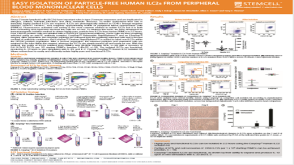 科学海报Easy Isolation of Particle-Free Human ILC2s from Peripheral Blood Mononuclear Cells


 沪公网安备31010102008431号