Ulbrandt ND et al. (AUG 2006)
Journal of Virology 80 16 7799--806
Isolation and characterization of monoclonal antibodies which neutralize human metapneumovirus in vitro and in vivo
Human metapneumovirus (hMPV) is a recently described member of the Paramyxoviridae family/Pneumovirinae subfamily and shares many common features with respiratory syncytial virus (RSV),another member of the same subfamily. hMPV causes respiratory tract illnesses that,similar to human RSV,occur predominantly during the winter months and have symptoms that range from mild to severe cough,bronchiolitis,and pneumonia. Like RSV,the hMPV virus can be subdivided into two genetic subgroups,A and B. With RSV,a single monoclonal antibody directed at the fusion (F) protein can prevent severe lower respiratory tract RSV infection. Because of the high level of sequence conservation of the F protein across all the hMPV subgroups,this protein is likely to be the preferred antigenic target for the generation of cross-subgroup neutralizing antibodies. Here we describe the generation of a panel of neutralizing monoclonal antibodies that bind to the hMPV F protein. A subset of these antibodies has the ability to neutralize prototypic strains of both the A and B hMPV subgroups in vitro. Two of these antibodies exhibited high-affinity binding to the F protein and were shown to protect hamsters against infection with hMPV. The data suggest that a monoclonal antibody could be used prophylactically to prevent lower respiratory tract disease caused by hMPV.
View Publication
Structure of human immunoproteasome with a reversible and noncompetitive inhibitor that selectively inhibits activated lymphocytes.
Proteasome inhibitors benefit patients with multiple myeloma and B cell-dependent autoimmune disorders but exert toxicity from inhibition of proteasomes in other cells. Toxicity should be minimized by reversible inhibition of the immunoproteasome β5i subunit while sparing the constitutive β5c subunit. Here we report β5i-selective inhibition by asparagine-ethylenediamine (AsnEDA)-based compounds and present the high-resolution cryo-EM structural analysis of the human immunoproteasome. Despite inhibiting noncompetitively,an AsnEDA inhibitor binds the active site. Hydrophobic interactions are accompanied by hydrogen bonding with β5i and β6 subunits. The inhibitors are far more cytotoxic for myeloma and lymphoma cell lines than for hepatocarcinoma or non-activated lymphocytes. They block human B-cell proliferation and promote apoptotic cell death selectively in antibody-secreting B cells,and to a lesser extent in activated human T cells. Reversible,β5i-selective inhibitors may be useful for treatment of diseases involving activated or neoplastic B cells or activated T cells.
View Publication
Ranga U et al. (MAR 2004)
Journal of virology 78 5 2586--90
Tat protein of human immunodeficiency virus type 1 subtype C strains is a defective chemokine.
Human immunodeficiency virus type 1 (HIV-1)-associated dementia (HAD) is correlated with increased monocyte migration to the brain,and the incidence of HAD among otherwise asymptomatic subjects appears to be lower in India than in the United States and Europe (1 to 2% versus 15 to 30%). Because of the genetic differences between HIV-1 strains circulating in these regions,we sought to identify viral determinants associated with this difference. We targeted Tat protein for these studies in view of its association with monocyte chemotactic function. Analyses of Tat sequences representing nine subtypes revealed that at least six amino acid residues are differentially conserved in subtype C Tat (C-Tat). Of these,cysteine (at position 31) was highly (textgreater99%) conserved in non-subtype C viruses and more than 90% of subtype C viruses encoded a serine. We hypothesized a compromised chemotactic function of C-Tat due to the disruption of CC motif and tested it with the wild type C-Tat (CS) and its two isogenic variants (CC and SC) derived by site-directed mutagenesis. We found that the CS natural variant was defective for monocyte chemotactic activity without a loss in the transactivation property. While the CC mutant is functionally competent for both the functions,in contrast,the SC mutant was defective in both. Therefore,the loss of the C-Tat chemotactic property may underlie the reduced incidence of HAD; although not presenting conclusive evidence,this study provides the first evidence for a potential epidemiologic phenomenon associated with biological differences in the subtype C viruses.
View Publication
产品类型:
产品号#:
15028
15068
产品名:
RosetteSep™ 人单核细胞富集抗体混合物
RosetteSep™人单核细胞富集抗体混合物
Falco M et al. (JUL 2010)
Journal of immunology (Baltimore,Md. : 1950) 185 1 433--41
Combined genotypic and phenotypic killer cell Ig-like receptor analyses reveal KIR2DL3 alleles displaying unexpected monoclonal antibody reactivity: identification of the amino acid residues critical for staining.
In humans,recent clinical and experimental data from hematopoietic stem cell transplantation revealed that donor-derived alloreactive NK cells exert a beneficial graft versus leukemia effect. The existence of donor-derived alloreactive NK cells can be predicted on the basis of donor killer cell Ig-like receptor (KIR) gene profile and HLA class I typing of both donor and recipient. Moreover,the size of the alloreactive NK cell population can be directly assessed by the combined use of anti-KIR-specific mAb. In this study,in an attempt to improve the definition of alloreactive NK cell subsets,we assessed the KIR genotype and phenotype in a cohort of 44 donors. This approach allowed the identification of two different KIR2DL3 alleles (KIR2DL3*005 and the novel allele KIR2DL3*015) that did not react with the anti-KIR2DL3-specific ECM41 mAb. In contrast,both alleles were recognized at the cell surface by several mAb reacting with KIR2DL2/L3/S2. Notably,KIR2DL3*005 was also stained by the anti-KIR2DL1/S1-specific EB6B and 11PB6 mAb. Functional analysis revealed that,despite its particular mAb reactivity,the specificity of KIR2DL3*005 for HLA-C molecules did not differ from that of other KIR2DL2/L3 alleles. Finally,site-directed mutagenesis demonstrated that glutamine at position 35 is required for ECM41 staining,whereas glutamic acid 35 and arginine 50 are relevant for staining with EB6B or 11PB6 mAb. Our present data represent a substantial progress in the characterization of the NK cell repertoire and an improved phenotypic/functional definition of given KIR(+) subsets.
View Publication
产品类型:
产品号#:
15025
15065
产品名:
RosetteSep™人NK细胞富集抗体混合物
Newby BN et al. ( 2017)
Diabetes 66 12 3061--3071
Type 1 Interferons Potentiate Human CD8+ T-Cell Cytotoxicity Through a STAT4- and Granzyme B-Dependent Pathway.
Events defining the progression to human type 1 diabetes (T1D) have remained elusive owing to the complex interaction between genetics,the immune system,and the environment. Type 1 interferons (T1-IFN) are known to be a constituent of the autoinflammatory milieu within the pancreas of patients with T1D. However,the capacity of IFNα/β to modulate human activated autoreactive CD8+ T-cell (cytotoxic T lymphocyte) responses within the islets of patients with T1D has not been investigated. Here,we engineer human β-cell-specific cytotoxic T lymphocytes and demonstrate that T1-IFN augments cytotoxicity by inducing rapid phosphorylation of STAT4,resulting in direct binding at the granzyme B promoter within 2 h of exposure. The current findings provide novel insights concerning the regulation of effector function by T1-IFN in human antigen-experienced CD8+ T cells and provide a mechanism by which the presence of T1-IFN potentiates diabetogenicity within the autoimmune islet.
View Publication
产品类型:
产品号#:
15023
15063
产品名:
RosetteSep™ 人CD8+ T细胞富集抗体混合物
RosetteSep™人CD8+ T细胞富集抗体混合物
Iqbal AJ et al. (OCT 2014)
Blood 124 15 e33--44
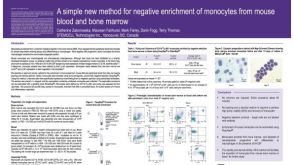
Human CD68 promoter GFP transgenic mice allow analysis of monocyte to macrophage differentiation in vivo.
The recruitment of monocytes and their differentiation into macrophages at sites of inflammation are key events in determining the outcome of the inflammatory response and initiating the return to tissue homeostasis. To study monocyte trafficking and macrophage differentiation in vivo,we have generated a novel transgenic reporter mouse expressing a green fluorescent protein (GFP) under the control of the human CD68 promoter. CD68-GFP mice express high levels of GFP in both monocyte and embryo-derived tissue resident macrophages in adult animals. The human CD68 promoter drives GFP expression in all CD115(+) monocytes of adult blood,spleen,and bone marrow; we took advantage of this to directly compare the trafficking of bone marrow-derived CD68-GFP monocytes to that of CX3CR1(GFP) monocytes in vivo using a sterile zymosan peritonitis model. Unlike CX3CR1(GFP) monocytes,which downregulate GFP expression on differentiation into macrophages in this model,CD68-GFP monocytes retain high-level GFP expression for 72 hours after differentiation into macrophages,allowing continued cell tracking during resolution of inflammation. In summary,this novel CD68-GFP transgenic reporter mouse line represents a powerful resource for analyzing monocyte mobilization and monocyte trafficking as well as studying the fate of recruited monocytes in models of acute and chronic inflammation.
View Publication
Carrera Silva EA et al. ( 2017)
Blood 130 17 1898--1902
CD207+CD1a+ cells circulate in pediatric patients with active Langerhans cell histiocytosis.
Langerhans cell histiocytosis (LCH) is a rare disease with an unknown etiology characterized by heterogeneous lesions containing CD207+CD1a+ cells that can arise in almost any tissue and cause significant morbidity and mortality. Precursors of pathological Langerhans cells have yet to be defined. Our aim was to identify circulating CD207+CD1a+ cells and their inducers in LCH. Expression of CD207 and CD1a in the blood myeloid compartment as well as thymic stromal lymphopoietin (TSLP) and transforming growth factor β (TGF-β) plasma levels were measured in 22 pediatric patients with active disease (AD) or nonactive disease (NAD). In patients with AD vs those with NAD,the myeloid compartment showed an increased CD11b (CD11bhigh plus CD11b+) fraction (39.7 ± 3.6 vs 18.6 ± 1.9),a higher percentage of circulating CD11bhighCD11c+CD207+ cells (44.5 ± 11.3 vs 3.2 ± 0.5),and the presence of CD11chighCD207+CD1a+ cells (25.0 ± 9.1 vs 2.3 ± 0.5). Blood CD207+CD1a+ cells were not observed in adult controls or umbilical cord. Increased TSLP and TGF-β levels were detected in patients with AD. Interestingly,plasma from patients with AD induces CD207 expression on CD14+ monocytes. We conclude that CD207+CD1a+ cells are circulating in patients with active LCH,and TSLP and TGF-β are potential drivers of Langerhans-like cells in vivo.
View Publication
Castriconi R et al. (JUN 2007)
Blood 109 11 4873--81
Functional characterization of natural killer cells in type I leukocyte adhesion deficiency.
In this study,we analyzed IL-2-activated polyclonal natural killer (NK) cells derived from 2 patients affected by leukocyte adhesion deficiency type I (LAD1),an immunodeficiency characterized by mutations of the gene coding for CD18,the beta subunit shared by major leukocyte integrins. We show that LAD1 NK cells express normal levels of various triggering NK receptors (and coreceptors) and that mAb-mediated engagement of these receptors results in the enhancement of both NK cytolytic activity and cytokine production. Moreover,these activating NK receptors were capable of recognizing their specific ligands on target cells. Thus,LAD1 NK cells,similarly to normal NK cells,were capable of killing most human tumor cells analyzed and produced high amounts of IFN-gamma when cocultured in presence of target cells. Murine target cells represented a common exception,as they were poorly susceptible to LAD1 NK cells. Finally,LAD1 NK cells could efficiently kill or induce maturation of monocyte-derived immature dendritic cells (DCs). Altogether our present study indicates that in LAD1 patients,3 important functions of NK cells (eg,cytotoxicity,IFN-gamma production,and DC editing) are only marginally affected and provides new insight on the cooperation between activating receptors and LFA-1 in the induction of NK cell activation and function.
View Publication