Hematopoietic stem cell exhaustion impacted by p18 INK4C and p21 Cip1/Waf1 in opposite manners.
Transplantation-associated stress can compromise the hematopoietic potential of hematopoietic stem cells (HSCs). As a consequence,HSCs may undergo exhaustion" in serial transplant recipients�
View Publication
产品类型:
产品号#:
18856
18856RF
产品名:
Smith Sa et al. (MAR 2012)
Journal of Virology 86 5 2665--75
Persistence of circulating memory B cell clones with potential for Dengue virus disease enhancement for decades following infection
Symptomatic dengue virus infection ranges in disease severity from an influenza-like illness to life-threatening shock. One model of the mechanism underlying severe disease proposes that weakly neutralizing,dengue serotype cross-reactive antibodies induced during a primary infection facilitate virus entry into Fc receptor-bearing cells during a subsequent secondary infection,increasing viral replication and the release of cytokines and vasoactive mediators,culminating in shock. This process has been termed antibody-dependent enhancement of infection and has significantly hindered vaccine development. Much of our understanding of this process has come from studies using mouse monoclonal antibodies (MAbs); however,antibody responses in mice typically exhibit less complexity than those in humans. A better understanding of the humoral immune response to natural dengue virus infection in humans is sorely needed. Using a high-efficiency human hybridoma technology,we isolated 37 hybridomas secreting human MAbs to dengue viruses from 12 subjects years or even decades following primary or secondary infection. The majority of the human antibodies recovered were broadly cross-reactive,directed against either envelope or premembrane proteins,and capable of enhancement of infection in vitro; few exhibited serotype-specific binding or potent neutralizing activity. Memory B cells encoding enhancing antibodies predominated in the circulation,even two or more decades following infection. Mapping the epitopes and activity of naturally occurring dengue antibodies should prove valuable in determining whether the enhancing and neutralizing activity of antibodies can be separated. Such principles could be used in the rational design of vaccines that enhance the induction of neutralizing antibodies,while lowering the risk of dengue shock syndrome.
View Publication
产品类型:
产品号#:
03800
03801
03802
03803
03804
03805
03806
产品名:
ClonaCell™-HY杂交瘤试剂盒
ClonaCell™-HY培养基A
ClonaCell™-HY 培养基 B
ClonaCell™-HY 培养基 C
ClonaCell™-HY 培养基 D
ClonaCell™-HY 培养基 E
ClonaCell™-HY PEG
Lu LL et al. (SEP 2016)
Cell
A Functional Role for Antibodies in Tuberculosis.
While a third of the world carries the burden of tuberculosis,disease control has been hindered by a lack of tools,including a rapid,point-of-care diagnostic and a protective vaccine. In many infectious diseases,antibodies (Abs) are powerful biomarkers and important immune mediators. However,in Mycobacterium tuberculosis (Mtb) infection,a discriminatory or protective role for humoral immunity remains unclear. Using an unbiased antibody profiling approach,we show that individuals with latent tuberculosis infection (Ltb) and active tuberculosis disease (Atb) have distinct Mtb-specific humoral responses,such that Ltb infection is associated with unique Ab Fc functional profiles,selective binding to FcγRIII,and distinct Ab glycosylation patterns. Moreover,compared to Abs from Atb,Abs from Ltb drove enhanced phagolysosomal maturation,inflammasome activation,and,most importantly,macrophage killing of intracellular Mtb. Combined,these data point to a potential role for Fc-mediated Ab effector functions,tuned via differential glycosylation,in Mtb control.
View Publication
产品类型:
产品号#:
18085
18085RF
18058
18058RF
15025
15065
产品名:
RosetteSep™人NK细胞富集抗体混合物
RosetteSep™人NK细胞富集抗体混合物
Cron RQ et al. (JAN 2006)
Journal of immunology (Baltimore,Md. : 1950) 176 2 811--8
Early growth response-1 is required for CD154 transcription.
CD154 (CD40 ligand) expression on CD4 T cells is normally tightly controlled,but abnormal or dysregulated expression of CD154 has been well documented in autoimmune diseases,such as systemic lupus erythematosus. Beyond regulation by NFAT proteins,little is known about the transcriptional activation of the CD154 promoter. We identified a species-conserved purine-rich sequence located adjacent to the CD154 transcriptional promoter proximal NFAT site,which binds early growth response (Egr) transcription factors. Gel shift assays and chromatin immunoprecipitation assays reveal that Egr-1,Egr-3,and NFAT1 present in primary human CD4 T cells are capable of binding this combinatorial site in vitro and in vivo,respectively. Multimerization of this NFAT/Egr sequence in the context of a reporter gene demonstrates this sequence is transcriptionally active upon T cell activation in primary human CD4 T cells. Overexpression of Egr-1,but not Egr-3,is capable of augmenting transcription of this reporter gene as well as that of an intact CD154 promoter. Conversely,overexpression of small interfering RNA specific for Egr-1 in primary human CD4 T cells inhibits CD154 expression. Similarly,upon activation,CD154 message is notably decreased in splenic CD4 T cells from Egr-1-deficient mice compared with wild-type controls. Our data demonstrate that Egr-1 is required for CD154 transcription in primary CD4 T cells. This has implications for selective targeting of Egr family members to control abnormal expression of CD154 in autoimmune diseases such as systemic lupus erythematosus.
View Publication
Rouhi A et al. (MAR 2006)
Journal of immunology (Baltimore,Md. : 1950) 176 5 2991--9
Evidence for epigenetic maintenance of Ly49a monoallelic gene expression.
Although structurally unrelated,the human killer cell Ig-like (KIR) genes and the rodent lectin-like Ly49 genes serve similar functional roles in NK cells. Moreover,both gene families display variegated,monoallelic expression patterns established at the transcriptional level. DNA methylation has been shown to play an important role in maintenance of expression patterns of KIR genes,which have CpG island promoters. The potential role of DNA methylation in expression of Ly49 genes,which have CpG-poor promoters,is unknown. In this study,we show that hypomethylation of the region encompassing the Pro-2 promoter of Ly49a and Ly49c in primary C57BL/6 NK cells correlates with expression of the gene. Using C57BL/6 x BALB/c F1 hybrid mice,we demonstrate that the expressed allele of Ly49a is hypomethylated while the nonexpressed allele is heavily methylated,indicating a role for epigenetics in maintaining monoallelic Ly49 gene expression. Furthermore,the Ly49a Pro-2 region is heavily methylated in fetal NK cells but variably methylated in nonlymphoid tissues. Finally,in apparent contrast to the KIR genes,we show that DNA methylation and the histone acetylation state of the Pro-2 region are strictly linked with Ly49a expression status.
View Publication
Human Immune Cytokines
Infographic of key cytokines for expansion, differentiation and characterization of major immune cell types
Villa M et al. (NOV 2016)
The EMBO journal
Aryl hydrocarbon receptor is required for optimal B-cell proliferation.
The aryl hydrocarbon receptor (AhR),a transcription factor known for mediating xenobiotic toxicity,is expressed in B cells,which are known targets for environmental pollutants. However,it is unclear what the physiological functions of AhR in B cells are. We show here that expression of Ahr in B cells is up-regulated upon B-cell receptor (BCR) engagement and IL-4 treatment. Addition of a natural ligand of AhR,FICZ,induces AhR translocation to the nucleus and transcription of the AhR target gene Cyp1a1,showing that the AhR pathway is functional in B cells. AhR-deficient (Ahr(-/-)) B cells proliferate less than AhR-sufficient (Ahr(+/+)) cells following in vitro BCR stimulation and in vivo adoptive transfer models confirmed that Ahr(-/-) B cells are outcompeted by Ahr(+/+) cells. Transcriptome comparison of AhR-deficient and AhR-sufficient B cells identified cyclin O (Ccno),a direct target of AhR,as a top candidate affected by AhR deficiency.
View Publication


 EasySep™小鼠TIL(CD45)正选试剂盒





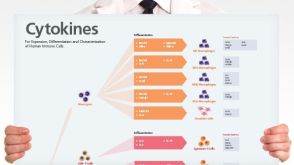 挂图Human Immune Cytokines Infographic of key cytokines for expansion, differentiation and characterization of major immune cell types
 实验方案How to Process a Leukopak for Downstream Cell Isolation




 沪公网安备31010102008431号