D. Xie et al. (MAY 2017)
Experimental cell research
The effects of activin A on the migration of human breast cancer cells and neutrophils and their migratory interaction.
Activin A belongs to the superfamily of transforming growth factor beta (TGF$\beta$) and is a critical regulatory cytokine in breast cancer and inflammation. However,the role of activin A in migration of breast cancer cells and immune cells was not well characterized. Here,a microfluidic device was used to examine the effect of activin A on the migration of human breast cancer cell line MDA-MB-231 cells and human blood neutrophils as well as their migratory interaction. We found that activin A promoted the basal migration but impaired epidermal growth factor (EGF)-induced migration of breast cancer cells. By contrast,activin A reduced neutrophil chemotaxis and transendothelial migration to N-Formyl-Met-Leu-Phe (fMLP). Finally,activin A promoted neutrophil chemotaxis to the supernatant from breast cancer cell culture. Collectively,our study revealed the different roles of activin A in regulating the migration of breast cancer cells and neutrophils and their migratory interaction. These findings suggested the potential of activin A as a therapeutic target for inflammation and breast cancers.
View Publication
产品类型:
产品号#:
19666
100-0404
产品名:
EasySep™ Direct人中性粒细胞分选试剂盒
RoboSep™ 人中性粒细胞分选试剂盒
Forthal DN et al. (FEB 2005)
Journal of virology 79 4 2042--9
Interactions between natural killer cells and antibody Fc result in enhanced antibody neutralization of human immunodeficiency virus type 1.
Antibodies can prevent lentivirus infections in animals and may play a role in controlling viral burden in established infection. In preventing and particularly in controlling infection,antibodies likely function in the presence of large quantities of virus. In this study,we explored the mechanisms by which antibodies neutralize large inocula of human immunodeficiency virus type 1 (HIV-1) on different target cells. Immunoglobulin G (IgG) from HIV-infected patients was tested for neutralizing activity against primary R5 strains of HIV-1 at inocula ranging from 100 to 20,000 50% tissue culture infective doses. At all virus inocula,inhibition by antibody was enhanced when target cells for virus growth were monocyte-depleted,peripheral blood mononuclear cells (PBMCs) rather than CD4(+) lymphocytes. However,enhanced inhibition on PBMCs was greatest with larger amounts of virus. Depleting PBMCs of natural killer (NK) cells,which express Fc receptors for IgG (FcgammaRs),abrogated the enhanced antibody inhibition,whereas adding NK cells to CD4(+) lymphocytes restored inhibition. There was no enhanced inhibition on PBMCs when F(ab')(2) was used. Further experiments demonstrated that the release of beta-chemokines,most likely through FcgammaR triggering of NK cells,contributed modestly to the antiviral activity of antibody on PBMCs and that antibody-coated virus adsorbed to uninfected cells provided a target for NK cell-mediated inhibition of HIV-1. These results indicate that Fc-FcgammaR interactions enhance the ability of antibody to neutralize HIV-1. Since FcgammaR-bearing cells are always present in vivo,FcgammaR-mediated antibody function may play a role in the ability of antibody to control lentivirus infection.
View Publication
产品类型:
产品号#:
18052
18052RF
18055
18055RF
产品名:
Kohler JJ et al. (MAR 2003)
Journal of leukocyte biology 73 3 407--16
Human immunodeficiency virus type 1 (HIV-1) induces activation of multiple STATs in CD4+ cells of lymphocyte or monocyte/macrophage lineages.
Human immunodeficiency virus type 1 (HIV-1) impacts the activation state of multiple lineages of hematopoietic cells. Chronic HIV-1 infection among individuals with progressive disease can be associated with increased levels of activated signal transducers and activators of transcription (STATs) in peripheral blood mononuclear cells. To investigate interactions between HIV-1 and CD4(+) cells,activated,phosphorylated STAT proteins in nuclear extracts from lymphocytic and promonocytic cell lines as well as primary monocyte-derived macrophages were measured. Levels of activated STATs increased six- to tenfold in HUT78 and U937 cells within 2 h following exposure to virions. The response to virus was dose-dependent,but kinetics of activation was delayed relative to interleukin-2 or interferon-gamma. Activation of STAT1,STAT3,and STAT5 occurred with diverse viral envelope proteins,independent of coreceptor use or viral replication. Envelope-deficient virions had no effect on STAT activation. Monoclonal antibody engagement of CD4 identified a novel role for CD4 as a mediator in the activation of multiple STATs. Results provide a model for HIV-1 pathogenesis in infected and noninfected hematopoietic cells.
View Publication
产品类型:
产品号#:
15028
15068
产品名:
RosetteSep™人单核细胞富集抗体混合物
RosetteSep™人单核细胞富集抗体混合物
Azevedo RI et al. (MAR 2009)
Blood 113 13 2999--3007
IL-7 sustains CD31 expression in human naive CD4+ T cells and preferentially expands the CD31+ subset in a PI3K-dependent manner.
The CD31(+) subset of human naive CD4(+) T cells is thought to contain the population of cells that have recently emigrated from the thymus,while their CD31(-) counterparts have been proposed to originate from CD31(+) cells after homeostatic cell division. Naive T-cell maintenance is known to involve homeostatic cytokines such as interleukin-7 (IL-7). It remains to be investigated what role this cytokine has in the homeostasis of naive CD4(+) T-cell subsets defined by CD31 expression. We provide evidence that IL-7 exerts a preferential proliferative effect on CD31(+) naive CD4(+) T cells from adult peripheral blood compared with the CD31(-) subset. IL-7-driven proliferation did not result in loss of CD31 expression,suggesting that CD31(+) naive CD4(+) T cells can undergo cytokine-driven homeostatic proliferation while preserving CD31. Furthermore,IL-7 sustained or increased CD31 expression even in nonproliferating cells. Both proliferation and CD31 maintenance were dependent on the activation of phosphoinositide 3-kinase (PI3K) signaling. Taken together,our data suggest that during adulthood CD31(+) naive CD4(+) T cells are maintained by IL-7 and that IL-7-based therapies may exert a preferential effect on this population.
View Publication
产品类型:
产品号#:
19052
19052RF
产品名:
EasySep™人CD4+ T细胞富集试剂盒
RoboSep™ 人CD4+ T细胞富集试剂盒含滤芯吸头
K. R. McCarthy et al. (JAN 2018)
Immunity 48 1 174--184.e9
Memory B Cells that Cross-React with Group 1 and Group 2 Influenza A Viruses Are Abundant in Adult Human Repertoires.
Human B cell antigen-receptor (BCR) repertoires reflect repeated exposures to evolving influenza viruses; new exposures update the previously generated B cell memory (Bmem) population. Despite structural similarity of hemagglutinins (HAs) from the two groups of influenza A viruses,cross-reacting antibodies (Abs) are uncommon. We analyzed Bmem compartments in three unrelated,adult donors and found frequent cross-group BCRs,both HA-head directed and non-head directed. Members of a clonal lineage from one donor had a BCR structure similar to that of a previously described Ab,encoded by different gene segments. Comparison showed that both Abs contacted the HA receptor-binding site through long heavy-chain third complementarity determining regions. Affinities of the clonal-lineage BCRs for historical influenza-virus HAs from both group 1 and group 2 viruses suggested that serial responses to seasonal influenza exposures had elicited the lineage and driven affinity maturation. We propose that appropriate immunization regimens might elicit a comparably broad response.
View Publication
产品类型:
产品号#:
85415
85420
85450
85460
86415
86420
86450
86460
产品名:
SepMate™-15 (IVD)
SepMate™-15 (IVD)
SepMate™-50 (IVD)
SepMate™-50 (IVD)
SepMate™-15 (RUO)
SepMate™-15 (RUO)
SepMate™-50 (RUO)
SepMate™-50 (RUO)
Beeton C et al. (NOV 2006)
Proceedings of the National Academy of Sciences of the United States of America 103 46 17414--9
Kv1.3 channels are a therapeutic target for T cell-mediated autoimmune diseases.
Autoreactive memory T lymphocytes are implicated in the pathogenesis of autoimmune diseases. Here we demonstrate that disease-associated autoreactive T cells from patients with type-1 diabetes mellitus or rheumatoid arthritis (RA) are mainly CD4+ CCR7- CD45RA- effector memory T cells (T(EM) cells) with elevated Kv1.3 potassium channel expression. In contrast,T cells with other antigen specificities from these patients,or autoreactive T cells from healthy individuals and disease controls,express low levels of Kv1.3 and are predominantly naïve or central-memory (T(CM)) cells. In T(EM) cells,Kv1.3 traffics to the immunological synapse during antigen presentation where it colocalizes with Kvbeta2,SAP97,ZIP,p56(lck),and CD4. Although Kv1.3 inhibitors [ShK(L5)-amide (SL5) and PAP1] do not prevent immunological synapse formation,they suppress Ca2+-signaling,cytokine production,and proliferation of autoantigen-specific T(EM) cells at pharmacologically relevant concentrations while sparing other classes of T cells. Kv1.3 inhibitors ameliorate pristane-induced arthritis in rats and reduce the incidence of experimental autoimmune diabetes in diabetes-prone (DP-BB/W) rats. Repeated dosing with Kv1.3 inhibitors in rats has not revealed systemic toxicity. Further development of Kv1.3 blockers for autoimmune disease therapy is warranted.
View Publication
产品类型:
产品号#:
19051
19051RF
产品名:
EasySep™人T细胞富集试剂盒
RoboSep™ 人T细胞富集试剂盒含滤芯吸头
Yoshimoto K et al. (JUL 2006)
International immunology 18 7 1189--96
Aberrant expression of BAFF in T cells of systemic lupus erythematosus, which is recapitulated by a human T cell line, Loucy.
B cell-activating factor of the tumor necrosis factor (TNF) family,or BAFF,is mainly produced in monocytes and dendritic cells,and indispensable for proliferation,differentiation and survival of B cells. BAFF is a type II membrane-bound protein and the extracellular C-terminal fragment is released from the cells as soluble BAFF (sBAFF),which binds to specific receptors on B cells. Accumulating evidence suggests that BAFF plays an important role in the pathogenesis of autoimmune diseases,such as systemic lupus erythematosus (SLE). In this study,we developed a sensitive sandwich ELISA system to quantify the amount of sBAFF using our own mAb. Treatment of peripheral T cells of SLE patients with an anti-CD3 antibody triggered robust expression of BAFF and subsequent release of sBAFF from the cells. On the other hand,the stimulus induced only marginal elevation of sBAFF from normal T cells. These data indicate that BAFF is expressed in T cells upon stimulation at least under pathological conditions. Expression of BAFF was also largely induced in a human T cell line,Loucy (American Type Tissue Collection CRL-2629),in response to several stimuli,while other T cell lines so far examined produced the cytokine almost constitutively. These data suggest that Loucy recapitulates some of the characteristics of SLE T cells. Investigation of molecular and cellular mechanisms of production of BAFF in Loucy demonstrated that expression of BAFF was regulated through a signal transduction pathway which involves c-jun NH2-terminal kinase and p38,and that shedding of BAFF was catalyzed by a membrane-bound protease,furin.
View Publication
产品类型:
产品号#:
15021
15061
产品名:
RosetteSep™人T细胞富集抗体混合物
RosetteSep™人T细胞富集抗体混合物
Wildum S et al. (AUG 2006)
Journal of virology 80 16 8047--59
Contribution of Vpu, Env, and Nef to CD4 down-modulation and resistance of human immunodeficiency virus type 1-infected T cells to superinfection.
Human immunodeficiency virus type 1 (HIV-1) utilizes Vpu,Env,and Nef to down-modulate its primary CD4 receptor from the cell surface,and this function seems to be critical for the pathogenesis of AIDS. The physiological relevance of CD4 down-modulation,however,is currently not well understood. In the present study,we analyzed the kinetics of CD4 down-modulation and the susceptibility of HIV-1-infected T cells to superinfection using proviral HIV-1 constructs containing individual and combined defects in vpu,env,and nef and expressing red or green fluorescent proteins. T cells infected with HIV-1 mutants containing functional nef genes expressed low surface levels of CD4 from the first moment that viral gene expression became detectable. In comparison,Vpu and Env had only minor to moderate effects on CD4 during later stages of infection. Consistent with these quantitative differences,Nef inhibited superinfection more efficiently than Vpu and Env. Notably,nef alleles from AIDS patients were more effective in preventing superinfection than those derived from a nonprogressor of HIV-1 infection. Our data suggest that protection against X4-tropic HIV-1 superinfection involves both CD4-independent and CD4-dependent mechanisms of HIV-1 Nef. X4 was effectively down-regulated by simian immunodeficiency virus and HIV-2 but not by HIV-1 Nef proteins. Thus,maximal protection seems to involve an as-yet-unknown mechanism that is independent of CD4 or coreceptor down-modulation. Finally,we demonstrate that superinfected primary T cells show enhanced levels of apoptosis. Accordingly,one reason that HIV-1 inhibits CD4 surface expression and superinfection is to prevent premature cell death in order to expand the period of effective virus production.
View Publication
产品类型:
产品号#:
15022
15062
产品名:
RosetteSep™人CD4+ T细胞富集抗体混合物
RosetteSep™人CD4+ T细胞富集抗体混合物
Lin L et al. ( 2014)
The Journal of Immunology 193 2 940--949
Human NK Cells Licensed by Killer Ig Receptor Genes Have an Altered Cytokine Program That Modifies CD4+ T Cell Function
NK cells are innate immune cells known for their cytolytic activities toward tumors and infections. They are capable of expressing diverse killer Ig-like receptors (KIRs),and KIRs are implicated in susceptibility to Crohn's disease (CD),a chronic intestinal inflammatory disease. However,the cellular mechanism of this genetic contribution is unknown. In this study,we show that the licensing" of NK cells�
View Publication
产品类型:
产品号#:
18052
18052RF
19051
19051RF
19055
19055RF
18231
19854
19854RF
15025
15065
产品名:
EasySep™人T细胞富集试剂盒
RoboSep™ 人T细胞富集试剂盒含滤芯吸头
EasySep™人NK细胞富集试剂盒
RoboSep™ 人NK细胞富集试剂盒含滤芯吸头
EasySep™小鼠B细胞分选试剂盒
RoboSep™ 小鼠B细胞分选试剂盒
RosetteSep™人NK细胞富集抗体混合物
RosetteSep™人NK细胞富集抗体混合物
Pereira RC et al. ( 2016)
Frontiers in immunology 7 415
Human Articular Chondrocytes Regulate Immune Response by Affecting Directly T Cell Proliferation and Indirectly Inhibiting Monocyte Differentiation to Professional Antigen-Presenting Cells.
Autologous chondrocyte implantation is the current gold standard cell therapy for cartilage lesions. However,in some instances,the heavily compromised health of the patient can either impair or limit the recovery of the autologous chondrocytes and a satisfactory outcome of the implant. Allogeneic human articular chondrocytes (hAC) could be a good alternative,but the possible immunological incompatibility between recipient and hAC donor should be considered. Herein,we report that allogeneic hAC inhibited T lymphocyte response to antigen-dependent and -independent proliferative stimuli. This effect was maximal when T cells and hAC were in contact and it was not relieved by the addition of exogenous lymphocyte growth factor interleukin (IL)-2. More important,hAC impaired the differentiation of peripheral blood monocytes induced with granulocyte monocyte colony-stimulating factor and IL-4 (Mo) to professional antigen-presenting cells,such as dendritic cells (DC). Indeed,a marked inhibition of the onset of the CD1a expression and an ineffective downregulation of CD14 antigens was observed in Mo-hAC co-cultures. Furthermore,compared to immature or mature DC,Mo from Mo-hAC co-cultures did not trigger an efficacious allo-response. The prostaglandin (PG) E2 present in the Mo-hAC co-culture conditioned media is a putative candidate of the hAC-mediated inhibition of Mo maturation. Altogether,these findings indicate that allogeneic hAC inhibit,rather than trigger,immune response and strongly suggest that an efficient chondrocyte implantation could be possible also in an allogeneic setting.
View Publication
产品类型:
产品号#:
17951
17951RF
17952
17952RF
18099
18099RF
100-0695
100-0696
产品名:
EasySep™人T细胞分选试剂盒
RoboSep™ 人T细胞分选试剂盒
EasySep™人CD4+ T细胞分选试剂盒
RoboSep™ 人CD4+ T细胞分选试剂盒
EasySep™人T细胞分选试剂盒
EasySep™人CD4+ T细胞分离试剂盒
Pende D et al. (MAR 2009)
Blood 113 13 3119--29
Anti-leukemia activity of alloreactive NK cells in KIR ligand-mismatched haploidentical HSCT for pediatric patients: evaluation of the functional role of activating KIR and redefinition of inhibitory KIR specificity.
We analyzed 21 children with leukemia receiving haploidentical hematopoietic stem cell transplantation (haplo-HSCT) from killer immunoglobulin (Ig)-like receptors (KIR) ligand-mismatched donors. We showed that,in most transplantation patients,variable proportions of donor-derived alloreactive natural killer (NK) cells displaying anti-leukemia activity were generated and maintained even late after transplantation. This was assessed through analysis of donor KIR genotype,as well as through phenotypic and functional analyses of NK cells,both at the polyclonal and clonal level. Donor-derived KIR2DL1(+) NK cells isolated from the recipient displayed the expected capability of selectively killing C1/C1 target cells,including patient leukemia blasts. Differently,KIR2DL2/3(+) NK cells displayed poor alloreactivity against leukemia cells carrying human leukocyte antigen (HLA) alleles belonging to C2 group. Unexpectedly,this was due to recognition of C2 by KIR2DL2/3,as revealed by receptor blocking experiments and by binding assays of soluble KIR to HLA-C transfectants. Remarkably,however,C2/C2 leukemia blasts were killed by KIR2DL2/3(+) (or by NKG2A(+)) NK cells that coexpressed KIR2DS1. This could be explained by the ability of KIR2DS1 to directly recognize C2 on leukemia cells. A role of the KIR2DS2 activating receptor in leukemia cell lysis could not be demonstrated. Altogether,these results may have important clinical implications for the selection of optimal donors for haplo-HSCT.
View Publication


 EasySep™小鼠TIL(CD45)正选试剂盒




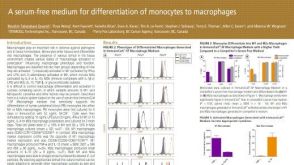 科学海报A Serum-Free Medium for Differentiation of Monocytes to Macrophages

 沪公网安备31010102008431号