Kortylewski M et al. (MAR 2009)
Cancer research 69 6 2497--505
Toll-like receptor 9 activation of signal transducer and activator of transcription 3 constrains its agonist-based immunotherapy.
Although toll-like receptor (TLR) agonists,such as CpG,are used as immunotherapeutic agents in clinical trials for cancer and infectious diseases,their effects are limited and the underlying mechanism(s) that restrains CpG efficacy remains obscure. Here,we show that signal transducer and activator of transcription 3 (Stat3) plays a key role in down-modulating immunostimulatory effects of CpG. In the absence of interleukin-6 (IL-6) and IL-10 induction,CpG directly activates Stat3 within minutes through TLR9. Ablating Stat3 in hematopoietic cells results in rapid activation of innate immunity by CpG,with enhanced production of IFN-gamma,tumor necrosis factor-alpha,IL-12,and activation of macrophages,neutrophils,and natural killer cells marked with Stat1 activation. Innate immune responses induced by CpG in mice with a Stat3-ablated hematopoietic system cause potent antitumor effects,leading to eradication of large (textgreater1 cm) B16 melanoma tumors within 72 h. Moreover,ablating Stat3 in myeloid cells increases CpG-induced dendritic cell maturation,T-cell activation,generation of tumor antigen-specific T cells,and long-lasting antitumor immunity. A critical role of Stat3 in mediating immunosuppression by certain cytokines and growth factors in the tumor microenvironment has been recently documented. By demonstrating direct and rapid activation of Stat3 by TLR agonists,we identify a second level of Stat3-mediated immunosuppression. Our results further suggest that targeting Stat3 can drastically improve CpG-based immunotherapeutic approaches.
View Publication
产品类型:
产品号#:
18770
18770RF
18758
18758RF
18768
18768RF
产品名:
Liyanage UK et al. (SEP 2002)
Journal of immunology (Baltimore,Md. : 1950) 169 5 2756--61
Prevalence of regulatory T cells is increased in peripheral blood and tumor microenvironment of patients with pancreas or breast adenocarcinoma.
Regulatory T cells (T(reg)) that prevent autoimmune diseases by suppression of self-reactive T cells may also suppress the immune response against cancer. In mice,depletion of T(reg) by Ab therapy leads to more efficient tumor rejection. T(reg)-mediated suppression of antitumor immune responses may partly explain the poor clinical response to vaccine-based immunotherapy for human cancer. In this study,we measured the prevalence of T(reg) that coexpress CD4 and CD25 in the PBLs,tumor-infiltrating lymphocytes,and regional lymph node lymphocytes from 65 patients with either pancreas or breast cancer. In breast cancer patients (n = 35),pancreas cancer patients (n = 30),and normal donors (n = 35),the prevalence of T(reg) were 16.6% (SE 1.22),13.2% (SE 1.13),and 8.6% (SE 0.71) of the total CD4(+) cells,respectively. The prevalence of T(reg) were significantly higher in breast cancer patients (p textless 0.01) and pancreas cancer patients (p textless 0.01) when compared with normal donors. In tumor-infiltrating lymphocytes and lymph node lymphocytes,the T(reg) prevalence were 20.2% (SE 3.93) and 20.1% (SE 4.3),respectively. T(reg) constitutively coexpressed CTLA-4 and CD45RO markers,and secreted TGF-beta and IL-10 but did not secrete IFN-gamma. When cocultured with activated CD8(+) cells or CD4(+)25(-) cells,T(reg) potently suppressed their proliferation and secretion of IFN-gamma. We conclude that the prevalence of T(reg) is increased in the peripheral blood as well as in the tumor microenvironment of patients with invasive breast or pancreas cancers. These T(reg) may mitigate the immune response against cancer,and may partly explain the poor immune response against tumor Ags.
View Publication
产品类型:
产品号#:
15022
15062
15023
15063
产品名:
RosetteSep™人CD4+ T细胞富集抗体混合物
RosetteSep™人CD4+ T细胞富集抗体混合物
RosetteSep™人CD8+ T细胞富集抗体混合物
RosetteSep™人CD8+ T细胞富集抗体混合物
Hinrichs CS et al. (OCT 2009)
Proceedings of the National Academy of Sciences of the United States of America 106 41 17469--74
Adoptively transferred effector cells derived from naive rather than central memory CD8+ T cells mediate superior antitumor immunity.
Effector cells derived from central memory CD8(+) T cells were reported to engraft and survive better than those derived from effector memory populations,suggesting that they are superior for use in adoptive immunotherapy studies. However,previous studies did not evaluate the relative efficacy of effector cells derived from naïve T cells. We sought to investigate the efficacy of tumor-specific effector cells derived from naïve or central memory T-cell subsets using transgenic or retrovirally transduced T cells engineered to express a tumor-specific T-cell receptor. We found that naïve,rather than central memory T cells,gave rise to an effector population that mediated superior antitumor immunity upon adoptive transfer. Effector cells developed from naïve T cells lost the expression of CD62L more rapidly than those derived from central memory T cells,but did not acquire the expression of KLRG-1,a marker for terminal differentiation and replicative senescence. Consistent with this KLRG-1(-) phenotype,naïve-derived cells were capable of a greater proliferative burst and had enhanced cytokine production after adoptive transfer. These results indicate that insertion of genes that confer antitumor specificity into naïve rather than central memory CD8(+) T cells may allow superior efficacy upon adoptive transfer.
View Publication
产品类型:
产品号#:
19753
19753RF
产品名:
Halim L et al. (JUL 2017)
Cell reports 20 3 757--770
An Atlas of Human Regulatory T Helper-like Cells Reveals Features of Th2-like Tregs that Support a Tumorigenic Environment.
Regulatory T cells (Tregs) play a pivotal role in maintaining immunological tolerance,but they can also play a detrimental role by preventing antitumor responses. Here,we characterized T helper (Th)-like Treg subsets to further delineate their biological function and tissue distribution,focusing on their possible contribution to disease states. RNA sequencing and functional assays revealed that Th2-like Tregs displayed higher viability and autocrine interleukin-2 (IL-2)-mediated activation than other subsets. Th2-like Tregs were preferentially found in tissues rather than circulation and exhibited the highest migratory capacity toward chemokines enriched at tumor sites. These cellular responses led us to hypothesize that this subset could play a role in maintaining a tumorigenic environment. Concurrently,Th2-like Tregs were enriched specifically in malignant tissues from patients with melanoma and colorectal cancer compared to healthy tissue. Overall,our results suggest that Th2-like Tregs may contribute to a tumorigenic environment due to their increased cell survival,higher migratory capacity,and selective T-effector suppressive ability.
View Publication
产品类型:
产品号#:
15022
15062
产品名:
RosetteSep™人CD4+ T细胞富集抗体混合物
RosetteSep™人CD4+ T细胞富集抗体混合物
Strainic MG et al. (MAR 2008)
Immunity 28 3 425--35
Locally produced complement fragments C5a and C3a provide both costimulatory and survival signals to naive CD4+ T cells.
Costimulatory signals are critical to T cell activation,but how their effects are mediated remains incompletely characterized. Here,we demonstrate that locally produced C5a and C3a anaphylatoxins interacting with their G protein-coupled receptors (GPCRs),C5aR and C3aR,on APCs and T cells both upstream and downstream of CD28 and CD40L signaling are integrally involved in T cell proliferation and differentiation. Disabling these interactions reduced MHC class II and costimulatory-molecule expression and dramatically diminished T cell responses. Importantly,impaired T cell activation by Cd80-/-Cd86-/- and Cd40-/- APCs was reconstituted by added C5a or C3a. C5aR and C3aR mediated their effects via PI-3 kinase-gamma-dependent AKT phosphorylation,providing a link between GPCR signaling,CD28 costimulation,and T cell survival. These local paracrine and autocrine interactions thus operate constitutively in naive T cells to maintain viability,and their amplification by cognate APC partners thus is critical to T cell costimulation.
View Publication
产品类型:
产品号#:
19751
19751RF
产品名:
Nettenstrom L et al. (JAN 2013)
Journal of immunological methods 387 2-Jan 81--8
An optimized multi-parameter flow cytometry protocol for human T regulatory cell analysis on fresh and viably frozen cells, correlation with epigenetic analysis, and comparison of cord and adult blood.
Multi-parameter flow cytometry analysis of T regulatory (Treg) cells is a widely used approach in basic and translational research studies. This approach has been complicated by a lack of specific markers for Treg cells and lack of uniformity in the quantification of Treg cells. Given the central role of Treg cells in the inception and perpetuation of diverse immune responses as well as its target as a therapeutic,it is imperative to have established methodologies for Treg cell analysis that are robust and usable for studies with multiple subjects as well as multicenter studies. In this study,we describe an optimized multi-parameter flow cytometry protocol for the quantification of human Treg cells from freshly obtained and viably frozen samples and correlations with epigenetic Treg cell analysis (TSDR demethylation). We apply these two methodologies to characterize Treg cell differences between cord blood and adult peripheral blood. In summary,the optimized protocol appears to be robust for Treg cell quantification from freshly isolated or viably frozen cells and the multi-parameter flow cytometry findings are strongly positively correlated with TSDR demethylation thus providing several options for the characterization of Treg cell frequency and function in large translational or clinical studies.
View Publication
Pua HH et al. (APR 2009)
Journal of immunology (Baltimore,Md. : 1950) 182 7 4046--55
Autophagy is essential for mitochondrial clearance in mature T lymphocytes.
Macroautophagy plays an important role in the regulation of cell survival,metabolism,and the lysosomal degradation of cytoplasmic material. In the immune system,autophagy contributes to the clearance of intracellular pathogens,MHCII cross-presentation of endogenous Ags,as well as cell survival. We and others have demonstrated that autophagy occurs in T lymphocytes and contributes to the regulation of their cellular function,including survival and proliferation. Here we show that the essential autophagy gene Atg7 is required in a cell-intrinsic manner for the survival of mature primary T lymphocytes. We also find that mitochondrial content is developmentally regulated in T but not in B cells,with exit from the thymus marking a transition from high mitochondrial content in thymocytes to lower mitochondrial content in mature T cells. Macroautophagy has been proposed to play an important role in the clearance of intracellular organelles,and autophagy-deficient mature T cells fail to reduce their mitochondrial content in vivo. Consistent with alterations in mitochondrial content,autophagy-deficient T cells have increased reactive oxygen species production as well as an imbalance in pro- and antiapoptotic protein expression. With much recent interest in the possibility of autophagy-dependent developmentally programmed clearance of organelles in lens epithelial cells and erythrocytes,our data demonstrate that autophagy may have a physiologically significant role in the clearance of superfluous mitochondria in T lymphocytes as part of normal T cell homeostasis.
View Publication
产品类型:
产品号#:
19751
19751RF
产品名:
Hayashi T et al. (AUG 2003)
Blood 102 4 1435--42
Ex vivo induction of multiple myeloma-specific cytotoxic T lymphocytes.
Multiple myeloma (MM) is an incurable plasma cell malignancy characterized by immunosuppression. In this study,we identified factors in patients' bone marrow (BM) sera inhibiting autologous anti-MM immunity and developed an ex vivo strategy for inducing MM-specific cytotoxic T lymphocytes (CTLs). We found that sera from BM of MM patients inhibited induction of dendritic cells (DCs),evidenced by both phenotype and only weak stimulation of T-cell proliferation. Anti-vascular endothelial growth factor (anti-VEGF) and/or anti-interleukin 6 (anti-IL-6) antibodies neutralized this inhibitory effect,confirming that VEGF and IL-6,at least in part,mediate immunosuppression in MM patients. To induce MM-specific CTLs ex vivo,immature DCs were generated by culture of adherent mononuclear cells in medium containing granulocyte-macrophage colony-stimulating factor (GM-CSF) and IL-4 for 5 days and then cocultured with apoptotic MM bodies in the presence of tumor necrosis factor alpha (TNF-alpha) for 3 days to induce their maturation. Autologous BM or peripheral blood mononuclear cells were stimulated weekly with these DCs,and cytotoxicity was examined against the MM cells used to pulse DCs. DCs cultured with apoptotic bodies stimulated significantly greater T-cell proliferation (stimulation index [SI] = 23.2 at a T-DC ratio of 360:1) than T cells stimulated by MM cells only (SI = 5.6),DCs only (SI = 9.3),or MM lysate-pulsed DCs (SI = 13.5). These CTLs from MM patients demonstrated specific cytotoxicity (24.7% at the effector-target [E/T] ratio of 40:1) against autologous primary MM cells. These studies therefore show that CTLs from MM patients can recognize and lyse autologous tumor cells and provide the framework for novel immunotherapy to improve patient outcome in MM.
View Publication


 EasySep™小鼠TIL(CD45)正选试剂盒





 抗人TNF-α抗体,clone MT15B15 抗人TNF-α的小鼠Monoclonal IgG1抗体
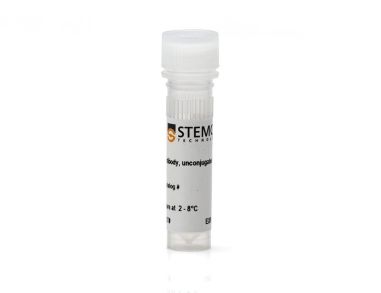 抗小鼠CD25抗体,clone 3C7 大鼠Monoclonal IgG2b抗体,抗小鼠CD25
 StemSpan™淋系祖细胞扩增添加物(10X) 用于人CD34+细胞扩增及分化为淋系祖细胞的添加物
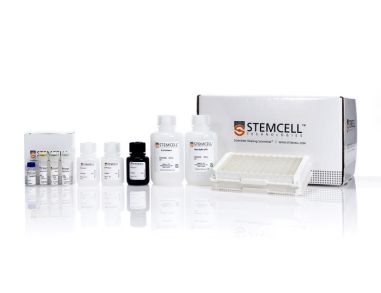 小鼠IL-4 ELISA试剂盒 用于小鼠白细胞介素4的检测和分析
 沪公网安备31010102008431号