Vasir B et al. (FEB 2005)
Journal of immunology (Baltimore,Md. : 1950) 174 4 2376--86
Dendritic cells induce MUC1 expression and polarization on human T cells by an IL-7-dependent mechanism.
The MUC1 transmembrane mucin is expressed on the surface of activated human T cells; however,the physiologic signals responsible for the regulation of MUC1 in T cells are not known. The present studies demonstrate that IL-7,but not IL-2 or IL-4,markedly induces MUC1 expression on CD3+ T cells. MUC1 was also up-regulated by IL-15,but to a lesser extent than that found with IL-7. The results show that IL-7 up-regulates MUC1 on CD4+,CD8+,CD25+,CD69+,naive CD45RA+,and memory CD45RO+ T cells. In concert with induction of MUC1 expression by IL-7,activated dendritic cells (DC) that produce IL-7 up-regulate MUC1 on allogeneic CD3+ T cells. DC also induce MUC1 expression on autologous CD3+ T cells in the presence of recall Ag. Moreover,DC-induced MUC1 expression on T cells is blocked by a neutralizing anti-IL-7 Ab. The results also demonstrate that DC induce polarization of MUC1 on T cells at sites opposing the DC-T cell synapse. These findings indicate that DC-mediated activation of Ag-specific T cells is associated with induction and polarization of MUC1 expression by an IL-7-dependent mechanism.
View Publication
产品类型:
产品号#:
15271HLA
产品名:
RosetteSep™ HLA 淋系细胞富集试剂盒
Donnarumma T et al. (NOV 2016)
Cell reports 17 6 1571--1583
Opposing Development of Cytotoxic and Follicular Helper CD4 T Cells Controlled by the TCF-1-Bcl6 Nexus.
CD4(+) T cells develop distinct and often contrasting helper,regulatory,or cytotoxic activities. Typically a property of CD8(+) T cells,granzyme-mediated cytotoxic T cell (CTL) potential is also exerted by CD4(+) T cells. However,the conditions that induce CD4(+) CTLs are not entirely understood. Using single-cell transcriptional profiling,we uncover a unique signature of Granzyme B (GzmB)(+) CD4(+) CTLs,which distinguishes them from other CD4(+) T helper (Th) cells,including Th1 cells,and strongly contrasts with the follicular helper T (Tfh) cell signature. The balance between CD4(+) CTL and Tfh differentiation heavily depends on the class of infecting virus and is jointly regulated by the Tfh-related transcription factors Bcl6 and Tcf7 (encoding TCF-1) and by the expression of the inhibitory receptors PD-1 and LAG3. This unique profile of CD4(+) CTLs offers targets for their study,and its antagonism by the Tfh program separates CD4(+) T cells with either helper or killer functions.
View Publication
McCully ML et al. ( 2015)
The Journal of Immunology 195 1 96--104
Skin Metabolites Define a New Paradigm in the Localization of Skin Tropic Memory T Cells
The localization of memory T cells to human skin is essential for long-term immune surveillance and the maintenance of barrier integrity. The expression of CCR8 during naive T cell activation is controlled by skin-specific factors derived from epidermal keratinocytes and not by resident dendritic cells. In this study,we show that the CCR8-inducing factors are heat stable and protease resistant and include the vitamin D3 metabolite 1α,25-dihydroxyvitamin D3 and PGE2. The effect of either metabolite alone on CCR8 expression was weak,whereas their combination resulted in robust CCR8 expression. Elevation of intracellular cAMP was essential because PGE2 could be substituted with the adenylyl cyclase agonist forskolin,and CCR8 expression was sensitive to protein kinase A inhibition. For effective induction,exposure of naive T cells to these epidermal factors needed to occur either prior to or during T cell activation even though CCR8 was only detected 4-5 d later in proliferating T cells. The importance of tissue environments in maintaining cellular immune surveillance networks within distinct healthy tissues provides a paradigm shift in adaptive immunity. Epidermal-derived vitamin D3 metabolites and PGs provide an essential cue for the localization of CCR8(+) immune surveillance T cells within healthy human skin.
View Publication
产品类型:
产品号#:
07801
07811
07851
07861
19848
19848RF
18060
18061
产品名:
Lymphoprep™
Lymphoprep™
EasySep™小鼠Pan-Naïve T细胞分选试剂盒
RoboSep™ 小鼠Pan-Naïve T细胞分选试剂盒
Lymphoprep™
Lymphoprep™
Ols ML et al. (OCT 2016)
Immunity
Dendritic Cells Regulate Extrafollicular Autoreactive B Cells via T Cells Expressing Fas and Fas Ligand.
The extrafollicular (EF) plasmablast response to self-antigens that contain Toll-like receptor (TLR) ligands is prominent in murine lupus models and some bacterial infections,but the inhibitors and activators involved have not been fully delineated. Here,we used two conventional dendritic cell (cDC) depletion systems to investigate the role of cDCs on a classical TLR-dependent autoreactive EF response elicited in rheumatoid-factor B cells by DNA-containing immune complexes. Contrary to our hypothesis,cDC depletion amplified rather than dampened the EF response in Fas-intact but not Fas-deficient mice. Further,we demonstrated that cDC-dependent regulation requires Fas and Fas ligand (FasL) expression by T cells,but not Fas expression by B cells. Thus,cDCs activate FasL-expressing T cells that regulate Fas-expressing extrafollicular helper T (Tefh) cells. These studies reveal a regulatory role for cDCs in B cell plasmablast responses and provide a mechanistic explanation for the excess autoantibody production observed in Fas deficiency.
View Publication
产品类型:
产品号#:
19754
19754RF
产品名:
Fahey AJ et al. (JUN 2007)
Journal of leukocyte biology 81 6 1562--7
Reciprocal effects of IFN-beta and IL-12 on STAT4 activation and cytokine induction in T cells.
IL-12 is an immunoregulatory cytokine,which promotes Th1 cell differentiation and is a major inducer of IFN-gamma. IFN-beta,a Type I IFN used in the treatment of multiple sclerosis,has been shown to significantly increase the expression of the anti-inflammatory cytokine IL-10,a major suppressor of Th1 cytokines. The beneficial immunomodulatory effects of IFN-beta may in part be a result of its ability to suppress IL-12. However,IL-12 and IFN-beta signal via the STAT4 pathway. Our aim was to investigate the relationship between IL-12 and IFN-beta by observing the effect of prior exposure to IL-12 or IFN-beta on the ability of T cells to subsequently respond to the other cytokine. We report that IFN-beta increases IL-12-induced STAT4 phosphorylation and up-regulates IL-12 receptor beta1 and beta2 expression. However,despite this up-regulation,IFN-beta suppressed IL-12-induced IFN-gamma expression. Our results suggest that this may be a result of the parallel induction of IL-10 by IFN-beta.
View Publication


 EasySep™小鼠TIL(CD45)正选试剂盒




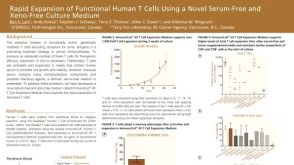 科学海报Rapid Expansion of Functional Human T Cells Using a Novel Serum-Free and Xeno-Free Culture Medium
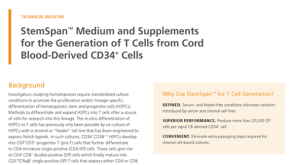 技术公告StemSpan™ Medium and Supplements for the Generation of T Cells from Cord Blood-Derived CD34+ Cells


 沪公网安备31010102008431号