Malhotra D et al. (FEB 2016)
Nature Immunology 17 2 187--95
Tolerance is established in polyclonal CD4(+) T cells by distinct mechanisms, according to self-peptide expression patterns.
Studies of repertoires of mouse monoclonal CD4(+) T cells have revealed several mechanisms of self-tolerance; however,which mechanisms operate in normal repertoires is unclear. Here we studied polyclonal CD4(+) T cells specific for green fluorescent protein expressed in various organs,which allowed us to determine the effects of specific expression patterns on the same epitope-specific T cells. Peptides presented uniformly by thymic antigen-presenting cells were tolerated by clonal deletion,whereas peptides excluded from the thymus were ignored. Peptides with limited thymic expression induced partial clonal deletion and impaired effector T cell potential but enhanced regulatory T cell potential. These mechanisms were also active for T cell populations specific for endogenously expressed self antigens. Thus,the immunotolerance of polyclonal CD4(+) T cells was maintained by distinct mechanisms,according to self-peptide expression patterns.
View Publication
产品类型:
产品号#:
18452
18452RF
18556
18556RF
产品名:
Cao Y et al. (MAR 2016)
Journal of Immunology 196 5 2075--84
Autoreactive T Cells from Patients with Myasthenia Gravis Are Characterized by Elevated IL-17, IFN-γ, and GM-CSF and Diminished IL-10 Production.
Myasthenia gravis (MG) is a prototypical autoimmune disease that is among the few for which the target Ag and the pathogenic autoantibodies are clearly defined. The pathology of the disease is affected by autoantibodies directed toward the acetylcholine receptor (AChR). Mature,Ag-experienced B cells rely on the action of Th cells to produce these pathogenic Abs. The phenotype of the MG Ag-reactive T cell compartment is not well defined; thus,we sought to determine whether such cells exhibit both a proinflammatory and a pathogenic phenotype. A novel T cell library assay that affords multiparameter interrogation of rare Ag-reactive CD4(+) T cells was applied. Proliferation and cytokine production in response to both AChR and control Ags were measured from 3120 T cell libraries derived from 11 MG patients and paired healthy control subjects. The frequency of CCR6(+) memory T cells from MG patients proliferating in response to AChR-derived peptides was significantly higher than that of healthy control subjects. Production of both IFN-γ and IL-17,in response to AChR,was also restricted to the CCR6(+) memory T cell compartment in the MG cohort,indicating a proinflammatory phenotype. These T cells also included an elevated expression of GM-CSF and absence of IL-10 expression,indicating a proinflammatory and pathogenic phenotype. This component of the autoimmune response in MG is of particular importance when considering the durability of MG treatment strategies that eliminate B cells,because the autoreactive T cells could renew autoimmunity in the reconstituted B cell compartment with ensuing clinical manifestations.
View Publication
产品类型:
产品号#:
17952
17952RF
100-0696
产品名:
EasySep™人CD4+ T细胞分选试剂盒
RoboSep™ 人CD4+ T细胞分选试剂盒
EasySep™人CD4+ T细胞分离试剂盒
Krummey SM et al. (MAR 2016)
Journal of Immunology 196 6 2838--46
Low-Affinity Memory CD8+ T Cells Mediate Robust Heterologous Immunity.
Heterologous immunity is recognized as a significant barrier to transplant tolerance. Whereas it has been established that pathogen-elicited memory T cells can have high or low affinity for cross-reactive allogeneic peptide-MHC,the role of TCR affinity during heterologous immunity has not been explored. We established a model with which to investigate the impact of TCR-priming affinity on memory T cell populations following a graft rechallenge. In contrast to high-affinity priming,low-affinity priming elicited fully differentiated memory T cells with a CD45RB(hi) status. High CD45RB status enabled robust secondary responses in vivo,as demonstrated by faster graft rejection kinetics and greater proliferative responses. CD45RB blockade prolonged graft survival in low affinity-primed mice,but not in high affinity-primed mice. Mechanistically,low affinity-primed memory CD8(+) T cells produced more IL-2 and significantly upregulated IL-2Rα expression during rechallenge. We found that CD45RB(hi) status was also a stable marker of priming affinity within polyclonal CD8(+) T cell populations. Following high-affinity rechallenge,low affinity-primed CD45RB(hi) cells became CD45RB(lo),demonstrating that CD45RB status acts as an affinity-based differentiation switch on CD8(+) T cells. Thus,these data establish a novel mechanism by which CD45 isoforms tune low affinity-primed memory CD8(+) T cells to become potent secondary effectors following heterologous rechallenge. These findings have direct implications for allogeneic heterologous immunity by demonstrating that despite a lower precursor frequency,low-affinity priming is sufficient to generate memory cells that mediate potent secondary responses against a cross-reactive graft challenge.
View Publication
产品类型:
产品号#:
19853
19853RF
产品名:
EasySep™小鼠CD8+ T细胞分选试剂盒
RoboSep™ 小鼠CD8+ T细胞分选试剂盒
Huus KE et al. (APR 2016)
Journal of Immunology 196 7 3097--108
Clinical Isolates of Pseudomonas aeruginosa from Chronically Infected Cystic Fibrosis Patients Fail To Activate the Inflammasome during Both Stable Infection and Pulmonary Exacerbation.
Immune recognition of pathogen-associated ligands leads to assembly and activation of inflammasomes,resulting in the secretion of inflammatory cytokines IL-1β and IL-18 and an inflammatory cell death called pyroptosis. Inflammasomes are important for protection against many pathogens,but their role during chronic infectious disease is poorly understood. Pseudomonas aeruginosa is an opportunistic pathogen that persists in the lungs of cystic fibrosis (CF) patients and may be responsible for the repeated episodes of pulmonary exacerbation characteristic of CF. P. aeruginosa is capable of inducing potent inflammasome activation during acute infection. We hypothesized that to persist within the host during chronic infection,P. aeruginosa must evade inflammasome activation,and pulmonary exacerbations may be the result of restoration of inflammasome activation. We therefore isolated P. aeruginosa from chronically infected CF patients during stable infection and exacerbation and evaluated the impact of these isolates on inflammasome activation in macrophages and neutrophils. P. aeruginosa isolates from CF patients failed to induce inflammasome activation,as measured by the secretion of IL-1β and IL-18 and by pyroptotic cell death,during both stable infection and exacerbation. Inflammasome evasion likely was due to reduced expression of inflammasome ligands and reduced motility and was not observed in environmental isolates or isolates from acute,non-CF infection. These results reveal a novel mechanism of pathogen adaptation by P. aeruginosa to avoid detection by inflammasomes in CF patients and indicate that P. aeruginosa-activated inflammasomes are not involved in CF pulmonary exacerbations.
View Publication
产品类型:
产品号#:
19762
19762RF
产品名:
EasySep™小鼠中性粒细胞富集试剂盒
RoboSep™ 小鼠中性粒细胞富集试剂盒含滤芯吸头
Ayasoufi K et al. (APR 2016)
Journal of Immunology 196 7 3180--90
CD4 T Cell Help via B Cells Is Required for Lymphopenia-Induced CD8 T Cell Proliferation.
Ab-mediated lymphoablation is commonly used in solid organ and hematopoietic cell transplantation. However,these strategies fail to control pathogenic memory T cells efficiently and to improve long-term transplant outcomes significantly. Understanding the mechanisms of T cell reconstitution is critical for enhancing the efficacy of Ab-mediated depletion in sensitized recipients. Using a murine analog of anti-thymocyte globulin (mATG) in a mouse model of cardiac transplantation,we previously showed that peritransplant lymphocyte depletion induces rapid memory T cell proliferation and only modestly prolongs allograft survival. We now report that T cell repertoire following depletion is dominated by memory CD4 T cells. Additional depletion of these residual CD4 T cells severely impairs the recovery of memory CD8 T cells after mATG treatment. The CD4 T cell help during CD8 T cell recovery depends on the presence of B cells expressing CD40 and intact CD40/CD154 interactions. The requirement for CD4 T cell help is not limited to the use of mATG in heart allograft recipients,and it is observed in nontransplanted mice and after CD8 T cell depletion with mAb instead of mATG. Most importantly,limiting helper signals increases the efficacy of mATG in controlling memory T cell expansion and significantly extends heart allograft survival in sensitized recipients. Our findings uncover the novel role for helper memory CD4 T cells during homeostatic CD8 T cell proliferation and open new avenues for optimizing lymphoablative therapies in allosensitized patients.
View Publication
产品类型:
产品号#:
19851
19851RF
产品名:
EasySep™小鼠T细胞分选试剂盒
RoboSep™ 小鼠T细胞分选试剂盒
Pu Y et al. (APR 2016)
Science Translational Medicine 8 333 333ra47
Androgen receptor antagonists compromise T cell response against prostate cancer leading to early tumor relapse.
Surgical and medical androgen deprivation therapy (ADT) is a cornerstone for prostate cancer treatment,but relapse usually occurs. We herein show that orchiectomy synergizes with immunotherapy,whereas the more widely used treatment of medical ADT involving androgen receptor (AR) antagonists suppresses immunotherapy. Furthermore,we observed that the use of medical ADT could unexpectedly impair the adaptive immune responses through interference with initial T cell priming rather than in the reactivation or expansion phases. Mechanistically,we have revealed that inadvertent immunosuppression might be potentially mediated by a receptor shared with γ-aminobutyric acid. Our data demonstrate that the timing and dosing of antiandrogens are critical to maximizing the antitumor effects of combination therapy. This study highlights an underappreciated mechanism of AR antagonist-mediated immunosuppression and provides a new strategy to enhance immune response and prevent the relapse of advanced prostate cancer.
View Publication
产品类型:
产品号#:
19853
19853RF
产品名:
EasySep™小鼠CD8+ T细胞分选试剂盒
RoboSep™ 小鼠CD8+ T细胞分选试剂盒
Rega A et al. (MAR 2013)
Journal of immunology (Baltimore,Md. : 1950) 190 5 2391--402
Plasmacytoid dendritic cells play a key role in tumor progression in lipopolysaccharide-stimulated lung tumor-bearing mice.
The antitumor activity of LPS was first described by Dr. William Coley. However,its role in lung cancer remains unclear. The aim of our study was to elucidate the dose-dependent effects of LPS (0.1-10 μg/mouse) in a mouse model of B16-F10-induced metastatic lung cancer. Lung tumor growth increased at 3 and 7 d after the administration of low-dose LPS (0.1 μg/mouse) compared with control mice. This was associated with an influx of plasmacytoid dendritic cells (pDCs),regulatory T cells,myeloid-derived suppressor cells,and CD8(+) regulatory T cells. In contrast,high-dose LPS (10 μg/mouse) reduced lung tumor burden and was associated with a greater influx of pDCs,as well as a stronger Th1 and Th17 polarization. Depletion of pDCs during low-dose LPS administration resulted in a decreased lung tumor burden. Depletion of pDCs during high-dose LPS treatment resulted in an increased tumor burden. The dichotomy in LPS effects was due to the phenotype of pDCs,which were immunosuppressive after the low-dose LPS,and Th1- and T cytotoxic-polarizing cells after the high-dose LPS. Adoptive transfer of T cells into nude mice demonstrated that CD8(+) T cells were responsible for pDC recruitment following low-dose LPS administration,whereas CD4(+) T cells were required for pDC influx after the high-dose LPS. In conclusion,our data suggest differential effects of low-dose versus high-dose LPS on pDC phenotype and tumor progression or regression in the lungs of mice.
View Publication
D. G. W. Alanine et al. (jun 2019)
Cell 178 1 216--228
Human Antibodies that Slow Erythrocyte Invasion Potentiate Malaria-Neutralizing Antibodies.
The Plasmodium falciparum reticulocyte-binding protein homolog 5 (PfRH5) is the leading target for next-generation vaccines against the disease-causing blood-stage of malaria. However,little is known about how human antibodies confer functional immunity against this antigen. We isolated a panel of human monoclonal antibodies (mAbs) against PfRH5 from peripheral blood B cells from vaccinees in the first clinical trial of a PfRH5-based vaccine. We identified a subset of mAbs with neutralizing activity that bind to three distinct sites and another subset of mAbs that are non-functional,or even antagonistic to neutralizing antibodies. We also identify the epitope of a novel group of non-neutralizing antibodies that significantly reduce the speed of red blood cell invasion by the merozoite,thereby potentiating the effect of all neutralizing PfRH5 antibodies as well as synergizing with antibodies targeting other malaria invasion proteins. Our results provide a roadmap for structure-guided vaccine development to maximize antibody efficacy against blood-stage malaria.
View Publication


 EasySep™小鼠TIL(CD45)正选试剂盒





 产品手册用于HLA分析的细胞分选产品
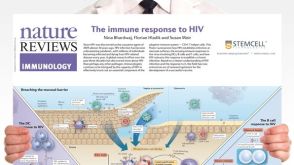 挂图The Immune Response to HIV Poster Summary of how HIV subverts the immune response to establish a chronic infection
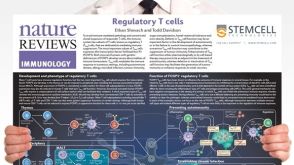 挂图Regulatory T Cells Overview of the development, phenotype and functions of regulatory T cells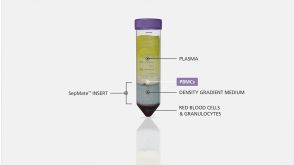

 沪公网安备31010102008431号