Suto A et al. (JUN 2008)
The Journal of experimental medicine 205 6 1369--79
Development and characterization of IL-21-producing CD4+ T cells.
It has recently been shown that interleukin (IL)-21 is produced by Th17 cells,functions as an autocrine growth factor for Th17 cells,and plays critical roles in autoimmune diseases. In this study,we investigated the differentiation and characteristics of IL-21-producing CD4(+) T cells by intracellular staining. Unexpectedly,we found that under Th17-polarizing conditions,the majority of IL-21-producing CD4(+) T cells did not produce IL-17A and -17F. We also found that IL-6 and -21 potently induced the development of IL-21-producing CD4(+) T cells without the induction of IL-4,IFN-gamma,IL-17A,or IL-17F production. On the other hand,TGF-beta inhibited IL-6- and IL-21-induced development of IL-21-producing CD4(+) T cells. IL-2 enhanced the development of IL-21-producing CD4(+) T cells under Th17-polarizing conditions. Finally,IL-21-producing CD4(+) T cells exhibited a stable phenotype of IL-21 production in the presence of IL-6,but retained the potential to produce IL-4 under Th2-polarizing conditions and IL-17A under Th17-polarizing conditions. These results suggest that IL-21-producing CD4(+) T cells exhibit distinct characteristics from Th17 cells and develop preferentially in an IL-6-rich environment devoid of TGF-beta,and that IL-21 functions as an autocrine growth factor for IL-21-producing CD4(+) T cells.
View Publication
产品类型:
产品号#:
21000
20119
20155
19752
19752RF
产品名:
RoboSep™- S
RoboSep™ 吸头组件抛光剂
RoboSep™分选管套装(9个塑料管)
Crispí et al. (OCT 2009)
Journal of immunology (Baltimore,Md. : 1950) 183 7 4675--81
Human TCR-alpha beta+ CD4- CD8- T cells can derive from CD8+ T cells and display an inflammatory effector phenotype.
The origin and function of human double negative (DN) TCR-alphabeta+ T cells is unknown. They are thought to contribute to the pathogenesis of systemic lupus erythematosus because they expand and accumulate in inflamed organs. In this study,we provide evidence that human TCR-alphabeta+ CD4- CD8- DN T cells can derive from activated CD8+ T cells. Freshly isolated TCR-alphabeta+ DN T cells display a distinct gene expression and cytokine production profile. DN cells isolated from peripheral blood as well as DN cells derived in vitro from CD8+ T cells produce a defined array of proinflammatory mediators that includes IL-1beta,IL-17,IFN-gamma,CXCL3,and CXCL2. These results indicate that,upon activation,CD8+ T cells have the capacity to acquire a distinct phenotype that grants them inflammatory capacity.
View Publication
产品类型:
产品号#:
15021
15061
产品名:
RosetteSep™人T细胞富集抗体混合物
RosetteSep™人T细胞富集抗体混合物
Chemnitz JM et al. (JAN 2006)
Cancer research 66 2 1114--22
Prostaglandin E2 impairs CD4+ T cell activation by inhibition of lck: implications in Hodgkin's lymphoma.
Many tumors,including Hodgkin's lymphoma,are associated with decreased cellular immunity and elevated levels of prostaglandin E(2) (PGE(2)),a known inhibitor of CD4+ T cell activation,suggested to be involved in immune deviation in cancer. To address the molecular mechanisms tumor-derived PGE(2) might have on primary human CD4+ T cells,we used a whole genome-based transcriptional approach and show that PGE(2) severely limited changes of gene expression induced by signaling through the T cell receptor and CD28. This data suggests an interference of PGE(2) at an early step of T cell receptor signaling: indeed,PGE(2) stimulation of T cells leads to inactivation of lck and reduced phosphorylation of ZAP70. Antiapoptotic genes escaped PGE(2)-induced inhibition resulting in partial protection from apoptosis in response to irradiation or Fas-mediated signaling. As a functional consequence,PGE(2)-treated CD4+ T cells are arrested in the cell cycle associated with up-regulation of the cyclin/cyclin-dependent kinase inhibitor p27(kip1). Most importantly,CD4+ T cells in Hodgkin's lymphoma show similar regulation of genes that were altered in vitro by PGE(2) in T cells from healthy individuals. These data strongly suggest that PGE(2) is an important factor leading to CD4+ T cell impairment observed in Hodgkin's lymphoma.
View Publication
产品类型:
产品号#:
15022
15062
产品名:
RosetteSep™人CD4+ T细胞富集抗体混合物
RosetteSep™人CD4+ T细胞富集抗体混合物
Swainson L et al. (JUN 2006)
Journal of immunology (Baltimore,Md. : 1950) 176 11 6702--8
IL-7R alpha gene expression is inversely correlated with cell cycle progression in IL-7-stimulated T lymphocytes.
IL-7 plays a major role in T lymphocyte homeostasis and has been proposed as an immune adjuvant for lymphopenic patients. This prospect is based,at least in part,on the short-term expansion of peripheral T cells in rIL7-treated mice and primates. Nevertheless,in vivo,following initial increases in T cell proliferation and numbers,lymphocytes return to a quiescent state. As the bases for this cell cycle exit have not yet been elucidated,it is important to assess the long-term biological effects of IL-7 on quiescent human T lymphocyte subsets. In this study,we find that IL-7-stimulated CD4+ naive lymphocytes enter into cell cycle with significantly delayed kinetics as compared with the memory population. Importantly though,these lymphocytes exit from the cell cycle despite the continuous replenishment of rIL-7. This response is distinct in memory and naive CD4+ lymphocytes with memory cells starting to exit from cycle by day 10 vs day 18 for naive cells. Return to quiescence is associated with a cessation in IL-7R signaling as demonstrated by an abrogation of STAT-5 phosphorylation,despite an up-regulation of surface IL-7Ralpha. Indeed,an initial 10-fold decrease in IL-7Ralpha mRNA levels is followed by increased IL-7Ralpha expression in naive as well as memory T cells,with kinetics paralleling cell cycle exit. Altogether,our data demonstrate that IL-7 promotes the extended survival of both naive and memory CD4+ T cells,whereas cycling of these two subsets is distinct and transient. Thus,IL-7 therapy should be designed to allow optimal responsiveness of naive and memory T cell subsets.
View Publication
产品类型:
产品号#:
15022
15062
产品名:
RosetteSep™人CD4+ T细胞富集抗体混合物
RosetteSep™人CD4+ T细胞富集抗体混合物
Zanin-Zhorov A et al. (JUL 2006)
The Journal of clinical investigation 116 7 2022--32
Heat shock protein 60 enhances CD4+ CD25+ regulatory T cell function via innate TLR2 signaling.
CD4+CD25+ Tregs regulate immunity,but little is known about their own regulation. We now report that the human 60-kDa heat shock protein (HSP60) acts as a costimulator of human Tregs,both CD4+CD25int and CD4+CD25hi. Treatment of Tregs with HSP60,or its peptide p277,before anti-CD3 activation significantly enhanced the ability of relatively low concentrations of the Tregs to downregulate CD4+CD25- or CD8+ target T cells,detected as inhibition of target T cell proliferation and IFN-gamma and TNF-alpha secretion. The enhancing effects of HSP60 costimulation on Tregs involved innate signaling via TLR2,led to activation of PKC,PI3K,and p38,and were further enhanced by inhibition of ERK. HSP60-treated Tregs suppressed target T cells both by cell-to-cell contact and by secretion of TGF-beta and IL-10. In addition,the expression of ERK,NF-kappaB,and T-bet by downregulated target T cells was inhibited. Thus,HSP60,a self-molecule,can downregulate adaptive immune responses by upregulating Tregs innately through TLR2 signaling.
View Publication
产品类型:
产品号#:
15022
15062
15023
15063
15021
15061
产品名:
RosetteSep™人CD4+ T细胞富集抗体混合物
RosetteSep™人CD4+ T细胞富集抗体混合物
RosetteSep™人CD8+ T细胞富集抗体混合物
RosetteSep™人CD8+ T细胞富集抗体混合物
RosetteSep™人T细胞富集抗体混合物
RosetteSep™人T细胞富集抗体混合物
Pu Y et al. (APR 2016)
Science Translational Medicine 8 333 333ra47
Androgen receptor antagonists compromise T cell response against prostate cancer leading to early tumor relapse.
Surgical and medical androgen deprivation therapy (ADT) is a cornerstone for prostate cancer treatment,but relapse usually occurs. We herein show that orchiectomy synergizes with immunotherapy,whereas the more widely used treatment of medical ADT involving androgen receptor (AR) antagonists suppresses immunotherapy. Furthermore,we observed that the use of medical ADT could unexpectedly impair the adaptive immune responses through interference with initial T cell priming rather than in the reactivation or expansion phases. Mechanistically,we have revealed that inadvertent immunosuppression might be potentially mediated by a receptor shared with γ-aminobutyric acid. Our data demonstrate that the timing and dosing of antiandrogens are critical to maximizing the antitumor effects of combination therapy. This study highlights an underappreciated mechanism of AR antagonist-mediated immunosuppression and provides a new strategy to enhance immune response and prevent the relapse of advanced prostate cancer.
View Publication
Laudanski K et al. (OCT 2006)
Proceedings of the National Academy of Sciences of the United States of America 103 42 15564--9
Cell-specific expression and pathway analyses reveal alterations in trauma-related human T cell and monocyte pathways.
Monitoring genome-wide,cell-specific responses to human disease,although challenging,holds great promise for the future of medicine. Patients with injuries severe enough to develop multiple organ dysfunction syndrome have multiple immune derangements,including T cell apoptosis and anergy combined with depressed monocyte antigen presentation. Genome-wide expression analysis of highly enriched circulating leukocyte subpopulations,combined with cell-specific pathway analyses,offers an opportunity to discover leukocyte regulatory networks in critically injured patients. Severe injury induced significant changes in T cell (5,693 genes),monocyte (2,801 genes),and total leukocyte (3,437 genes) transcriptomes,with only 911 of these genes common to all three cell populations (12%). T cell-specific pathway analyses identified increased gene expression of several inhibitory receptors (PD-1,CD152,NRP-1,and Lag3) and concomitant decreases in stimulatory receptors (CD28,CD4,and IL-2Ralpha). Functional analysis of T cells and monocytes confirmed reduced T cell proliferation and increased cell surface expression of negative signaling receptors paired with decreased monocyte costimulation ligands. Thus,genome-wide expression from highly enriched cell populations combined with knowledge-based pathway analyses leads to the identification of regulatory networks differentially expressed in injured patients. Importantly,application of cell separation,genome-wide expression,and cell-specific pathway analyses can be used to discover pathway alterations in human disease.
View Publication
Gracias DT et al. (FEB 2016)
Journal of Immunology 196 3 1186--98
Phosphatidylinositol 3-Kinase p110δ Isoform Regulates CD8+ T Cell Responses during Acute Viral and Intracellular Bacterial Infections.
The p110δ isoform of PI3K is known to play an important role in immunity,yet its contribution to CTL responses has not been fully elucidated. Using murine p110δ-deficient CD8(+) T cells,we demonstrated a critical role for the p110δ subunit in the generation of optimal primary and memory CD8(+) T cell responses. This was demonstrated in both acute viral and intracellular bacterial infections in mice. We show that p110δ signaling is required for CD8(+) T cell activation,proliferation and effector cytokine production. We provide evidence that the effects of p110δ signaling are mediated via Akt activation and through the regulation of TCR-activated oxidative phosphorylation and aerobic glycolysis. In light of recent clinical trials that employ drugs targeting p110δ in certain cancers and other diseases,our study suggests caution in using these drugs in patients,as they could potentially increase susceptibility to infectious diseases. These studies therefore reveal a novel and direct role for p110δ signaling in in vivo CD8(+) T cell immunity to microbial pathogens.
View Publication


 EasySep™小鼠TIL(CD45)正选试剂盒




 实验方案Stimulation of Antigen-Specific T Cells Using Peptide Pools
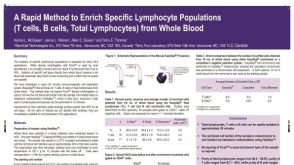 科学海报Cell Enrichment of Specific Lymphocyte Populations (T Cells, B Cells, Total Lymphocytes) from Whole Blood
 27:26
线上讲座How to Optimize Your T Cell Therapy Workflow—Without the Use of Serum or Feeder Cells发布日期: 08/27/2024
27:26
线上讲座How to Optimize Your T Cell Therapy Workflow—Without the Use of Serum or Feeder Cells发布日期: 08/27/2024

 沪公网安备31010102008431号