Evidence for a cross-talk between human neutrophils and Th17 cells.
Interleukin-17A (IL-17A) and IL-17F are 2 of several cytokines produced by T helper 17 cells (Th17),which are able to indirectly induce the recruitment of neutrophils. Recently,human Th17 cells have been phenotypically characterized and shown to express discrete chemokine receptors,including CCR2 and CCR6. Herein,we show that highly purified neutrophils cultured with interferon-gamma plus lipopolysaccharide produce the CCL2 and CCL20 chemokines,the known ligands of CCR2 and CCR6,respectively. Accordingly,supernatants from activated neutrophils induced chemotaxis of Th17 cells,which was greatly suppressed by anti-CCL20 and anti-CCL2 antibodies. We also discovered that activated Th17 cells could directly chemoattract neutrophils via the release of biologically active CXCL8. Consistent with this reciprocal recruitment,neutrophils and Th17 cells were found in gut tissue from Crohn disease and synovial fluid from rheumatoid arthritis patients. Finally,we report that,although human Th17 cells can directly interact with freshly isolated or preactivated neutrophils via granulocyte-macrophage colony-stimulating factor,tumor necrosis factor-alpha,and interferon-gamma release,these latter cells cannot be activated by IL-17A and IL-17F,because of their lack of IL-17RC expression. Collectively,our results reveal a novel chemokine-dependent reciprocal cross-talk between neutrophils and Th17 cells,which may represent a useful target for the treatment of chronic inflammatory diseases.
View Publication
产品类型:
产品号#:
19309
19309RF
19052
19052RF
19058
19058RF
100-1525
产品名:
EasySep™人定制富集试剂盒
RoboSep™ 人定制富集试剂盒,含滤芯吸头
EasySep™人CD4+ T细胞富集试剂盒
RoboSep™ 人CD4+ T细胞富集试剂盒含滤芯吸头
EasySep™人单核细胞富集试剂盒(不去除CD16)
RoboSep™ 人单核细胞富集试剂盒(不去除CD16)含滤芯吸头
EasySep™人单核细胞富集试剂盒(不去除CD16)
Yu J-J et al. (FEB 2010)
Clinical and vaccine immunology : CVI 17 2 215--22
Francisella tularensis T-cell antigen identification using humanized HLA-DR4 transgenic mice.
There is no licensed vaccine against the intracellular pathogen Francisella tularensis. The use of conventional mouse strains to screen protective vaccine antigens may be problematic,given the differences in the major histocompatibility complex (MHC) binding properties between murine and human antigen-presenting cells. We used engineered humanized mice that lack endogenous MHC class II alleles but that express a human HLA allele (HLA-DR4 transgenic [tg] mice) to identify potential subunit vaccine candidates. Specifically,we applied a biochemical and immunological screening approach with bioinformatics to select putative F. tularensis subsp. novicida T-cell-reactive antigens using humanized HLA-DR4 tg mice. Cell wall- and membrane-associated proteins were extracted with Triton X-114 detergent and were separated by fractionation with a Rotofor apparatus and whole-gel elution. A series of proteins were identified from fractions that stimulated antigen-specific gamma interferon (IFN-gamma) production,and these were further downselected by the use of bioinformatics and HLA-DR4 binding algorithms. We further examined the validity of this combinatorial approach with one of the identified proteins,a 19-kDa Francisella tularensis outer membrane protein (designated Francisella outer membrane protein B [FopB]; FTN0119). FopB was shown to be a T-cell antigen by a specific IFN-gamma recall assay with purified CD4(+) T cells from F. tularensis subsp. novicida DeltaiglC-primed HLA-DR4 tg mice and cells of a human B-cell line expressing HLA-DR4 (DRB1*0401) functioning as antigen-presenting cells. Intranasal immunization of HLA-DR4 tg mice with the single antigen FopB conferred significant protection against lethal pulmonary challenge with an F. tularensis subsp. holarctica live vaccine strain. These results demonstrate the value of combining functional biochemical and immunological screening with humanized HLA-DR4 tg mice to map HLA-DR4-restricted Francisella CD4(+) T-cell epitopes.
View Publication
产品类型:
产品号#:
19752
19752RF
产品名:
Parish ST et al. (MAR 2010)
Journal of immunology (Baltimore,Md. : 1950) 184 6 2847--54
Adenosine deaminase modulation of telomerase activity and replicative senescence in human CD8 T lymphocytes.
Increased proportions of CD8 T lymphocytes lacking expression of the CD28 costimulatory receptor have been documented during both aging and chronic infection with HIV-1,and their abundance correlates with numerous deleterious clinical outcomes. CD28-negative cells also arise in cell cultures of CD8(+)CD28(+) following multiple rounds of Ag-driven proliferation,reaching the end stage of replicative senescence. The present study investigates the role of a second T cell costimulatory receptor component,adenosine deaminase (ADA),on the process of replicative senescence. We had previously reported that CD28 signaling is required for optimal telomerase upregulation. In this study,we show that the CD8(+)CD28(+) T lymphocytes that are ADA(+) have significantly greater telomerase activity than those that do not express ADA and that ADA is progressively lost as cultures progress to senescence. Because ADA converts adenosine to inosine,cells lacking this enzyme might be subject to prolonged exposure to adenosine,which has immunosuppressive effects. Indeed,we show that chronic exposure of CD8 T lymphocytes to exogenous adenosine accelerates the process of replicative senescence,causing a reduction in overall proliferative potential,reduced telomerase activity,and blunted IL-2 gene transcription. The loss of CD28 expression was accelerated,in part due to adenosine-induced increases in constitutive caspase-3,known to act on the CD28 promoter. These findings provide the first evidence for a role of ADA in modulating the process of replicative senescence and suggest that strategies to enhance this enzyme may lead to novel therapeutic approaches for pathologies associated with increases in senescent CD8 T lymphocytes.
View Publication
产品类型:
产品号#:
19053
19053RF
产品名:
EasySep™人CD8+ T细胞富集试剂盒
RoboSep™ 人CD8+ T细胞富集试剂盒含滤芯吸头
Tomihara K et al. (JUN 2010)
Journal of immunology (Baltimore,Md. : 1950) 184 11 6151--60
Antigen-specific immunity and cross-priming by epithelial ovarian carcinoma-induced CD11b(+)Gr-1(+) cells.
Both innate and adaptive immune systems are considered important for cancer prevention,immunosurveillance,and control of cancer progression. It is known that,although both systems initially eliminate emerging tumor cells efficiently,tumors eventually escape immune attack by a variety of mechanisms,including differentiation and recruitment of immunosuppressive CD11b(+)Gr-1(+) myeloid suppressor cells into the tumor microenvironment. However,we show that CD11b(+)Gr-1(+) cells found in ascites of epithelial ovarian cancer-bearing mice at advanced stages of disease are immunostimulatory rather than being immunosuppressive. These cells consist of a homogenous population of cells that morphologically resemble neutrophils. Moreover,like dendritic cells,immunostimulatory CD11b(+)Gr-1(+) cells can strongly cross-prime,augmenting the proliferation of functional CTLs via signaling through the expression of costimulatory molecule CD80. Adoptive transfer of these immunostimulatory CD11b(+)Gr-1(+) cells from ascites of ovarian cancer-bearing mice results in the significant regression of s.c. tumors even without being pulsed with exogenous tumor Ag prior to adoptive transfer. We now show for the first time that adaptive immune responses against cancer can be augmented by these cancer-induced granulocyte-like immunostimulatory myeloid (CD11b(+)Gr-1(+)) cells,thereby mediating highly effective antitumor immunity in an adoptive transfer model of immunity.
View Publication
Thrombopoietin cooperates with FLT3-ligand in the generation of plasmacytoid dendritic cell precursors from human hematopoietic progenitors.
Type 1 interferon-producing cells (IPCs),also known as plasmacytoid dendritic cell (DC) precursors,represent the key effectors in antiviral innate immunity and triggers for adaptive immune responses. IPCs play important roles in the pathogenesis of systemic lupus erythematosus (SLE) and in modulating immune responses after hematopoietic stem cell transplantation. Understanding IPC development from hematopoietic progenitor cells (HPCs) may provide critical information in controlling viral infection,autoimmune SLE,and graft-versus-host disease. FLT3-ligand (FLT3-L) represents a key IPC differentiation factor from HPCs. Although hematopoietic cytokines such as interleukin-3 (IL-3),IL-7,stem cell factor (SCF),macrophage-colony-stimulating factor (M-CSF),and granulocyte M-CSF (GM-CSF) promote the expansion of CD34+ HPCs in FLT3-L culture,they strongly inhibit HPC differentiation into IPCs. Here we show that thrombopoietin (TPO) cooperates with FLT3-L,inducing CD34+ HPCs to undergo a 400-fold expansion in cell numbers and to generate more than 6 x 10(6) IPCs per 10(6) CD34+ HPCs within 30 days in culture. IPCs derived from HPCs in FLT3-L/TPO cultures display blood IPC phenotype and have the capacity to produce large amounts of interferon-alpha (IFN-alpha) and to differentiate into mature DCs. This culture system,combined with the use of adult peripheral blood CD34+ HPCs purified from G-CSF-mobilized donors,permits the generation of more than 10(9) IPCs from a single blood donor.
View Publication
产品类型:
产品号#:
18058
18058RF
产品名:
Chiu B-C et al. (MAR 2004)
The American journal of pathology 164 3 1021--30
The innate pulmonary granuloma: characterization and demonstration of dendritic cell recruitment and function.
Granulomas are innate sequestration responses that can be modified by superimposed acquired immune mechanisms. The present study examined the innate stage of pulmonary granuloma responses to bead-immobilized Th1- and Th2-inducing pathogen antigens (Ags),Mycobacteria bovis purified protein derivative (PPD) and Schistosoma mansoni soluble egg Ags (SEA). Compared to a nonpathogen Ag,PPD and SEA bead elicited larger lesions with the former showing accelerated inflammation. Temporal analyses of cytokine and chemokine transcripts showed all Ag beads induced tumor necrosis factor-alpha mRNA but indicated biased interleukin (IL)-1,IL-6,and IL-12 expression with PPD challenge. All beads elicited comparable levels of CXCL9,CXL10,CCL2,CCL17,and CCL22 mRNA,but PPD beads caused biased CXCL2 CXCL5,CCL3,and CCL4 expression whereas both pathogen Ags induced CCL7. Immunohistochemical,electron microscopic,and flow cytometric analyses showed that Ag beads mobilized CD11c+ dendritic cells (DCs) of comparable maturation. Transfer of DCs from PPD Ag-challenged lungs conferred a Th1 anamnestic cytokine response in recipients. Surprisingly,transfer of DCs from the helminth SEA-challenged lungs did not confer the expected Th2 response,but instead rendered recipients incapable of Ag-elicited IL-4 production. These results provide in vivo evidence that lung DCs recruited under inflammatory conditions favor Th1 responses and alternative mechanisms are required for Th2 commitment.
View Publication
产品类型:
产品号#:
18554
18554RF
18564
18564RF
产品名:
Curat CA et al. (MAY 2004)
Diabetes 53 5 1285--92
From blood monocytes to adipose tissue-resident macrophages: induction of diapedesis by human mature adipocytes.
Obesity has been suggested to be a low-grade systemic inflammatory state,therefore we studied the interaction between human adipocytes and monocytes via adipose tissue (AT)-derived capillary endothelium. Cells composing the stroma-vascular fraction (SVF) of human ATs were characterized by fluorescence-activated cell sorter (FACS) analysis and two cell subsets (resident macrophages and endothelial cells [ECs]) were isolated using antibody-coupled microbeads. Media conditioned by mature adipocytes maintained in fibrin gels were applied to AT-derived ECs. Thereafter,the expression of endothelial adhesion molecules was analyzed as well as the adhesion and transmigration of human monocytes. FACS analysis showed that 11% of the SVF is composed of CD14(+)/CD31(+) cells,characterized as resident macrophages. A positive correlation was found between the BMI and the percentage of resident macrophages,suggesting that fat tissue growth is associated with a recruitment of blood monocytes. Incubation of AT-derived ECs with adipocyte-conditioned medium resulted in the upregulation of EC adhesion molecules and the increased chemotaxis of blood monocytes,an effect mimicked by recombinant human leptin. These results indicate that adipokines,such as leptin,activate ECs,leading to an enhanced diapedesis of blood monocytes,and suggesting that fat mass growth might be linked to inflammatory processes.
View Publication


 EasySep™小鼠TIL(CD45)正选试剂盒






 产品手册细胞分选相关工具
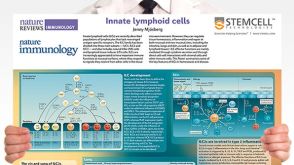 挂图Innate Lymphoid Cells Overview of innate lymphoid cells (ILCs) development, classification, plasticity and functional diversity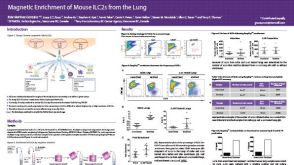
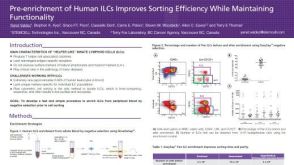 科学海报Pre-enrichment of Human ILCs Improves Sorting Efficiency While Maintaining Functionality
 沪公网安备31010102008431号