Guan X et al. (MAY 2012)
Stem Cell Research 8 3 410--5
Derivation of human embryonic stem cells with NEMO deficiency.
Deficiency of the nuclear factor-kappa-B essential modulator (NEMO) is a rare X-linked disorder that presents in boys as hypohydrotic ectodermal dysplasia with immunodeficiency due to defective nuclear factor-κB activation. Here we report on the generation of 2 human embryonic stem cell lines from discarded in vitro fertilization (IVF) embryos ascertained via preimplantation genetic diagnosis. We have derived two human embryonic stem cell lines that carry a T458G hypomorphic mutation in exon 4 of the NEMO (or IKBKG) gene. One of the lines is diploid male; the other is diploid female but has clonally inactivated the X-chromosome that harbors the wild-type IKBKG gene. We show that both lines are pluripotent,have the capacity to differentiate into hematopoietic progenitors,and have defective inhibitor of nuclear factor kappa-B kinase activity. These NEMO deficiency hES cell lines provide an unlimited source for differentiated cell types and may serve as a unique tool to study NEMO deficiency and potentially lead to the development of new therapies for this disease.
View Publication
Bain G et al. (APR 1995)
Developmental biology 168 2 342--57
Embryonic stem cells express neuronal properties in vitro.
Mouse embryonic stem (ES) cells cultured as aggregates and exposed to retinoic acid are induced to express multiple phenotypes normally associated with neurons. A large percentage of treated aggregates produce a rich neuritic outgrowth. Dissociating the induced aggregates with trypsin and plating the cells as a monolayer results in cultures in which a sizable percentage of the cells have a neuronal appearance. These neuron-like cells express class III beta-tubulin and the neurofilament M subunit. Induced cultures express transcripts for neural-associated genes including the neurofilament L subunit,glutamate receptor subunits,the transcription factor Brn-3,and GFAP. Levels of neurofilament L and GAD67 and GAD65 transcripts rise dramatically upon induction. Physiological studies show that the neuron-like cells generate action potentials and express TTX-sensitive sodium channels,as well as voltage-gated potassium channels and calcium channels. We conclude that a complex system of neuronal gene expression can be activated in cultured ES cells. This system should be favorable for investigating some of the mechanisms that regulate neuronal differentiation.
View Publication
产品类型:
产品号#:
06902
06952
00321
00322
00323
00324
00325
产品名:
Danet G et al. (JUL 2003)
The Journal of clinical investigation 112 1 126--35
Expansion of human SCID-repopulating cells under hypoxic conditions.
It has been proposed that bone marrow (BM) hematopoietic stem and progenitor cells are distributed along an oxygen (O2) gradient,where stem cells reside in the most hypoxic areas and proliferating progenitors are found in O2-rich areas. However,the effects of hypoxia on human hematopoietic stem cells (HSCs) have not been characterized. Our objective was to evaluate the functional and molecular responses of human BM progenitors and stem cells to hypoxic conditions. BM lineage-negative (Lin-) CD34+CD38- cells were cultured in serum-free medium under 1.5% O2 (hypoxia) or 20% O2 (normoxia) for 4 days. Using limiting dilution analysis,we demonstrate that the absolute number of SCID-repopulating cells (SRCs) increased by 5.8-fold in hypoxic cultures compared with normoxia,and by 4.2-fold compared with freshly isolated Lin-CD34+CD38- cells. The observed increase in BM-repopulating activity was associated with a preferential expansion of Lin-CD34+CD38- cells. We also demonstrate that,in response to hypoxia,hypoxia-inducible factor-1alpha protein was stabilized,surface expression of angiogenic receptors was upregulated,and VEGF secretion increased in BM Lin-CD34+ cultures. The use of low O2 levels to enhance the survival and/or self-renewal of human BM HSCs in vitro represents an important advance and could have valuable clinical implications.
View Publication
产品类型:
产品号#:
05150
09500
09600
09650
产品名:
MyeloCult™ H5100
BIT 9500血清替代物
StemSpan™ SFEM
StemSpan™ SFEM
Xu C (JAN 2006)
Methods in enzymology 420 18--37
Characterization and evaluation of human embryonic stem cells.
Human embryonic stem cells (hESCs) provide great opportunities for regenerative medicine,pharmacological and toxicological investigation,and the study of human embryonic development. These applications require proper derivation,maintenance,and extensive characterization of undifferentiated cells before being used for differentiation into cells of interest. Undifferentiated hESCs possess several unique features,including their extensive proliferation capacity in the undifferentiated state,ability to maintain a normal karyotype after long-term culture,expression of markers characteristic of stem cells,high constitutive telomerase activity,and capacity to differentiate into essentially all somatic cell types. This chapter will summarize the current development in culture conditions and provide technical details for the evaluation and characterization of hESCs.
View Publication
产品类型:
产品号#:
05850
05857
05870
05875
85850
85857
85870
85875
产品名:
mTeSR™1
mTeSR™1
Chung J et al. (AUG 2009)
Current protocols in stem cell biology Chapter 5 August Unit 5A.3
Magnetic resonance imaging of human embryonic stem cells.
Magnetic resonance imaging (MRI) may emerge as an ideal non-invasive imaging modality to monitor stem cell therapy in the failing heart. This imaging modality generates any arbitrary tomographic view at high spatial and temporal resolution with exquisite intrinsic tissue contrast. This capability enables robust evaluation of both the cardiac anatomy and function. Traditionally,superparamagnetic iron oxide nanoparticle (SPIO) has been widely used for cellular MRI due to SPIO's ability to enhance sensitivity of MRI by inducing remarkable hypointense,negative signal,blooming effect" on T2*-weighted MRI acquisition. Recently�
View Publication
Reprogramming of T cells from human peripheral blood.
Vogt-Koyanagi-Harada (VKH) disease (and sympathetic ophthalmia) is an ocular inflammatory disease that is considered to be a cell-mediated autoimmune disease against melanocytes. The purpose of this study was to determine the Ags specific to VKH disease and to develop an animal model of VKH disease. We found that exposure of lymphocytes from patients with VKH disease to peptides (30-mer) derived from the tyrosinase family proteins led to significant proliferation of the lymphocytes. Immunization of these peptides into pigmented rats induced ocular and extraocular changes that highly resembled human VKH disease,and we suggest that an experimental VKH disease was induced in these rats. We conclude that VKH disease is an autoimmune disease against the tyrosinase family proteins.
View Publication
产品类型:
产品号#:
05850
05857
05870
05875
05920
85850
85857
85870
85875
产品名:
mTeSR™1
mTeSR™1
Sokolov MV and Neumann RD (JAN 2010)
PLoS ONE 5 12 e14195
Radiation-induced bystander effects in cultured human stem cells.
BACKGROUND: The radiation-induced bystander effect" (RIBE) was shown to occur in a number of experimental systems both in vitro and in vivo as a result of exposure to ionizing radiation (IR). RIBE manifests itself by intercellular communication from irradiated cells to non-irradiated cells which may cause DNA damage and eventual death in these bystander cells. It is known that human stem cells (hSC) are ultimately involved in numerous crucial biological processes such as embryologic development; maintenance of normal homeostasis; aging; and aging-related pathologies such as cancerogenesis and other diseases. However�
View Publication
产品类型:
产品号#:
05850
05857
05870
05875
85850
85857
85870
85875
产品名:
mTeSR™1
mTeSR™1
Mangeot P-E et al. (SEP 2011)
Molecular therapy : the journal of the American Society of Gene Therapy 19 9 1656--66
Protein Transfer Into Human Cells by VSV-G-induced Nanovesicles.
Identification of new techniques to express proteins into mammal cells is of particular interest for both research and medical purposes. The present study describes the use of engineered vesicles to deliver exogenous proteins into human cells. We show that overexpression of the spike glycoprotein of the vesicular stomatitis virus (VSV-G) in human cells induces the release of fusogenic vesicles named gesicles. Biochemical and functional studies revealed that gesicles incorporated proteins from producer cells and could deliver them to recipient cells. This protein-transduction method allows the direct transport of cytoplasmic,nuclear or surface proteins in target cells. This was demonstrated by showing that the TetR transactivator and the receptor for the murine leukemia virus (MLV) envelope [murine cationic amino acid transporter-1 (mCAT-1)] were efficiently delivered by gesicles in various cell types. We further shows that gesicle-mediated transfer of mCAT-1 confers to human fibroblasts a robust permissiveness to ecotropic vectors,allowing the generation of human-induced pluripotent stem cells in level 2 biosafety facilities. This highlights the great potential of mCAT-1 gesicles to increase the safety of experiments using retro/lentivectors. Besides this,gesicles is a versatile tool highly valuable for the nongenetic delivery of functions such as transcription factors or genome engineering agents.
View Publication
产品类型:
产品号#:
05850
05857
05870
05875
85850
85857
85870
85875
产品名:
mTeSR™1
mTeSR™1
Galy A et al. (JAN 2000)
Blood 95 1 128--37
Distinct signals control the hematopoiesis of lymphoid-related dendritic cells.
The molecular and cellular requirements for the development of different populations of human dendritic cells (DC) were studied. Conditions were defined that support DC production from lymphoid progenitors but that fail to induce DC formation from peripheral monocytes. The production of these lymphoid-related DC was severely blocked when hematopoietic progenitors overexpressed Ik7,a mutant dominant-negative Ikaros protein. In contrast,Ik7 did not block the formation of DC in conditions supporting the development of monocyte-derived DC. Furthermore,Ik7 did not block the formation of monocyte/macrophages and enhanced granulopoiesis. One of the molecular mechanisms mediated by Ik7 appears to be down-regulation of the flt3-receptor mRNA. Thus,distinct signals control the formation of DC demonstrating that some aspects of DC diversity are determined in part by distinct molecular cues at the hematopoietic level. (Blood. 2000;95:128-137)
View Publication
产品类型:
产品号#:
04431
产品名:
MethoCult™ H4431
Sliwa A et al. (SEP 2009)
Genes & nutrition 4 3 195--8
Differentiation of human adipose tissue SVF cells into cardiomyocytes.
Progenitor cells have been extensively studied and therapeutically applied in tissue reconstructive therapy. Stromal vascular fraction (SVF) cells,which are derived from adipose tissue,may represent a potential source of the cells which undergo phenotypical differentiation into many lineages both in vitro as well as in vivo. The goal of this study was to check whether human SVF cells may differentiate into cardiomyocyte-like entities. Human SVF cells were induced to differentiate by their incubation in Methocult medium in the presence of SCF,IL-3 and IL-6. Morphological transformation of the cells was monitored using optical light microscope,whereas changes in expression of the genes typical for cardiac phenotype were measured by qRT-PCR. Incubation of the human SVF cells in the medium that promotes cardiomyocyte differentiation in vitro resulted in formation of myotubule-like structures accompanied by up-regulation of the myocardium-characteristic genes,such as GATA,MEF2C,MYOD1,but not ANP. Human SVF cells differentiate into cardiomyocyte-like cells in the presence of the certain set of myogenesis promoting cytokines.
View Publication


 EasySep™小鼠TIL(CD45)正选试剂盒





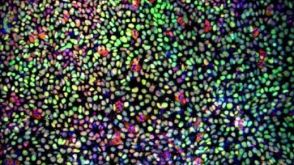 实验方案Maintenance of Porcine Pluripotent Stem Cells (pPSCs) Using eTeSR™
 沪公网安备31010102008431号