RNA-binding protein L1TD1 interacts with LIN28 via RNA and is required for human embryonic stem cell self-renewal and cancer cell proliferation.
Human embryonic stem cells (hESC) have a unique capacity to self-renew and differentiate into all the cell types found in human body. Although the transcriptional regulators of pluripotency are well studied,the role of cytoplasmic regulators is still poorly characterized. Here,we report a new stem cell-specific RNA-binding protein L1TD1 (ECAT11,FLJ10884) required for hESC self-renewal and cancer cell proliferation. Depletion of L1TD1 results in immediate downregulation of OCT4 and NANOG. Furthermore,we demonstrate that OCT4,SOX2,and NANOG all bind to the promoter of L1TD1. Moreover,L1TD1 is highly expressed in seminomas,and depletion of L1TD1 in these cancer cells influences self-renewal and proliferation. We show that L1TD1 colocalizes and interacts with LIN28 via RNA and directly with RNA helicase A (RHA). LIN28 has been reported to regulate translation of OCT4 in complex with RHA. Thus,we hypothesize that L1TD1 is part of the L1TD1-RHA-LIN28 complex that could influence levels of OCT4. Our results strongly suggest that L1TD1 has an important role in the regulation of stemness.
View Publication
产品类型:
产品号#:
05850
05857
05870
05875
36254
85850
85857
85870
85875
产品名:
DMEM/F-12 with 15 mM HEPES
mTeSR™1
mTeSR™1
Smith GH (JAN 1996)
Breast cancer research and treatment 39 1 21--31
Experimental mammary epithelial morphogenesis in an in vivo model: evidence for distinct cellular progenitors of the ductal and lobular phenotype.
An in vivo transplantation system has been used to evaluate the developmental capacities of specific mouse mammary epithelial cell populations. Specifically,mouse mammary epithelial cells with distinctly limited developmental potentials have been identified using this procedure. Two distinct epithelial cell progenitors have been identified by experiments designed to determine whether basal lobular and ductal phenotypes could develop independently under conditions imposed by a limiting dilution. The prediction that these separate epithelial progenitors must exist was based upon the results from transplantation experiments carried out in epithelium-divested mammary fat pads of syngeneic mice with mammary epithelium from two different transgenic mouse models. The results presented here demonstrate the following points: 1) lobular,i.e. secretory,progenitor cells are present as distinct entities among the mammary epithelial cells found in immature virgin female mice; 2) similarly,ductal epithelial progenitors are present within the same population; 3) lobular progenitors are present in greater numbers,although both cell populations are extremely small; 4) as expected,some inocula produce outgrowths with simultaneous development of both lobular and ductal phenotypes--it is not known whether this indicates cooperative interaction between the two epithelial progenitors or signals the presence of a third progenitor type capable of producing both ductular and lobular committed daughters; 5) these findings have important consequences in the design of experiments aimed at testing the effects of known and putative mammary oncogenes and tumor suppressor genes,using techniques which include cellular transformation in vitro followed by in vivo cultivation and evaluation.
View Publication
产品类型:
产品号#:
01700
01705
05601
05610
05620
01702
产品名:
ALDEFLUOR™ 试剂盒
ALDEFLUOR™ DEAB试剂, 1.5 mM, 1 mL
EpiCult™-B 人培养基
EpiCult™-B 小鼠培养基
MammoCult™ 人源培养基套装
ALDEFLUOR™检测缓冲液
Park S-W et al. (DEC 2010)
Blood 116 25 5762--72
Efficient differentiation of human pluripotent stem cells into functional CD34+ progenitor cells by combined modulation of the MEK/ERK and BMP4 signaling pathways.
Differentiation of human pluripotent stem cells (hPSCs) into functional cell types is a crucial step in cell therapy. In the present study,we demonstrate that functional CD34(+) progenitor cells can be efficiently produced from human embryonic stem cells (hESCs) and induced pluripotent stem cells (hiPSCs) by combined modulation of 2 signaling pathways. A higher proportion of CD34(+) cells (∼ 20%) could be derived from hPSCs by inhibition of mitogen-activated protein kinase (MAPK) extracellular signal-regulated protein kinase (MEK)/extracellular signal-regulated kinase (ERK) signaling and activation of bone morphogenic protein-4 (BMP4) signaling. hPSC-derived CD34(+) progenitor cells further developed to endothelial and smooth muscle cells with functionality. Moreover,they contributed directly to neovasculogenesis in ischemic mouse hind limbs,thereby resulting in improved blood perfusion and limb salvage. Our results suggest that combined modulation of signaling pathways may be an efficient means of differentiating hPSCs into functional CD34(+) progenitor cells.
View Publication
产品类型:
产品号#:
04434
04444
产品名:
MethoCult™ H4434 Classic
MethoCult™ H4434 Classic
Miyoshi N et al. (JAN 2010)
Proceedings of the National Academy of Sciences of the United States of America 107 1 40--5
Defined factors induce reprogramming of gastrointestinal cancer cells.
Although cancer is a disease with genetic and epigenetic origins,the possible effects of reprogramming by defined factors remain to be fully understood. We studied the effects of the induction or inhibition of cancer-related genes and immature status-related genes whose alterations have been reported in gastrointestinal cancer cells. Retroviral-mediated introduction of induced pluripotent stem (iPS) cell genes was necessary for inducing the expression of immature status-related proteins,including Nanog,Ssea4,Tra-1-60,and Tra-1-80 in esophageal,stomach,colorectal,liver,pancreatic,and cholangiocellular cancer cells. Induced cells,but not parental cells,possessed the potential to express morphological patterns of ectoderm,mesoderm,and endoderm,which was supported by epigenetic studies,indicating methylation of DNA strands and the histone H3 protein at lysine 4 in promoter regions of pluripotency-associated genes such as NANOG. In in vitro analysis induced cells showed slow proliferation and were sensitized to differentiation-inducing treatment,and in vivo tumorigenesis was reduced in NOD/SCID mice. This study demonstrated that pluripotency was manifested in induced cells,and that the induced pluripotent cancer (iPC) cells were distinct from natural cancer cells with regard to their sensitivity to differentiation-inducing treatment. Retroviral-mediated introduction of iPC cells confers higher sensitivity to chemotherapeutic agents and differentiation-inducing treatment.
View Publication
产品类型:
产品号#:
05850
05857
05870
05875
85850
85857
85870
85875
产品名:
mTeSR™1
mTeSR™1
Boheler KR et al. (AUG 2002)
Circulation research 91 3 189--201
Differentiation of pluripotent embryonic stem cells into cardiomyocytes.
Embryonic stem (ES) cells have been established as permanent lines of undifferentiated pluripotent cells from early mouse embryos. ES cells provide a unique system for the genetic manipulation and the creation of knockout strains of mice through gene targeting. By cultivation in vitro as 3D aggregates called embryoid bodies,ES cells can differentiate into derivatives of all 3 primary germ layers,including cardiomyocytes. Protocols for the in vitro differentiation of ES cells into cardiomyocytes representing all specialized cell types of the heart,such as atrial-like,ventricular-like,sinus nodal-like,and Purkinje-like cells,have been established. During differentiation,cardiac-specific genes as well as proteins,receptors,and ion channels are expressed in a developmental continuum,which closely recapitulates the developmental pattern of early cardiogenesis. Exploitation of ES cell-derived cardiomyocytes has facilitated the analysis of early cardiac development and has permitted in vitro gain-of-function" or "loss-of-function" genetic studies. Recently�
View Publication
产品类型:
产品号#:
06902
06952
00321
00322
00323
00324
00325
产品名:
Ben-David U and Benvenisty N (MAR 2014)
Nature protocols 9 3 729--740
Chemical ablation of tumor-initiating human pluripotent stem cells.
The tumorigenicity of human pluripotent stem cells (hPSCs) is widely acknowledged as a major obstacle that withholds their application in regenerative medicine. This protocol describes two efficient and robust ways to chemically eliminate the tumor-initiating hPSCs from monolayer culture. The protocol details how to maintain and differentiate hPSCs,how to apply chemical inhibitors to cultures of hPSCs and their differentiated progeny,and how to assess the purity of the resultant cell cultures using in vitro and in vivo assays. It also describes how to rescue the cytotoxic effect. The elimination and the rescue assay can be completed within 3-5 d,the in vitro assessment requires another day,and the in vivo assessment requires up to 12 additional weeks.
View Publication
产品类型:
产品号#:
05850
05857
05870
05875
85850
85857
85870
85875
产品名:
mTeSR™1
mTeSR™1
Ichida JK et al. (AUG 2014)
Nature chemical biology 10 8 632--9
Notch inhibition allows oncogene-independent generation of iPS cells.
The reprogramming of somatic cells to pluripotency using defined transcription factors holds great promise for biomedicine. However,human reprogramming remains inefficient and relies either on the use of the potentially dangerous oncogenes KLF4 and CMYC or the genetic inhibition of the tumor suppressor gene p53. We hypothesized that inhibition of signal transduction pathways that promote differentiation of the target somatic cells during development might relieve the requirement for non-core pluripotency factors during induced pluripotent stem cell (iPSC) reprogramming. Here,we show that inhibition of Notch greatly improves the efficiency of iPSC generation from mouse and human keratinocytes by suppressing p21 in a p53-independent manner and thereby enriching for undifferentiated cells capable of long-term self-renewal. Pharmacological inhibition of Notch enabled routine production of human iPSCs without KLF4 and CMYC while leaving p53 activity intact. Thus,restricting the development of somatic cells by altering intercellular communication enables the production of safer human iPSCs.
View Publication
产品类型:
产品号#:
05850
05857
05870
05875
73092
85850
85857
85870
85875
产品名:
DBZ
mTeSR™1
mTeSR™1
Kurian L et al. (JAN 2013)
Nature methods 10 1 77--83
Conversion of human fibroblasts to angioblast-like progenitor cells.
Lineage conversion of one somatic cell type to another is an attractive approach for generating specific human cell types. Lineage conversion can be direct,in the absence of proliferation and multipotent progenitor generation,or indirect,by the generation of expandable multipotent progenitor states. We report the development of a reprogramming methodology in which cells transition through a plastic intermediate state,induced by brief exposure to reprogramming factors,followed by differentiation. We use this approach to convert human fibroblasts to mesodermal progenitor cells,including by non-integrative approaches. These progenitor cells demonstrated bipotent differentiation potential and could generate endothelial and smooth muscle lineages. Differentiated endothelial cells exhibited neo-angiogenesis and anastomosis in vivo. This methodology for indirect lineage conversion to angioblast-like cells adds to the armamentarium of reprogramming approaches aimed at the study and treatment of ischemic pathologies.
View Publication
产品类型:
产品号#:
05850
05857
05870
05875
85850
85857
85870
85875
产品名:
mTeSR™1
mTeSR™1
Ward E et al. (MAY 2017)
Stem cells and development
Feeder-Free Derivation of Naïve Human Pluripotent Stem Cells.
Human pluripotent stem cells (HPSCs) cultured in conditions that maintain pluripotency via FGF and TGFβ signaling have been described as being in a primed state. These cells have been shown to exhibit characteristics more closely related to mouse epiblast-derived stem cells than to so called naïve mouse PSCs said to possess a more ground state pluripotency that mimics the early mouse embryo inner cell mass. Initial attempts to create culture conditions favorable for generation of naïve HPSCs from primed HPSCs has required the use of mouse embryonic fibroblasts as a feeder layer to support this transition. A protocol for the routine derivation and maintenance of naïve HPSCs in completely defined conditions is highly desirable for stem cell researchers to enhance the study and clinical translation of naïve HPSCs. Here we describe a standard protocol for transitioning primed HPSCs to a naïve state using commercial RSet media and xeno-free recombinant vitronectin.
View Publication
Zhong B et al. (MAY 2011)
Stem cells and development 20 5 795--807
Efficient generation of nonhuman primate induced pluripotent stem cells.
Induced pluripotent stem (iPS) cells have great potential for regenerative medicine and gene therapy. Thus far,iPS cells have typically been generated using integrating viral vectors expressing various reprogramming transcription factors; nonintegrating methods have been less effective and efficient. Because there is a significant risk of malignant transformation and cancer involved with the use of iPS cells,careful evaluation of transplanted iPS cells will be necessary in small and large animal studies before clinical application. Here,we have generated and characterized nonhuman primate iPS cells with the goal of evaluating iPS cell transplantation in a clinically relevant large animal model. We developed stable Phoenix-RD114-based packaging cell lines that produce OCT4,SOX2,c-MYC,and KLF4 (OSCK) expressing gammaretroviral vectors. Using these vectors in combination with small molecules,we were able to efficiently and reproducibly generate nonhuman primate iPS cells from pigtailed macaques (Macaca nemestrina). The established nonhuman primate iPS cells exhibited pluripotency and extensive self-renewal capacity. The facile and reproducible generation of nonhuman primate iPS cells using defined producer cells as a source of individual reprogramming factors should provide an important resource to optimize and evaluate iPS cell technology for studies involving stem cell biology and regenerative medicine.
View Publication


 EasySep™小鼠TIL(CD45)正选试剂盒





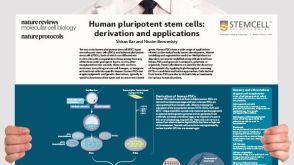 挂图Derivation and Applications of Human Pluripotent Stem Cells Overview of the derivation of human embryonic stem cells (hESCs) and induced pluripotent stem cells (iPSCs)发布日期: 11/26/2020

 沪公网安备31010102008431号