Kreitzer FR et al. (JUN 2013)
American journal of stem cells 2 2 119--31
A robust method to derive functional neural crest cells from human pluripotent stem cells.
Neural crest (NC) cells contribute to the development of many complex tissues of all three germ layers during embryogenesis,and its abnormal development accounts for several congenital birth defects. Generating NC cells-including specific subpopulations such as cranial,cardiac,and trunk NC cells-from human pluripotent stem cells will provide a valuable model system to study human development and disease. Here,we describe a rapid and robust NC differentiation method called LSB-short" that is based on dual SMAD pathway inhibition. This protocol yields high percentages of NC cell populations from multiple human induced pluripotent stem and human embryonic stem cell lines in 8 days. The resulting cells can be propagated easily�
View Publication
产品类型:
产品号#:
05850
05857
05870
05875
72142
72144
85850
85857
85870
85875
产品名:
mTeSR™1
mTeSR™1
Jung L et al. (JUN 2014)
Molecular Human Reproduction 20 6 538--549
ONSL and OSKM cocktails act synergistically in reprogramming human somatic cells into induced pluripotent stem cells
The advent of human induced pluripotent stem cells (hiPSC) is revolutionizing many research fields including cell-replacement therapy,drug screening,physiopathology of specific diseases and more basic research such as embryonic development or diseases modeling. Despite the large number of reports on reprogramming methods,techniques in use remain globally inefficient. We present here a new optimized approach to improve this efficiency. After having tested different monocistronic vectors with poor results,we adopted a polycistronic cassette encoding Thomson's cocktail OCT4,NANOG,SOX2 and LIN28 (ONSL) separated by 2A peptides. This cassette was tested in various vector backbones,based on lentivirus or retrovirus under a LTR or EF1 alpha promoter. This allowed us to show that ONSL-carrier retrovectors reprogrammed adult fibroblast cells with a much higher efficiency (up to 0.6%) than any other tested. We then compared the reprogramming efficiencies of two different polycistronic genes,ONSL and OCT4,SOX2,KLF4 and cMYC (OSKM) placed in the same retrovector backbone. Interestingly,in this context ONSL gene reprograms more efficiently than OSKM but OSKM reprograms faster suggesting that the two cocktails may reprogram through distinct pathways. By equally mixing RV-LTR-ONSL and RV-LTR-OSKM,we indeed observed a remarkable synergy,yielding a reprogramming efficiency of textgreater2%. We present here a drastic improvement of the reprogramming efficiency,which opens doors to the development of automated and high throughput strategies of hiPSC production. Furthermore,non-integrative reprogramming protocols (i.e. mRNA) may take advantage of this synergy to boost their efficiency.
View Publication
产品类型:
产品号#:
05850
05857
05870
05875
07923
05893
85850
85857
85870
85875
产品名:
Dispase (1 U/mL)
AggreWell™ EB形成培养基
mTeSR™1
mTeSR™1
Selekman JA et al. (DEC 2013)
Tissue engineering. Part C,Methods 19 12 949--60
Efficient generation of functional epithelial and epidermal cells from human pluripotent stem cells under defined conditions.
Human pluripotent stem cells (hPSCs) have an unparalleled potential to generate limitless quantities of any somatic cell type. However,current methods for producing populations of various somatic cell types from hPSCs are generally not standardized and typically incorporate undefined cell culture components often resulting in variable differentiation efficiencies and poor reproducibility. To address this,we have developed a defined approach for generating epithelial progenitor and epidermal cells from hPSCs. In doing so,we have identified an optimal starting cell density to maximize yield and maintain high purity of K18+/p63+ simple epithelial progenitors. In addition,we have shown that the use of synthetic,defined substrates in lieu of Matrigel and gelatin can successfully facilitate efficient epithelial differentiation,maintaining a high (backslashtextgreater75%) purity of K14+/p63+ keratinocyte progenitor cells and at a two to threefold higher yield than a previously reported undefined differentiation method. These K14+/p63+ cells also exhibited a higher expansion potential compared to cells generated using an undefined differentiation protocol and were able to terminally differentiate and recapitulate an epidermal tissue architecture in vitro. In summary,we have demonstrated the production of populations of functional epithelial and epidermal cells from multiple hPSC lines using a new,completely defined differentiation strategy.
View Publication
产品类型:
产品号#:
05850
05857
05870
05875
85850
85857
85870
85875
产品名:
mTeSR™1
mTeSR™1
Ramos P et al. (JAN 2011)
Blood 117 4 1379--89
Enhanced erythropoiesis in Hfe-KO mice indicates a role for Hfe in the modulation of erythroid iron homeostasis.
In hereditary hemochromatosis,mutations in HFE lead to iron overload through abnormally low levels of hepcidin. In addition,HFE potentially modulates cellular iron uptake by interacting with transferrin receptor,a crucial protein during erythropoiesis. However,the role of HFE in this process was never explored. We hypothesize that HFE modulates erythropoiesis by affecting dietary iron absorption and erythroid iron intake. To investigate this,we used Hfe-KO mice in conditions of altered dietary iron and erythropoiesis. We show that Hfe-KO mice can overcome phlebotomy-induced anemia more rapidly than wild-type mice (even when iron loaded). Second,we evaluated mice combining the hemochromatosis and β-thalassemia phenotypes. Our results suggest that lack of Hfe is advantageous in conditions of increased erythropoietic activity because of augmented iron mobilization driven by deficient hepcidin response. Lastly,we demonstrate that Hfe is expressed in erythroid cells and impairs iron uptake,whereas its absence exclusively from the hematopoietic compartment is sufficient to accelerate recovery from phlebotomy. In summary,we demonstrate that Hfe influences erythropoiesis by 2 distinct mechanisms: limiting hepcidin expression under conditions of simultaneous iron overload and stress erythropoiesis,and impairing transferrin-bound iron uptake by erythroid cells. Moreover,our results provide novel suggestions to improve the treatment of hemochromatosis.
View Publication
Adherent cells generated during long-term culture of human umbilical cord blood CD34+ cells have characteristics of endothelial cells and beneficial effect on cord blood ex vivo expansion.
Hematopoiesis depends on the association of hematopoietic stem cells with stromal cells that constitute the hematopoietic microenvironment. The in vitro development of the endothelial cell from umbilical cord blood (UCB) is not well established and has met very limited success. In this study,UCB CD34(+) cells were cultured for 5 weeks in a stroma-free liquid culture system using thrombopoietin,flt3 ligand,and granulocyte-colony stimulating factor. By week 4-5,we found that firmly adherent fibroblast-like cells were established. These cells showed characteristics of endothelial cells expressing von Willebrand factor,human vascular cell adhesion molecule-1,human intracellular adhesion molecule-1,human CD31,E-selectin,and human macrophage. Furthermore,when comparing an ex vivo system without an established endothelial monolayer to an ex vivo system with an established endothelial monolayer,better expansion of total nucleated cells,CD34(+) cells,and colony-forming units (CFUs)-granulocyte-macrophage and CFUs-granulocyte-erythroid-megakaryocyte-macrophage were found during culture. This phenomenon was in part due to the fact that a significant reduction of apoptotic fractions was found in the CD34(+) cells,which were cultured on the adherent monolayer for up to 5 weeks. To gather quantitative data on the number of endothelial cells derived from a given number of CD34 cells,we performed limiting dilution assay by using Poisson distribution: the number of tested cells (linear scale) producing a 37% negative culture (logarithmic scale) is the number of cells containing one endothelial cell. By this method,one endothelial cell may be found from 314 CD34(+) cells after 5 weeks of culture. These results suggest that the UCB CD34(+) cell fraction contains endothelial cell precursors,establishing the hematopoietic microenvironment and providing the beneficial effects through downregulating apoptosis on UCB expansion protocols. These observations may provide insight for future cellular therapy or graft engineering.
View Publication
产品类型:
产品号#:
04434
04444
产品名:
MethoCult™ H4434 Classic
MethoCult™ H4434 Classic
Yap MS et al. (DEC 2016)
Virology journal 13 1 5
Pluripotent Human embryonic stem cell derived neural lineages for in vitro modelling of enterovirus 71 infection and therapy.
BACKGROUND The incidence of neurological complications and fatalities associated with Hand,Foot & Mouth disease has increased over recent years,due to emergence of newly-evolved strains of Enterovirus 71 (EV71). In the search for new antiviral therapeutics against EV71,accurate and sensitive in vitro cellular models for preliminary studies of EV71 pathogenesis is an essential prerequisite,before progressing to expensive and time-consuming live animal studies and clinical trials. METHODS This study thus investigated whether neural lineages derived from pluripotent human embryonic stem cells (hESC) can fulfil this purpose. EV71 infection of hESC-derived neural stem cells (NSC) and mature neurons (MN) was carried out in vitro,in comparison with RD and SH-SY5Y cell lines. RESULTS Upon assessment of post-infection survivability and EV71 production by the various types,it was observed that NSC were significantly more susceptible to EV71 infection compared to MN,RD (rhabdomyosarcoma) and SH-SY5Y cells,which was consistent with previous studies on mice. The SP81 peptide had significantly greater inhibitory effect on EV71 production by NSC and MN compared to the cancer-derived RD and SH-SY5Y cell lines. CONCLUSIONS Hence,this study demonstrates that hESC-derived neural lineages can be utilized as in vitro models for studying EV71 pathogenesis and for screening of antiviral therapeutics.
View Publication
产品类型:
产品号#:
05850
05857
05870
05875
85850
85857
85870
85875
产品名:
mTeSR™1
mTeSR™1
Gualandi C et al. (JUN 2016)
Macromolecular Bioscience
Poly-l-Lactic Acid Nanofiber-Polyamidoamine Hydrogel Composites: Preparation, Properties, and Preliminary Evaluation as Scaffolds for Human Pluripotent Stem Cell Culturing
Electrospun poly-l-lactic acid (PLLA) nanofiber mats carrying surface amine groups,previously introduced by nitrogen atmospheric pressure nonequilibrium plasma,are embedded into aqueous solutions of oligomeric acrylamide-end capped AGMA1,a biocompatible polyamidoamine with arg-gly-asp (RGD)-reminiscent repeating units. The resultant mixture is finally cured giving PLLA-AGMA1 hydrogel composites that absorb large amounts of water and,in the swollen state,are translucent,soft,and pliable,yet as strong as the parent PLLA mat. They do not split apart from each other when swollen in water and remain highly flexible and resistant,since the hydrogel portion is covalently grafted onto the PLLA nanofibers via the addition reaction of the surface amine groups to a part of the terminal acrylic double bonds of AGMA1 oligomers. Preliminary tested as scaffolds,the composites prove capable of maintaining short-term undifferentiated cultures of human pluripotent stem cells in feeder-free conditions.
View Publication
产品类型:
产品号#:
05850
05857
05870
05875
85850
85857
85870
85875
产品名:
mTeSR™1
mTeSR™1
Liu C et al. (DEC 2010)
Blood 116 25 5518--27
Progenitor cell dose determines the pace and completeness of engraftment in a xenograft model for cord blood transplantation.
Two critical concerns in clinical cord blood transplantation are the initial time to engraftment and the subsequent restoration of immune function. These studies measured the impact of progenitor cell dose on both the pace and strength of hematopoietic reconstitution by transplanting nonobese diabetic/severe combined immunodeficiency/interleukin-2 receptor-gamma-null (NSγ) mice with lineage-depleted aldehyde dehydrogenase-bright CD34(+) human cord blood progenitors. The progress of each transplant was monitored over an extended time course by repeatedly analyzing the peripheral blood for human hematopoietic cells. In vivo human hematopoietic development was complete. After long-term transplantation assays (≥ 19 weeks),human T-cell development was documented within multiple tissues in 16 of 32 NSγ mice. Human T-cell differentiation was active within NSγ thymuses,as documented by the presence of CD4(+) CD8(+) T-cell progenitors as well as T-cell receptor excision circles. It is important to note that although myeloid and B-cell engraftment was detected as early as 4 weeks after transplantation,human T-cell development was exclusively late onset. High progenitor cell doses were associated with a robust human hematopoietic chimerism that accelerated both initial time to engraftment and subsequent T-cell development. At lower progenitor cell doses,the chimerism was weak and the human hematopoietic lineage development was frequently incomplete.
View Publication
A two-dimensionally coincident second difference cosmic ray spike removal method for the fully automated processing of Raman spectra.
Charge-coupled device detectors are vulnerable to cosmic rays that can contaminate Raman spectra with positive going spikes. Because spikes can adversely affect spectral processing and data analyses,they must be removed. Although both hardware-based and software-based spike removal methods exist,they typically require parameter and threshold specification dependent on well-considered user input. Here,we present a fully automated spike removal algorithm that proceeds without requiring user input. It is minimally dependent on sample attributes,and those that are required (e.g.,standard deviation of spectral noise) can be determined with other fully automated procedures. At the core of the method is the identification and location of spikes with coincident second derivatives along both the spectral and spatiotemporal dimensions of two-dimensional datasets. The method can be applied to spectra that are relatively inhomogeneous because it provides fairly effective and selective targeting of spikes resulting in minimal distortion of spectra. Relatively effective spike removal obtained with full automation could provide substantial benefits to users where large numbers of spectra must be processed.
View Publication
Yang L et al. ( 2014)
Current Protocols in Molecular Biology 107 31.1.1----17
CRISPR/Cas9-Directed Genome Editing of Cultured Cells.
Human genome engineering has been transformed by the introduction of the CRISPR (clustered regularly interspaced short palindromic repeats)/Cas (CRISPR-associated) system found in most bacteria and archaea. Type II CRISPR/Cas systems have been engineered to induce RNA-guided genome editing in human cells,where small RNAs function together with Cas9 nucleases for sequence-specific cleavage of target sequences. Here we describe the protocol for Cas9-mediated human genome engineering,including construct building and transfection methods necessary for delivering Cas9 and guide RNA (gRNA) into human-induced pluripotent stem cells (hiPSCs) and HEK293 cells. Following genome editing,we also describe methods to assess genome editing efficiency using next-generation sequencing and isolate monoclonal hiPSCs with the desired modifications for downstream applications.
View Publication


 EasySep™小鼠TIL(CD45)正选试剂盒





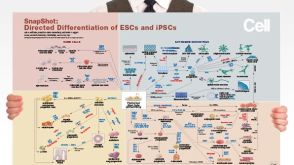 挂图Directed Differentiation of Pluripotent Stem Cells Strategies for differentiating ES and iPS cells into ectoderm, endoderm or mesoderm

 沪公网安备31010102008431号