Huang K et al. (JAN 2014)
Science China Life Sciences 57 2 162--70
Neural progenitor cells from human induced pluripotent stem cells generated less autogenous immune response
The breakthrough development of induced pluripotent stem cells (iPSCs) raises the prospect of patient-specific treatment for many diseases through the replacement of affected cells. However,whether iPSC-derived functional cell lineages generate a deleterious immune response upon auto-transplantation remains unclear. In this study,we differentiated five human iPSC lines from skin fibroblasts and urine cells into neural progenitor cells (NPCs) and analyzed their immunogenicity. Through co-culture with autogenous peripheral blood mononuclear cells (PBMCs),we showed that both somatic cells and iPSC-derived NPCs do not stimulate significant autogenous PBMC proliferation. However,a significant immune reaction was detected when these cells were co-cultured with allogenous PBMCs. Furthermore,no significant expression of perforin or granzyme B was detected following stimulation of autogenous immune effector cells (CD3+CD8− T cells,CD3+CD8+ T cells or CD3−CD56+ NK cells) by NPCs in both PBMC and T cell co-culture systems. These results suggest that human iPSC-derived NPCs may not initiate an immune response in autogenous transplants,and thus set a base for further preclinical evaluation of human iPSCs.
View Publication
产品类型:
产品号#:
05850
05857
05870
05875
85850
85857
85870
85875
产品名:
mTeSR™1
mTeSR™1
Du W et al. (APR 2011)
Blood 117 16 4243--52
Overexpression of IL-3Rα on CD34+CD38- stem cells defines leukemia-initiating cells in Fanconi anemia AML.
Patients with Fanconi anemia (FA) have a high risk of developing acute myeloid leukemia (AML). In this study,we attempted to identify cell-surface markers for leukemia-initiating cells in FA-AML patients. We found that the IL-3 receptor-α (IL-3Rα) is a promising candidate as an leukemia-initiating cell-specific antigen for FA-AML. Whereas IL-3Rα expression is undetectable on normal CD34(+)CD38(-) HSCs,it is overexpressed on CD34(+)CD38(-) cells from FA patients with AML. We examined the leukemia-initiating cell activity of IL-3Rα-positive FA-AML cells in a humanized" FA xenotransplant model in which we separated AML cells into IL-3Rα-positive and IL-3Rα-negative CD34 fractions and transplanted them into irradiated recipient mice. In all 3 FA-AML samples�
View Publication
DNA repair in human pluripotent stem cells is distinct from that in non-pluripotent human cells.
The potential for human disease treatment using human pluripotent stem cells,including embryonic stem cells and induced pluripotent stem cells (iPSCs),also carries the risk of added genomic instability. Genomic instability is most often linked to DNA repair deficiencies,which indicates that screening/characterization of possible repair deficiencies in pluripotent human stem cells should be a necessary step prior to their clinical and research use. In this study,a comparison of DNA repair pathways in pluripotent cells,as compared to those in non-pluripotent cells,demonstrated that DNA repair capacities of pluripotent cell lines were more heterogeneous than those of differentiated lines examined and were generally greater. Although pluripotent cells had high DNA repair capacities for nucleotide excision repair,we show that ultraviolet radiation at low fluxes induced an apoptotic response in these cells,while differentiated cells lacked response to this stimulus,and note that pluripotent cells had a similar apoptotic response to alkylating agent damage. This sensitivity of pluripotent cells to damage is notable since viable pluripotent cells exhibit less ultraviolet light-induced DNA damage than do differentiated cells that receive the same flux. In addition,the importance of screening pluripotent cells for DNA repair defects was highlighted by an iPSC line that demonstrated a normal spectral karyotype,but showed both microsatellite instability and reduced DNA repair capacities in three out of four DNA repair pathways examined. Together,these results demonstrate a need to evaluate DNA repair capacities in pluripotent cell lines,in order to characterize their genomic stability,prior to their pre-clinical and clinical use.
View Publication
产品类型:
产品号#:
05850
05857
05870
05875
85850
85857
85870
85875
产品名:
mTeSR™1
mTeSR™1
Orlova VV et al. ( 2014)
1213 1213 107--119
Assessment of functional competence of endothelial cells from human pluripotent stem cells in zebrafish embryos.
Human pluripotent stem cells (hPSCs) are proving to be a valuable source of endothelial cells (ECs),pericytes,and vascular smooth muscle cells (vSMCs). Although an increasing number of phenotypic markers are becoming available to determine the phenotypes of these cells in vitro,the ability to integrate and form functional vessels in the host organism,typically mouse,remains critical for the assessment of EC functional competence. However,current mouse models require relatively large numbers of cells that might be difficult to derive simultaneously from multiple hPSCs lines. Therefore,there is an urgent need for new functional assays that are robust and can be performed with small numbers of cells. Here we describe a novel zebrafish xenograft model to test functionality of hPSC-derived ECs. The assay can be performed in 10 days and requires only ˜100-400 human cells per embryo. Thus,the zebrafish xenograft model can be useful for the accurate and rapid assessment of functionality of hPSC-derived ECs in a lower vertebrate model that is widely viewed by regulatory authorities as a more acceptable alternative to adult mice.
View Publication
产品类型:
产品号#:
05850
05857
05870
05875
85850
85857
85870
85875
产品名:
mTeSR™1
mTeSR™1
Wang X et al. (FEB 2016)
Stem cells (Dayton,Ohio) 34 2 380--391
Immune modulatory mesenchymal stem cells derived from human embryonic stem cells through a trophoblast-like stage.
Mesenchymal stem/stromal cells (MSCs) have great clinical potential in modulating inflammation and promoting tissue repair. Human embryonic stem cells (hESCs) have recently emerged as a potentially superior cell source for MSCs. However,the generation methods reported so far vary greatly in quality and efficiency. Here,we describe a novel method to rapidly and efficiently produce MSCs from hESCs via a trophoblast-like intermediate stage in approximately 11-16 days. We term these cells T-MSCs" and show that T-MSCs express a phenotype and differentiation potential minimally required to define MSCs. T-MSCs exhibit potent immunomodulatory activity in vitro as they can remarkably inhibit proliferation of cocultured T and B lymphocytes. Unlike bone marrow MSCs�
View Publication
产品类型:
产品号#:
05850
05857
05870
05875
85850
85857
85870
85875
产品名:
mTeSR™1
mTeSR™1
Chen YS et al. (FEB 2012)
Stem cells translational medicine 1 2 83--95
Small molecule mesengenic induction of human induced pluripotent stem cells to generate mesenchymal stem/stromal cells.
The translational potential of mesenchymal stem/stromal cells (MSCs) is limited by their rarity in somatic organs,heterogeneity,and need for harvest by invasive procedures. Induced pluripotent stem cells (iPSCs) could be an advantageous source of MSCs,but attempts to derive MSCs from pluripotent cells have required cumbersome or untranslatable techniques,such as coculture,physical manipulation,sorting,or viral transduction. We devised a single-step method to direct mesengenic differentiation of human embryonic stem cells (ESCs) and iPSCs using a small molecule inhibitor. First,epithelial-like monolayer cells were generated by culturing ESCs/iPSCs in serum-free medium containing the transforming growth factor-β pathway inhibitor SB431542. After 10 days,iPSCs showed upregulation of mesodermal genes (MSX2,NCAM,HOXA2) and downregulation of pluripotency genes (OCT4,LEFTY1/2). Differentiation was then completed by transferring cells into conventional MSC medium. The resultant development of MSC-like morphology was associated with increased expression of genes,reflecting epithelial-to-mesenchymal transition. Both ESC- and iPSC-derived MSCs exhibited a typical MSC immunophenotype,expressed high levels of vimentin and N-cadherin,and lacked expression of pluripotency markers at the protein level. Robust osteogenic and chondrogenic differentiation was induced in vitro in ES-MSCs and iPS-MSCs,whereas adipogenic differentiation was limited,as reported for primitive fetal MSCs and ES-MSCs derived by other methods. We conclude that treatment with SB431542 in two-dimensional cultures followed by culture-induced epithelial-to-mesenchymal transition leads to rapid and uniform MSC conversion of human pluripotent cells without the need for embryoid body formation or feeder cell coculture,providing a robust,clinically applicable,and efficient system for generating MSCs from human iPSCs.
View Publication
Generation of human muscle fibers and satellite-like cells from human pluripotent stem cells in vitro.
Progress toward finding a cure for muscle diseases has been slow because of the absence of relevant cellular models and the lack of a reliable source of muscle progenitors for biomedical investigation. Here we report an optimized serum-free differentiation protocol to efficiently produce striated,millimeter-long muscle fibers together with satellite-like cells from human pluripotent stem cells (hPSCs) in vitro. By mimicking key signaling events leading to muscle formation in the embryo,in particular the dual modulation of Wnt and bone morphogenetic protein (BMP) pathway signaling,this directed differentiation protocol avoids the requirement for genetic modifications or cell sorting. Robust myogenesis can be achieved in vitro within 1 month by personnel experienced in hPSC culture. The differentiating culture can be subcultured to produce large amounts of myogenic progenitors amenable to numerous downstream applications. Beyond the study of myogenesis,this differentiation method offers an attractive platform for the development of relevant in vitro models of muscle dystrophies and drug screening strategies,as well as providing a source of cells for tissue engineering and cell therapy approaches.
View Publication
产品类型:
产品号#:
05850
05857
05870
05875
85850
85857
85870
85875
产品名:
mTeSR™1
mTeSR™1
iPSC Consortium H (MAY 2017)
Nature neuroscience 20 5 648--660
Developmental alterations in Huntington's disease neural cells and pharmacological rescue in cells and mice.
Neural cultures derived from Huntington's disease (HD) patient-derived induced pluripotent stem cells were used for 'omics' analyses to identify mechanisms underlying neurodegeneration. RNA-seq analysis identified genes in glutamate and GABA signaling,axonal guidance and calcium influx whose expression was decreased in HD cultures. One-third of gene changes were in pathways regulating neuronal development and maturation. When mapped to stages of mouse striatal development,the profiles aligned with earlier embryonic stages of neuronal differentiation. We observed a strong correlation between HD-related histone marks,gene expression and unique peak profiles associated with dysregulated genes,suggesting a coordinated epigenetic program. Treatment with isoxazole-9,which targets key dysregulated pathways,led to amelioration of expanded polyglutamine repeat-associated phenotypes in neural cells and of cognitive impairment and synaptic pathology in HD model R6/2 mice. These data suggest that mutant huntingtin impairs neurodevelopmental pathways that could disrupt synaptic homeostasis and increase vulnerability to the pathologic consequence of expanded polyglutamine repeats over time.
View Publication
产品类型:
产品号#:
05850
05857
05870
05875
85850
85857
85870
85875
产品名:
mTeSR™1
mTeSR™1
Bao X et al. ( 2016)
Nature biomedical engineering 1
Long-term self-renewing human epicardial cells generated from pluripotent stem cells under defined xeno-free conditions.
The epicardium contributes both multi-lineage descendants and paracrine factors to the heart during cardiogenesis and cardiac repair,underscoring its potential for cardiac regenerative medicine. Yet little is known about the cellular and molecular mechanisms that regulate human epicardial development and regeneration. Here,we show that the temporal modulation of canonical Wnt signaling is sufficient for epicardial induction from 6 different human pluripotent stem cell (hPSC) lines,including a WT1-2A-eGFP knock-in reporter line,under chemically-defined,xeno-free conditions. We also show that treatment with transforming growth factor beta (TGF-β)-signalling inhibitors permitted long-term expansion of the hPSC-derived epicardial cells,resulting in a more than 25 population doublings of WT1+ cells in homogenous monolayers. The hPSC-derived epicardial cells were similar to primary epicardial cells both in vitro and in vivo,as determined by morphological and functional assays,including RNA-seq. Our findings have implications for the understanding of self-renewal mechanisms of the epicardium and for epicardial regeneration using cellular or small-molecule therapies.
View Publication
产品类型:
产品号#:
05850
05857
05870
05875
05940
85850
85857
85870
85875
产品名:
mTeSR™1
mTeSR™1
Lou Y-R et al. (SEP 2015)
Scientific reports 5 13635
Silica bioreplication preserves three-dimensional spheroid structures of human pluripotent stem cells and HepG2 cells.
Three-dimensional (3D) cell cultures produce more in vivo-like multicellular structures such as spheroids that cannot be obtained in two-dimensional (2D) cell cultures. Thus,they are increasingly employed as models for cancer and drug research,as well as tissue engineering. It has proven challenging to stabilize spheroid architectures for detailed morphological examination. Here we overcome this issue using a silica bioreplication (SBR) process employed on spheroids formed from human pluripotent stem cells (hPSCs) and hepatocellular carcinoma HepG2 cells cultured in the nanofibrillar cellulose (NFC) hydrogel. The cells in the spheroids are more round and tightly interacting with each other than those in 2D cultures,and they develop microvilli-like structures on the cell membranes as seen in 2D cultures. Furthermore,SBR preserves extracellular matrix-like materials and cellular proteins. These findings provide the first evidence of intact hPSC spheroid architectures and similar fine structures to 2D-cultured cells,providing a pathway to enable our understanding of morphogenesis in 3D cultures.
View Publication


 EasySep™小鼠TIL(CD45)正选试剂盒





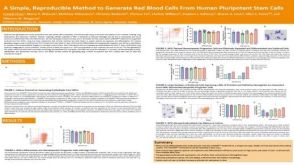 科学海报A Simple, Reproducible Method to Generate Red Blood Cells From Human Pluripotent Stem Cells
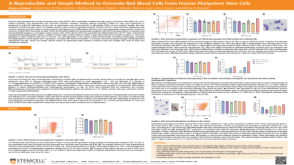 科学海报A Reproducible and Simple Method to Generate Red Blood Cells From Human Pluripotent Stem Cells
 沪公网安备31010102008431号