Cell-based therapies have generated great interest in the scientific and medical communities,and stem cells in particular are very appealing for regenerative medicine,drug screening and other biomedical applications. These unspecialized cells have unlimited self-renewal capacity and the remarkable ability to produce mature cells with specialized functions,such as blood cells,nerve cells or cardiac muscle. However,the actual number of cells that can be obtained from available donors is very low. One possible solution for the generation of relevant numbers of cells for several applications is to scale-up the culture of these cells in vitro. This review describes recent developments in the cultivation of stem cells in bioreactors,particularly considerations regarding critical culture parameters,possible bioreactor configurations,and integration of novel technologies in the bioprocess development stage. We expect that this review will provide updated and detailed information focusing on the systematic production of stem cell products in compliance with regulatory guidelines,while using robust and cost-effective approaches.
View Publication
产品类型:
产品号#:
05850
05857
05870
05875
85850
85857
85870
85875
产品名:
mTeSR™1
mTeSR™1
Alisson-Silva F et al. (MAY 2014)
Glycobiology 24 5 458--468
Evidences for the involvement of cell surface glycans in stem cell pluripotency and differentiation
Induced pluripotent stem (iPS) cells are somatic cells that have been reprogrammed to a pluripotent state via the introduction of defined transcription factors. Although iPS is a potentially valuable resource for regenerative medicine and drug development,several issues regarding their pluripotency,differentiation propensity and potential for tumorigenesis remain to be elucidated. Analysis of cell surface glycans has arisen as an interesting tool for the characterization of iPS. An appropriate characterization of glycan surface molecules of human embryonic stem (hES) cells and iPS cells might generate crucial data to highlight their role in the acquisition and maintenance of pluripotency. In this study,we characterized the surface glycans of iPS generated from menstrual blood-derived mesenchymal cells (iPS-MBMC). We demonstrated that,upon spontaneous differentiation,iPS-MBMC present high amounts of terminal $\$-galactopyranoside residues,pointing to an important role of terminal-linked sialic acids in pluripotency maintenance. The removal of sialic acids by neuraminidase induces iPS-MBMC and hES cells differentiation,prompting an ectoderm commitment. Exposed $\$-galactopyranose residues might be recognized by carbohydrate-binding molecules found on the cell surface,which could modulate intercellular or intracellular interactions. Together,our results point for the first time to the involvement of the presence of terminal sialic acid in the maintenance of embryonic stem cell pluripotency and,therefore,the modulation of sialic acid biosynthesis emerges as a mechanism that may govern stem cell differentiation.
View Publication
产品类型:
产品号#:
05850
05857
05870
05875
07923
60093
60093.1
60093AD
60093AD.1
60093PE
60093PE.1
85850
85857
85870
85875
产品名:
Dispase (1 U/mL)
抗人OCT4(OCT3)抗体,克隆3A2A20
抗人OCT4(OCT3)抗体,clone 3A2A20
抗人OCT4(OCT3)抗体,克隆3A2A20,Alexa Fluor® 488
抗人OCT4(OCT3)抗体,克隆3A2A20,Alexa Fluor® 488
抗人OCT4(OCT3)抗体,克隆3A2A20,PE
抗人OCT4(OCT3)抗体,克隆3A2A20,PE
mTeSR™1
mTeSR™1
Yi L et al. (NOV 2012)
Cancer Research 72 21 5635--5645
Multiple roles of p53-related pathways in somatic cell reprogramming and stem cell differentiation
The inactivation of p53 functions enhances the efficiency and decreases the latency of producing induced pluripotent stem cells (iPSC) in culture. The formation of iPSCs in culture starts with a rapid set of cell divisions followed by an epigenetic reprogramming of the DNA and chromatin. The mechanisms by which the p53 protein inhibits the formation of iPSCs are largely unknown. Using a temperature sensitive mutant of the p53 (Trp53) gene,we examined the impact of the temporal expression of wild type p53 in preventing stem cell induction from somatic cells. We also explored how different p53 mutant alleles affect the reprogramming process. We found that little or no p53 activity favors the entire process of somatic cell reprogramming. Reactivation of p53 at any time point during the reprogramming process not only interrupted the formation of iPSCs,but also induced newly formed stem cells to differentiate. Among p53-regulated genes,p21 (Cdkn1a),but not Puma (Bbc3) played a partial role in iPSCs formation probably by slowing cell division. Activation of p53 functions in iPSCs induced senescence and differentiation in stem cell populations. High rate of birth defects and increases in DNA methylation at the IGF2-H19 loci in female offspring of p53 knockout mice suggested that the absence of p53 may give rise to epigenetic instability in a stochastic fashion. Consistently,selected p53 missense mutations showed differential effects on the stem cell reprogramming efficiency in a c-Myc dependent manner. The absence of p53 activity and functions also contributed to an enhanced efficiency of iPSC production from cancer cells. The production of iPSCs in culture from normal and cancer cells,although different from each other in several ways,both responded to the inhibition of reprogramming by the p53 protein.
View Publication
Thirumala S et al. (JUL 2009)
Organogenesis 5 3 143--54
Clinical grade adult stem cell banking.
There has been a great deal of scientific interest recently generated by the potential therapeutic applications of adult stem cells in human care but there are several challenges regarding quality and safety in clinical applications and a number of these challenges relate to the processing and banking of these cells ex-vivo. As the number of clinical trials and the variety of adult cells used in regenerative therapy increases,safety remains a primary concern. This has inspired many nations to formulate guidelines and standards for the quality of stem cell collection,processing,testing,banking,packaging and distribution. Clinically applicable cryopreservation and banking of adult stem cells offers unique opportunities to advance the potential uses and widespread implementation of these cells in clinical applications. Most current cryopreservation protocols include animal serum proteins and potentially toxic cryoprotectant additives (CPAs) that prevent direct use of these cells in human therapeutic applications. Long term cryopreservation of adult stem cells under good manufacturing conditions using animal product free solutions is critical to the widespread clinical implementation of ex-vivo adult stem cell therapies. Furthermore,to avoid any potential cryoprotectant related complications,reduced CPA concentrations and efficient post-thaw washing to remove CPA are also desirable. The present review focuses on the current strategies and important aspects of adult stem cell banking for clinical applications. These include current good manufacturing practices (cGMPs),animal protein free freezing solutions,cryoprotectants,freezing & thawing protocols,viability assays,packaging and distribution. The importance and benefits of banking clinical grade adult stem cells are also discussed.
View Publication
产品类型:
产品号#:
07930
07931
07940
07955
07956
07959
07954
100-1061
07952
产品名:
CryoStor® CS10
CryoStor® CS10
CryoStor® CS10
CryoStor® CS10
CryoStor® CS10
CryoStor® CS10
CryoStor® CS10
Avery S et al. (MAY 2010)
Stem Cells 28 5 863--73
The role of SMAD4 in human embryonic stem cell self-renewal and stem cell fate.
Transforming growth factor (TGF)-beta superfamily proteins play a key role in the regulation of human embryonic stem cells (hESCs). Those of the TGFbeta/activin/nodal branch seem to support self-renewal and pluripotency,whereas those of the bone morphogenic protein (BMP) branch induce differentiation. In contrast to this generalization,we found that hESC remained undifferentiated after knockdown of SMAD4 with inducible short hairpin RNA interference,although the knockdown inhibited TGFbeta signaling and rendered the cells nonresponsive to BMP-induced differentiation. Moreover,the rapid differentiation of hESC after pharmacological inhibition of TGFbeta/activin/nodal receptor signaling was restricted after SMAD4 knockdown. These results suggest that TGFbeta/activin/nodal signaling supports the undifferentiated phenotype of hESC by suppressing BMP activity. During long-term culture,SMAD4 knockdown cell populations became less stable and more permissive to neural induction,a situation that was rescued by re-establishment of SMAD4 expression. These results suggest that SMAD4 is not required for maintenance of the undifferentiated state of hESC,but rather to stabilize that state.
View Publication
产品类型:
产品号#:
05850
05857
05870
05875
85850
85857
85870
85875
产品名:
mTeSR™1
mTeSR™1
Patel R and Alahmad AJ ( 2016)
Fluids and barriers of the CNS 13 6
BACKGROUND Patient-derived induced pluripotent stem cells (iPSCs) are an innovative source as an in vitro model for neurological diseases. Recent studies have demonstrated the differentiation of brain microvascular endothelial cells (BMECs) from various stem cell sources,including iPSC lines. However,the impact of the culturing conditions used to maintain such stem cell pluripotency on their ability to differentiate into BMECs remains undocumented. In this study,we investigated the effect of different sources of Matrigel and stem cell maintenance medium on BMEC differentiation efficiency. METHODS The IMR90-c4 iPSC line was maintained on mTeSR1 or in essential-8 (E-8) medium on growth factor-reduced (GFR) Matrigel from three different manufacturers. Cells were differentiated into BMECs following published protocols. The phenotype of BMEC monolayers was assessed by immunocytochemistry. Barrier function was assessed by transendothelial electrical resistance (TEER) and permeability to sodium fluorescein,whereas the presence of drug efflux pumps was assessed by uptake assay using fluorescent substrates. RESULTS Stem cell maintenance medium had little effect on the yield and barrier phenotype of IMR90-derived BMECs. The source of GFR-Matrigel used for the differentiation process significantly impacted the ability of IMR90-derived BMECs to form tight monolayers,as measured by TEER and fluorescein permeability. However,the Matrigel source had minimal effect on BMEC phenotype and drug efflux pump activity. CONCLUSION This study supports the ability to differentiate BMECs from iPSCs grown in mTeSR1 or E-8 medium and also suggests that the origin of GFR-Matrigel has a marked inpact on BMEC barrier properties.
View Publication
产品类型:
产品号#:
05850
05857
05870
05875
85850
85857
85870
85875
产品名:
mTeSR™1
mTeSR™1
Talavera-Adame D et al. (NOV 2016)
Diabetologia 59 11 2378--2386
Effective endothelial cell and human pluripotent stem cell interactions generate functional insulin-producing beta cells.
AIMS/HYPOTHESIS Endothelial cells (ECs) play an essential role in pancreatic organogenesis. We hypothesise that effective in vitro interactions between human microvascular endothelial cells (HMECs) and human pluripotent stem cells (hPSCs) results in the generation of functional pancreatic beta cells. METHODS Embryoid bodies (EBs) derived from hPSCs were cultured alone (controls) or with ECs in collagen gels. Subsequently,cells were analysed for pancreatic beta cell markers,and then isolated and expanded. Insulin secretion in response to glucose was evaluated in vitro by static and dynamic (perifusion) assays,and in vivo by EB transplantation into immunodeficient mice. RESULTS Co-cultured EBs had a higher expression of mature beta cells markers and enhanced insulin secretion in vitro,compared with controls. In mice,transplanted EBs had higher levels of human C-peptide secretion with a significant reduction in hyperglycaemia after the selective destruction of native pancreatic beta cells. In addition,there was significant in vitro upregulation of bone morphogenetic proteins 2 and 4 (BMP-2,4) in co-cultured cells,compared with controls. CONCLUSIONS/INTERPRETATION ECs provide essential signalling in vitro,such as activation of the BMP pathway,for derivation of functional insulin-producing beta cells from hPSCs.
View Publication
产品类型:
产品号#:
05850
05857
05870
05875
85850
85857
85870
85875
产品名:
mTeSR™1
mTeSR™1
Fiorenzano A et al. (SEP 2016)
Nature communications 7 12589
Cripto is essential to capture mouse epiblast stem cell and human embryonic stem cell pluripotency.
Known molecular determinants of developmental plasticity are mainly transcription factors,while the extrinsic regulation of this process has been largely unexplored. Here we identify Cripto as one of the earliest epiblast markers and a key extracellular determinant of the naive and primed pluripotent states. We demonstrate that Cripto sustains mouse embryonic stem cell (ESC) self-renewal by modulating Wnt/β-catenin,whereas it maintains mouse epiblast stem cell (EpiSC) and human ESC pluripotency through Nodal/Smad2. Moreover,we provide unprecedented evidence that Cripto controls the metabolic reprogramming in ESCs to EpiSC transition. Remarkably,Cripto deficiency attenuates ESC lineage restriction in vitro and in vivo,and permits ESC transdifferentiation into trophectoderm lineage,suggesting that Cripto has earlier functions than previously recognized. All together,our studies provide novel insights into the current model of mammalian pluripotency and contribute to the understanding of the extrinsic regulation of the first cell lineage decision in the embryo.
View Publication


 EasySep™小鼠TIL(CD45)正选试剂盒




 产品手册qPCR Arrays for Cell Characterization
 科学海报A Novel 96-well Plate Cell Culture Assay for Lineage-Specific Hematopoietic Cell Toxicity Screening
 人IL-17A ELISA试剂盒 用于人白细胞介素17A的检测和测定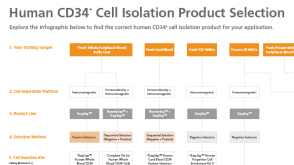

 沪公网安备31010102008431号