Ward E et al. (MAY 2017)
Stem cells and development
Feeder-Free Derivation of Naïve Human Pluripotent Stem Cells.
Human pluripotent stem cells (HPSCs) cultured in conditions that maintain pluripotency via FGF and TGFβ signaling have been described as being in a primed state. These cells have been shown to exhibit characteristics more closely related to mouse epiblast-derived stem cells than to so called naïve mouse PSCs said to possess a more ground state pluripotency that mimics the early mouse embryo inner cell mass. Initial attempts to create culture conditions favorable for generation of naïve HPSCs from primed HPSCs has required the use of mouse embryonic fibroblasts as a feeder layer to support this transition. A protocol for the routine derivation and maintenance of naïve HPSCs in completely defined conditions is highly desirable for stem cell researchers to enhance the study and clinical translation of naïve HPSCs. Here we describe a standard protocol for transitioning primed HPSCs to a naïve state using commercial RSet media and xeno-free recombinant vitronectin.
View Publication
产品类型:
产品号#:
05230
05970
产品名:
STEMdiff™ 三胚层分化试剂盒
Dobo I et al. (AUG 1995)
Journal of hematotherapy 4 4 281--7
Collagen matrix: an attractive alternative to agar and methylcellulose for the culture of hematopoietic progenitors in autologous transplantation products.
Autografts using untreated or in vitro manipulated bone marrow and peripheral blood stem cells represent promising approaches to the treatment of malignant diseases. In this work,the collagen gel culture technique was compared with agar and methylcellulose for its capacity to permit the growth of human granulomonocytic (day 14 CFU-GM; collagen vs agar or MTC) or erythroblastic (day 7 CFU-E and day 14 BFU-E; collagen versus methylcellulose) colonies in autologous transplantation products. Our results show that the collagen culture system always gave as many or more colonies than the other techniques. It also allowed harvesting of gels onto glass slides and subsequent May-Grünwald-Giemsa,cytochemical or immunocytochemical staining. We suggest that the collagen assay represents an interesting alternative to the widely used agar or methylcellulose systems for the culture of hematopoietic progenitors because of the equal or higher number of colonies detected,the easy phenotypical identification of colonies in stained gels,and the ability to store high-quality documentation. This technique is particularly attractive for use in the quality control of autologous bone marrow transplantation procedures.
View Publication
产品类型:
产品号#:
04961
04965
04962
04915
04807
04809
04906
04913
04803
04804
04905
04850
04974
04902
04960
04900
04901
04963
04970
04971
产品名:
MegaCult™-C胶原和含细胞因子培养基
MegaCult™-C CFU-Mk染色试剂盒
MegaCult-C 10% BSA, 6mL
MegaCult-C Human Serum, 6mL
Alkaline Phosphatase Substrate Tabs, pk
Biotin/Conjugate Goat Anti-Mu lgG, 125uL
MegaCult-C Evans Blue Stain, 5mL
Primary Ab, Anti-HuAnti-GPIIb/IIIa 360uL
MegaCult-C Control Antibody, 100 µL
Avidin-Alk Phosphatase Conjugate, 200 uL
MegaCult™-C含脂质培养基
MegaCult™-C胶原和含脂质培养基
胶原蛋白溶液
MegaCult™-C胶原和无细胞因子培养基
MegaCult™-C无细胞因子培养基
MegaCult™-C含细胞因子培养基
双室载玻片套件
MegaCult™-C无细胞因子全套试剂盒
MegaCult™-C含细胞因子全套试剂盒
Nakayama N et al. (APR 1998)
Blood 91 7 2283--95
Natural killer and B-lymphoid potential in CD34+ cells derived from embryonic stem cells differentiated in the presence of vascular endothelial growth factor.
Differentiation of totipotent mouse embryonic stem (ES) cells to various lymphohematopoietic cells is an in vitro model of the hematopoietic cell development during embryogenesis. To understand this process at cellular levels,differentiation intermediates were investigated. ES cells generated progeny expressing CD34,which was significantly enhanced by vascular endothelial growth factor (VEGF). The isolated CD34+ cells were enriched for myeloid colony-forming cells but not significantly for erythroid colony-forming cells. When cultured on OP9 stroma cells in the presence of interleukin-2 and interleukin-7,the CD34+ cells developed two types of B220+ CD34- lymphocytes: CD3- cytotoxic lymphocytes and CD19+ pre-B cells,and such lymphoid potential was highly enriched in the CD34+ population. Interestingly,the cytotoxic cells expressed the natural killer (NK) cell markers,such as NKR-P1,perforin,and granzymes,classified into two types,one of which showed target specificity of NK cells. Thus,ES cells have potential to generate NK-type cytotoxic lymphocytes in vitro in addition to erythro-myeloid cells and pre-B cells,and both myeloid and lymphoid cells seem to be derived from the CD34+ intermediate,on which VEGF may play an important role.
View Publication
产品类型:
产品号#:
06902
06952
00321
00322
00323
00324
00325
产品名:
Bhatia M et al. (SEP 1998)
Nature medicine 4 9 1038--45
A newly discovered class of human hematopoietic cells with SCID-repopulating activity.
The detection of primitive hematopoietic cells based on repopulation of immune-deficient mice is a powerful tool to characterize the human stem-cell compartment. Here,we identify a newly discovered human repopulating cell,distinct from previously identified repopulating cells,that initiates multilineage hematopoiesis in NOD/SCID mice. We call such cells CD34neg-SCID repopulating cells,or CD34neg-SRC. CD34neg-SRC are restricted to a Lin-CD34-CD38- population without detectable surface markers for multiple lineages and CD38 or those previously associated with stem cells (HLA-DR,Thy-1 and CD34). In contrast to CD34+ subfractions,Lin-CD34-CD38- cells have low clonogenicity in short-and long-term in vitro assays. The number of CD34neg-SRC increased in short-term suspension cultures in conditions that did not maintain SRC derived from CD34+ populations,providing independent biological evidence of their distinctiveness. The identification of this newly discovered cell demonstrates complexity of the organization of the human stem-cell compartment and has important implications for clinical applications involving stem-cell transplantation.
View Publication
Jara-Avaca M et al. (FEB 2017)
Stem cell reports 8 2 305--317
EBIO Does Not Induce Cardiomyogenesis in Human Pluripotent Stem Cells but Modulates Cardiac Subtype Enrichment by Lineage-Selective Survival.
Subtype-specific human cardiomyocytes (CMs) are valuable for basic and applied research. Induction of cardiomyogenesis and enrichment of nodal-like CMs was described for mouse pluripotent stem cells (mPSCs) in response to 1-ethyl-2-benzimidazolinone (EBIO),a chemical modulator of small-/intermediate-conductance Ca(2+)-activated potassium channels (SKs 1-4). Investigating EBIO in human pluripotent stem cells (PSCs),we have applied three independent differentiation protocols of low to high cardiomyogenic efficiency. Equivalent to mPSCs,timed EBIO supplementation during hPSC differentiation resulted in dose-dependent enrichment of up to 80% CMs,including an increase in nodal- and atrial-like phenotypes. However,our study revealed extensive EBIO-triggered cell loss favoring cardiac progenitor preservation and,subsequently,CMs with shortened action potentials. Proliferative cells were generally more sensitive to EBIO,presumably via an SK-independent mechanism. Together,EBIO did not promote cardiogenic differentiation of PSCs,opposing previous findings,but triggered lineage-selective survival at a cardiac progenitor stage,which we propose as a pharmacological strategy to modulate CM subtype composition.
View Publication
产品类型:
产品号#:
85850
85857
85870
85875
产品名:
mTeSR™1
mTeSR™1
Kim JJ et al. (JAN 2017)
Scientific reports 7 39406
Optical High Content Nanoscopy of Epigenetic Marks Decodes Phenotypic Divergence in Stem Cells.
While distinct stem cell phenotypes follow global changes in chromatin marks,single-cell chromatin technologies are unable to resolve or predict stem cell fates. We propose the first such use of optical high content nanoscopy of histone epigenetic marks (epi-marks) in stem cells to classify emergent cell states. By combining nanoscopy with epi-mark textural image informatics,we developed a novel approach,termed EDICTS (Epi-mark Descriptor Imaging of Cell Transitional States),to discern chromatin organizational changes,demarcate lineage gradations across a range of stem cell types and robustly track lineage restriction kinetics. We demonstrate the utility of EDICTS by predicting the lineage progression of stem cells cultured on biomaterial substrates with graded nanotopographies and mechanical stiffness,thus parsing the role of specific biophysical cues as sensitive epigenetic drivers. We also demonstrate the unique power of EDICTS to resolve cellular states based on epi-marks that cannot be detected via mass spectrometry based methods for quantifying the abundance of histone post-translational modifications. Overall,EDICTS represents a powerful new methodology to predict single cell lineage decisions by integrating high content super-resolution nanoscopy and imaging informatics of the nuclear organization of epi-marks.
View Publication
产品类型:
产品号#:
85850
85857
85870
85875
产品名:
mTeSR™1
mTeSR™1
Razaq MA et al. (MAR 2017)
British journal of haematology 176 6 971--983
A molecular roadmap of definitive erythropoiesis from human induced pluripotent stem cells.
Human induced pluripotent stem cells (hiPSCs) are being considered for use in understanding haematopoietic disorders and as a potential source of in vitro manufactured red cells. Here,we show that hiPSCs are able to recapitulate various stages of developmental erythropoiesis. We show that primitive erythroblasts arise first,express CD31(+) with CD235a(+),embryonic globins and red cell markers,but fail to express the hallmark red cell transcripts of adult erythropoiesis. When hiPSC-derived CD45(+) CD235a(-) haematopoietic progenitors are isolated on day 12 and further differentiated on OP9 stroma,they selectively express CD36(+) and CD235a(+),adult erythroid transcripts for transcription factors (e.g.,BCL11A,KLF1) and fetal/adult globins (HBG1/2,HBB). Importantly,hiPSC- and cord-derived CD36(+) CD235a(+) erythroblasts show a striking homology by transcriptome array profiling (only 306 transcripts with a 2Log fold change<1textperiodcentered5- or 2textperiodcentered8-fold). Phenotypic and transcriptome profiling of CD45(+) CD117(+) CD235a(+) pro-erythroblasts and terminally differentiated erythroblasts is also provided,including evidence of a HbF (fetal) to HbA (adult) haemoglobin switch and enucleation,that mirrors their definitive erythroblast cord-derived counterparts. These findings provide a molecular roadmap of developmental erythropoiesis from hiPSC sources at several critical stages,but also helps to inform on their use for clinical applications and modelling human haematopoietic disease.
View Publication
产品类型:
产品号#:
85850
85857
85870
85875
产品名:
mTeSR™1
mTeSR™1
Horikiri T et al. ( 2017)
PloS one 12 1 e0170342
SOX10-Nano-Lantern Reporter Human iPS Cells; A Versatile Tool for Neural Crest Research.
The neural crest is a source to produce multipotent neural crest stem cells that have a potential to differentiate into diverse cell types. The transcription factor SOX10 is expressed through early neural crest progenitors and stem cells in vertebrates. Here we report the generation of SOX10-Nano-lantern (NL) reporter human induced pluripotent stem cells (hiPS) by using CRISPR/Cas9 systems,that are beneficial to investigate the generation and maintenance of neural crest progenitor cells. SOX10-NL positive cells are produced transiently from hiPS cells by treatment with TGFβ inhibitor SB431542 and GSK3 inhibitor CHIR99021. We found that all SOX10-NL-positive cells expressed an early neural crest marker NGFR,however SOX10-NL-positive cells purified from differentiated hiPS cells progressively attenuate their NL-expression under proliferation. We therefore attempted to maintain SOX10-NL-positive cells with additional signaling on the plane and sphere culture conditions. These SOX10-NL cells provide us to investigate mass culture with neural crest cells for stem cell research.
View Publication


 EasySep™小鼠TIL(CD45)正选试剂盒





 技术公告Culturing Leukemic Stem & Progenitor Cells with StemSpan™ Medium
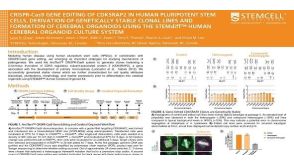 科学海报CRISPR-Cas9 Gene Editing Of CDK5RAP2 In Human Pluripotent Stem Cells, Derivation Of Genetically Stable Clonal Lines And Formation Of Cerebral Organoids

 沪公网安备31010102008431号