Lin M et al. (NOV 2016)
BMC systems biology 10 1 105
Integrative transcriptome network analysis of iPSC-derived neurons from schizophrenia and schizoaffective disorder patients with 22q11.2 deletion.
BACKGROUND Individuals with 22q11.2 Deletion Syndrome (22q11.2 DS) are a specific high-risk group for developing schizophrenia (SZ),schizoaffective disorder (SAD) and autism spectrum disorders (ASD). Several genes in the deleted region have been implicated in the development of SZ,e.g.,PRODH and DGCR8. However,the mechanistic connection between these genes and the neuropsychiatric phenotype remains unclear. To elucidate the molecular consequences of 22q11.2 deletion in early neural development,we carried out RNA-seq analysis to investigate gene expression in early differentiating human neurons derived from induced pluripotent stem cells (iPSCs) of 22q11.2 DS SZ and SAD patients. METHODS Eight cases (ten iPSC-neuron samples in total including duplicate clones) and seven controls (nine in total including duplicate clones) were subjected to RNA sequencing. Using a systems level analysis,differentially expressed genes/gene-modules and pathway of interests were identified. Lastly,we related our findings from in vitro neuronal cultures to brain development by mapping differentially expressed genes to BrainSpan transcriptomes. RESULTS We observed ˜2-fold reduction in expression of almost all genes in the 22q11.2 region in SZ (37 genes reached p-value textless 0.05,36 of which reached a false discovery rate textless 0.05). Outside of the deleted region,745 genes showed significant differences in expression between SZ and control neurons (p textless 0.05). Function enrichment and network analysis of the differentially expressed genes uncovered converging evidence on abnormal expression in key functional pathways,such as apoptosis,cell cycle and survival,and MAPK signaling in the SZ and SAD samples. By leveraging transcriptome profiles of normal human brain tissues across human development into adulthood,we showed that the differentially expressed genes converge on a sub-network mediated by CDC45 and the cell cycle,which would be disrupted by the 22q11.2 deletion during embryonic brain development,and another sub-network modulated by PRODH,which could contribute to disruption of brain function during adolescence. CONCLUSIONS This study has provided evidence for disruption of potential molecular events in SZ patient with 22q11.2 deletion and related our findings from in vitro neuronal cultures to functional perturbations that can occur during brain development in SZ.
View Publication
产品类型:
产品号#:
05850
05857
05870
05875
85850
85857
85870
85875
产品名:
mTeSR™1
mTeSR™1
Sweeney CL et al. (FEB 2017)
Molecular therapy : the journal of the American Society of Gene Therapy 25 2 321--330
Targeted Repair of CYBB in X-CGD iPSCs Requires Retention of Intronic Sequences for Expression and Functional Correction.
X-linked chronic granulomatous disease (X-CGD) is an immune deficiency resulting from defective production of microbicidal reactive oxygen species (ROS) by phagocytes. Causative mutations occur throughout the CYBB gene,resulting in absent or defective gp91(phox) protein expression. To correct CYBB exon 5 mutations while retaining normal gene regulation,we utilized TALEN or Cas9 for exon 5 replacement in induced pluripotent stem cells (iPSCs) from patients,which restored gp91(phox) expression and ROS production in iPSC-derived granulocytes. Alternate approaches for correcting the majority of X-CGD mutations were assessed,involving TALEN- or Cas9-mediated insertion of CYBB minigenes at exon 1 or 2 of the CYBB locus. Targeted insertion of an exon 1-13 minigene into CYBB exon 1 resulted in no detectable gp91(phox) expression or ROS activity in iPSC-derived granulocytes. In contrast,targeted insertion of an exon 2-13 minigene into exon 2 restored both gp91(phox) and ROS activity. This demonstrates the efficacy of two correction strategies: seamless repair of specific CYBB mutations by exon replacement or targeted insertion of an exon 2-13 minigene to CYBB exon 2 while retaining exon/intron 1. Furthermore,it highlights a key issue for targeted insertion strategies for expression from an endogenous promoter: retention of intronic elements can be necessary for expression.
View Publication
Live cell monitoring of hiPSC generation and differentiation using differential expression of endogenous microRNAs
Human induced pluripotent stem cells (hiPSCs) provide new possibilities for regenerative therapies. In order for this potential to be achieved,it is critical to efficiently monitor the differentiation of these hiPSCs into specific lineages. Here,we describe a lentiviral reporter vector sensitive to specific microRNAs (miRNA) to show that a single vector bearing multiple miRNA target sequences conjugated to different reporters can be used to monitor hiPSC formation and subsequent differentiation from human fetal fibroblasts (HFFs). The reporter vector encodes EGFP conjugated to the targets of human embryonic stem cell (hESC) specific miRNAs (miR-302a and miR-302d) and mCherry conjugated to the targets of differentiated cells specific miRNAs (miR-142-3p,miR-155,and miR-223). The vector was used to track reprogramming of HFF to iPSC. HFFs co-transduced with this reporter vector and vectors encoding 4 reprogramming factors (OCT4,SOX2,KLF4 and cMYC) were mostly positive for EGFP (67%) at an early stage of hiPSC formation. EGFP expression gradually disappeared and mCherry expression increased indicating less miRNAs specific to differentiated cells and expression of miRNAs specific to hESCs. Upon differentiation of the hiPSC into embryoid bodies,a large fraction of these hiPSCs regained EGFP expression and some of those cells became single positive for EGFP. Further differentiation into neural lineages showed distinct structures demarcated by either EGFP or mCherry expression. These findings demonstrate that a miRNA dependent reporter vector can be a useful tool to monitor living cells during reprogramming of hiPSC and subsequent differentiation to lineage specific cells.
View Publication
产品类型:
产品号#:
05850
05857
05870
05875
85850
85857
85870
85875
27845
27945
27840
27865
27940
27965
产品名:
mTeSR™1
mTeSR™1
Zhou S et al. (JUN 2016)
Differentiation; research in biological diversity 1--12
The positional identity of iPSC-derived neural progenitor cells along the anterior-posterior axis is controlled in a dosage-dependent manner by bFGF and EGF
Neural rosettes derived from human induced pluripotent stem cells (iPSCs) have been claimed to be a highly robust in vitro cellular model for biomedical application. They are able to propagate in vitro in the presence of mitogens,including basic fibroblast growth factor (bFGF) and epidermal growth factor (EGF). However,these two mitogens are also involved in anterior-posterior patterning in a gradient dependent manner along the neural tube axis. Here,we compared the regional identity of neural rosette cells and specific neural subtypes of their progeny propagated with low and high concentrations of bFGF and EGF. We observed that low concentrations of bFGF and EGF in the culturing system were able to induce forebrain identity of the neural rosettes and promote subsequent cortical neuronal differentiation. On the contrary,high concentrations of these mitogens stimulate a mid-hindbrain fate of the neural rosettes,resulting in subsequent cholinergic neuron differentiation. Thus,our results indicate that different concentrations of bFGF and EGF supplemented during propagation of neural rosettes are involved in altering the identity of the resultant neural cells.
View Publication
产品类型:
产品号#:
05850
05857
05870
05875
85850
85857
85870
85875
产品名:
mTeSR™1
mTeSR™1
Abaci HE et al. (JUN 2016)
Advanced healthcare materials 5 14 1800--1807
Human Skin Constructs with Spatially Controlled Vasculature Using Primary and iPSC-Derived Endothelial Cells.
Vascularization of engineered human skin constructs is crucial for recapitulation of systemic drug delivery and for their long-term survival,functionality,and viable engraftment. In this study,the latest microfabrication techniques are used and a novel bioengineering approach is established to micropattern spatially controlled and perfusable vascular networks in 3D human skin equivalents using both primary and induced pluripotent stem cell (iPSC)-derived endothelial cells. Using 3D printing technology makes it possible to control the geometry of the micropatterned vascular networks. It is verified that vascularized human skin equivalents (vHSEs) can form a robust epidermis and establish an endothelial barrier function,which allows for the recapitulation of both topical and systemic delivery of drugs. In addition,the therapeutic potential of vHSEs for cutaneous wounds on immunodeficient mice is examined and it is demonstrated that vHSEs can both promote and guide neovascularization during wound healing. Overall,this innovative bioengineering approach can enable in vitro evaluation of topical and systemic drug delivery as well as improve the potential of engineered skin constructs to be used as a potential therapeutic option for the treatment of cutaneous wounds.
View Publication
产品类型:
产品号#:
05850
05857
05870
05875
85850
85857
85870
85875
产品名:
mTeSR™1
mTeSR™1
Higelin J et al. ( 2016)
Frontiers in cellular neuroscience 10 290
FUS Mislocalization and Vulnerability to DNA Damage in ALS Patients Derived hiPSCs and Aging Motoneurons.
Mutations within the FUS gene (Fused in Sarcoma) are known to cause Amyotrophic Lateral Sclerosis (ALS),a neurodegenerative disease affecting upper and lower motoneurons. The FUS gene codes for a multifunctional RNA/DNA-binding protein that is primarily localized in the nucleus and is involved in cellular processes such as splicing,translation,mRNA transport and DNA damage response. In this study,we analyzed pathophysiological alterations associated with ALS related FUS mutations (mFUS) in human induced pluripotent stem cells (hiPSCs) and hiPSC derived motoneurons. To that end,we compared cells carrying a mild or severe mFUS in physiological- and/or stress conditions as well as after induced DNA damage. Following hyperosmolar stress or irradiation,mFUS hiPS cells recruited significantly more cytoplasmatic FUS into stress granules accompanied by impaired DNA-damage repair. In motoneurons wild-type FUS was localized in the nucleus but also deposited as small punctae within neurites. In motoneurons expressing mFUS the protein was additionally detected in the cytoplasm and a significantly increased number of large,densely packed FUS positive stress granules were seen along neurites. The amount of FUS mislocalization correlated positively with both the onset of the human disease (the earlier the onset the higher the FUS mislocalization) and the maturation status of the motoneurons. Moreover,even in non-stressed post-mitotic mFUS motoneurons clear signs of DNA-damage could be detected. In summary,we found that the susceptibility to cell stress was higher in mFUS hiPSCs and hiPSC derived motoneurons than in controls and the degree of FUS mislocalization correlated well with the clinical severity of the underlying ALS related mFUS. The accumulation of DNA damage and the cellular response to DNA damage stressors was more pronounced in post-mitotic mFUS motoneurons than in dividing hiPSCs suggesting that mFUS motoneurons accumulate foci of DNA damage,which in turn might be directly linked to neurodegeneration.
View Publication
产品类型:
产品号#:
05850
05857
05870
05875
85850
85857
85870
85875
产品名:
mTeSR™1
mTeSR™1
Palmer DJ et al. ( 2016)
Molecular therapy. Nucleic acids 5 e372
Homology Requirements for Efficient, Footprintless Gene Editing at the CFTR Locus in Human iPSCs with Helper-dependent Adenoviral Vectors.
Helper-dependent adenoviral vectors mediate high efficiency gene editing in induced pluripotent stem cells without needing a designer nuclease thereby avoiding off-target cleavage. Because of their large cloning capacity of 37 kb,helper-dependent adenoviral vectors with long homology arms are used for gene editing. However,this makes vector construction and recombinant analysis difficult. Conversely,insufficient homology may compromise targeting efficiency. Thus,we investigated the effect of homology length on helper-dependent adenoviral vector targeting efficiency at the cystic fibrosis transmembrane conductance regulator locus in induced pluripotent stem cells and found a positive correlation. With 23.8 and 21.4 kb of homology,the frequencies of targeted recombinants were 50-64.6% after positive selection for vector integration,and 97.4-100% after negative selection against random integrations. With 14.8 kb,the frequencies were 26.9-57.1% after positive selection and 87.5-100% after negative selection. With 9.6 kb,the frequencies were 21.4 and 75% after positive and negative selection,respectively. With only 5.6 kb,the frequencies were 5.6-16.7% after positive selection and 50% after negative selection,but these were more than high enough for efficient identification and isolation of targeted clones. Furthermore,we demonstrate helper-dependent adenoviral vector-mediated footprintless correction of cystic fibrosis transmembrane conductance regulator mutations through piggyBac excision of the selectable marker. However,low frequencies (≤ 1 × 10(-3)) necessitated negative selection for piggyBac-excision product isolation.
View Publication
产品类型:
产品号#:
05850
05857
05870
05875
85850
85857
85870
85875
产品名:
mTeSR™1
mTeSR™1
Baarine M et al. (NOV 2015)
PLoS ONE 10 11 e0143238
Functional characterization of IPSC-derived brain cells as a model for X-linked adrenoleukodystrophy
X-ALD is an inherited neurodegenerative disorder where mutations in the ABCD1 gene result in clinically diverse phenotypes: the fatal disorder of cerebral childhood ALD (cALD) or a milder disorder of adrenomyeloneuropathy (AMN). The various models used to study the pathobiology of X-ALD disease lack the appropriate presentation for different phenotypes of cALD vs AMN. This study demonstrates that induced pluripotent stem cells (IPSC) derived brain cells astrocytes (Ast),neurons and oligodendrocytes (OLs) express morphological and functional activities of the respective brain cell types. The excessive accumulation of saturated VLCFA,a hallmark" of X-ALD�
View Publication


 EasySep™小鼠TIL(CD45)正选试剂盒





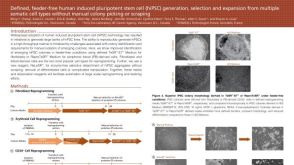 科学海报Defined, Feeder-Free Human Induced Pluripotent Stem Cell (hiPSC) Generation, Selection and Expansion from Multiple Somatic Cell Types


 沪公网安备31010102008431号