Neural Stem Cells
Overview of the types of NSCs and their potential use as therapeutic agents for disease
De Kock J et al. (SEP 2011)
Toxicology in vitro : an international journal published in association with BIBRA 25 6 1191--202
Evaluation of the multipotent character of human foreskin-derived precursor cells.
In the present study,the trilineage differentiation capacity of human foreskin-derived precursor cells (hSKP) was evaluated upon exposure to various (non)commercial (i and ii) ectodermal,(iii) mesodermal and (iv) endodermal differentiation media. (i) Upon sequential exposure of the cells to keratinocyte growth (CnT-07® or CnT-057®) and differentiation (CnT-02® or Epilife®) media,keratinocyte-like cells (filaggrin(+)/involucrin(+)) were obtained. The preferred keratinocyte differentiation strategy was exposure to CnT-07®. (ii) When hSKP were subsequently exposed to NeuroCult® media,cells underwent a weak neuro-ectodermal differentiation expressing nestin,myelin binding protein (MBP),vimentin and alpha-foetoprotein (AFP). Sequential exposure to NPMM® and NPDM® generated cells with an inferior neuro-ectodermal phenotype (nestin(+)/vimentin(+)/MBP(-)/AFP(-)). (iii) Upon exposure of hSKP to insulin-transferrin-selenite (ITS) and dexamethasone,small lipid droplets were observed,suggesting their differentiation potential towards adipocyte-like cells. (iv) Finally,after sequential exposure to hepatogenic growth factors and cytokines,an immature hepatic cell population was generated. The presence of pre-albumin suggests that a sequential exposure strategy is here superior to a cocktail approach. In summary,a considerable impact of different (non)commercial media on the lineage-specific differentiation efficiency of hSKP is shown. In addition,we demonstrate here for the first time that,in a suitable keratinocyte stimulating micro-environment,hSKP can generate keratinocyte-like progeny in vitro.
View Publication
产品类型:
产品号#:
05751
产品名:
NeuroCult™ NS-A 扩增试剂盒(人)
Olmez I et al. (JUN 2015)
Journal of Cellular and Molecular Medicine 19 6 1262--1272
Dedifferentiation of patient-derived glioblastoma multiforme cell lines results in a cancer stem cell-like state with mitogen-independent growth
Emerging evidence shows that glioblastoma multiforme (GBM) originates from cancer stem cells (CSCs). Characterization of CSC-specific signalling pathways would help identify new therapeutic targets and perhaps lead to the development of more efficient therapies selectively targeting CSCs. Here; we successfully dedifferentiated two patient-derived GBM cell lines into CSC-like cells (induced glioma stem cells,iGSCs) through expression of Oct4,Sox2 and Nanog transcription factors. Transformed cells exhibited significant suppression of epidermal growth factor receptor and its downstream pathways. Compared with parental GBM cells,iGSCs formed large neurospheres even in the absence of exogenous mitogens; they exhibited significant sensitivity to salinomycin and chemoresistance to temozolomide. Further characterization of iGSCs revealed induction of NOTCH1 and Wnt/β-catenin signalling and expression of CD133,CD44 and ALDH1A1. Our results indicate that iGSCs may help us understand CSC physiology and lead to development of potential therapeutic interventions aimed at differentiating tumour cells to render them more sensitive to chemotherapy or other standard agents.
View Publication
产品类型:
产品号#:
05750
05850
05857
05870
05875
85850
85857
85870
85875
产品名:
NeuroCult™ NS-A 基础培养基(人)
mTeSR™1
mTeSR™1
Yoshikawa K et al. (FEB 2013)
Biochemical and biophysical research communications 431 1 104--10
Multipotent stem cells are effectively collected from adult human cheek skin.
Skin-derived precursor (SKP) cells are a valuable resource for tissue engineering and regenerative medicine,because they represent multipotent stem cells that differentiate into neural and mesodermal progenies. Previous studies suggest that the stem cell pool decreases with age. Here,we show that human multipotent SKP cells can be efficiently collected from adult cheek/chin skin,even in aged individuals of 70-78years. SKP cells were isolated from 38 skin samples by serum-free sphere culture and examined for the ability to differentiate into neural and mesodermal lineages. The number of spheres obtained from adult facial skin was significantly higher than that of trunk or extremity skin. SKP cells derived from cheek/chin skin exhibited a high ability to differentiate into neural and mesodermal cells relative to those derived from eyelid,trunk,or extremity skin. Furthermore,cheek/chin skin SKP cells were shown to express markers for undifferentiated stem cells,including a high expression level of the Sox9 gene. These results indicate that cheek/chin skin is useful for the recovery of multipotent stem cells for tissue engineering and regenerative therapy.
View Publication


 EasySep™小鼠TIL(CD45)正选试剂盒




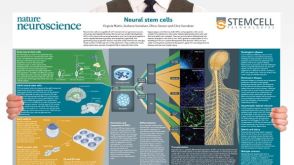 挂图Neural Stem Cells Overview of the types of NSCs and their potential use as therapeutic agents for disease
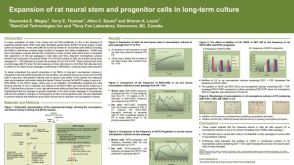 科学海报Expansion of Rat Neural Stem and Progenitor Cells in Long-Term Culture

 沪公网安备31010102008431号