Merkle FT et al. (FEB 2015)
Development (Cambridge,England) 142 4 633--643
Generation of neuropeptidergic hypothalamic neurons from human pluripotent stem cells.
Hypothalamic neurons orchestrate many essential physiological and behavioral processes via secreted neuropeptides,and are relevant to human diseases such as obesity,narcolepsy and infertility. We report the differentiation of human pluripotent stem cells into many of the major types of neuropeptidergic hypothalamic neurons,including those producing pro-opiolemelanocortin,agouti-related peptide,hypocretin/orexin,melanin-concentrating hormone,oxytocin,arginine vasopressin,corticotropin-releasing hormone (CRH) or thyrotropin-releasing hormone. Hypothalamic neurons can be generated using a 'self-patterning' strategy that yields a broad array of cell types,or via a more reproducible directed differentiation approach. Stem cell-derived human hypothalamic neurons share characteristic morphological properties and gene expression patterns with their counterparts in vivo,and are able to integrate into the mouse brain. These neurons could form the basis of cellular models,chemical screens or cellular therapies to study and treat common human diseases.
View Publication
产品类型:
产品号#:
05850
05857
05870
05875
85850
85857
85870
85875
产品名:
mTeSR™1
mTeSR™1
Kurita R et al. (SEP 2006)
Stem cells (Dayton,Ohio) 24 9 2014--22
Tal1/Scl gene transduction using a lentiviral vector stimulates highly efficient hematopoietic cell differentiation from common marmoset (Callithrix jacchus) embryonic stem cells.
The development of embryonic stem cell (ESC) therapies requires the establishment of efficient methods to differentiate ESCs into specific cell lineages. Here,we report the in vitro differentiation of common marmoset (CM) (Callithrix jacchus) ESCs into hematopoietic cells after exogenous gene transfer using vesicular stomatitis virus-glycoprotein-pseudotyped lentiviral vectors. We transduced hematopoietic genes,including tal1/scl,gata1,gata2,hoxB4,and lhx2,into CM ESCs. By immunochemical and morphological analyses,we demonstrated that overexpression of tal1/scl,but not the remaining genes,dramatically increased hematopoiesis of CM ESCs,resulting in multiple blood-cell lineages. Furthermore,flow cytometric analysis demonstrated that CD34,a hematopoietic stem/progenitor cell marker,was highly expressed in tal1/scl-overexpressing embryoid body cells. Similar results were obtained from three independent CM ESC lines. These results suggest that transduction of exogenous tal1/scl cDNA into ESCs is a promising method to induce the efficient differentiation of CM ESCs into hematopoietic stem/progenitor cells.
View Publication
产品类型:
产品号#:
03434
03444
04435
04445
产品名:
MethoCult™ GF M3434
MethoCult™ GF M3434
MethoCult™ H4435 Enriched
MethoCult™ H4435 Enriched
Orlova VV et al. ( 2014)
1213 1213 107--119
Assessment of functional competence of endothelial cells from human pluripotent stem cells in zebrafish embryos.
Human pluripotent stem cells (hPSCs) are proving to be a valuable source of endothelial cells (ECs),pericytes,and vascular smooth muscle cells (vSMCs). Although an increasing number of phenotypic markers are becoming available to determine the phenotypes of these cells in vitro,the ability to integrate and form functional vessels in the host organism,typically mouse,remains critical for the assessment of EC functional competence. However,current mouse models require relatively large numbers of cells that might be difficult to derive simultaneously from multiple hPSCs lines. Therefore,there is an urgent need for new functional assays that are robust and can be performed with small numbers of cells. Here we describe a novel zebrafish xenograft model to test functionality of hPSC-derived ECs. The assay can be performed in 10 days and requires only ˜100-400 human cells per embryo. Thus,the zebrafish xenograft model can be useful for the accurate and rapid assessment of functionality of hPSC-derived ECs in a lower vertebrate model that is widely viewed by regulatory authorities as a more acceptable alternative to adult mice.
View Publication
产品类型:
产品号#:
05850
05857
05870
05875
85850
85857
85870
85875
产品名:
mTeSR™1
mTeSR™1
Wang X et al. (FEB 2016)
Stem cells (Dayton,Ohio) 34 2 380--391
Immune modulatory mesenchymal stem cells derived from human embryonic stem cells through a trophoblast-like stage.
Mesenchymal stem/stromal cells (MSCs) have great clinical potential in modulating inflammation and promoting tissue repair. Human embryonic stem cells (hESCs) have recently emerged as a potentially superior cell source for MSCs. However,the generation methods reported so far vary greatly in quality and efficiency. Here,we describe a novel method to rapidly and efficiently produce MSCs from hESCs via a trophoblast-like intermediate stage in approximately 11-16 days. We term these cells T-MSCs" and show that T-MSCs express a phenotype and differentiation potential minimally required to define MSCs. T-MSCs exhibit potent immunomodulatory activity in vitro as they can remarkably inhibit proliferation of cocultured T and B lymphocytes. Unlike bone marrow MSCs�
View Publication
产品类型:
产品号#:
05850
05857
05870
05875
85850
85857
85870
85875
产品名:
mTeSR™1
mTeSR™1
Chen YS et al. (FEB 2012)
Stem cells translational medicine 1 2 83--95
Small molecule mesengenic induction of human induced pluripotent stem cells to generate mesenchymal stem/stromal cells.
The translational potential of mesenchymal stem/stromal cells (MSCs) is limited by their rarity in somatic organs,heterogeneity,and need for harvest by invasive procedures. Induced pluripotent stem cells (iPSCs) could be an advantageous source of MSCs,but attempts to derive MSCs from pluripotent cells have required cumbersome or untranslatable techniques,such as coculture,physical manipulation,sorting,or viral transduction. We devised a single-step method to direct mesengenic differentiation of human embryonic stem cells (ESCs) and iPSCs using a small molecule inhibitor. First,epithelial-like monolayer cells were generated by culturing ESCs/iPSCs in serum-free medium containing the transforming growth factor-β pathway inhibitor SB431542. After 10 days,iPSCs showed upregulation of mesodermal genes (MSX2,NCAM,HOXA2) and downregulation of pluripotency genes (OCT4,LEFTY1/2). Differentiation was then completed by transferring cells into conventional MSC medium. The resultant development of MSC-like morphology was associated with increased expression of genes,reflecting epithelial-to-mesenchymal transition. Both ESC- and iPSC-derived MSCs exhibited a typical MSC immunophenotype,expressed high levels of vimentin and N-cadherin,and lacked expression of pluripotency markers at the protein level. Robust osteogenic and chondrogenic differentiation was induced in vitro in ES-MSCs and iPS-MSCs,whereas adipogenic differentiation was limited,as reported for primitive fetal MSCs and ES-MSCs derived by other methods. We conclude that treatment with SB431542 in two-dimensional cultures followed by culture-induced epithelial-to-mesenchymal transition leads to rapid and uniform MSC conversion of human pluripotent cells without the need for embryoid body formation or feeder cell coculture,providing a robust,clinically applicable,and efficient system for generating MSCs from human iPSCs.
View Publication
Implantable tissue-engineered blood vessels from human induced pluripotent stem cells
Derivation of functional vascular smooth muscle cells (VSMCs) from human induced pluripotent stem cells (hiPSCs) to generate tissue-engineered blood vessels (TEBVs) holds great potential in treating patients with vascular diseases. Herein,hiPSCs were differentiated into alpha-smooth muscle actin ($$-SMA) and calponin-positive VSMCs,which were seeded onto polymer scaffolds in bioreactors for vascular tissue growth. A functional TEBV with abundant collagenous matrix and sound mechanics resulted,which contained cells largely positive for $$-SMA and smooth muscle myosin heavy chain (SM-MHC). Moreover,when hiPSC-derived TEBV segments were implanted into nude rats as abdominal aorta interposition grafts,they remained unruptured and patent with active vascular remodeling,and showed no evidence of teratoma formation during a 2-week proof-of-principle study. Our studies represent the development of the first implantable TEBVs based on hiPSCs,and pave the way for developing autologous or allogeneic grafts for clinical use in patients with vascular disease.
View Publication
产品类型:
产品号#:
05850
05857
05870
05875
85850
85857
85870
85875
产品名:
mTeSR™1
mTeSR™1
Ohta R et al. (NOV 2016)
Scientific reports 6 35680
Laminin-guided highly efficient endothelial commitment from human pluripotent stem cells.
Obtaining highly purified differentiated cells via directed differentiation from human pluripotent stem cells (hPSCs) is an essential step for their clinical application. Among the various conditions that should be optimized,the precise role and contribution of the extracellular matrix (ECM) during differentiation are relatively unclear. Here,using a short fragment of laminin 411 (LM411-E8),an ECM predominantly expressed in the vascular endothelial basement membrane,we demonstrate that the directed switching of defined ECMs robustly yields highly-purified (textgreater95%) endothelial progenitor cells (PSC-EPCs) without cell sorting from hPSCs in an integrin-laminin axis-dependent manner. Single-cell RNA-seq analysis revealed that LM411-E8 resolved intercellular transcriptional heterogeneity and escorted the progenitor cells to the appropriate differentiation pathway. The PSC-EPCs gave rise to functional endothelial cells both in vivo and in vitro. We therefore propose that sequential switching of defined matrices is an important concept for guiding cells towards desired fate.
View Publication
产品类型:
产品号#:
05850
05857
05870
05875
85850
85857
85870
85875
产品名:
mTeSR™1
mTeSR™1
Chen X et al. (SEP 2006)
Stem cells (Dayton,Ohio) 24 9 2052--9
Bioreactor expansion of human adult bone marrow-derived mesenchymal stem cells.
Supplementation of mesenchymal stem cells (MSCs) during hematopoietic stem cell (HSC) transplantation alleviates complications such as graft-versus-host disease,leading to a speedy recovery of hematopoiesis. To meet this clinical demand,a fast MSC expansion method is required. In the present study,we examined the feasibility of using a rotary bioreactor system to expand MSCs from isolated bone marrow mononuclear cells. The cells were cultured in a rotary bioreactor with Myelocult medium containing a combination of supplementary factors,including stem cell factor and interleukin-3 and -6. After 8 days of culture,total cell numbers,Stro-1(+)CD44(+)CD34(-) MSCs,and CD34(+)CD44(+)Stro-1(-) HSCs were increased 9-,29-,and 8-fold,respectively. Colony-forming efficiency-fibroblast per day of the bioreactor-treated cells was 1.44-fold higher than that of the cells without bioreactor treatment. The bioreactor-expanded MSCs showed expression of primitive MSC markers endoglin (SH2) and vimentin,whereas markers associated with lineage differentiation,including osteocalcin (osteogenesis),type II collagen (chondrogenesis),and C/EBP-alpha (CCAAT/enhancer-binding protein-alpha) (adipogenesis),were not detected. Upon induction,the bioreactor-expanded MSCs were able to differentiate into osteoblasts,chondrocytes,and adipocytes. We conclude that the rotary bioreactor with the modified Myelocult medium reported in this study may be used to rapidly expand MSCs.
View Publication
产品类型:
产品号#:
05150
产品名:
MyeloCult™ H5100
Grow EJ et al. (JUN 2015)
Nature 522 7555 221--5
Intrinsic retroviral reactivation in human preimplantation embryos and pluripotent cells.
Endogenous retroviruses (ERVs) are remnants of ancient retroviral infections,and comprise nearly 8% of the human genome. The most recently acquired human ERV is HERVK(HML-2),which repeatedly infected the primate lineage both before and after the divergence of the human and chimpanzee common ancestor. Unlike most other human ERVs,HERVK retained multiple copies of intact open reading frames encoding retroviral proteins. However,HERVK is transcriptionally silenced by the host,with the exception of in certain pathological contexts such as germ-cell tumours,melanoma or human immunodeficiency virus (HIV) infection. Here we demonstrate that DNA hypomethylation at long terminal repeat elements representing the most recent genomic integrations,together with transactivation by OCT4 (also known as POU5F1),synergistically facilitate HERVK expression. Consequently,HERVK is transcribed during normal human embryogenesis,beginning with embryonic genome activation at the eight-cell stage,continuing through the emergence of epiblast cells in preimplantation blastocysts,and ceasing during human embryonic stem cell derivation from blastocyst outgrowths. Remarkably,we detected HERVK viral-like particles and Gag proteins in human blastocysts,indicating that early human development proceeds in the presence of retroviral products. We further show that overexpression of one such product,the HERVK accessory protein Rec,in a pluripotent cell line is sufficient to increase IFITM1 levels on the cell surface and inhibit viral infection,suggesting at least one mechanism through which HERVK can induce viral restriction pathways in early embryonic cells. Moreover,Rec directly binds a subset of cellular RNAs and modulates their ribosome occupancy,indicating that complex interactions between retroviral proteins and host factors can fine-tune pathways of early human development.
View Publication
产品类型:
产品号#:
05850
05857
05870
05875
85850
85857
85870
85875
产品名:
mTeSR™1
mTeSR™1
Carpenter L et al. (APR 2011)
Blood 117 15 4008--4011
Human induced pluripotent stem cells are capable of B-cell lymphopoiesis.
Induced pluripotent stem (iPS) cells offer a unique potential for understanding the molecular basis of disease and development. Here we have generated several human iPS cell lines,and we describe their pluripotent phenotype and ability to differentiate into erythroid cells,monocytes,and endothelial cells. More significantly,however,when these iPS cells were differentiated under conditions that promote lympho-hematopoiesis from human embryonic stem cells,we observed the formation of pre-B cells. These cells were CD45(+)CD19(+)CD10(+) and were positive for transcripts Pax5,IL7αR,λ-like,and VpreB receptor. Although they were negative for surface IgM and CD5 expression,iPS-derived CD45(+)CD19(+) cells also exhibited multiple genomic D-J(H) rearrangements,which supports a pre-B-cell identity. We therefore have been able to demonstrate,for the first time,that human iPS cells are able to undergo hematopoiesis that contributes to the B-cell lymphoid lineage.
View Publication


 EasySep™小鼠TIL(CD45)正选试剂盒





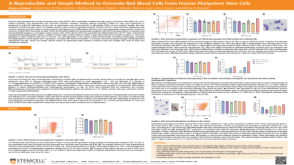 科学海报A Reproducible and Simple Method to Generate Red Blood Cells From Human Pluripotent Stem Cells

 沪公网安备31010102008431号