Ungrin MD et al. (APR 2012)
Biotechnology and bioengineering 109 4 853--66
Rational bioprocess design for human pluripotent stem cell expansion and endoderm differentiation based on cellular dynamics.
We present a predictive bioprocess design strategy employing cell- and molecular-level analysis of rate-limiting steps in human pluripotent stem cell (hPSC) expansion and differentiation,and apply it to produce definitive endoderm (DE) progenitors using a scalable directed-differentiation technology. We define a bioprocess optimization parameter (L; targeted cell Loss) and,with quantitative cell division tracking and fate monitoring,identify and overcome key suspension bioprocess bottlenecks. Adapting process operating conditions to pivotal parameters (single cell survival and growth rate) in a cell-line-specific manner enabled adherent-equivalent expansion of hPSCs in feeder- and matrix-free defined-medium suspension culture. Predominantly instructive differentiation mechanisms were found to underlie a subsequent 18-fold expansion,during directed differentiation,to high-purity DE competent for further commitment along pancreatic and hepatic lineages. This study demonstrates that iPSC expansion and differentiation conditions can be prospectively specified to guide the enhanced production of target cells in a scale-free directed differentiation system.
View Publication
产品类型:
产品号#:
27845
27945
27840
27865
27940
27965
产品名:
Ermakov A et al. (NOV 2012)
Stem Cell Research 9 3 171--184
A role for intracellular calcium downstream of G-protein signaling in undifferentiated human embryonic stem cell culture
Multiple signalling pathways maintain human embryonic stem cells (hESC) in an undifferentiated state. Here we sought to define the significance of G protein signal transduction in the preservation of this state distinct from other cellular processes. Continuous treatment with drugs targeting G(αs)-,G(α-i/o)- and G(α-q/11)-subunit signalling mediators were assessed in independent hESC lines after 7days to discern effects on normalised alkaline phosphatase positive colony frequency vs total cell content. This identified PLCβ,intracellular free calcium and CAMKII kinase activity downstream of G(α-q/11) as of particular importance to the former. To confirm the significance of this finding we generated an agonist-responsive hESC line transgenic for a G(α-q/11) subunit-coupled receptor and demonstrated that an undifferentiated state could be promoted in the presence of an agonist without exogenously supplied bFGF and that this correlated with elevated intracellular calcium. Similarly,treatment of unmodified hESCs with a range of intracellular free calcium-modulating drugs in biologically defined mTESR culture system lacking exogenous bFGF promoted an hESC phenotype after 1week of continuous culture as defined by co-expression of OCT4 and NANOG. At least one of these drugs,lysophosphatidic acid significantly elevates phosphorylation of calmodulin and STAT3 in this culture system (ptextless0.05). These findings substantiate a role for G-protein and calcium signalling in undifferentiated hESC culture.
View Publication
产品类型:
产品号#:
05850
05857
05870
05875
85850
85857
85870
85875
产品名:
mTeSR™1
mTeSR™1
Zhang Y et al. (JUN 2013)
Blood 121 24 4906--16
AML1-ETO mediates hematopoietic self-renewal and leukemogenesis through a COX/β-catenin signaling pathway.
Developing novel therapies that suppress self-renewal of leukemia stem cells may reduce the likelihood of relapses and extend long-term survival of patients with acute myelogenous leukemia (AML). AML1-ETO (AE) is an oncogene that plays an important role in inducing self-renewal of hematopoietic stem/progenitor cells (HSPCs),leading to the development of leukemia stem cells. Previously,using a zebrafish model of AE and a whole-organism chemical suppressor screen,we have discovered that AE induces specific hematopoietic phenotypes in embryonic zebrafish through a cyclooxygenase (COX)-2 and β-catenin-dependent pathway. Here,we show that AE also induces expression of the Cox-2 gene and activates β-catenin in mouse bone marrow cells. Inhibition of COX suppresses β-catenin activation and serial replating of AE(+) mouse HSPCs. Genetic knockdown of β-catenin also abrogates the clonogenic growth of AE(+) mouse HSPCs and human leukemia cells. In addition,treatment with nimesulide,a COX-2 selective inhibitor,dramatically suppresses xenograft tumor formation and inhibits in vivo progression of human leukemia cells. In summary,our data indicate an important role of a COX/β-catenin-dependent signaling pathway in tumor initiation,growth,and self-renewal,and in providing the rationale for testing potential benefits from common COX inhibitors as a part of AML treatments.
View Publication
产品类型:
产品号#:
70002
70002.1
70002.2
70002.3
70002.4
70002.5
产品名:
Son M-Y et al. (APR 2014)
Human molecular genetics 23 7 1802--1816
Comparative receptor tyrosine kinase profiling identifies a novel role for AXL in human stem cell pluripotency.
The extensive molecular characterization of human pluripotent stem cells (hPSCs),human embryonic stem cells (hESCs) and human-induced pluripotent stem cells (hiPSCs) is required before they can be applied in the future for personalized medicine and drug discovery. Despite the efforts that have been made with kinome analyses,we still lack in-depth insights into the molecular signatures of receptor tyrosine kinases (RTKs) that are related to pluripotency. Here,we present the first detailed and distinct repertoire of RTK characteristic for hPSC pluripotency by determining both the expression and phosphorylation profiles of RTKs in hESCs and hiPSCs using reverse transcriptase-polymerase chain reaction with degenerate primers that target conserved tyrosine kinase domains and phospho-RTK array,respectively. Among the RTKs tested,the up-regulation of EPHA1,ERBB2,FGFR4 and VEGFR2 and the down-regulation of AXL,EPHA4,PDGFRB and TYRO3 in terms of both their expression and phosphorylation levels were predominantly related to the maintenance of hPSC pluripotency. Notably,the specific inhibition of AXL was significantly advantageous in maintaining undifferentiated hESCs and hiPSCs and for the overall efficiency and kinetics of hiPSC generation. Additionally,a global phosphoproteomic analysis showed that ∼30% of the proteins (293 of 970 phosphoproteins) showed differential phosphorylation upon AXL inhibition in undifferentiated hPSCs,revealing the potential contribution of AXL-mediated phosphorylation dynamics to pluripotency-related signaling networks. Our findings provide a novel molecular signature of AXL in pluripotency control that will complement existing pluripotency-kinome networks.
View Publication
产品类型:
产品号#:
05850
05857
05870
05875
85850
85857
85870
85875
产品名:
mTeSR™1
mTeSR™1
Lei Y and Schaffer DV (DEC 2013)
Proceedings of the National Academy of Sciences of the United States of America 110 52 E5039----E5048
A fully defined and scalable 3D culture system for human pluripotent stem cell expansion and differentiation
Human pluripotent stem cells (hPSCs),including human embryonic stem cells and induced pluripotent stem cells,are promising for numerous biomedical applications,such as cell replacement therapies,tissue and whole-organ engineering,and high-throughput pharmacology and toxicology screening. Each of these applications requires large numbers of cells of high quality; however,the scalable expansion and differentiation of hPSCs,especially for clinical utilization,remains a challenge. We report a simple,defined,efficient,scalable,and good manufacturing practice-compatible 3D culture system for hPSC expansion and differentiation. It employs a thermoresponsive hydrogel that combines easy manipulation and completely defined conditions,free of any human- or animal-derived factors,and entailing only recombinant protein factors. Under an optimized protocol,the 3D system enables long-term,serial expansion of multiple hPSCs lines with a high expansion rate (∼20-fold per 5-d passage,for a 1072-fold expansion over 280 d),yield (∼2.0 × 10⁷ cells per mL of hydrogel),and purity (∼95% Oct4+),even with single-cell inoculation,all of which offer considerable advantages relative to current approaches. Moreover,the system enabled 3D directed differentiation of hPSCs into multiple lineages,including dopaminergic neuron progenitors with a yield of ∼8 × 10⁷ dopaminergic progenitors per mL of hydrogel and ∼80-fold expansion by the end of a 15-d derivation. This versatile system may be useful at numerous scales,from basic biological investigation to clinical development.
View Publication
产品类型:
产品号#:
05850
05857
05870
05875
85850
85857
85870
85875
产品名:
mTeSR™1
mTeSR™1
Zeng H et al. (SEP 2016)
Cell stem cell 19 3 326--340
An Isogenic Human ESC Platform for Functional Evaluation of Genome-wide-Association-Study-Identified Diabetes Genes and Drug Discovery.
Genome-wide association studies (GWASs) have increased our knowledge of loci associated with a range of human diseases. However,applying such findings to elucidate pathophysiology and promote drug discovery remains challenging. Here,we created isogenic human ESCs (hESCs) with mutations in GWAS-identified susceptibility genes for type 2 diabetes. In pancreatic beta-like cells differentiated from these lines,we found that mutations in CDKAL1,KCNQ1,and KCNJ11 led to impaired glucose secretion in vitro and in vivo,coinciding with defective glucose homeostasis. CDKAL1 mutant insulin+ cells were also hypersensitive to glucolipotoxicity. A high-content chemical screen identified a candidate drug that rescued CDKAL1-specific defects in vitro and in vivo by inhibiting the FOS/JUN pathway. Our approach of a proof-of-principle platform,which uses isogenic hESCs for functional evaluation of GWAS-identified loci and identification of a drug candidate that rescues gene-specific defects,paves the way for precision therapy of metabolic diseases.
View Publication
产品类型:
产品号#:
05850
05857
05870
05875
85850
85857
85870
85875
产品名:
mTeSR™1
mTeSR™1
McGrath PS et al. (JUL 2015)
Diabetes 64 7 2497--2505
The basic helix-loop-helix transcription factor neurog3 is required for development of the human endocrine pancreas
Neurogenin3 (NEUROG3) is a basic helix-loop-helix transcription factor required for development of the endocrine pancreas in mice. In contrast,humans with NEUROG3 mutations are born with endocrine pancreas function,calling into question whether NEUROG3 is required for human endocrine pancreas development. To test this directly,we generated human embryonic stem cell (hESC) lines where both alleles of NEUROG3 were disrupted using CRISPR/Cas9-mediated gene targeting. NEUROG3(-/-) hESC lines efficiently formed pancreatic progenitors but lacked detectible NEUROG3 protein and did not form endocrine cells in vitro. Moreover,NEUROG3(-/-) hESC lines were unable to form mature pancreatic endocrine cells after engraftment of PDX1(+)/NKX6.1(+) pancreatic progenitors into mice. In contrast,a 75-90% knockdown of NEUROG3 caused a reduction,but not a loss,of pancreatic endocrine cell development. We conclude that NEUROG3 is essential for endocrine pancreas development in humans and that as little as 10% NEUROG3 is sufficient for formation of pancreatic endocrine cells.
View Publication
产品类型:
产品号#:
05850
05857
05870
05875
07920
85850
85857
85870
85875
07922
产品名:
ACCUTASE™
mTeSR™1
mTeSR™1
ACCUTASE™
Jeong J et al. (OCT 2014)
Experimental and Molecular Pathology 97 2 253--258
Patient-tailored application for Duchene muscular dystrophy on mdx mice based induced mesenchymal stem cells
Mesenchymal stem cells (MSCs) may be used as powerful tools for the repair and regeneration of damaged tissues. However,isolating tissue specific-derived MSCs may cause pain and increased infection rates in patients,and repetitive isolations may be required. To overcome these difficulties,we have examined alternative methods for MSC production. Here,we show that induced pluripotent stem cells (iPSCs) may be differentiated into mesenchymal stem cells (iMSCs) following exposure to SB431542. Purified iMSCs were administered to mdx mice to study skeletal muscle regeneration in a murine model of muscular dystrophy. Purified iMSCs displayed fibroblast-like morphology,formed three-dimensional spheroid structures,and expressed characteristic mesenchymal stem cell surface markers such as CD29,CD33,CD73,CD90,and CD105. Moreover,iMSCs were capable of differentiating into adipogenic,osteogenic,and chondrogenic lineages. Transplanting iMSC cells to tibialis anterior skeletal muscle tissue in mdx mice lowered oxidative damage as evidenced by a reduction in nitrotyrosine levels,and normal dystrophin expression levels were restored. This study demonstrates the therapeutic potential of purified iMSCs in skeletal muscle regeneration in mdx mice,and suggests that iPSCs are a viable alternate source for deriving MSCs as needed. textcopyright 2014 Elsevier Inc.
View Publication
产品类型:
产品号#:
05850
05857
05870
05875
85850
85857
85870
85875
产品名:
mTeSR™1
mTeSR™1
Yu J et al. (DEC 2008)
Yearbook of Dermatology and Dermatologic Surgery 2008 5858 301--302
Induced Pluripotent Stem Cell Lines Derived from Human Somatic Cells
Somatic cell nuclear transfer allows trans-acting factors present in the mammalian oocyte to reprogram somatic cell nuclei to an undifferentiated state. We show that four factors (OCT4,SOX2,NANOG,and LIN28) are sufficient to reprogram human somatic cells to pluripotent stem cells that exhibit the essential characteristics of embryonic stem (ES) cells. These induced pluripotent human stem cells have normal karyotypes,express telomerase activity,express cell surface markers and genes that characterize human ES cells,and maintain the developmental potential to differentiate into advanced derivatives of all three primary germ layers. Such induced pluripotent human cell lines should be useful in the production of new disease models and in drug development,as well as for applications in transplantation medicine,once technical limitations (for example,mutation through viral integration) are eliminated.
View Publication
产品类型:
产品号#:
03120
05850
05857
05870
05875
05920
09500
27100
27150
85850
85857
85870
85875
产品名:
BIT 9500血清替代物
35 mm培养皿
35 mm培养皿
mTeSR™1
mTeSR™1
Ciampi O et al. (JUN 2016)
Stem Cell Research 17 1 130--139
Generation of functional podocytes from human induced pluripotent stem cells
Generating human podocytes in vitro could offer a unique opportunity to study human diseases. Here,we describe a simple and efficient protocol for obtaining functional podocytes in vitro from human induced pluripotent stem cells. Cells were exposed to a three-step protocol,which induced their differentiation into intermediate mesoderm,then into nephron progenitors and,finally,into mature podocytes. After differentiation,cells expressed the main podocyte markers,such as synaptopodin,WT1,α-Actinin-4,P-cadherin and nephrin at the protein and mRNA level,and showed the low proliferation rate typical of mature podocytes. Exposure to Angiotensin II significantly decreased the expression of podocyte genes and cells underwent cytoskeleton rearrangement. Cells were able to internalize albumin and self-assembled into chimeric 3D structures in combination with dissociated embryonic mouse kidney cells. Overall,these findings demonstrate the establishment of a robust protocol that,mimicking developmental stages,makes it possible to derive functional podocytes in vitro.
View Publication
产品类型:
产品号#:
05850
05857
05870
05875
85850
85857
85870
85875
05270
05275
产品名:
mTeSR™1
mTeSR™1
STEMdiff™ APEL™2 培养基
STEMdiff™ APEL™2 培养基
Baker D et al. (NOV 2016)
Stem cell reports 7 5 998--1012
Detecting Genetic Mosaicism in Cultures of Human Pluripotent Stem Cells.
Genetic changes in human pluripotent stem cells (hPSCs) gained during culture can confound experimental results and potentially jeopardize the outcome of clinical therapies. Particularly common changes in hPSCs are trisomies of chromosomes 1,12,17,and 20. Thus,hPSCs should be regularly screened for such aberrations. Although a number of methods are used to assess hPSC genotypes,there has been no systematic evaluation of the sensitivity of the commonly used techniques in detecting low-level mosaicism in hPSC cultures. We have performed mixing experiments to mimic the naturally occurring mosaicism and have assessed the sensitivity of chromosome banding,qPCR,fluorescence in situ hybridization,and digital droplet PCR in detecting variants. Our analysis highlights the limits of mosaicism detection by the commonly employed methods,a pivotal requirement for interpreting the genetic status of hPSCs and for setting standards for safe applications of hPSCs in regenerative medicine.
View Publication


 EasySep™小鼠TIL(CD45)正选试剂盒




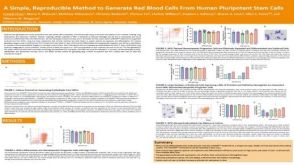 科学海报A Simple, Reproducible Method to Generate Red Blood Cells From Human Pluripotent Stem Cells

 沪公网安备31010102008431号