E47 regulates hematopoietic stem cell proliferation and energetics but not myeloid lineage restriction.
The immune system is replenished by self-renewing hematopoietic stem cells (HSCs) that produce multipotent progenitors (MPPs) with little renewal capacity. E-proteins,the widely expressed basic helix-loop-helix transcription factors,contribute to HSC and MPP activity,but their specific functions remain undefined. Using quantitative in vivo and in vitro approaches,we show that E47 is dispensable for the short-term myeloid differentiation of HSCs but regulates their long-term capabilities. E47-deficient progenitors show competent myeloid production in short-term assays in vitro and in vivo. However,long-term myeloid and lymphoid differentiation is compromised because of a progressive loss of HSC self-renewal that is associated with diminished p21 expression and hyperproliferation. The activity of E47 is shown to be cell-intrinsic. Moreover,E47-deficient HSCs and MPPs have altered expression of genes associated with cellular energy metabolism,and the size of the MPP pool but not downstream lymphoid precursors in bone marrow or thymus is rescued in vivo by antioxidant. Together,these observations suggest a role for E47 in the tight control of HSC proliferation and energy metabolism,and demonstrate that E47 is not required for short-term myeloid differentiation.
View Publication
产品类型:
产品号#:
03434
03444
产品名:
MethoCult™ GF M3434
MethoCult™ GF M3434
Zhu HH et al. (MAY 2011)
Blood 117 20 5350--61
Kit-Shp2-Kit signaling acts to maintain a functional hematopoietic stem and progenitor cell pool.
The stem cell factor (SCF)/Kit system has served as a classic model in deciphering molecular signaling events in the hematopoietic compartment,and Kit expression is a most critical marker for hematopoietic stem cells (HSCs) and progenitors. However,it remains to be elucidated how Kit expression is regulated in HSCs. Herein we report that a cytoplasmic tyrosine phosphatase Shp2,acting downstream of Kit and other RTKs,promotes Kit gene expression,constituting a Kit-Shp2-Kit signaling axis. Inducible ablation of PTPN11/Shp2 resulted in severe cytopenia in BM,spleen,and peripheral blood in mice. Shp2 removal suppressed the functional pool of HSCs/progenitors,and Shp2-deficient HSCs failed to reconstitute lethally irradiated recipients because of defects in homing,self-renewal,and survival. We show that Shp2 regulates coordinately multiple signals involving up-regulation of Kit expression via Gata2. Therefore,this study reveals a critical role of Shp2 in maintenance of a functional HSC/progenitor pool in adult mammals,at least in part through a kinase-phosphatase-kinase cascade.
View Publication
产品类型:
产品号#:
03434
03444
产品名:
MethoCult™ GF M3434
MethoCult™ GF M3434
Casazza A et al. (APR 2011)
Arteriosclerosis,thrombosis,and vascular biology 31 4 741--9
Systemic and targeted delivery of semaphorin 3A inhibits tumor angiogenesis and progression in mouse tumor models.
OBJECTIVE: The role of semaphorins in tumor progression is still poorly understood. In this study,we aimed at elucidating the regulatory role of semaphorin 3A (SEMA3A) in primary tumor growth and metastatic dissemination. METHODS AND RESULTS: We used 3 different experimental approaches in mouse tumor models: (1) overexpression of SEMA3A in tumor cells,(2) systemic expression of SEMA3A following liver gene transfer in mice,and (3) tumor-targeted release of SEMA3A using gene modified Tie2-expressing monocytes as delivery vehicles. In each of these experimental settings,SEMA3A efficiently inhibited tumor growth by inhibiting vessel function and increasing tumor hypoxia and necrosis,without promoting metastasis. We further show that the expression of the receptor neuropilin-1 in tumor cells is required for SEMA3A-dependent inhibition of tumor cell migration in vitro and metastatic spreading in vivo. CONCLUSIONS: In sum,both systemic and tumor-targeted delivery of SEMA3A inhibits tumor angiogenesis and tumor growth in multiple mouse models; moreover,SEMA3A inhibits the metastatic spreading from primary tumors. These data support the rationale for further investigation of SEMA3A as an anticancer molecule.
View Publication
产品类型:
产品号#:
09600
09650
19756
19756RF
产品名:
StemSpan™ SFEM
StemSpan™ SFEM
Rybtsov S et al. (JUN 2011)
The Journal of experimental medicine 208 6 1305--15
Hierarchical organization and early hematopoietic specification of the developing HSC lineage in the AGM region.
The aorta-gonad-mesonephros region plays an important role in hematopoietic stem cell (HSC) development during mouse embryogenesis. The vascular endothelial cadherin�?� CD45�?� (VE-cad�?�CD45�?�) population contains the major type of immature pre-HSCs capable of developing into long-term repopulating definitive HSCs. In this study,we developed a new coaggregation culture system,which supports maturation of a novel population of CD45-negative (VE-cad�?�CD45�?�CD41�?�) pre-HSCs into definitive HSCs. The appearance of these pre-HSCs precedes development of the VE-cad�?�CD45�?� pre-HSCs (termed here type I and type II pre-HSCs,respectively),thus establishing a hierarchical directionality in the developing HSC lineage. By labeling the luminal surface of the dorsal aorta,we show that both type I and type II pre-HSCs are distributed broadly within the endothelial and subendothelial aortic layers,in contrast to mature definitive HSCs which localize to the aortic endothelial layer. In agreement with expression of CD41 in pre-HSCs,in vivo CD41-Cre-mediated genetic tagging occurs in embryonic pre-HSCs and persists in all lymphomyeloid lineages of the adult animal.
View Publication
产品类型:
产品号#:
03434
03444
产品名:
MethoCult™ GF M3434
MethoCult™ GF M3434
Storms RW et al. (AUG 1999)
Proceedings of the National Academy of Sciences of the United States of America 96 16 9118--23
Isolation of primitive human hematopoietic progenitors on the basis of aldehyde dehydrogenase activity.
Because hematopoietic stem cells are rich in aldehyde dehydrogenase (ALDH) activity,we developed a fluorescent substrate for ALDH,termed BODIPY aminoacetaldehyde (BAAA),and tested its potential for isolating primitive human hematopoietic cells. A population of cells with low orthogonal light scattering and bright fluorescence intensity (SSC(lo)ALDH(br) cells) could be readily fractionated from human umbilical cord blood cells costained with BAAA and the multidrug-resistance inhibitor verapamil. The SSC(lo)ALDH(br) population was depleted of lineage-committed cells,40-90% pure for CD34(+)CD38(lo/-) cells,and enriched 50- to 100-fold for primitive hematopoietic progenitors detected in short- and long-term culture analyses. Together,these observations indicate that fractionating human hematopoietic stem cells on the basis of ALDH activity using BAAA is an effective method for isolating primitive human hematopoietic progenitors. This technique may be useful for isolating stem cells from other tissues as well.
View Publication
A role for thrombopoietin in hemangioblast development.
Vascular endothelial growth factor (VEGF) and stem cell factor (SCF) act as growth factors for the hemangioblast,an embryonic progenitor of the hematopoietic and endothelial lineages. Because thrombopoietin (TPO) and its receptor,c-Mpl,regulate primitive hematopoietic populations,including bone marrow hematopoietic stem cells,we investigated whether TPO acts on the hemangioblasts that derive from differentiation of embryonic stem cells in vitro. Reverse transcriptase polymerase chain reaction analysis detected expression of c-Mpl beginning on day 3 of embryoid body differentiation when the hemangioblast first arises. In assays of the hemangioblast colony-forming cell (BL-CFC),TPO alone supported BL-CFC formation and nearly doubled the number of BL-CFC when added together with VEGF and SCF. When replated under the appropriate conditions,TPO-stimulated BL-CFC gave rise to secondary hematopoietic colonies,as well as endothelial cells,confirming their nature as hemangioblasts. Addition of a neutralizing anti-VEGF antibody did not block TPO enhancement of BL-CFC formation,suggesting that TPO acts independently of VEGF. These results establish that Mpl signaling plays a role in the earliest stages of hematopoietic development and that TPO represents a third growth factor influencing hemangioblast formation.
View Publication
产品类型:
产品号#:
03434
03444
产品名:
MethoCult™ GF M3434
MethoCult™ GF M3434
Corti S et al. (OCT 2008)
The Journal of clinical investigation 118 10 3316--30
Neural stem cell transplantation can ameliorate the phenotype of a mouse model of spinal muscular atrophy.
Spinal muscular atrophy (SMA),a motor neuron disease (MND) and one of the most common genetic causes of infant mortality,currently has no cure. Patients with SMA exhibit muscle weakness and hypotonia. Stem cell transplantation is a potential therapeutic strategy for SMA and other MNDs. In this study,we isolated spinal cord neural stem cells (NSCs) from mice expressing green fluorescent protein only in motor neurons and assessed their therapeutic effects on the phenotype of SMA mice. Intrathecally grafted NSCs migrated into the parenchyma and generated a small proportion of motor neurons. Treated SMA mice exhibited improved neuromuscular function,increased life span,and improved motor unit pathology. Global gene expression analysis of laser-capture-microdissected motor neurons from treated mice showed that the major effect of NSC transplantation was modification of the SMA phenotype toward the wild-type pattern,including changes in RNA metabolism proteins,cell cycle proteins,and actin-binding proteins. NSC transplantation positively affected the SMA disease phenotype,indicating that transplantation of NSCs may be a possible treatment for SMA.
View Publication
产品类型:
产品号#:
01700
01705
01701
01702
产品名:
ALDEFLUOR™ 试剂盒
ALDEFLUOR™ DEAB试剂, 1.5 mM, 1 mL
ALDEFLUOR™检测缓冲液
Sommer G et al. (MAY 2003)
Proceedings of the National Academy of Sciences of the United States of America 100 11 6706--11
Gastrointestinal stromal tumors in a mouse model by targeted mutation of the Kit receptor tyrosine kinase.
Oncogenic Kit mutations are found in somatic gastrointestinal (GI) stromal tumors (GISTs) and mastocytosis. A mouse model for the study of constitutive activation of Kit in oncogenesis has been produced by a knock-in strategy introducing a Kit exon 11-activating mutation into the mouse genome based on a mutation found in a case of human familial GIST syndrome. Heterozygous mutant KitV558Delta/+ mice develop symptoms of disease and eventually die from pathology in the GI tract. Patchy hyperplasia of Kit-positive cells is evident within the myenteric plexus of the entire GI tract. Neoplastic lesions indistinguishable from human GISTs were observed in the cecum of the mutant mice with high penetrance. In addition,mast cell numbers in the dorsal skin were increased. Therefore KitV558Delta/+ mice reproduce human familial GISTs,and they may be used as a model for the study of the role and mechanisms of Kit in neoplasia. Importantly,these results demonstrate that constitutive Kit signaling is critical and sufficient for induction of GIST and hyperplasia of interstitial cells of Cajal.
View Publication
产品类型:
产品号#:
09600
09650
产品名:
StemSpan™ SFEM
StemSpan™ SFEM
Fiorenzano A et al. (SEP 2016)
Nature communications 7 12589
Cripto is essential to capture mouse epiblast stem cell and human embryonic stem cell pluripotency.
Known molecular determinants of developmental plasticity are mainly transcription factors,while the extrinsic regulation of this process has been largely unexplored. Here we identify Cripto as one of the earliest epiblast markers and a key extracellular determinant of the naive and primed pluripotent states. We demonstrate that Cripto sustains mouse embryonic stem cell (ESC) self-renewal by modulating Wnt/β-catenin,whereas it maintains mouse epiblast stem cell (EpiSC) and human ESC pluripotency through Nodal/Smad2. Moreover,we provide unprecedented evidence that Cripto controls the metabolic reprogramming in ESCs to EpiSC transition. Remarkably,Cripto deficiency attenuates ESC lineage restriction in vitro and in vivo,and permits ESC transdifferentiation into trophectoderm lineage,suggesting that Cripto has earlier functions than previously recognized. All together,our studies provide novel insights into the current model of mammalian pluripotency and contribute to the understanding of the extrinsic regulation of the first cell lineage decision in the embryo.
View Publication
产品类型:
产品号#:
05850
05857
05870
05875
85850
85857
85870
85875
产品名:
mTeSR™1
mTeSR™1
Chailangkarn T et al. (AUG 2016)
Nature 536 7616 338--343
A human neurodevelopmental model for Williams syndrome.
Williams syndrome is a genetic neurodevelopmental disorder characterized by an uncommon hypersociability and a mosaic of retained and compromised linguistic and cognitive abilities. Nearly all clinically diagnosed individuals with Williams syndrome lack precisely the same set of genes,with breakpoints in chromosome band 7q11.23 (refs 1-5). The contribution of specific genes to the neuroanatomical and functional alterations,leading to behavioural pathologies in humans,remains largely unexplored. Here we investigate neural progenitor cells and cortical neurons derived from Williams syndrome and typically developing induced pluripotent stem cells. Neural progenitor cells in Williams syndrome have an increased doubling time and apoptosis compared with typically developing neural progenitor cells. Using an individual with atypical Williams syndrome,we narrowed this cellular phenotype to a single gene candidate,frizzled 9 (FZD9). At the neuronal stage,layer V/VI cortical neurons derived from Williams syndrome were characterized by longer total dendrites,increased numbers of spines and synapses,aberrant calcium oscillation and altered network connectivity. Morphometric alterations observed in neurons from Williams syndrome were validated after Golgi staining of post-mortem layer V/VI cortical neurons. This model of human induced pluripotent stem cells fills the current knowledge gap in the cellular biology of Williams syndrome and could lead to further insights into the molecular mechanism underlying the disorder and the human social brain.
View Publication
Migliaccio AR et al. (FEB 2003)
The Journal of experimental medicine 197 3 281--96
GATA-1 as a regulator of mast cell differentiation revealed by the phenotype of the GATA-1low mouse mutant.
Here it is shown that the phenotype of adult mice lacking the first enhancer (DNA hypersensitive site I) and the distal promoter of the GATA-1 gene (neo Delta HS or GATA-1(low) mutants) reveals defects in mast cell development. These include the presence of morphologically abnormal alcian blue(+) mast cells and apoptotic metachromatic(-) mast cell precursors in connective tissues and peritoneal lavage and numerous (60-70% of all the progenitors) unique" trilineage cells committed to erythroid�
View Publication


 EasySep™小鼠TIL(CD45)正选试剂盒





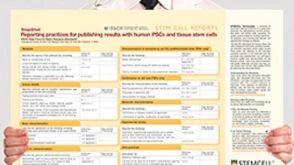 挂图Reporting Practices for Publishing Results with hPSCs Learn how to plan and conduct your human pluripotent stem cell (hPSC)-based research following the ISSCR’s Standards for Human Stem Cell Use in Research
 沪公网安备31010102008431号