Meng G and Rancourt DE (JAN 2012)
Methods in molecular biology (Clifton,N.J.) 873 69--80
Derivation and maintenance of undifferentiated human embryonic stem cells
Human embryonic stem cells (hESCs) are self-renewing,pluripotent cells derived from the inner cell mass of blastocysts,early-stage embryos,or blastomeres. hESCs can be propagated indefinitely in an undifferentiated state in vitro and have the ability to differentiate into all cell types of the body. Therefore,these cells can potentially provide an unlimited source of cells and hold promise for transplantation therapy,regenerative medicine,drug screening and discovery,and basic scientific research. Surplus human embryos donated for hESC derivation are extremely valuable,and inefficient derivation of hESCs would be a terrible waste of human embryos. Here,we describe a method for isolating hESC lines from human blastocysts with high efficiency. We also describe the methods for excising differentiated areas from partially differentiated hESC colonies and re-isolating undifferentiated hESCs from extremely differentiated hESC colonies.
View Publication
Momcilovic O et al. (JAN 2010)
PLoS ONE 5 10 e13410
DNA damage responses in human induced pluripotent stem cells and embryonic stem cells.
BACKGROUND: Induced pluripotent stem (iPS) cells have the capability to undergo self-renewal and differentiation into all somatic cell types. Since they can be produced through somatic cell reprogramming,which uses a defined set of transcription factors,iPS cells represent important sources of patient-specific cells for clinical applications. However,before these cells can be used in therapeutic designs,it is essential to understand their genetic stability. METHODOLOGY/PRINCIPAL FINDINGS: Here,we describe DNA damage responses in human iPS cells. We observe hypersensitivity to DNA damaging agents resulting in rapid induction of apoptosis after γ-irradiation. Expression of pluripotency factors does not appear to be diminished after irradiation in iPS cells. Following irradiation,iPS cells activate checkpoint signaling,evidenced by phosphorylation of ATM,NBS1,CHEK2,and TP53,localization of ATM to the double strand breaks (DSB),and localization of TP53 to the nucleus of NANOG-positive cells. We demonstrate that iPS cells temporary arrest cell cycle progression in the G(2) phase of the cell cycle,displaying a lack of the G(1)/S cell cycle arrest similar to human embryonic stem (ES) cells. Furthermore,both cell types remove DSB within six hours of γ-irradiation,form RAD51 foci and exhibit sister chromatid exchanges suggesting homologous recombination repair. Finally,we report elevated expression of genes involved in DNA damage signaling,checkpoint function,and repair of various types of DNA lesions in ES and iPS cells relative to their differentiated counterparts. CONCLUSIONS/SIGNIFICANCE: High degrees of similarity in DNA damage responses between ES and iPS cells were found. Even though reprogramming did not alter checkpoint signaling following DNA damage,dramatic changes in cell cycle structure,including a high percentage of cells in the S phase,increased radiosensitivity and loss of DNA damage-induced G(1)/S cell cycle arrest,were observed in stem cells generated by induced pluripotency.
View Publication
产品类型:
产品号#:
05850
05857
05870
05875
07923
85850
85857
85870
85875
产品名:
Dispase (1 U/mL)
mTeSR™1
mTeSR™1
Kozhich OA et al. (AUG 2013)
Stem Cell Reviews and Reports 9 4 531--536
Standardized Generation and Differentiation of Neural Precursor Cells from Human Pluripotent Stem Cells
Precise,robust and scalable directed differentiation of pluripotent stem cells is an important goal with respect to disease modeling or future therapies. Using the AggreWell™400 system we have standardized the differentiation of human embryonic and induced pluripotent stem cells to a neuronal fate using defined conditions. This allows reproducibility in replicate experiments and facilitates the direct comparison of cell lines. Since the starting point for EB formation is a single cell suspension,this protocol is suitable for standard and novel methods of pluripotent stem cell culture. Moreover,an intermediate population of neural precursor cells,which are routinely textgreater95% NCAM(pos) and Tra-1-60(neg) by FACS analysis,may be expanded and frozen prior to differentiation allowing a convenient starting point for downstream experiments.
View Publication
产品类型:
产品号#:
05850
05857
05870
05875
85850
85857
85870
85875
27845
27945
27840
27865
27940
27965
产品名:
mTeSR™1
mTeSR™1
Mandegar MA et al. (AUG 2011)
Human Molecular Genetics 20 15 2905--13
Functional human artificial chromosomes are generated and stably maintained in human embryonic stem cells
We present a novel and efficient non-integrating gene expression system in human embryonic stem cells (hESc) utilizing human artificial chromosomes (HAC),which behave as autonomous endogenous host chromosomes and segregate correctly during cell division. HAC are important vectors for investigating the organization and structure of the kinetochore,and gene complementation. HAC have so far been obtained in immortalized or tumour-derived cell lines,but never in stem cells,thus limiting their potential therapeutic application. In this work,we modified the herpes simplex virus type 1 amplicon system for efficient transfer of HAC DNA into two hESc. The deriving stable clones generated green fluorescent protein gene-expressing HAC at high frequency,which were stably maintained without selection for 3 months. Importantly,no integration of the HAC DNA was observed in the hESc lines,compared with the fibrosarcoma-derived control cells,where the exogenous DNA frequently integrated in the host genome. The hESc retained pluripotency,differentiation and teratoma formation capabilities. This is the first report of successfully generating gene expressing de novo HAC in hESc,and is a significant step towards the genetic manipulation of stem cells and potential therapeutic applications.
View Publication
产品类型:
产品号#:
05850
05857
05870
05875
85850
85857
85870
85875
27845
27945
27840
27865
27940
27965
产品名:
mTeSR™1
mTeSR™1
Campbell CJV et al. (SEP 2010)
Blood 116 9 1433--42
The human stem cell hierarchy is defined by a functional dependence on Mcl-1 for self-renewal capacity.
The molecular basis for the unique proliferative and self-renewal properties that hierarchically distinguish human stem cells from progenitors and terminally differentiated cells remains largely unknown. We report a role for the Bcl-2 family member myeloid cell leukemia-1 (Mcl-1) as an indispensable regulator of self-renewal in human stem cells and show that a functional dependence on Mcl-1 defines the human stem cell hierarchy. In vivo pharmacologic targeting of the Bcl-2 family members in human hematopoietic stem cells (HSCs) and human leukemic stem cells reduced stem cell regenerative and self-renewal function. Subsequent protein expression studies showed that,among the Bcl-2 family members,only Mcl-1 was up-regulated exclusively in the human HSC fraction on in vivo regeneration of hematopoiesis. Short hairpin RNA-knockdown of Mcl-1 in human cord blood cells did not affect survival in the HSC or hematopoietic progenitor cell fractions in vitro but specifically reduced the in vivo self-renewal function of human HSCs. Moreover,knockdown of Mcl-1 in ontogenetically primitive human pluripotent stem cells resulted in almost complete ablation of stem cell self-renewal function. Our findings show that Mcl-1 is an essential regulator of stem cell self-renewal in humans and therefore represents an axis for therapeutic interventions.
View Publication
产品类型:
产品号#:
04434
04444
产品名:
MethoCult™ H4434 Classic
MethoCult™ H4434 Classic
Oh SKW et al. (MAY 2009)
Stem Cell Research 2 3 219--230
Long-term microcarrier suspension cultures of human embryonic stem cells
The conventional method of culturing human embryonic stem cells (hESC) is on two-dimensional (2D) surfaces,which is not amenable for scale up to therapeutic quantities in bioreactors. We have developed a facile and robust method for maintaining undifferentiated hESC in three-dimensional (3D) suspension cultures on matrigel-coated microcarriers achieving 2- to 4-fold higher cell densities than those in 2D colony cultures. Stable,continuous propagation of two hESC lines on microcarriers has been demonstrated in conditioned media for 6 months. Microcarrier cultures (MC) were also demonstrated in two serum-free defined media (StemPro and mTeSR1). MC achieved even higher cell concentrations in suspension spinner flasks,thus opening the prospect of propagation in controlled bioreactors. ?? 2009 Elsevier B.V. All rights reserved.
View Publication
产品类型:
产品号#:
05850
05857
05870
05875
85850
85857
85870
85875
产品名:
mTeSR™1
mTeSR™1
Yao M et al. (JAN 2010)
Cells,tissues,organs 191 3 203--12
Prostate-regenerating capacity of cultured human adult prostate epithelial cells.
Experimentation with the progenitor/stem cells in adult prostate epithelium can be inconvenient due to a tight time line from tissue acquisition to cell isolation and to downstream experiments. To circumvent this inconvenience,we developed a simple technical procedure for culturing epithelial cells derived from human prostate tissue. In this study,benign prostate tissue was enzymatically digested and fractionated into epithelium and stroma,which were then cultured in the medium designed for prostate epithelial and stromal cells,respectively. The cultured cells were analyzed by immunocytochemical staining and flow cytometry. Prostate tissue-regenerating capacity of cultured cells in vitro was determined by co-culturing epithelial and stromal cells in dihydrotestosterone-containing RPMI. Cell lineages in formed acini-like structures were determined by immunohistochemistry. The culture of epithelial cells mainly consisted of basal cells. A minor population was negative for known lineage markers and positive for CD133. The culture also contained cells with high activity of aldehyde dehydrogenase. After co-culturing with stromal cells,the epithelial cells were able to form acini-like structures containing multiple cell lineages. Thus,the established culture of prostate epithelial cells provides an alternative source for studying progenitor/stem cells of prostate epithelium.
View Publication
产品类型:
产品号#:
01700
01705
01701
01702
产品名:
ALDEFLUOR™ 试剂盒
ALDEFLUOR™ DEAB试剂, 1.5 mM, 1 mL
ALDEFLUOR™检测缓冲液
Zhang P et al. (SEP 2014)
Journal of visualized experiments : JoVE 91 51737
Directed dopaminergic neuron differentiation from human pluripotent stem cells.
Dopaminergic (DA) neurons in the substantia nigra pars compacta (also known as A9 DA neurons) are the specific cell type that is lost in Parkinson's disease (PD). There is great interest in deriving A9 DA neurons from human pluripotent stem cells (hPSCs) for regenerative cell replacement therapy for PD. During neural development,A9 DA neurons originate from the floor plate (FP) precursors located at the ventral midline of the central nervous system. Here,we optimized the culture conditions for the stepwise differentiation of hPSCs to A9 DA neurons,which mimics embryonic DA neuron development. In our protocol,we first describe the efficient generation of FP precursor cells from hPSCs using a small molecule method,and then convert the FP cells to A9 DA neurons,which could be maintained in vitro for several months. This efficient,repeatable and controllable protocol works well in human embryonic stem cells (hESCs) and human induced pluripotent stem cells (hiPSCs) from normal persons and PD patients,in which one could derive A9 DA neurons to perform in vitro disease modeling and drug screening and in vivo cell transplantation therapy for PD.
View Publication
产品类型:
产品号#:
05850
05857
05870
05875
85850
85857
85870
85875
产品名:
mTeSR™1
mTeSR™1
Ramirez J-M et al. (APR 2010)
World journal of stem cells 2 2 24--33
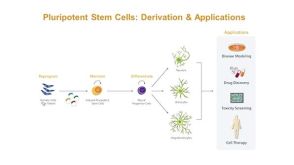
Human pluripotent stem cells: from biology to cell therapy.
Human pluripotent stem cells (PSCs),encompassing embryonic stem cells and induced pluripotent stem cells,proliferate extensively and differentiate into virtually any desired cell type. PSCs endow regenerative medicine with an unlimited source of replacement cells suitable for human therapy. Several hurdles must be carefully addressed in PSC research before these theoretical possibilities are translated into clinical applications. These obstacles are: (1) cell proliferation; (2) cell differentiation; (3) genetic integrity; (4) allogenicity; and (5) ethical issues. We discuss these issues and underline the fact that the answers to these questions lie in a better understanding of the biology of PSCs. To contribute to this aim,we have developed a free online expression atlas,Amazonia!,that displays for each human gene a virtual northern blot for PSC samples and adult tissues (http://www.amazonia.transcriptome.eu).
View Publication
产品类型:
产品号#:
05850
05857
05870
05875
85850
85857
85870
85875
产品名:
mTeSR™1
mTeSR™1
Pang ZP et al. (AUG 2011)
Nature 476 7359 220--3
Induction of human neuronal cells by defined transcription factors.
Somatic cell nuclear transfer,cell fusion,or expression of lineage-specific factors have been shown to induce cell-fate changes in diverse somatic cell types. We recently observed that forced expression of a combination of three transcription factors,Brn2 (also known as Pou3f2),Ascl1 and Myt1l,can efficiently convert mouse fibroblasts into functional induced neuronal (iN) cells. Here we show that the same three factors can generate functional neurons from human pluripotent stem cells as early as 6 days after transgene activation. When combined with the basic helix-loop-helix transcription factor NeuroD1,these factors could also convert fetal and postnatal human fibroblasts into iN cells showing typical neuronal morphologies and expressing multiple neuronal markers,even after downregulation of the exogenous transcription factors. Importantly,the vast majority of human iN cells were able to generate action potentials and many matured to receive synaptic contacts when co-cultured with primary mouse cortical neurons. Our data demonstrate that non-neural human somatic cells,as well as pluripotent stem cells,can be converted directly into neurons by lineage-determining transcription factors. These methods may facilitate robust generation of patient-specific human neurons for in vitro disease modelling or future applications in regenerative medicine.
View Publication
产品类型:
产品号#:
05850
05857
05870
05875
85850
85857
85870
85875
产品名:
mTeSR™1
mTeSR™1
Chen KG et al. (NOV 2012)
Stem Cell Research 9 3 237--248
Non-colony type monolayer culture of human embryonic stem cells
Regenerative medicine,relying on human embryonic stem cell (hESC) technology,opens promising new avenues for therapy of many severe diseases. However,this approach is restricted by limited production of the desired cells due to the refractory properties of hESC growth in vitro. It is further hindered by insufficient control of cellular stress,growth rates,and heterogeneous cellular states under current culture conditions. In this study,we report a novel cell culture method based on a non-colony type monolayer (NCM) growth. Human ESCs under NCM remain pluripotent as determined by teratoma assays and sustain the potential to differentiate into three germ layers. This NCM culture has been shown to homogenize cellular states,precisely control growth rates,significantly increase cell production,and enhance hESC recovery from cryopreservation without compromising chromosomal integrity. This culture system is simple,robust,scalable,and suitable for high-throughput screening and drug discovery.
View Publication


 EasySep™小鼠TIL(CD45)正选试剂盒






 沪公网安备31010102008431号