Uenishi G et al. (DEC 2014)
Stem Cell Reports 3 6 1073--1084
Tenascin C promotes hematoendothelial development and T lymphoid commitment from human pluripotent stem cells in chemically defined conditions
The recent identification of hemogenic endothelium (HE) in human pluripotent stem cell (hPSC) cultures presents opportunities to investigate signaling pathways that are essential for blood development from endothelium and provides an exploratory platform for de novo generation of hematopoietic stem cells (HSCs). However,the use of poorly defined human or animal components limits the utility of the current differentiation systems for studying specific growth factors required for HE induction and manufacturing clinical-grade therapeutic blood cells. Here,we identified chemically defined conditions required to produce HE from hPSCs growing in Essential 8 (E8) medium and showed that Tenascin C (TenC),an extracellular matrix protein associated with HSC niches,strongly promotes HE and definitive hematopoiesis in this system. hPSCs differentiated in chemically defined conditions undergo stages of development similar to those previously described in hPSCs cocultured on OP9 feeders,including the formation of VE-Cadherin(+)CD73(-)CD235a/CD43(-) HE and hematopoietic progenitors with myeloid and T lymphoid potential.
View Publication
Gutierrez-Ramos JC and Palacios R (OCT 1992)
Proceedings of the National Academy of Sciences of the United States of America 89 19 9171--5
In vitro differentiation of embryonic stem cells into lymphocyte precursors able to generate T and B lymphocytes in vivo.
Embryonic stem cells can be induced in vitro,by coculture with the stromal line RP.0.10 and a mixture of interleukins 3,6,and 7,to differentiate into T (Joro75+) and B (B-220+) lymphocyte progenitors and other (Thy-1+,PgP-1+,c-kit+,Joro75-,B-220-,F4/80-,Mac-1-) hemopoietic precursors. The progeny of in vitro-induced embryonic stem cells can reconstitute the lymphoid compartments of T- and B-lymphocyte-deficient scid mice and generate mature T and B lymphocytes in sublethally irradiated normal mice. Exogenous cytokines can dramatically alter the developmental fate of embryonic stem cells in culture. The in vitro system described here should facilitate the study of molecular events leading to cell-lineage commitment and to the formation of hemopoietic stem cells and their immediate lymphoid progeny.
View Publication
产品类型:
产品号#:
06902
06952
00321
00322
00323
00324
00325
产品名:
Rosenzweig M et al. (APR 2001)
Blood 97 7 1951--9
Induction of cytotoxic T lymphocyte and antibody responses to enhanced green fluorescent protein following transplantation of transduced CD34(+) hematopoietic cells.
Genetic modification of hematopoietic stem cells often results in the expression of foreign proteins in pluripotent progenitor cells and their progeny. However,the potential for products of foreign genes introduced into hematopoietic stem cells to induce host immune responses is not well understood. Gene marking and induction of immune responses to enhanced green fluorescent protein (eGFP) were examined in rhesus macaques that underwent nonmyeloablative irradiation followed by infusions of CD34(+) bone marrow cells transduced with a retroviral vector expressing eGFP. CD34(+) cells were obtained from untreated animals or from animals treated with recombinant human granulocyte colony-stimulating factor (G-CSF) alone or G-CSF and recombinant human stem cell factor. Levels of eGFP-expressing cells detected by flow cytometry peaked at 0.1% to 0.5% of all leukocytes 1 to 4 weeks after transplantation. Proviral DNA was detected in 0% to 17% of bone marrow--derived colony-forming units at periods of 5 to 18 weeks after transplantation. However,5 of 6 animals studied demonstrated a vigorous eGFP-specific cytotoxic T lymphocyte (CTL) response that was associated with a loss of genetically modified cells in peripheral blood,as demonstrated by both flow cytometry and polymerase chain reaction. The eGFP-specific CTL responses were MHC-restricted,mediated by CD8(+) lymphocytes,and directed against multiple epitopes. eGFP-specific CTLs were able to efficiently lyse autologous CD34(+) cells expressing eGFP. Antibody responses to eGFP were detected in 3 of 6 animals. These data document the potential for foreign proteins expressed in CD34(+) hematopoietic cells and their progeny to induce antibody and CTL responses in the setting of a clinically applicable transplantation protocol. (Blood. 2001;97:1951-1959)
View Publication
产品类型:
产品号#:
09600
09650
产品名:
StemSpan™ SFEM
StemSpan™ SFEM
Huijskens MJAJ et al. (DEC 2014)
Journal of leukocyte biology 96 6 1165--75
Technical advance: ascorbic acid induces development of double-positive T cells from human hematopoietic stem cells in the absence of stromal cells.
The efficacy of donor HSCT is partly reduced as a result of slow post-transplantation immune recovery. In particular,T cell regeneration is generally delayed,resulting in high infection-related mortality in the first years post-transplantation. Adoptive transfer of in vitro-generated human T cell progenitors seems a promising approach to accelerate T cell recovery in immunocompromised patients. AA may enhance T cell proliferation and differentiation in a controlled,feeder-free environment containing Notch ligands and defined growth factors. Our experiments show a pivotal role for AA during human in vitro T cell development. The blocking of NOS diminished this effect,indicating a role for the citrulline/NO cycle. AA promotes the transition of proT1 to proT2 cells and of preT to DP T cells. Furthermore,the addition of AA to feeder cocultures resulted in development of DP and SP T cells,whereas without AA,a preT cell-stage arrest occurred. We conclude that neither DLL4-expressing feeder cells nor feeder cell conditioned media are required for generating DP T cells from CB and G-CSF-mobilized HSCs and that generation and proliferation of proT and DP T cells are greatly improved by AA. This technology could potentially be used to generate T cell progenitors for adoptive therapy.
View Publication
产品类型:
产品号#:
09605
09655
产品名:
StemSpan™ SFEM II
StemSpan™ SFEM II
Pereira LE et al. (MAY 2007)
Journal of virology 81 9 4445--56
Simian immunodeficiency virus (SIV) infection influences the level and function of regulatory T cells in SIV-infected rhesus macaques but not SIV-infected sooty mangabeys.
Differences in clinical outcome of simian immunodeficiency virus (SIV) infection in disease-resistant African sooty mangabeys (SM) and disease-susceptible Asian rhesus macaques (RM) prompted us to examine the role of regulatory T cells (Tregs) in these two animal models. Results from a cross-sectional study revealed maintenance of the frequency and absolute number of peripheral Tregs in chronically SIV-infected SM while a significant loss occurred in chronically SIV-infected RM compared to uninfected animals. A longitudinal study of experimentally SIV-infected animals revealed a transient increase in the frequency of Tregs from baseline values following acute infection in RM,but no change in the frequency of Tregs occurred in SM during this period. Further examination revealed a strong correlation between plasma viral load (VL) and the level of Tregs in SIV-infected RM but not SM. A correlation was also noted in SIV-infected RM that control VL spontaneously or in response to antiretroviral chemotherapy. In addition,immunofluorescent cell count assays showed that while Treg-depleted peripheral blood mononuclear cells from RM led to a significant enhancement of CD4+ and CD8+ T-cell responses to select pools of SIV peptides,there was no detectable T-cell response to the same pool of SIV peptides in Treg-depleted cells from SIV-infected SM. Our data collectively suggest that while Tregs do appear to play a role in the control of viremia and the magnitude of the SIV-specific immune response in RM,their role in disease resistance in SM remains unclear.
View Publication


 EasySep™小鼠TIL(CD45)正选试剂盒




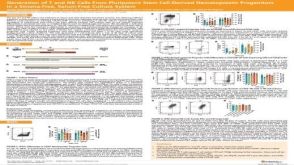 科学海报Generation of T and NK Cells From Pluripotent Stem Cell-Derived Hematopoietic Progenitors in a Stroma-Free, Serum-Free Culture System
 StemSpan™淋系祖细胞扩增添加物(10X) 用于人CD34+细胞扩增及分化为淋系祖细胞的添加物
 抗人CD137(ILA)抗体,clone 4B4-1 抗人、猴CD137的小鼠Monoclonal 抗体
 大豆胰蛋白酶抑制剂,ACF 用于抑制胰蛋白酶的活性
 抗人CD69(AIM)抗体,clone FN50 抗人CD69小鼠Monoclonal 抗体
 DNase I 用于消化DNA
 抗小鼠CD48(SLAMF2)抗体,clone HM48-1 仓鼠(亚美尼亚)抗小鼠 CD48(SLAMF2)Monoclonal IgG1 抗体
 沪公网安备31010102008431号