Bacigalupo A et al. (JUL 2005)
Experimental hematology 33 7 819--27
T-cell suppression mediated by mesenchymal stem cells is deficient in patients with severe aplastic anemia.
OBJECTIVE: To compare the suppressive effect of mesenchymal stem cells (MSC),derived from normal individuals or severe aplastic anemia patients (SAA),on T-cell activation. PATIENTS AND METHODS: We studied bone marrow MSC from 19 healthy donors and 23 SAA patients in different phases of the disease: at diagnosis (n = 3),following immunosuppressive therapy (IS) (n = 16),or after a bone marrow transplant (BMT) (n = 4). MSC were tested for T-cell suppression in the following assays: mixed lymphocyte reaction (MLR),phytohemaglutinin (PHA)-primed cultures,activation surface markers,gamma-IFN production,hematopoietic colony formation (CFC),production of cyclic ADP-ribose (cADPR). RESULTS: The abnormalities of SAA MSC included: 1) significantly lower suppression of T-cell proliferation induced by alloantigens (p = 0.009) or PHA (p = 0.006); 2) impaired capacity to suppress CD38 expression on PHA-primed T cells (p = 0.001); 3) impaired ability to suppress gamma-IFN production in PHA cultures,resulting in an 11-fold higher gamma-IFN concentration; 4) no preventive effect on T cell-mediated inhibition of CFC; and 5) significantly reduced (p = 0.009) production of cADPR,a universal calcium mobilizer. MSC-mediated suppression of PHA-induced T-cell proliferation was restored to control levels in 3 of 4 patients post-BMT. CONCLUSION: The ability of MSC to downregulate T-cell priming,proliferation,and cytokine release is deficient in patients with SAA,persists indefinitely after immunosuppressive therapy,but seems to be restored after BMT. Whether these abnormalities are relevant to the pathogenesis of aplastic anemia remains to be determined.
View Publication
产品类型:
产品号#:
05401
05402
05411
产品名:
MesenCult™ MSC 基础培养基(人)
MesenCult™ MSC刺激添加物(人)
MesenCult™ 增殖试剂盒(人)
Sloand EM et al. (SEP 2006)
Proceedings of the National Academy of Sciences of the United States of America 103 39 14483--8
Granulocyte colony-stimulating factor preferentially stimulates proliferation of monosomy 7 cells bearing the isoform IV receptor.
Granulocyte colony-stimulating factor (GCSF) administration has been linked to the development of monosomy 7 in severe congenital neutropenia and aplastic anemia. We assessed the effect of pharmacologic doses of GCSF on monosomy 7 cells to determine whether this chromosomal abnormality developed de novo or arose as a result of favored expansion of a preexisting clone. Fluorescence in situ hybridization (FISH) of chromosome 7 was used to identify small populations of aneuploid cells. When bone marrow mononuclear cells from patients with monosomy 7 were cultured with 400 ng/ml GCSF,all samples showed significant increases in the proportion of monosomy 7 cells. In contrast,bone marrow from karyotypically normal aplastic anemia,myelodysplastic syndrome,or healthy individuals did not show an increase in monosomy 7 cells in culture. In bone marrow CD34 cells of patients with myelodysplastic syndrome and monosomy 7,GCSF receptor (GCSFR) protein was increased. Although no mutation was found in genomic GCSFR DNA,CD34 cells showed increased expression of the GCSFR class IV mRNA isoform,which is defective in signaling cellular differentiation. GCSFR signal transduction via the Jak/Stat system was abnormal in monosomy 7 CD34 cells,with increased phosphorylated signal transducer and activation of transcription protein,STAT1-P,and increased STAT5-P relative to STAT3-P. Our results suggest that pharmacologic doses of GCSF increase the proportion of preexisting monosomy 7 cells. The abnormal response of monosomy 7 cells to GCSF would be explained by the expansion of undifferentiated monosomy 7 clones expressing the class IV GCSFR,which is defective in signaling cell maturation.
View Publication
Oct4 maintains the pluripotency of human embryonic stem cells by inactivating p53 through sirt1-mediated deacetylation
Oct4 is critical to maintain the pluripotency of human embryonic stem cells (hESCs); however,the underlying mechanism remains to be fully understood. Here,we report that silencing of Oct4 in hESCs leads to the activation of tumor suppressor p53,inducing the differentiation of hESCs since acute disruption of p53 in p53 conditional knockout (p53CKO) hESCs prevents the differentiation of hESCs after Oct4 depletion. We further discovered that the silencing of Oct4 significantly reduces the expression of Sirt1,a deacetylase known to inhibit p53 activity and the differentiation of ESCs,leading to increased acetylation of p53 at lysine 120 and 164. The importance of Sirt1 in mediating Oct4-dependent pluripotency is revealed by the finding that the ectopic expression of Sirt1 in Oct4-silenced hESCs prevents p53 activation and hESC differentiation. In addition,using knock-in approach,we revealed that the acetylation of p53 at lysine 120 and 164 is required for both stabilization and activity of p53 in hESCs. In summary,our findings reveal a novel role of Oct4 in maintaining the pluripotency of hESCs by suppressing pathways that induce differentiation. Considering that p53 suppresses pluripotency after DNA damage response in ESCs,our findings further underscore the stringent mechanism to coordinate DNA damage response pathways and pluripotency pathways in order to maintain the pluripotency and genomic stability of hESCs.
View Publication
产品类型:
产品号#:
05850
05857
05870
05875
85850
85857
85870
85875
产品名:
mTeSR™1
mTeSR™1
Wang Y et al. (MAR 2017)
Nucleic acids research 45 5 e29
Integration-defective lentiviral vector mediates efficient gene editing through homology-directed repair in human embryonic stem cells.
Human embryonic stem cells (hESCs) are used as platforms for disease study,drug screening and cell-based therapy. To facilitate these applications,it is frequently necessary to genetically manipulate the hESC genome. Gene editing with engineered nucleases enables site-specific genetic modification of the human genome through homology-directed repair (HDR). However,the frequency of HDR remains low in hESCs. We combined efficient expression of engineered nucleases and integration-defective lentiviral vector (IDLV) transduction for donor template delivery to mediate HDR in hESC line WA09. This strategy led to highly efficient HDR with more than 80% of the selected WA09 clones harboring the transgene inserted at the targeted genomic locus. However,certain portions of the HDR clones contained the concatemeric IDLV genomic structure at the target site,probably resulted from recombination of the IDLV genomic input before HDR with the target. We found that the integrase protein of IDLV mediated the highly efficient HDR through the recruitment of a cellular protein,LEDGF/p75. This study demonstrates that IDLV-mediated HDR is a powerful and broadly applicable technology to carry out site-specific gene modification in hESCs.
View Publication
产品类型:
产品号#:
05850
05857
05870
05875
85850
85857
85870
85875
产品名:
mTeSR™1
mTeSR™1
Moussaieff A et al. (MAR 2015)
Cell Metabolism 21 3 392--402
Glycolysis-mediated changes in acetyl-CoA and histone acetylation control the early differentiation of embryonic stem cells
Loss of pluripotency is a gradual event whose initiating factors are largely unknown. Here we report the earliest metabolic changes induced during the first hours of differentiation. High-resolution NMR identified 44 metabolites and a distinct metabolic transition occurring during early differentiation. Metabolic and transcriptional analyses showed that pluripotent cells produced acetyl-CoA through glycolysis and rapidly lost this function during differentiation. Importantly,modulation of glycolysis blocked histone deacetylation and differentiation in human and mouse embryonic stem cells. Acetate,a precursor of acetyl-CoA,delayed differentiation and blocked early histone deacetylation in a dose-dependent manner. Inhibitors upstream of acetyl-CoA caused differentiation of pluripotent cells,while those downstream delayed differentiation. Our results show a metabolic switch causing a loss of histone acetylation and pluripotent state during the first hours of differentiation. Our data highlight the important role metabolism plays in pluripotency and suggest that a glycolytic switch controlling histone acetylation can release stem cells from pluripotency.
View Publication
产品类型:
产品号#:
05850
05857
05870
05875
85850
85857
85870
85875
产品名:
mTeSR™1
mTeSR™1
Ramachandra CJA et al. (SEP 2011)
Nucleic Acids Research 39 16 e107
Efficient recombinase-mediated cassette exchange at the AAVS1 locus in human embryonic stem cells using baculoviral vectors
Insertion of a transgene into a defined genomic locus in human embryonic stem cells (hESCs) is crucial in preventing random integration-induced insertional mutagenesis,and can possibly enable persistent transgene expression during hESC expansion and in their differentiated progenies. Here,we employed homologous recombination in hESCs to introduce heterospecific loxP sites into the AAVS1 locus,a site with an open chromatin structure that allows averting transgene silencing phenomena. We then performed Cre recombinase mediated cassette exchange using baculoviral vectors to insert a transgene into the modified AAVS1 locus. Targeting efficiency in the master hESC line with the loxP-docking sites was up to 100%. Expression of the inserted transgene lasted for at least 20 passages during hESC expansion and was retained in differentiated cells derived from the genetically modified hESCs. Thus,this study demonstrates the feasibility of genetic manipulation at the AAVS1 locus with homologous recombination and using viral transduction in hESCs to facilitate recombinase-mediated cassette exchange. The method developed will be useful for repeated gene targeting at a defined locus of the hESC genome.
View Publication
Lai W-H et al. (DEC 2010)
Cellular reprogramming 12 6 641--653
ROCK inhibition facilitates the generation of human-induced pluripotent stem cells in a defined, feeder-, and serum-free system.
Human-induced pluripotent stem cells (iPSCs) generated from human adult somatic cells through reprogramming hold great promises for future regenerative medicine. However,exposure of human iPSCs to animal feeder and serum in the process of their generation and maintenance imposes risk of transmitting animal pathogens to human subjects,thus hindering the potential therapeutic applications. Here,we report the successful generation of human iPSCs in a feeder-independent culture system with defined factors. Two stable human iPSC lines were established from primary human dermal fibroblasts of two healthy volunteers. These human iPSCs expressed a panel of pluripotency markers including stage-specific embryonic antigen (SSEA)-4,tumor-rejection antigen (TRA)-1-60,TRA-1-81,and alkaline phosphatase,while maintaining normal karyotypes and the exogenous reprogramming factors being silenced. In addition,these human iPSCs can differentiate along lineages representative of the three embryonic germ layers upon formation of embryoid bodies,indicating their pluripotency. Furthermore,subcutaneous transplantation of these cells into immunodeficient mice resulted in teratoma formation in 6 to 8 weeks. Our findings are an important step toward generating patient-specific iPSCs in a more clinically compliant manner by eliminating the need of animal feeder cells and animal serum.
View Publication
产品类型:
产品号#:
05850
05857
05870
05875
85850
85857
85870
85875
产品名:
mTeSR™1
mTeSR™1
Kortylewski M et al. (DEC 2005)
Nature medicine 11 12 1314--21
Inhibiting Stat3 signaling in the hematopoietic system elicits multicomponent antitumor immunity.
The immune system can act as an extrinsic suppressor of tumors. Therefore,tumor progression depends in part on mechanisms that downmodulate intrinsic immune surveillance. Identifying these inhibitory pathways may provide promising targets to enhance antitumor immunity. Here,we show that Stat3 is constitutively activated in diverse tumor-infiltrating immune cells,and ablating Stat3 in hematopoietic cells triggers an intrinsic immune-surveillance system that inhibits tumor growth and metastasis. We observed a markedly enhanced function of dendritic cells,T cells,natural killer (NK) cells and neutrophils in tumor-bearing mice with Stat3(-/-) hematopoietic cells,and showed that tumor regression requires immune cells. Targeting Stat3 with a small-molecule drug induces T cell- and NK cell-dependent growth inhibition of established tumors otherwise resistant to direct killing by the inhibitor. Our findings show that Stat3 signaling restrains natural tumor immune surveillance and that inhibiting hematopoietic Stat3 in tumor-bearing hosts elicits multicomponent therapeutic antitumor immunity.
View Publication
产品类型:
产品号#:
18709
18709RF
产品名:
EasySep™小鼠定制正选试剂盒
RoboSep™ 小鼠定制正选试剂盒含滤芯吸头
Yokota T et al. (MAR 2009)
Blood 113 13 2914--23
The endothelial antigen ESAM marks primitive hematopoietic progenitors throughout life in mice.
Although recent advances have enabled hematopoietic stem cells (HSCs) to be enriched to near purity,more information about their characteristics will improve our understanding of their development and stage-related functions. Here,using microarray technology,we identified endothelial cell-selective adhesion molecule (ESAM) as a novel marker for murine HSCs in fetal liver. Esam was expressed at high levels within a Rag1(-) c-kit(Hi) Sca1(+) HSC-enriched fraction,but sharply down-regulated with activation of the Rag1 locus,a valid marker for the most primitive lymphoid progenitors in E14.5 liver. The HSC-enriched fraction could be subdivided into 2 on the basis of ESAM levels. Among endothelial antigens on hematopoietic progenitors,ESAM expression showed intimate correlation with HSC activity. The ESAM(Hi) population was highly enriched for multipotent myeloid-erythroid progenitors and primitive progenitors with lymphopoietic activity,and exclusively reconstituted long-term lymphohematopoiesis in lethally irradiated recipients. Tie2(+) c-kit(+) lymphohematopoietic cells in the E9.5-10.5 aorta-gonad-mesonephros region also expressed high levels of ESAM. Furthermore,ESAM was detected on primitive hematopoietic progenitors in adult bone marrow. Interestingly,ESAM expression in the HSC-enriched fraction was up-regulated in aged mice. We conclude that ESAM marks HSC in murine fetal liver and will facilitate studies of hematopoiesis throughout life.
View Publication
产品类型:
产品号#:
03434
03444
产品名:
MethoCult™ GF M3434
MethoCult™ GF M3434
Phanstiel D et al. (MAR 2008)
Proceedings of the National Academy of Sciences of the United States of America 105 11 4093--8
Mass spectrometry identifies and quantifies 74 unique histone H4 isoforms in differentiating human embryonic stem cells.
Epigenetic regulation through chromatin is thought to play a critical role in the establishment and maintenance of pluripotency. Traditionally,antibody-based technologies were used to probe for specific posttranslational modifications (PTMs) present on histone tails,but these methods do not generally reveal the presence of multiple modifications on a single-histone tail (combinatorial codes). Here,we describe technology for the discovery and quantification of histone combinatorial codes that is based on chromatography and mass spectrometry. We applied this methodology to decipher 74 discrete combinatorial codes on the tail of histone H4 from human embryonic stem (ES) cells. Finally,we quantified the abundances of these codes as human ES cells undergo differentiation to reveal striking changes in methylation and acetylation patterns. For example,H4R3 methylation was observed only in the presence of H4K20 dimethylation; such context-specific patterning exemplifies the power of this technique.
View Publication


 EasySep™小鼠TIL(CD45)正选试剂盒





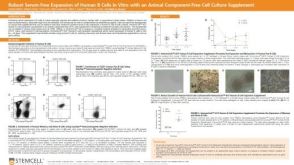 科学海报Robust Serum-Free Expansion of Human B Cells In Vitro with an Animal Component-Free Cell Culture Supplement
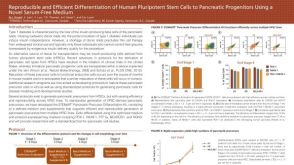 科学海报Reproducible and Efficient Differentiation of Human Pluripotent Stem Cells to Pancreatic Progenitors Using a Novel Serum-Free Medium
 沪公网安备31010102008431号