Zeng J and Wang S (JAN 2014)
Stem cells translational medicine 3 1 69--80
Human dendritic cells derived from embryonic stem cells stably modified with CD1d efficiently stimulate antitumor invariant natural killer T cell response.
Invariant natural killer T (iNKT) cells are a unique lymphocyte subpopulation that mediates antitumor activities upon activation. A current strategy to harness iNKT cells for cancer treatment is endogenous iNKT cell activation using patient-derived dendritic cells (DCs). However,the limited number and functional defects of patient DCs are still the major challenges for this therapeutic approach. In this study,we investigated whether human embryonic stem cells (hESCs) with an ectopically expressed CD1d gene could be exploited to address this issue. Using a lentivector carrying an optimized expression cassette,we generated stably modified hESC lines that consistently overexpressed CD1d. These modified hESC lines were able to differentiate into DCs as efficiently as the parental line. Most importantly,more than 50% of such derived DCs were CD1d+. These CD1d-overexpressing DCs were more efficient in inducing iNKT cell response than those without modification,and their ability was comparable to that of DCs generated from monocytes of healthy donors. The iNKT cells expanded by the CD1d-overexpressing DCs were functional,as demonstrated by their ability to lyse iNKT cell-sensitive glioma cells. Therefore,hESCs stably modified with the CD1d gene may serve as a convenient,unlimited,and competent DC source for iNKT cell-based cancer immunotherapy.
View Publication
产品类型:
产品号#:
05850
05857
05870
05875
09600
09650
70024
70024.1
85850
85857
85870
85875
产品名:
StemSpan™ SFEM
StemSpan™ SFEM
冻存的人外周血Pan T细胞
冻存的人外周血Pan T细胞
mTeSR™1
mTeSR™1
Gao L et al. (APR 2000)
Blood 95 7 2198--203
Selective elimination of leukemic CD34(+) progenitor cells by cytotoxic T lymphocytes specific for WT1.
Hematologic malignancies such as acute and chronic myeloid leukemia are characterized by the malignant transformation of immature CD34(+) progenitor cells. Transformation is associated with elevated expression of the Wilm's tumor gene encoded transcription factor (WT1). Here we demonstrate that WT1 can serve as a target for cytotoxic T lymphocytes (CTL) with exquisite specificity for leukemic progenitor cells. HLA-A0201- restricted CTL specific for WT1 kill leukemia cell lines and inhibit colony formation by transformed CD34(+) progenitor cells isolated from patients with chronic myeloid leukemia (CML),whereas colony formation by normal CD34(+) progenitor cells is unaffected. Thus,the tissue-specific transcription factor WT1 is an ideal target for CTL-mediated purging of leukemic progenitor cells in vitro and for antigen-specific therapy of leukemia and other WT1-expressing malignancies in vivo.
View Publication
产品类型:
产品号#:
04535
04545
产品名:
MethoCult™ H4535 Enriched,不含EPO
MethoCult™ H4535 Enriched,不含EPO
Benvenuto F et al. (JUL 2007)
Stem cells (Dayton,Ohio) 25 7 1753--60
Human mesenchymal stem cells promote survival of T cells in a quiescent state.
Mesenchymal stem cells (MSC) are part of the bone marrow that provides signals supporting survival and growth of bystander hematopoietic stem cells (HSC). MSC modulate also the immune response,as they inhibit proliferation of lymphocytes. In order to investigate whether MSC can support survival of T cells,we investigated MSC capacity of rescuing T lymphocytes from cell death induced by different mechanisms. We observed that MSC prolong survival of unstimulated T cells and apoptosis-prone thymocytes cultured under starving conditions. MSC rescued T cells from activation induced cell death (AICD) by downregulation of Fas receptor and Fas ligand on T cell surface and inhibition of endogenous proteases involved in cell death. MSC dampened also Fas receptor mediated apoptosis of CD95 expressing Jurkat leukemic T cells. In contrast,rescue from AICD was not associated with a significant change of Bcl-2,an inhibitor of apoptosis induced by cell stress. Accordingly,MSC exhibited a minimal capacity of rescuing Jurkat cells from chemically induced apoptosis,a process disrupting the mitochondrial membrane potential regulated by Bcl-2. These results suggest that MSC interfere with the Fas receptor regulated process of programmed cell death. Overall,MSC can inhibit proliferation of activated T cells while supporting their survival in a quiescent state,providing a model of their activity inside the HSC niche. Disclosure of potential conflicts of interest is found at the end of this article.
View Publication
Want AJ et al. (JAN 2012)
Regenerative medicine 7 1 71--84
Large-scale expansion and exploitation of pluripotent stem cells for regenerative medicine purposes: beyond the T flask.
Human pluripotent stem cells will likely be a significant part of the regenerative medicine-driven healthcare revolution. In order to realize this potential,culture processes must be standardized,scalable and able to produce clinically relevant cell numbers,whilst maintaining critical biological functionality. This review comprises a broad overview of important bioprocess considerations,referencing the development of biopharmaceutical processes in an effort to learn from current best practice in the field. Particular focus is given to the recent efforts to grow human pluripotent stem cells in microcarrier or aggregate suspension culture,which would allow geometric expansion of productive capacity were it to be fully realized. The potential of these approaches is compared with automation of traditional T-flask culture,which may provide a cost-effective platform for low-dose,low-incidence conditions or autologous therapies. This represents the first step in defining the full extent of the challenges facing bioprocess engineers in the exploitation of large-scale human pluripotent stem cell manufacture.
View Publication
Begum AN et al. (JUL 2014)
Translational psychiatry 4 January e414
Women with the Alzheimer's risk marker ApoE4 lose A-specific CD4 T cells 10-20 years before men.
Adaptive immunity to self-antigens causes autoimmune disorders,such as multiple sclerosis,psoriasis and type 1 diabetes; paradoxically,T- and B-cell responses to amyloid-$\$(A$\$) reduce Alzheimer's disease (AD)-associated pathology and cognitive impairment in mouse models of the disease. The manipulation of adaptive immunity has been a promising therapeutic approach for the treatment of AD,although vaccine and anti-A$\$ approaches have proven difficult in patients,thus far. CD4(+) T cells have a central role in regulating adaptive immune responses to antigens,and A$\$-specific CD4(+) T cells have been shown to reduce AD pathology in mouse models. As these cells may facilitate endogenous mechanisms that counter AD,an evaluation of their abundance before and during AD could provide important insights. A$\$-CD4see is a new assay developed to quantify A$\$-specific CD4(+) T cells in human blood,using dendritic cells derived from human pluripotent stem cells. In tests of textgreater50 human subjects A$\$-CD4see showed an age-dependent decline of A$\$-specific CD4(+) T cells,which occurs earlier in women than men. In aggregate,men showed a 50% decline in these cells by the age of 70 years,but women reached the same level before the age of 60 years. Notably,women who carried the AD risk marker apolipoproteinE-ɛ4 (ApoE4) showed the earliest decline,with a precipitous drop between 45 and 52 years,when menopause typically begins. A$\$-CD4see requires a standard blood draw and provides a minimally invasive approach for assessing changes in A$\$ that may reveal AD-related changes in physiology by a decade. Furthermore,CD4see probes can be modified to target any peptide,providing a powerful new tool to isolate antigen-specific CD4(+) T cells from human subjects.
View Publication
Quintarelli C et al. (MAR 2011)
Blood 117 12 3353--62
High-avidity cytotoxic T lymphocytes specific for a new PRAME-derived peptide can target leukemic and leukemic-precursor cells.
The cancer testis antigen (CTA) preferentially expressed antigen of melanoma (PRAME) is overexpressed by many hematologic malignancies,but is absent on normal tissues,including hematopoietic progenitor cells,and may therefore be an appropriate candidate for T cell-mediated immunotherapy. Because it is likely that an effective antitumor response will require high-avidity,PRAME-specific cytotoxic T lymphocytes (CTLs),we attempted to generate such CTLs using professional and artificial antigen-presenting cells loaded with a peptide library spanning the entire PRAME protein and consisting of 125 synthetic pentadecapeptides overlapping by 11 amino acids. We successfully generated polyclonal,PRAME-specific CTL lines and elicited high-avidity CTLs,with a high proportion of cells recognizing a previously uninvestigated HLA-A*02-restricted epitope,P435-9mer (NLTHVLYPV). These PRAME-CTLs could be generated both from normal donors and from subjects with PRAME(+) hematologic malignancies. The cytotoxic activity of our PRAME-specific CTLs was directed not only against leukemic blasts,but also against leukemic progenitor cells as assessed by colony-forming-inhibition assays,which have been implicated in leukemia relapse. These PRAME-directed CTLs did not affect normal hematopoietic progenitors,indicating that this approach may be of value for immunotherapy of PRAME(+) hematologic malignancies.
View Publication
Derivation of transgene-free human induced pluripotent stem cells from human peripheral T cells in defined culture conditions
Recently,induced pluripotent stem cells (iPSCs) were established as promising cell sources for revolutionary regenerative therapies. The initial culture system used for iPSC generation needed fetal calf serum in the culture medium and mouse embryonic fibroblast as a feeder layer,both of which could possibly transfer unknown exogenous antigens and pathogens into the iPSC population. Therefore,the development of culture systems designed to minimize such potential risks has become increasingly vital for future applications of iPSCs for clinical use. On another front,although donor cell types for generating iPSCs are wide-ranging,T cells have attracted attention as unique cell sources for iPSCs generation because T cell-derived iPSCs (TiPSCs) have a unique monoclonal T cell receptor genomic rearrangement that enables their differentiation into antigen-specific T cells,which can be applied to novel immunotherapies. In the present study,we generated transgene-free human TiPSCs using a combination of activated human T cells and Sendai virus under defined culture conditions. These TiPSCs expressed pluripotent markers by quantitative PCR and immunostaining,had a normal karyotype,and were capable of differentiating into cells from all three germ layers. This method of TiPSCs generation is more suitable for the therapeutic application of iPSC technology because it lowers the risks associated with the presence of undefined,animal-derived feeder cells and serum. Therefore this work will lead to establishment of safer iPSCs and extended clinical application.
View Publication


 EasySep™小鼠TIL(CD45)正选试剂盒




 抗人CD5抗体,clone UCHT2 小鼠Monoclonal IgG1抗体,抗人、恒河猴、食蟹猴CD5
 抗人CD154(CD40L)抗体,clone 5C8 抗人CD154(CD40L)小鼠Monoclonal 抗体
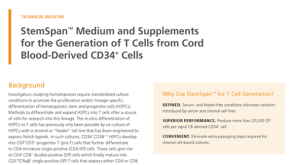 技术公告StemSpan™ Medium and Supplements for the Generation of T Cells from Cord Blood-Derived CD34+ Cells
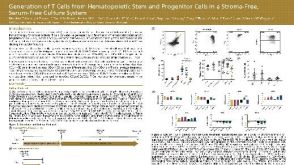 科学海报Generation of T Cells from Hematopoietic Stem and Progenitor Cells in a Stroma-Free, Serum-Free Culture System
 抗小鼠CD44抗体,clone IM7 抗人、鼠、恒河猴CD44(组织非特异性碱性磷酸酶)的大鼠Monoclonal IgG2b抗体
 沪公网安备31010102008431号